

Many of us place a statue on a shelf and think little more of it. But the role of statues in interior design goes far deeper than ornament. A well-chosen statue occupies real space, casts its own shadows, and carries an emotional presence that a print or cushion simply cannot match. If you are looking to bring mindfulness and spiritual intention into your home, statues are one of the most direct and enduring ways to do it. This guide will help you understand how they work, where to place them, and how to choose the right piece for your space.
Key Takeaways
| Point | Details |
|---|---|
| Statues add spatial depth | Unlike flat artwork, statues bring three-dimensional form that shapes mood and presence in a room. |
| Placement shapes mindfulness | Positioning statues in focal areas like entryways or seating zones enhances their calming and spiritual impact. |
| Material affects emotion | Choose materials that reflect your style and desired ambience, from warm marble to modern metals. |
| Statues support mental health | Art environments with sculptures can reduce anxiety and depression through stress reduction and attention restoration. |
| Care preserves energy | Regular cleaning and protecting statues from sunlight and humidity keep their aesthetic and mindful qualities vibrant. |
Understanding how statues shape interior mood and space
Statues are fundamentally different from other forms of home decor because they exist in three dimensions. They have weight, texture, and shadow. You can walk around them, notice how the light changes across their surface at different times of day, and feel their material beneath your fingertips. This physical presence is precisely why sculpture adds depth and volume that flat wall art cannot replicate, communicating emotional qualities through the handling of form and material.
The material a statue is made from sets its emotional tone immediately. Stone feels ancient and grounding, as though it belongs to the earth rather than a shelf. Wood is warm and tactile, softening a room and inviting stillness. Metal, particularly aged bronze or raw iron, carries weight and quiet authority. Each surface texture reads differently under light, and that reading shifts the mood of the room around it.

Shop Now: Large Classic Brass Buddha Head
Lighting is perhaps the most underestimated tool when it comes to statues in home decor. A soft, warm bulb placed slightly above and to the side of a stone Buddha will draw out the carved contours and create gentle shadows that feel meditative. The same statue under a cold, overhead spotlight looks flat and clinical. Thoughtful lighting does not just show your statue; it gives it room to breathe.
Think about the right size for your space before you decide on a piece, because proportion matters. A small figure on a wide mantelpiece disappears. A tall statue in a low-ceilinged alcove feels uneasy. Scale is part of how a statue communicates its presence.
Pro Tip: Try placing a candle or a warm-toned lamp at a 45-degree angle to your statue. The way shadow falls across carved or textured surfaces can completely transform how a piece feels in the room, creating atmosphere that shifts gently from morning to evening.
Statues as focal points and mindful design anchors
Every room benefits from a focal point, a place where the eye settles naturally and the mind follows. Statues are among the most effective focal points available because they do not just catch your gaze; they hold it. The importance of placement for sculptures is well established in interior design thinking, with entryways and seating arrangements being particularly powerful positions because they ensure the statue is encountered intentionally, not glanced at in passing.
There are several placement strategies worth considering, each suited to a different intention:
-
Entryway or hallway: Placing a statue here means it is the first and last thing you see when entering and leaving your home. For a mindful household, this creates a moment of pause, a quiet transition between the outside world and your personal sanctuary.
-
Near primary seating: A statue positioned at eye level when you are seated becomes a companion during moments of rest, reading, or reflection. It anchors the seating area and gives the space a gentle spiritual quality without demanding attention.
-
On a dedicated shelf or plinth: Elevating a statue on a pedestal or niche physically separates it from surrounding objects and signals its significance. This works particularly well for meaningful spiritual figures that deserve their own visual space.
Here is a practical overview of placement options and their strengths:
| Placement | Mindful benefit | Design consideration |
|---|---|---|
| Entryway | Sets intention on arrival | Keep surrounding space clean and uncluttered |
| Living room, near seating | Encourages restful focus | Match scale to the seating area |
| Staircase landing | Creates pause on a journey through the home | Allow adequate space so it does not feel cramped |
| Bedroom shelf | Supports a calm sleep environment | Choose softer materials like wood or pale stone |
| Garden or outdoor space | Connects interior intention with nature | Select weather-appropriate materials |
Pro Tip: Avoid placing statues in areas of high foot traffic where they can be knocked or handled absentmindedly. A statue that holds spiritual meaning deserves a position that encourages mindful interaction rather than accidental contact.
Understanding what Buddha symbolises for your home can also guide your placement decisions, as different postures and gestures carry distinct meanings that resonate with specific rooms and intentions.
The mental health benefits of mindful statue decor in your home
The connection between art in the home and mental wellbeing is not merely anecdotal. There is growing evidence that environments incorporating sculpture and natural materials can actively support psychological health. Biophilic art environments can significantly improve both depression and anxiety symptoms, with one longitudinal study finding notable improvements in the intervention group over nine months compared with controls.
“Biophilic art environments that incorporate natural textures, organic forms, and sculptural elements have been shown to support attention restoration and reduce physiological stress responses, offering a meaningful contribution to everyday mental wellbeing.”
What makes statues particularly well suited to this kind of environment is their combination of natural material, organic form, and cultural meaning. A stone or wooden Buddha is not simply an object on a shelf. It is something that engages your attention gently, without the demanding quality of a screen or a busy print. The mind rests on it. That quality of restful attention is precisely what mindfulness practice cultivates.
For women managing the constant noise of modern life, a well-placed statue made from a natural material can serve as an everyday anchor. It does not require you to sit in formal meditation. Simply seeing it when you walk into a room, or noticing it while you have your morning tea, is enough to create a brief but genuine moment of calm.
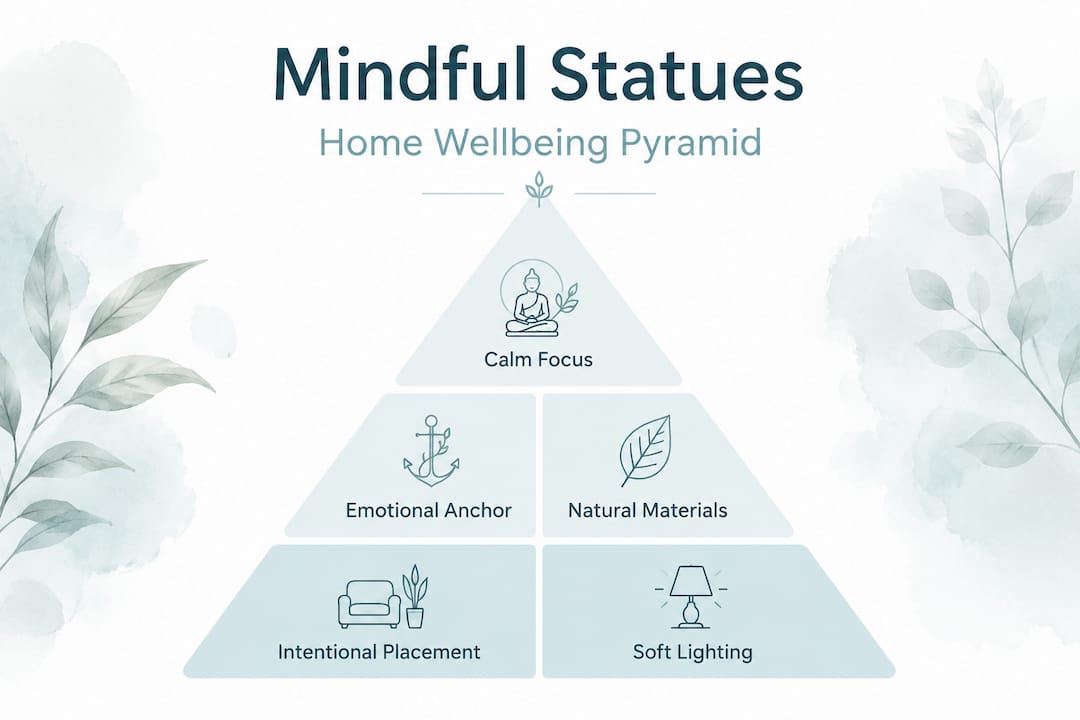
Using statues in modern design means recognising that decorative objects can be more than beautiful. They can be functional in the quietest and most personal sense, supporting your emotional equilibrium as reliably as any other wellbeing habit.
Selecting statues that reflect your mindfulness and spiritual style
Choosing a statue is a personal decision, and it is worth slowing down rather than reaching for the first thing that looks appealing. The material, scale, and style each speak differently to different people and different rooms.
Material selection is essential for indoor sculptures, with metals suited to contemporary spaces, while bronze and marble carry warmth and a sense of timeless sophistication. Here is how common materials translate into atmosphere:
| Material | Emotional quality | Best suited to |
|---|---|---|
| Stone or resin with stone finish | Grounded, ancient, calm | Traditional, Japandi, or natural interiors |
| Wood or driftwood | Warm, earthy, intimate | Scandi, boho, or rustic spaces |
| Bronze or aged metal | Authoritative, rich, contemplative | Classic, eclectic, or art-focused rooms |
| White or pale ceramic | Light, serene, unobtrusive | Minimalist, coastal, or modern interiors |
| Painted or gilded finishes | Celebratory, devotional, characterful | Eclectic or spiritually expressive spaces |
Style matters just as much as material. Abstract forms can feel quietly spiritual without being overtly religious, making them a comfortable choice if you want the energy without the iconography. Traditional figures like a seated or standing Buddha carry clear symbolic weight and suit spaces designed around intention and practice. If you are unsure where to begin, reading about what Buddha symbolises for mindfulness gives useful grounding before you invest.
Scale is the final variable. A small statue on a cluttered shelf risks being lost entirely. Give it room. If a piece holds meaning for you, treat it with the visual generosity it deserves by allowing some clear space around it. For further guidance on proportion, exploring statue sizing by room will help you avoid the most common mistakes. You can also explore how artisan makers approach limited edition ceramics for a broader understanding of how material and craft shape the value of a decorative piece.
Pro Tip: When styling with sculptures, group odd numbers of objects if your statue sits among other pieces on a surface. A statue flanked by a single candle holder and a small plant feels considered and calm. An even arrangement can feel stiff or symmetrical in a way that works against the organic mood you are trying to create.
Care and maintenance for lasting mindful statue presence
A statue that is dusty, faded, or sitting in the wrong light loses something of its presence. Caring for your statues is not a chore; it is an extension of the intention you have placed in them. Preserving your sculpture’s finish and appearance is straightforward when you establish a few simple habits.
Dust your statue regularly using a soft, dry cloth. For carved surfaces with texture, a soft paintbrush can reach into crevices without scratching. Keep the surface clean and you will notice how much more alive the piece looks, particularly under soft lighting.
Avoid placing statues in direct sunlight for extended periods. UV exposure gradually bleaches and weakens many materials, including painted resin, wood, and certain stone finishes. Similarly, avoid humid rooms like bathrooms unless the piece is explicitly designed for moisture exposure. A gentle environment extends the life of any surface finish and preserves the depth of colour and texture you chose the piece for.
Handle statues mindfully when moving or cleaning around them. Many pieces have delicate carved details that can chip or crack under careless contact. If you do need to move a statue, hold it from its base where the mass is most stable. For full guidance on statue care, returning to practical resources will keep your pieces in good condition season after season.
Pro Tip: Align your statue care with the change of seasons. Each equinox or solstice, take a few minutes to clean, reposition, and mindfully reconnect with your pieces. It becomes a small ritual that keeps your relationship with your decor intentional rather than habitual.
Why statues are essential yet underestimated in mindful home design
Most interior design advice treats statues as a finishing touch, something you add once the real work of choosing sofas and paint colours is done. We think that gets things the wrong way around.
A statue is not decoration layered over a room. It is an anchor. It gives a space emotional specificity that furniture, textiles, and lighting alone cannot provide. When someone walks into a room where a stone Buddha sits on a plinth beside a linen-covered chair, they feel something. Not just visually, but physically. The presence of a three-dimensional object with weight and meaning changes the quality of the air in a room in a way that is genuinely difficult to articulate but immediately felt.
What is often missed is how a statue shifts in feeling depending on light and angle. The same piece can feel energising in morning light and deeply calming by candlelight. This is not accidental. It is the nature of three-dimensional form. You are not decorating with a static object; you are introducing something that responds to its environment. That responsiveness is precisely what makes statues so powerful for creating genuinely mindful spaces.
Most people, when they feel their home lacks something, reach for another cushion or a new plant. Rarely do they consider that what the room is missing is presence. Not more things, but something with genuine weight. A meaningful statue, placed with care, addresses that absence more directly than almost any other single purchase you could make.
Mindfulness and home harmony through spiritual decor is not about creating a shrine. It is about curating a living environment that supports the quality of attention you want to bring to your daily life. Statues, more than almost any other decorative object, have the capacity to do exactly that.
Discover mindful statues to elevate your home decor
If these ideas resonate with you, Root & Still offers a curated collection of Buddha statues designed specifically to bring calm, beauty, and spiritual intention into your living space. Every piece is selected with both design and feeling in mind, so that what you bring home is more than a decorative object.
The standing welcome Buddha at one metre tall makes a genuinely striking entryway or living room anchor, creating that focal point presence we described above. If you prefer softer colour and a more contemporary feel, the turquoise praying Buddha brings a sense of devotion and quiet elegance. For spaces that favour natural, understated tones, the whitewash standing Buddha sits beautifully against linen, rattan, and pale stone backdrops. Browse the full collection at Root & Still and find the piece that feels like it belongs in your home.
Frequently asked questions
How do statues improve mindfulness in home decor?
Statues add three-dimensional form that engages both sight and a sense of physical presence, offering a natural point of restful focus that supports mindful attention in everyday living.
Where is the best place to position a statue in a UK home?
Entryways, near seating, and staircase landings are ideal positions because they ensure the statue becomes an immediate focal point, particularly when supported by a pedestal and thoughtful lighting.
Can statues positively affect mental health?
Yes. Biophilic art environments including sculptures have been shown to significantly reduce depression and anxiety symptoms over time, supporting stress reduction and attention restoration in everyday settings.
What materials for statues are best for mindfulness-focused interiors?
Natural materials such as stone, wood, and bronze bring warmth and groundedness, while metals suit contemporary interiors with their reflective quality; the right choice depends entirely on the emotional atmosphere you want to cultivate.
How should I care for my indoor statues to preserve their mindful presence?
Regular dusting and careful placement away from direct sunlight and humidity will protect the surface finish and texture, keeping your statue a lasting and beautiful presence in your home.


