

Choosing a stone garden sculpture feels simple until you’re standing in a garden centre surrounded by dozens of options, each promising to transform your outdoor space. The material, the style, the weight, the way it will age through a British winter — all of it matters more than it first appears. A well-chosen sculpture doesn’t just fill a corner; it gives your garden a quiet focal point, a sense of intention, and a presence that grows richer with every passing season. This guide walks you through everything you need to know to choose with confidence.
Key Takeaways
| Point | Details |
|---|---|
| Choose frost-resistant stone | Opt for frost-proof cast or granite sculptures to ensure long-lasting beauty through UK winters. |
| Patina enhances charm | Allow moss and lichen to develop naturally on cast stone for added character and serenity. |
| Style suits setting | Match sculpture type and placement—figurative, Buddha, or abstract—to your garden’s design for maximum impact. |
| Value meets durability | Cast stone offers affordability and resilience compared to pricier natural stones. |
How to choose the right stone for your garden sculpture
The material your sculpture is made from shapes everything: how long it lasts, how it looks in ten years, how much it costs, and how much effort you’ll spend maintaining it. Before you fall in love with a particular design, it’s worth understanding what lies beneath the surface.
The two main categories you’ll encounter are natural stone and reconstituted stone, also called cast stone. Common materials for garden sculptures include natural options such as marble, granite, limestone, sandstone, and travertine, alongside cast stone made from crushed limestone aggregate combined with cement. Each has a distinct personality and a different set of trade-offs.
Natural stone carries an undeniable authenticity. Marble is luminous and cool to the touch; granite is dense and almost indestructible; limestone develops a soft, creamy patina over time. These qualities are genuinely beautiful, but natural stone is heavy, expensive, and often requires careful sourcing. A large granite piece can weigh several hundred kilograms and carry a price tag to match.
Cast stone, by contrast, is engineered specifically for outdoor use. Reconstituted cast stone is frost-proof to between minus 15°C and minus 20°C, develops a natural moss and lichen patina within six to twelve months, and weighs between 15 and 180 kilograms depending on size. It also costs roughly 70 to 80 per cent less than equivalent natural stone pieces, making it the practical choice for most UK gardens.
Maintenance is another consideration worth thinking through carefully. Cast stone actually benefits from being left alone. Moss and lichen settle into its surface and give it the appearance of something genuinely old and rooted in the garden. Sealing it would prevent this natural ageing process, so it’s best avoided.
Pro Tip: If you want the look of aged stone without waiting years for it to develop, position your cast stone sculpture in a slightly shaded, north-facing spot. The moisture encourages moss growth much faster than a sunny, exposed position would.
Budget matters too. Cast stone offers excellent value without sacrificing quality or longevity. For most home decor enthusiasts working with a considered budget, it represents the most sensible starting point.
Types of stone garden sculptures: Features and styles
With the key selection criteria in mind, it helps to look more closely at the individual stone types and what each one brings to a garden setting.
Natural stone options each have their own character. Granite is the hardest and most durable, virtually impervious to frost and staining. Marble is elegant but more porous, making it better suited to sheltered positions. Limestone weathers beautifully in the British climate, softening at the edges and developing a warm, honeyed tone. Sandstone is lighter in weight and easier to carve into intricate detail, though it can be more susceptible to moisture over time. Travertine, with its distinctive pitted surface, brings a Mediterranean warmth that works well in contemporary garden designs.
Reconstituted stone is available in regional varieties that echo the character of natural British stone. Cotswold cast stone has a warm, golden tone that suits cottage and country gardens. Portland cast stone is cooler and paler, lending itself to formal or contemporary spaces. These regional finishes allow you to match a sculpture to the existing stone in your garden walls, paths, or paving, creating a sense of continuity and belonging.
One stone type deserves a special mention for those drawn to period and heritage gardens. Coade stone, an artificial terracotta developed in the eighteenth century, was widely used in Georgian gardens and remains remarkably durable. Surviving examples demonstrate a lifespan that far exceeds most modern materials, and its crisp, detailed surface has barely softened over centuries. It is now rare and largely found in historic settings, but understanding its legacy helps you appreciate why material quality matters so deeply.
For UK buyers seeking cast stone sculptures from established makers, companies like Haddonstone have long produced frost-proof pieces that develop genuine character over time. Their work sits within a tradition of British garden ornamentation that values longevity and quiet beauty over novelty.
| Stone type | Frost resistance | Lifespan | Patina development | Relative cost |
|---|---|---|---|---|
| Granite | Excellent (to -25°C+) | 100+ years | Slow, minimal | Very high |
| Marble | Moderate | 50-80 years | Moderate | High |
| Limestone | Good | 40-70 years | Good, warm tone | Medium-high |
| Cast stone | Very good (to -20°C) | 30-50 years | Excellent (6-12 months) | Low-medium |
| Sandstone | Fair | 20-40 years | Good | Medium |
If you are drawn to a sculpture with spiritual resonance, a classic timeless Buddha statue in cast stone brings both the aesthetic warmth of aged stone and the symbolic calm of the Buddha form, making it a particularly considered choice for a garden designed around serenity.
Pro Tip: When comparing stone sculptures in person, run your hand across the surface. Cast stone should feel slightly granular and cool, similar to natural limestone. If a piece feels hollow or lightweight, it may be resin dressed to look like stone, which will not age in the same way.
Comparing stone sculptures: Durability, cost, and aesthetics
You’ve seen the range of stones available, but how do they stack up against each other for longevity, style, and cost in the UK climate?
| Stone type | Expected lifespan | Frost rating | Moss/patina | Maintenance | Cost range |
|---|---|---|---|---|---|
| Granite | 100+ years | Excellent | Minimal | Very low | £££££ |
| Marble | 50-80 years | Moderate | Moderate | Low-medium | ££££ |
| Limestone | 40-70 years | Good | Good | Low | £££ |
| Cast stone | 30-50 years | Very good | Excellent | Very low | ££ |
| Sandstone | 20-40 years | Fair | Good | Medium | ££-£££ |
Durability benchmarks confirm that granite exceeds 100 years of outdoor life and withstands temperatures below minus 25°C, making it the most resilient natural option. Cast stone, while not quite matching granite’s lifespan, develops a patina that actually enhances its aesthetics over time, and it requires no sealant to maintain its appearance.
“Natural stone offers unique character and premium longevity, but cast stone provides consistent quality, detail, and affordability for most UK home decor enthusiasts.” — Garden Ornaments
The visual effect of weathering is something many buyers underestimate when making their initial choice. A freshly cast stone Buddha placed in a garden in spring will look noticeably different by autumn. By the following year, it will carry the soft grey-green tones of moss and lichen that make it feel as though it has always belonged there. This natural ageing is one of cast stone’s most appealing qualities, and it is something that resin, which typically lasts only five to ten years outdoors, simply cannot replicate.
For those who want a sculpture with a distinctive colour that holds its character over time, a turquoise stone Buddha sculpture offers a beautiful alternative. The colour is embedded into the finish rather than painted on, so it weathers gracefully rather than peeling or fading in an unsightly way.
Cost is often the deciding factor, and it is worth being honest about what you are getting at each price point. A granite piece will outlast your garden itself. A cast stone piece will outlast most garden redesigns and look increasingly beautiful as it ages. For the majority of UK gardens, cast stone represents the most thoughtful balance of quality, character, and value.
Choosing the right style and placement for serenity
Once you’ve chosen your ideal stone, selecting the right sculpture style and its placement will elevate your whole garden design.
Garden sculptures broadly fall into two categories: figurative and abstract. Figurative pieces, such as classical figures, animals, and Buddha forms, tell a story and create an immediate emotional response. Abstract pieces tend to suit modern and minimalist gardens, where clean lines and negative space are part of the design language. Neither is inherently superior; the right choice depends on the atmosphere you want to create and the existing character of your garden.
Placement methodologies follow well-established principles. Classical and figurative pieces work best at the end of a path or at the centre of a formal garden layout, where they draw the eye along a clear axis. Animal sculptures, particularly those with a welcoming posture, suit entrances and gateways. Buddha figures are most powerful in quieter, more sheltered corners where a sense of stillness can gather around them. Abstract pieces often work well as centrepieces on open lawns, where their form can be appreciated from multiple angles.
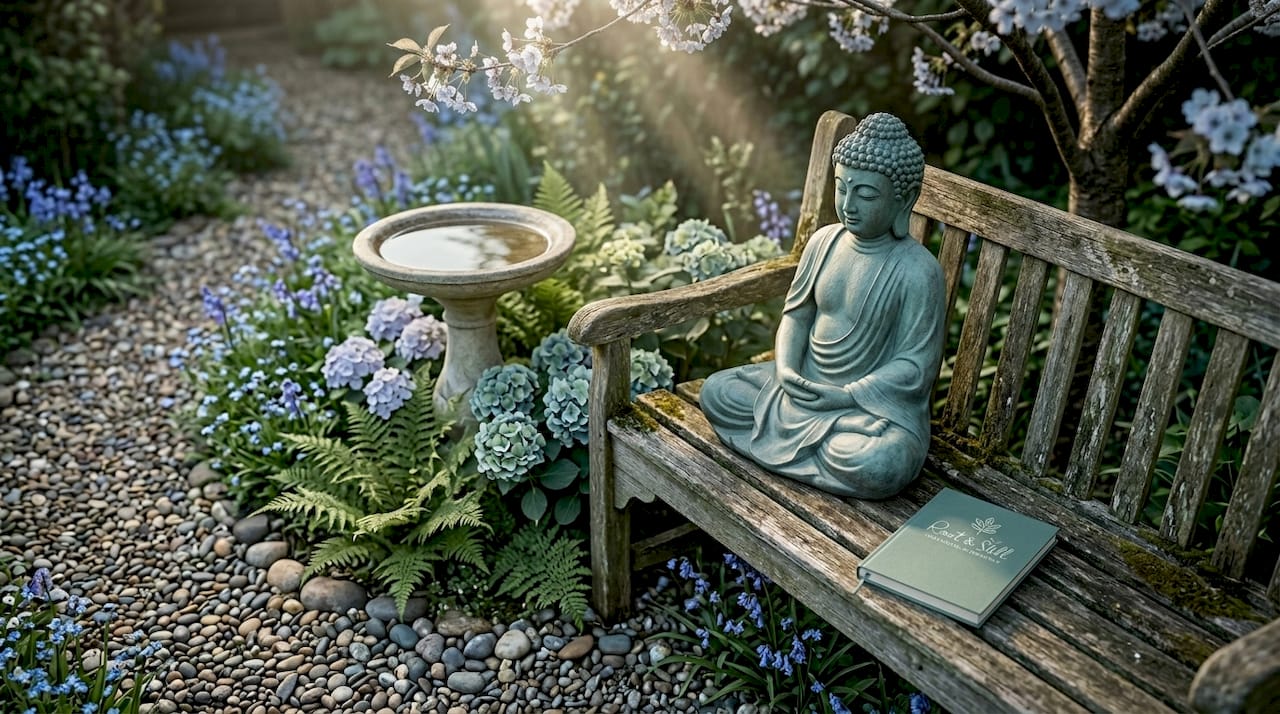
For serene UK gardens, a seated Buddha in Cotswold cast stone blends naturally with surrounding planting and creates a genuine sense of calm. Pairing it with a gravel bed, a small water feature, or low-growing ground cover amplifies this effect considerably. The combination of stone, water, and soft planting is the foundation of a zen-inspired garden corner that feels genuinely restful rather than contrived.
“The most effective garden sculptures are those that appear to have chosen their own position, as though the garden grew up around them rather than the other way around.”
A few practical considerations will help you place your sculpture with confidence. Think about sightlines from inside the house, particularly from a kitchen or living room window. A sculpture that can be seen from indoors extends the sense of the garden into the home, especially during the quieter winter months when you spend less time outside. Consider also how the light falls across the piece at different times of day. Stone sculptures often look most beautiful in the low, golden light of early morning or late afternoon, when shadows reveal their texture and form most clearly.
A white Buddha garden statue placed against dark evergreen planting creates a striking contrast that draws the eye without feeling jarring. The pale stone seems to hold the light, giving the garden a calm, luminous quality even on overcast days, which, in the UK, is rather useful.
Our perspective: What truly transforms a UK garden with stone sculpture
Here is something that most buying guides won’t tell you: the stone type matters far less than where you place the piece and how much space you give it to breathe.
We see many gardens where a beautiful sculpture has been tucked into a crowded border, surrounded by competing plants and ornaments, and its presence is almost entirely lost. The sculpture hasn’t failed. The placement has. Stone needs space around it, a visual pause, a moment of stillness in the landscape.
The natural patina that develops on cast stone over months and years is not a compromise. It is genuinely one of the most beautiful things that can happen to a garden. We would encourage you to resist the urge to clean or seal your sculpture, and instead let the British climate do what it does best. Rain, moss, lichen, and time are extraordinary collaborators.
Traditional advice often focuses on matching stone colour to existing garden materials, and while that is sensible, it can lead to overly cautious choices. Sometimes the most powerful thing a sculpture can do is contrast gently with its surroundings. A pale whitewash Buddha garden piece against a dark yew hedge, or a warm golden cast stone figure beside a grey slate path, creates a quiet tension that makes both elements more interesting.
The deeper truth is that a stone sculpture works best when it reflects something of your own sensibility. Not the trend of the moment, not what looks impressive in a catalogue, but what genuinely resonates with how you want to feel when you step outside. Serenity in a garden is not a style choice. It is a practice, and the right sculpture can support that practice every single day.
Discover your perfect garden sculpture
If this guide has inspired you to bring a stone sculpture into your garden, Root & Still offers a carefully curated selection of Buddha and classic-style pieces designed to bring genuine stillness and beauty to outdoor spaces across the UK. Each piece is chosen for its quality, its character, and its ability to age gracefully through British seasons. Whether you are looking for a commanding Buddha statue 1m high to anchor a garden entrance or a more intimate classic Buddha sculpture for a sheltered corner, you’ll find pieces that feel considered rather than generic. Explore the collection and find the sculpture that feels right for your space.
Frequently asked questions
Which stone type lasts longest outdoors in the UK?
Granite offers the longest outdoor lifespan, often exceeding 100 years and withstanding even extreme frost well below minus 25°C, making it the most resilient choice for permanent garden features.
What’s the benefit of cast stone compared to natural stone?
Cast stone offers excellent frost resistance and patina development, and it is 70 to 80 per cent more affordable than natural stone, making it the most practical and beautiful choice for most UK gardens.
How should I clean and care for my stone garden sculpture?
Most stone sculptures need only gentle brushing or a light rinse with water; it is important to avoid sealing cast stone so that the natural moss and lichen patina can develop freely and enhance the piece’s character over time.
Where should I place stone sculptures for the best effect?
Classical figures suit path ends, animal sculptures work well at entrances, and Buddha statues are most powerful in quiet, sheltered corners, ideally elevated on a pedestal to bring them to eye level and give them a sense of presence.


