Buddha statues are symbolic representations of the Buddha’s spiritual states, communicating specific meanings through posture, hand gesture, and accompanying detail. Far from decorative objects alone, each statue functions as a visual teaching, encoding centuries of Buddhist philosophy into a single, still form. Understanding buddha statue meaning poses explained through these three layers gives you a far richer appreciation of any piece you encounter, whether in a gallery, a temple, or your own home. This guide covers the primary postures, key hand gestures known as mudras, and the contextual details that complete each statue’s meaning, so you can read any figure with confidence and choose pieces that genuinely resonate.
What are the main Buddha postures and their meanings?
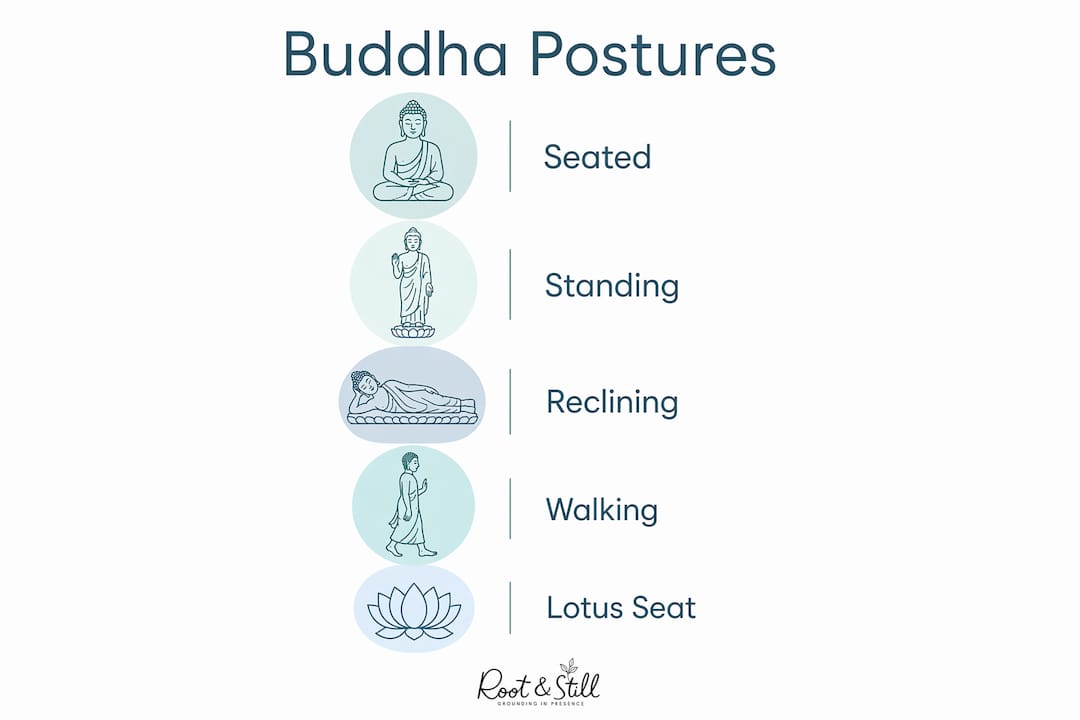
Posture is the first layer of meaning in any Buddha statue, establishing the broad emotional and spiritual tone before you consider anything else. The three primary forms are seated, standing, and reclining, and each carries a distinct symbolic weight.
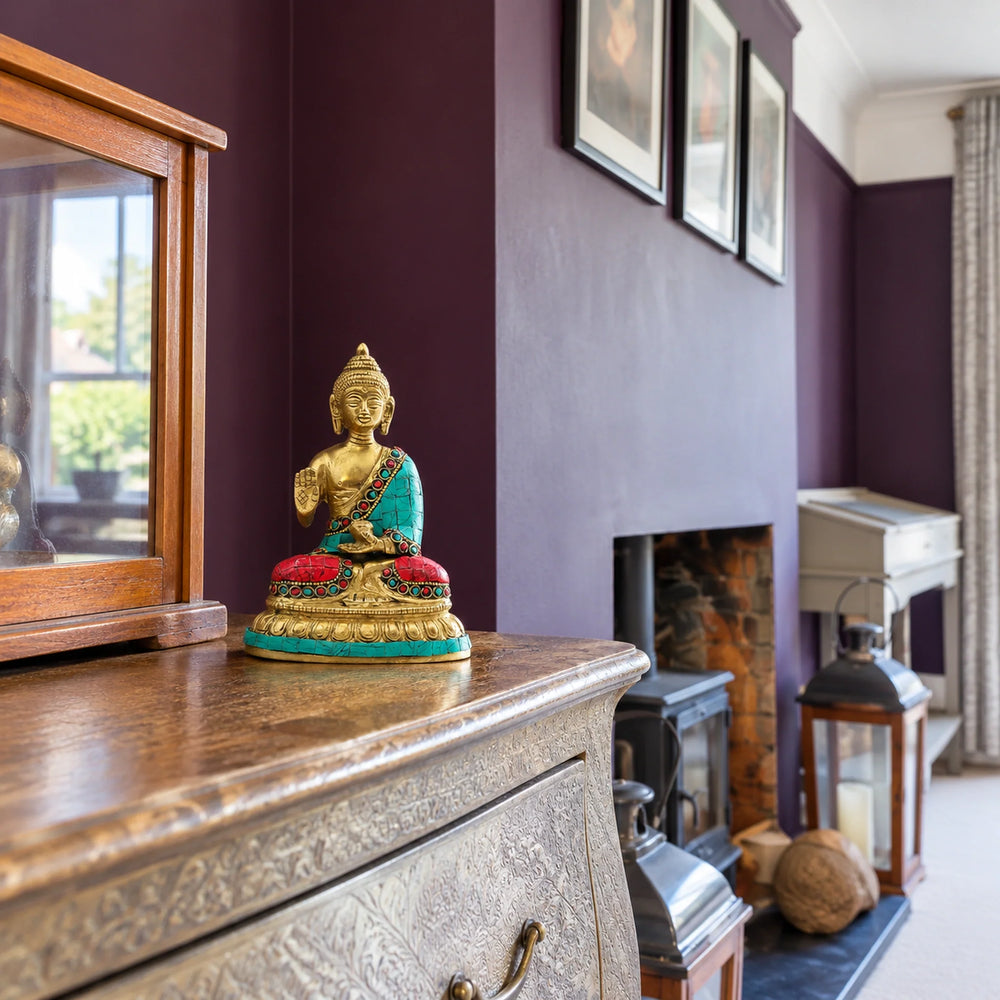
Seated postures are the most common form you will encounter. They represent concentration, inner stability, and the meditative stillness that characterises the Buddha’s path to enlightenment. A seated figure invites you to slow down and settle, making it a natural choice for meditation rooms, reading corners, or any space where you want the atmosphere to feel grounded and composed.

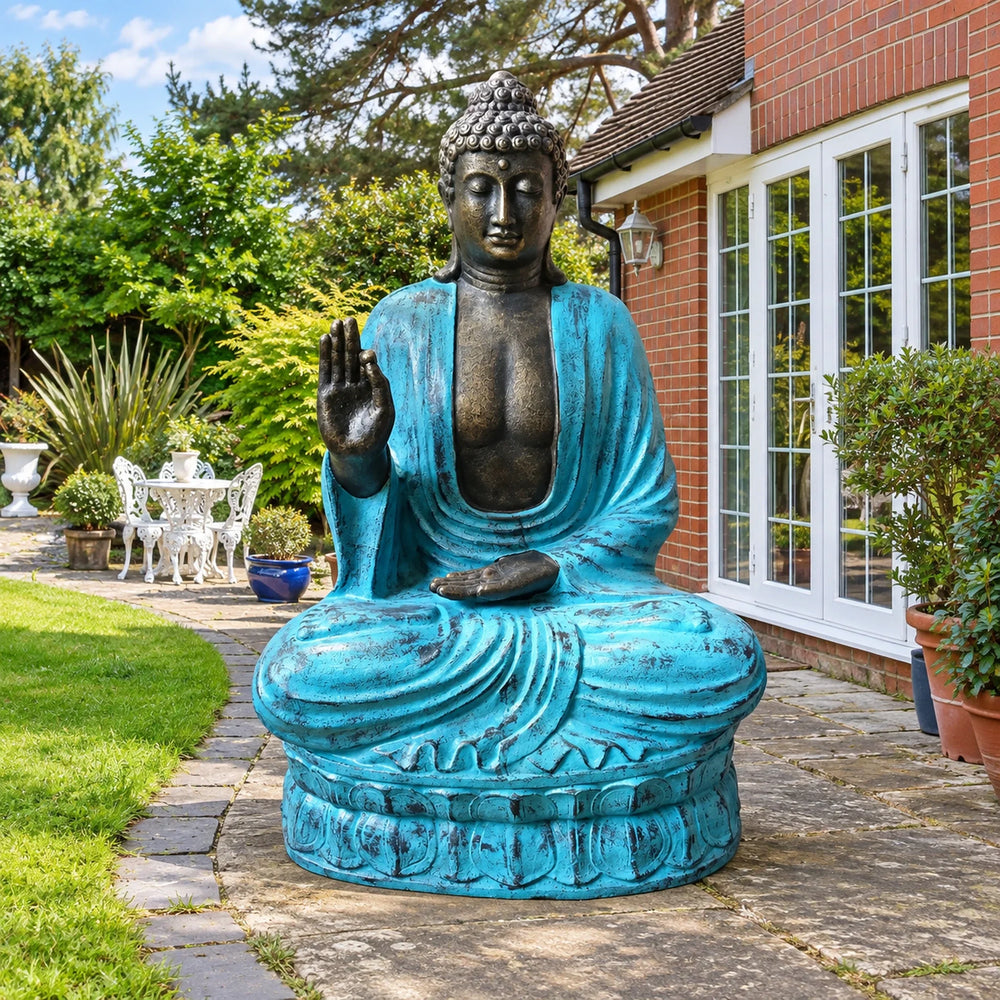
Shop now: Large Outdoor Garden Thai Buddha Statue - Antique Gold - 96cm
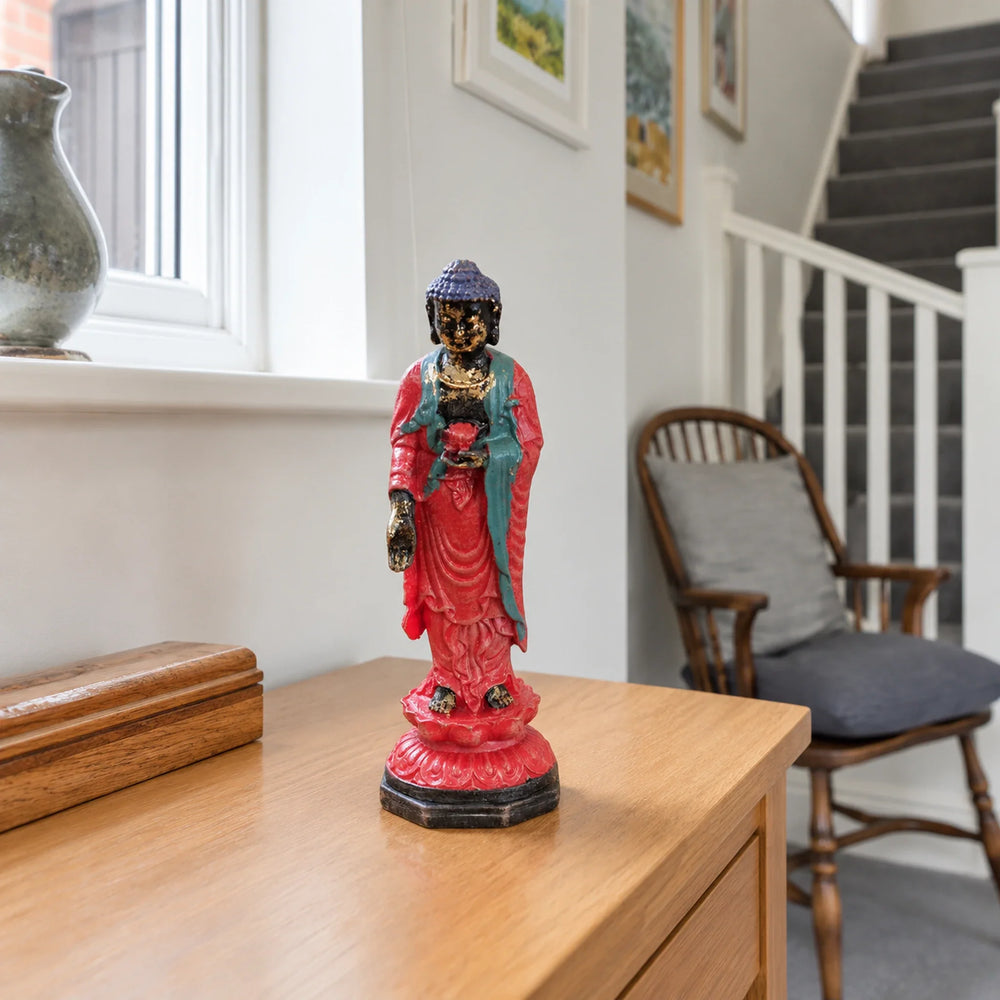
Standing postures carry a more active energy. Standing figures signify protection, welcoming, or the act of teaching, depending on the hand gesture accompanying them. With both feet planted firmly, the standing Buddha encourages generosity and fearlessness in the viewer, projecting a sense of calm authority rather than withdrawal.
Reclining postures hold perhaps the most profound symbolism of all. The reclining Buddha represents the Buddha’s final moments before parinirvana, his peaceful passing beyond the cycle of rebirth. Rather than conveying sadness, the reclining form communicates release, acceptance, and the quiet completion of a life fully lived. It is a statue that suits spaces where you want to encourage letting go and a sense of deep peace.
- Seated: meditation, inner stillness, stability
- Standing: protection, welcoming, active generosity
- Reclining: parinirvana, release, acceptance of impermanence
Pro Tip: When you first encounter a Buddha statue, step back and identify the posture before examining any other detail. Posture sets the entire interpretive frame, and reading it first prevents the common mistake of misreading a gesture in isolation.
How do Buddha hand gestures (mudras) define specific meanings?
Mudras are the hand gestures that give each Buddha statue its precise spiritual meaning. The word mudra comes from Sanskrit and translates roughly as “seal” or “mark,” and these gestures function as a visual language that communicates the Buddha’s inner state at a specific moment. Once you learn to read them, the difference between two seemingly similar seated statues becomes immediately clear.
The five mudras you will encounter most often are:
-
Dhyana mudra (meditation). Both hands rest in the lap, palms facing upward, one placed gently on the other. This gesture signals inner calm and collectedness, representing the meditative absorption the Buddha entered before enlightenment. It is the most serene of all gestures.
-
Bhumisparsha mudra (earth-touching). The right hand reaches down to touch the earth, while the left rests in the lap. This gesture signifies calling the earth to witness the Buddha’s enlightenment, making it one of the most historically significant poses in Buddhist art. You will recognise it in many classic Thai and Burmese statues.
-
Dharmachakra mudra (teaching). Both hands are raised to chest height, with the thumbs and index fingers forming circles. This gesture represents the Buddha’s first sermon after enlightenment, the moment he set the wheel of the Dharma in motion. It conveys wisdom being actively shared.
-
Abhaya mudra (reassurance or fearlessness). The right hand is raised, palm facing outward. A raised palm means reassurance and protection, offering the viewer a sense of safety and calm. This mudra appears frequently in standing statues and is one of the most immediately recognisable.
-
Varada mudra (giving or generosity). The right hand faces downward with an open palm, sometimes with fingers extended toward the ground. This gesture symbolises the offering of blessings, compassion, and material or spiritual gifts to all beings.
Palm orientation matters considerably. A palm facing outward projects energy toward the viewer, as in the abhaya mudra, while a palm facing inward or downward draws energy toward the earth or the statue itself. Finger placement adds further nuance: fingers held together suggest unity and focus, while slightly separated fingers indicate a more open, receptive state.
Pro Tip: Look at both hands together, not just the dominant one. Many statues combine two mudras simultaneously, one in each hand, and the combined meaning is always richer than either gesture read alone.
What additional features affect Buddha statue symbolism?
Beyond posture and mudras, a range of secondary details shape the full meaning of any Buddha statue. Facial expressions convey different emotional tones: a slight downward gaze suggests inward contemplation, while a gentle smile communicates compassion and approachability. Eyes that are half-closed indicate meditative focus, whereas fully open eyes suggest active awareness or teaching.
Crowns and jewellery are particularly telling. A figure wearing an elaborate crown or ornate jewellery is almost certainly a bodhisattva rather than the historical Buddha. Bodhisattvas are enlightened beings who remain in the world to guide others, and their adornment reflects their royal spiritual status. The historical Buddha, by contrast, is typically depicted with simple robes and the ushnisha, a cranial protrusion representing wisdom, atop his head.
The objects a statue holds or the surface it rests upon also carry weight. Consider the following:
| Feature | Symbolic meaning |
|---|---|
| Lotus seat | Composure, purity, spiritual unfolding |
| Alms bowl | Simplicity, renunciation, monastic life |
| Dharma wheel | Teaching, the path to liberation |
| Flame or jewel | Enlightenment, spiritual radiance |
| Attendant figures | Compassion extended to all beings |
Regional style and material also influence how a statue presents itself without altering its core identity. A Thai bronze seated Buddha and a Japanese stone seated Buddha may look quite different in texture, colour, and proportion, yet both communicate the same meditative meaning if the posture and mudra align. What changes is the aesthetic register, not the symbolic content.
How to accurately identify and interpret a Buddha statue’s pose and meaning
Reading multiple elements together yields the most accurate interpretation of any Buddha statue. Focusing on a single feature risks misreading the whole. The following approach gives you a reliable method for any statue you encounter.
-
Examine the posture first. Is the figure seated, standing, or reclining? This establishes the broad symbolic context before you look at anything else.
-
Identify the hand gestures. Look at both hands. Note the position of the palms, the direction they face, and how the fingers are arranged. Match what you see to the five primary mudras described above.
-
Read the secondary details. Check for crowns, jewellery, objects held, and the surface the figure rests upon. These details confirm or refine the meaning suggested by posture and gesture.
-
Consider the regional context. If you know the statue’s origin, whether Thai, Tibetan, Chinese, Japanese, or Gandharan, this helps you interpret stylistic choices that might otherwise seem ambiguous.
-
Cross-reference with reputable sources. Museums such as the British Museum and the Victoria and Albert Museum maintain detailed online catalogues with scholarly descriptions of Buddhist art. These are reliable references when you want to verify an interpretation.
The most common mistake is over-focusing on a single dramatic detail, such as a striking facial expression or an unusual object, while overlooking the posture and mudra that frame it. A serene face on a standing figure with an earth-touching gesture, for example, would be an unusual and potentially misidentified combination worth investigating further.
Pro Tip: When choosing a statue for your home, match its meaning to your intention for the space. A meditation mudra suits a quiet corner where you practise stillness. An abhaya mudra near an entrance creates a welcoming, protective atmosphere for anyone who crosses the threshold.
How do different Buddha statues suit personal spaces and décor?
Statues communicate moods that influence how they settle into a room, and aligning a statue’s meaning with your intention for a space produces a far more coherent and restful result than choosing purely on visual appeal. A statue that embodies stillness belongs in a meditation room or bedroom. One that radiates generosity or welcome suits an entrance hall or living room where people gather.
Material and size shape the atmosphere as much as the pose does. A large stone or resin seated Buddha anchors a garden or a generous living room, giving the space a sense of weight and permanence. A smaller piece in a warm, natural finish, whether in aged terracotta or a matte stone effect, softens a shelf or side table without dominating it. You can explore statue size guidance to find the right scale for each room before you commit to a piece.
Pairing a statue with natural materials deepens its presence in a room. Linen, rattan, raw wood, and smooth stone all share a quality of quiet restraint that allows a Buddha figure to feel settled rather than placed. A meditation Buddha on a raw wood shelf beside a simple candle holder creates an atmosphere that is genuinely restful, not merely decorative.
The direction a statue faces also contributes to the overall feeling of a space. Positioning a welcoming or teaching figure so it faces the room’s main entrance draws calm energy inward. A guide to statue placement can help you think through these choices with more precision.
Key takeaways
Understanding Buddha statue meaning requires reading posture, mudra, and secondary detail together, since no single element tells the complete story.
| Point | Details |
|---|---|
| Posture sets the frame | Identify seated, standing, or reclining form first to establish the statue’s broad symbolic meaning. |
| Mudras carry precise meaning | Learn the five primary hand gestures to distinguish meditation, enlightenment, teaching, reassurance, and generosity. |
| Secondary details confirm meaning | Crowns, lotus seats, and objects held refine interpretation and distinguish bodhisattvas from the historical Buddha. |
| Read all elements together | Focusing on one detail in isolation is the most common cause of misinterpretation. |
| Match meaning to space | Align a statue’s symbolism with your intention for the room to create a genuinely coherent atmosphere. |
Why I think most people read Buddha statues back to front
When I first started paying close attention to Buddha statues, I made the same mistake almost everyone does. I looked at the face first. A serene expression felt like the whole message, and I stopped there. It took time to realise that the face is actually the last thing to read, not the first. Posture and mudra carry the primary meaning; the face simply confirms the emotional register.
What surprised me most was how much a statue’s presence in a room shifts once you understand what it is actually communicating. A meditation Buddha placed in a busy hallway creates a quiet friction, a stillness that does not quite belong there. Move it to a bedroom corner, and the whole room feels more settled. That is not superstition. It is the result of aligning symbolic meaning with spatial intention.
The other thing worth saying is that you do not need to be a Buddhist scholar to engage respectfully and meaningfully with these pieces. Curiosity and a willingness to look carefully are enough. The symbolism is generous. It rewards attention without demanding expertise. Start with posture, learn the mudras, and let the rest unfold gradually. The statues have been communicating patiently for centuries. They will wait.
— Dhriti
Find a Buddha statue that speaks to your space
Rootandstill curates a range of Buddha statues and mindful décor pieces designed to bring genuine stillness into everyday rooms. Whether you are drawn to the grounded calm of a seated meditation Buddha or the layered symbolism of a feng shui Buddha set, each piece is selected for both its aesthetic quality and its symbolic integrity. The collection spans a range of sizes, finishes, and styles, so you can find a figure that suits your space and your intention without compromise. Browse the full range at Rootandstill and take the time to choose a piece that genuinely resonates.
FAQ
What does a seated Buddha statue mean?
A seated Buddha statue represents meditation, inner stillness, and spiritual stability. It is the most common posture in Buddhist art and reflects the Buddha’s state during his path to enlightenment.
What is the most auspicious Buddha hand gesture?
The abhaya mudra, with the right palm raised and facing outward, is widely regarded as the most reassuring gesture, signifying protection and the dispelling of fear. The varada mudra, with an open downward palm, is equally positive, representing generosity and the giving of blessings.
How do I tell a Buddha statue from a bodhisattva statue?
A figure wearing a crown or elaborate jewellery is almost certainly a bodhisattva rather than the historical Buddha. The historical Buddha is typically depicted in simple robes with the ushnisha, a raised cranial protrusion, as his primary distinguishing feature.
What does a reclining Buddha represent?
The reclining Buddha represents the Buddha’s peaceful passing into parinirvana, his final release from the cycle of rebirth. It symbolises acceptance, impermanence, and the quiet completion of an enlightened life.
Can I place a Buddha statue anywhere in my home?
You can place a Buddha statue in most rooms, but aligning its symbolic meaning with the purpose of the space produces the most harmonious result. A meditation mudra suits quiet, private areas, while a welcoming or teaching gesture works well near an entrance or in a shared living space.