

Finding a genuinely well-made Buddha figurine is harder than it looks. The market is flooded with mass-produced pieces that mimic the surface appearance of quality without any of the substance beneath it. If you care about mindfulness, interior atmosphere, or giving a gift that carries real meaning, knowing how to spot a quality Buddha figurine matters enormously. This guide walks you through everything from craftsmanship markers and material choices to respectful placement and common buying mistakes, so you can choose with confidence and bring something truly settled into your home.
Key takeaways
| Point | Details |
|---|---|
| Assess craftsmanship first | Look for symmetry, crisp carving, and a stable base as primary markers of genuine quality. |
| Match material to placement | Choose sandstone or bronze for durability outdoors; quality resin or stone for indoor calm. |
| Colour shapes the mood | White adds luminosity, brown brings warmth, and blue promotes calm. Match colour to the room’s feeling. |
| Elevation and placement matter | Position your figurine at least 76 cm from the floor and away from cluttered or low-energy areas. |
| Verify before you buy | Check iconographic accuracy, material weight, and seller credibility before committing to a purchase. |
Spotting a quality Buddha figurine: craftsmanship and materials
The single most reliable way to identify a quality piece is to look closely at the carving. Craftsmanship markers include symmetry, crisply carved details, a stable base, and authentic iconographic gestures. A well-made figurine holds its proportions evenly from every angle. The facial features settle into a state of calm rather than looking blank or slightly lopsided, and the lines of the robe or the curl of the fingers feel deliberate and assured.

Shop Now: Hand Carved Wooden Buddha Sitting Statue Whitewash - 30cm Welcome
Run your hand along the surface. Quality pieces made from stone, bronze, or premium resin carry a certain weight and texture that cheaper imitations cannot replicate. Natural materials like sandstone and bronze age gracefully and carry a tactile honesty that plastic simply does not. When you hold a hollow plastic Buddha, it feels disposable. A piece cast from proper resin or carved from stone feels anchored, like it belongs.
Beyond the surface feel, check the iconography. Traditional Buddha postures and mudras carry specific meanings, and a quality piece will represent them accurately. The Dhyana mudra, where both hands rest open in the lap, signals meditation. The Abhaya mudra, with the right hand raised and palm outward, conveys protection and peace. When a figurine garbles these gestures or combines them incorrectly, it signals a manufacturer who copied an image without understanding its source.
Look at the base, too. A quality piece sits flat without rocking. The underside should be cleanly finished, not raw or crumbling. Small details like the texture of the lotus petals on a seated Buddha, or the clean transition between the figure’s neck and shoulders, reveal the care taken at every stage of production.
Pro Tip: Turn the figurine upside down in the shop or examine product photography of the base when buying online. A rough, unfinished underside is one of the clearest signs of mass production cut corners.
Choosing by size, colour, and material
Once you feel confident about craftsmanship, the next consideration is how the piece will live in your space. Size is often the first instinct, but colour choice can impact interior atmosphere more decisively than scale. A small white Buddha on a dark linen shelf can command a room. A large brown figure on a warm terracotta wall can feel like it has always been there.
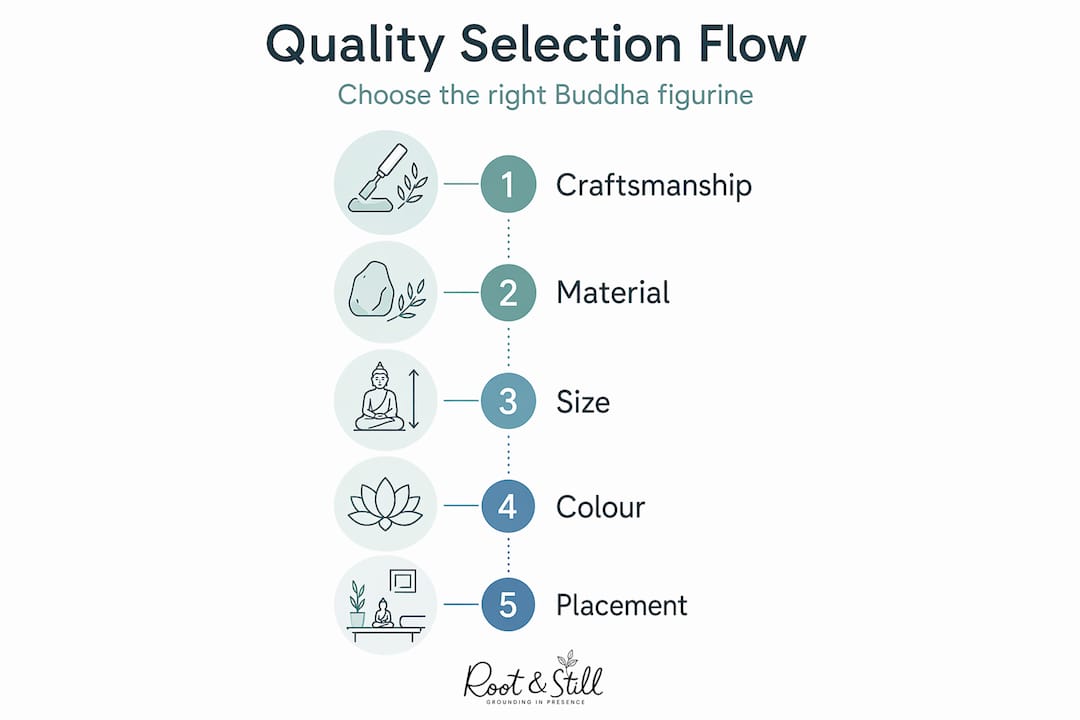
The table below offers a practical reference for matching colour to room feel.
| Colour | Mood effect | Best setting |
|---|---|---|
| White | Luminous, clean, and spacious | Dark walls, minimal interiors, meditation rooms |
| Black | Bold contrast, focused presence | Pale walls, modern or industrial spaces |
| Brown or sandstone | Warm, grounded, organic | Earthy palettes, living rooms, garden corners |
| Blue or turquoise | Calm, cool, and expansive | Bathrooms (on a shelf), bedrooms, coastal rooms |
Colour symbolism varies in its emotional impact depending on the backdrop, so it is worth considering the walls, furniture, and light in the room before selecting. A turquoise figurine can feel serene against cream walls and overwhelming against bold green ones.
For placement outdoors, material choice becomes a question of survival as much as aesthetics. White resin figurines placed in exposed gardens require frequent sealing and a sheltered position to prevent accelerated weathering, while sandstone finishes hold up considerably better over time. For indoor use, the choice is broader. Stone and bronze carry longevity and presence. High-quality cold-cast resin, when well made, can mimic stone convincingly and is lighter to position and reposition as your space evolves.
For guidance on choosing the right size for each room, it helps to think about focal points rather than filling space. A figurine placed at eye level on a shelf invites contemplation. One positioned on the floor in a corner gives the room a quiet anchor without demanding attention.
Pro Tip: When buying as a gift, opt for a medium-sized piece in a neutral, warm tone like sandstone or aged bronze. It works across more interior styles and feels considered rather than imposing.
Placing your figurine with care
Finding the right spot for your Buddha figurine is as significant as choosing the piece itself. Proper elevation of around 76 cm from the floor is the standard recommended in respectful modern decor practice, keeping the figure above everyday clutter and at or near eye level when seated.
Here are the core principles for placement that holds both culturally and aesthetically:
- Position the figurine on a clean, stable surface such as a shelf, console table, or dedicated altar space.
- Face the figure towards the room rather than towards a wall, so its presence can be felt as you move through the space.
- Keep the area around it uncluttered. Give the piece room to breathe.
- Avoid placing it in bathrooms, directly on the floor, or in spaces associated with heavy traffic and distraction.
- If you use it in a meditation space, position it at a point you naturally rest your gaze during practice.
Placement away from low-energy areas like laundry rooms, bathrooms, or cluttered corners is not superstition. It is a reflection of the respect you bring to the object and, by extension, to your own space. A Buddha figurine for meditation works best when the environment around it supports stillness, not chaos.
From an interior design perspective, the figurine functions as a focal anchor. Pairing it with natural elements like a linen runner, a small candle, or a single stem in a stone vase deepens the sense of calm without overworking the arrangement. Read more about how statues shape a mindful home to build a fuller picture of the space around your chosen piece.
Red flags and quality checks before you buy
Even with the best intentions, it is easy to be misled when buying decorative Buddha figurines online or in a busy shop. Knowing what to look for before you commit can spare you real disappointment.
Signs that a figurine is low quality or mass-produced include:
- A noticeably light weight for its size, suggesting hollow or thin-walled construction
- Seam lines visible along the sides of the figure where mould halves have been joined carelessly
- Blurred or softened facial detail, particularly around the eyes and mouth
- Iconographic inconsistencies, such as incorrect hand gestures or a posture that does not correspond to any traditional form
- Paint applied unevenly or flaking at the edges of carved details
Authenticity can be assessed through a combination of craftsmanship detail, material weight, and accurate cultural iconography. A seller who cannot explain what posture the figurine depicts or what the hand gesture signifies is a seller who has not spent time understanding their stock.
When buying online, read the product description carefully. Terms like “handcrafted,” “hand-carved,” or “artisan-made” should be supported by photography that shows texture, tool marks, and natural variation. If every piece in a range looks absolutely identical and flawless, it is almost certainly produced by machine rather than by hand. Natural variation in tone, texture, or surface patina is a sign of authenticity, not a flaw.
Pro Tip: Ask the seller directly about the material and origin of the piece. A confident, detailed answer suggests genuine knowledge. A vague or deflecting response is worth taking seriously as a warning sign.
Quality figurines blend cultural appreciation with mindful intention rather than serving as mere fashion accessories. When the seller shares that perspective, you are likely in the right place.
My honest view on what quality really means
I have spent a long time around Buddha figurines, both as objects of aesthetic interest and as pieces that carry genuine presence in a room. What I have come to believe is that the quality of a Buddha figurine is not simply a function of price or material grade. It is about whether the piece was made with care and whether you receive it with the same.
I have seen expensive bronze figures placed carelessly on bathroom floors and modest stone pieces positioned with such thought and attention that they transformed a corner of a flat into somewhere genuinely restful. The commitment to a clean, calm, respectful space around the figurine matters more than what you paid for it.
That said, buying a poorly made imitation does not honour the intention behind it. A piece that chips at the first touch, whose face holds no expression of stillness, gives you nothing to rest your attention on. There is real value in choosing something that will age well, hold its form, and feel settled in your home for years. My honest advice is to spend a little more on fewer, better pieces. Let one good figurine anchor a corner of your home rather than filling shelves with pieces that feel weightless in every sense of the word.
See the meaning behind thoughtful gifting for more on why the right piece given with care carries something beyond its physical form.
— Root
Explore Rootandstill’s curated collection
At Rootandstill, every Buddha figurine is chosen for its craftsmanship, presence, and the way it settles into a real home rather than simply filling space. The collection spans sizes and finishes suited to living rooms, garden corners, and dedicated meditation areas. The standing Buddha statue at one metre tall brings a calm focal point to larger spaces, while the turquoise praying Buddha offers a striking yet serene presence in colour-led interiors. Every order is packed with care and ships free, so the piece arrives in the same spirit it was chosen. Whether you are investing in your own space or finding a buddha statue gift idea for someone you care about, Rootandstill makes it straightforward to choose with confidence.
FAQ
What makes a Buddha figurine high quality?
High-quality Buddha figurines display symmetry, precisely carved detail, accurate iconography, and a stable base. Natural materials like stone, sandstone, or bronze indicate genuine craftsmanship, while hollow construction and blurred detail suggest mass production.
How do I choose the right colour Buddha statue for my home?
Colour choices should reflect the mood you want the room to carry. White adds luminosity to dark walls, brown and sandstone tones bring warmth to earthy palettes, and blue or turquoise promotes calm in bedrooms and quieter spaces.
Where is the best place to put a Buddha figurine at home?
Position your figurine on a clean, elevated surface at around 76 cm from the floor, facing into the room and away from cluttered or disruptive areas. A shelf, console table, or dedicated meditation corner works well.
Can I use a Buddha figurine outdoors?
Yes, though material choice matters significantly. Sandstone finishes are more resilient in outdoor conditions, while white resin figurines require regular sealing and a sheltered position to avoid weathering.
How can I tell if a Buddha figurine is handcrafted?
Look for natural variation in surface texture, tone, and finishing. Genuine handcrafted pieces show slight tool marks and subtle inconsistencies that machine-produced figurines do not. If every piece in a range looks identical and flawless, it is likely mould-produced rather than made by hand.


