

There is a quiet assumption that Buddha statues are simply attractive ornaments, pleasing shapes that fill a shelf or soften a corner with a sense of the exotic. Some people go further, treating them as lucky charms, objects that passively attract fortune without any deeper engagement. But when you gift a Buddha statue with genuine understanding, something more meaningful happens. The statue becomes a point of stillness in a busy home, a reminder of presence, compassion, and the value of slowing down. This article will help you understand the symbolism, cultural layers, and practical choices that make gifting a Buddha statue a truly thoughtful act.
Table of Contents
- Understanding the symbolism of Buddha statues
- Cultural respect and thoughtful gifting decisions
- Myths and misconceptions about gifting Buddha statues
- How to gift a Buddha statue for mindful living
- Beyond luck: what mindful gifting really means
- Mindful gifting made easy: discover your Buddha statue
- Frequently asked questions
Key Takeaways
| Point | Details |
|---|---|
| Statue meanings matter | Different postures and mudras carry distinct messages and should match the recipient’s values. |
| Cultural respect is key | Always consider the recipient’s spiritual and cultural background when gifting Buddha statues. |
| Intent outweighs superstition | Gift Buddha statues for mindfulness and compassion, not just ‘luck’ or fortune. |
| Myths debunked | Buying Buddha statues for yourself is acceptable and true mindfulness comes from the gifting intention. |
| Mindful gifting process | Thoughtful selection, personalisation and presentation enhance the spiritual impact of the gift. |
Understanding the symbolism of Buddha statues
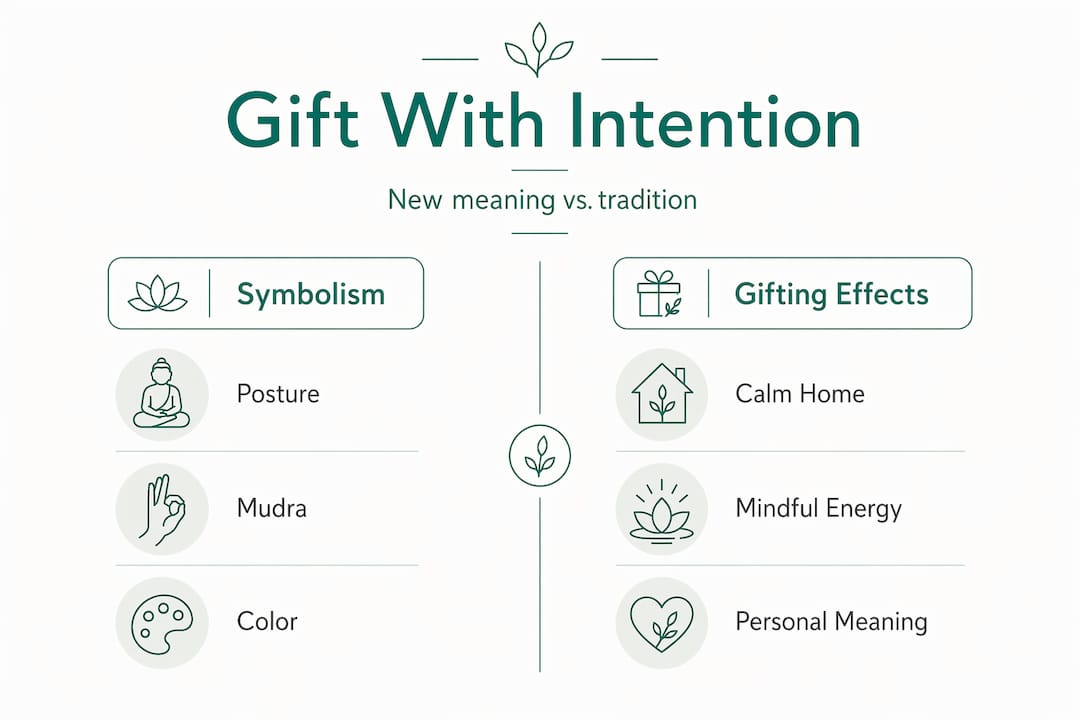
Every Buddha statue carries meaning well beyond its material form. The posture, the position of the hands, the expression, the scale, all of these details communicate something specific about the spiritual quality the statue embodies. When you choose one for a gift, you are not simply selecting an attractive object. You are choosing a particular kind of presence for someone’s home.
The hands of a Buddha figure, known as mudras, are one of the most expressive elements. A statue with both hands resting open in the lap, palms facing upward, represents deep meditation and inner stillness. This is one of the most widely recognised postures, and it tends to feel quietly settled in almost any home setting. The praying Buddha meaning speaks to devotion, reverence, and a sense of reaching toward something greater, making it a particularly warm gift for someone beginning a mindfulness practice or creating a peaceful corner at home.
The standing posture carries a different quality altogether. A standing Buddha symbolism communicates welcome, active compassion, and readiness to help. The right hand is often raised in a gesture of reassurance, as though the figure is saying: you are safe here. This makes it an ideal gift for someone moving into a new home or navigating a period of change in their life.
Colour also carries weight. A red Buddha for décor introduces warmth, energy, and vitality into a space, and pairs beautifully with natural materials like linen or rattan. Different traditions associate different colours with specific qualities, from white for purity and clarity to gold for abundance and light.
Where gifting symbolism becomes especially significant is in the pairing of intention with object. Gifting symbolism across cultures tends to carry deeper meaning than the object itself suggests on the surface. As one thoughtful resource notes, symbolism depends on posture and mudras and some figures may feel awkward or inappropriate in certain contexts. This is not a reason to hesitate. It is simply a reason to pause and choose with care.
| Posture | Mudra or gesture | Qualities embodied |
|---|---|---|
| Meditating | Hands in lap, palms up | Stillness, inner calm |
| Praying | Palms pressed together | Devotion, reverence |
| Standing | Right hand raised | Welcome, reassurance |
| Earth touching | Right hand toward ground | Enlightenment, truth |
| Happy Buddha | Arms wide, laughing | Joy, abundance |
Knowing these distinctions helps you give a gift that genuinely reflects what you wish for the person receiving it.
Cultural respect and thoughtful gifting decisions
Choosing a Buddha statue for someone else asks a little more of you than simply picking a beautiful object. It asks you to consider the person’s background, their relationship to spirituality, and what the statue might mean within their home and life. This is where gifting becomes truly thoughtful rather than simply generous.
If the recipient has a Buddhist faith or a strong connection to South or East Asian cultures, they will likely feel the choice of statue very personally. Selecting an inaccurate depiction or a figure associated with humour or caricature could feel jarring rather than warm. The reclining Buddha, for instance, represents the moment of the Buddha’s passing and carries a very particular weight. While deeply meaningful in certain ceremonial contexts, it may feel incongruous as a gift for someone’s living room mantelpiece.
For recipients who are drawn to mindful living rather than religious practice, the range of appropriate choices widens. The key question to ask yourself is: what quality do I want this statue to bring into their home? Calm and focus? A sense of welcome? A reminder to breathe and slow down? As cultural background and intended use shape what is appropriate, your answer to that question will naturally guide you toward the right piece.
A teal Buddha gifting choice communicates elegance and serenity, pairing the grounding presence of the Buddha form with a colour that evokes still water and open sky. It feels genuinely restful in a modern British home. If you are looking for something with a little more warmth and lightness, a happy Buddha gift in a whitewash wood finish brings a gentle joy that is universally welcoming.
Here is a straightforward process for choosing a statue gift with real thoughtfulness:
- Consider whether the recipient has any religious or cultural connections that would shape what feels appropriate.
- Decide on the quality or feeling you want to bring into their home, whether that is calm, joy, welcome, or focus.
- Match that intention to a posture and colour that embodies it.
- Think about the material. Stone and resin tend to feel grounded and permanent. Wood feels warm and organic.
- Consider scale. A statue that is too large can overwhelm a space. Too small and it loses its quiet presence.
Pro Tip: Before you purchase, spend a moment thinking about where in the recipient’s home the statue is likely to live. A figure for a meditation space has different qualities than one for a hallway or kitchen shelf.
Myths and misconceptions about gifting Buddha statues
Perhaps the most persistent myth around Buddha statues is the idea that you should never buy one for yourself, that the statue must be received as a gift in order to bring any benefit. This belief circulates widely in home décor circles and on social media, often presented as ancient wisdom. In reality, buying one yourself is entirely appropriate, and the prohibition is a modern folk belief with no basis in Buddhist teaching.
This matters because it shapes how people relate to the objects they bring into their homes. If you believe a statue only works as a lucky token received from someone else, you are treating it as a superstitious object rather than a genuine support for mindful living. The real value of a Buddha statue in the home is as a point of stillness and reflection, something that gently redirects your attention when your thoughts are scattered.
The broader category of fortune claims deserves the same scrutiny. Suggestions that a specific statue placed in a particular corner will attract wealth or prevent misfortune are folk traditions layered onto Buddhist imagery over centuries. They are not without their own cultural richness, but they are not Buddhist teachings. Choosing a statue for the quality of mindful energy it brings, for the calm and compassion it embodies, is far more aligned with what the tradition actually values.
There is also a common misconception that only statues depicting the historical Buddha, Siddhartha Gautama, are appropriate for the home. The laughing figure often called the Happy Buddha is actually a depiction of Budai, a beloved Chinese folkloric figure. Many people display both, and both can carry genuine warmth and meaning. The key is knowing which you are choosing and why.
A mindfulness gift in the form of a beautifully crafted Buddha head, for instance, brings the essence of peaceful presence without requiring any particular belief system to appreciate it. Its value is experiential. It softens a room, quietens the eye, and creates a moment of stillness wherever it sits.
Pro Tip: When gifting a Buddha statue, focus on compassion, calm and mindful living rather than luck or fortune. This shifts the gift from superstition to something genuinely meaningful.
How to gift a Buddha statue for mindful living
Once you have selected the right statue with care and intention, the act of giving it can itself be made more meaningful. The way you present a gift communicates something about how you hold the recipient and the thought behind the choice.

Shop Now: Red & Gold Buddha - Large
Begin by wrapping the statue in natural materials where possible. Linen or undyed cotton, tied with simple twine or ribbon, creates a presentation that feels considered and unhurried. Avoid overly commercial wrapping that places the emphasis on spectacle rather than substance.
Include a short handwritten note that explains your choice. You might mention the posture, what it represents, and why you felt it suited the person. This transforms the gift into a conversation rather than a transaction. It also helps the recipient place the statue with intention in their home, understanding what it is there to offer.
Think about how the recipient might be guided to find the right spot for their new piece. A white Buddha for home works beautifully in a clean, minimal space, perhaps on a low shelf alongside a candle and a small plant. A teal décor Buddha in a richer tone can anchor a reading nook or a quiet corner of a bedroom.
The right choice matched to recipient and context can bring genuinely mindful energy and spiritual depth to everyday décor. This is not a grand claim. It is simply the experience of living with an object that was chosen carefully, placed with thought, and returned to again and again as a small, grounding ritual.
A mindful gifting checklist worth keeping in mind:
Consider the recipient’s background and spiritual connection. Choose a posture that reflects the quality you wish for them. Select a material and colour that suits their home’s feel. Present the gift in natural, unhurried wrapping. Include a handwritten note explaining the choice. Suggest a quiet, considered spot for placement.
Beyond luck: what mindful gifting really means
We want to offer a perspective that most articles on this subject gloss over entirely. The conversation around Buddha statues tends to orbit around luck: which statue brings fortune, where to place it for wealth, what colour attracts the right energy. This framing misses something far more valuable.
When you give a Buddha statue as a gift, the most significant thing you are offering is not an object. It is an invitation. An invitation to slow down, to create a space that feels intentional, to return to something steady when daily life feels scattered. The statue is a physical anchor for that intention.
This is why mindfulness and compassion over fortune are the qualities worth emphasising when you choose and give a statue. Fortune is passive. It either arrives or it does not. Mindfulness is something you practise, and a thoughtfully placed statue can support that practice every single day.
We also believe that the act of choosing a statue carefully is itself a form of meditation. It asks you to consider the recipient with genuine attention, to think about what would serve their wellbeing, and to select something that will feel meaningful rather than merely decorative. A thinking pose Buddha in hand-carved detail embodies exactly that quality of careful, unhurried consideration.
The homes we find most settled and restorative are not the ones filled with lucky objects. They are the ones where every piece has a reason for being there, where the objects in a room feel chosen rather than accumulated. That is the real gift a Buddha statue can offer.
Mindful gifting made easy: discover your Buddha statue
Choosing a statue that feels genuinely right can take time, but it does not have to feel overwhelming.
At Root & Still, we curate each piece with exactly this kind of intention in mind. Whether you are drawn to a standing Buddha collection that welcomes visitors into a hallway or a praying Buddha selection that anchors a meditation corner, every statue in our collection has been chosen for the quality of presence it brings into a modern home. We believe that a well-chosen statue is not just a beautiful object. It is a quiet companion in the daily practice of living with more calm and balance. Explore our full mindful home décor shop and find the piece that speaks to your intention.
Frequently asked questions
Is it bad luck to buy a Buddha statue for yourself?
No, buying a Buddha statue for yourself is entirely appropriate. The belief that you should never buy one for yourself has no basis in Buddhist teaching and is considered a modern folk belief.
Which Buddha statue posture is best for gifting?
A meditating or praying posture tends to work well for most recipients drawn to mindful living, but symbolism depends on posture and mudras so it is worth matching the gesture to what you hope the gift will bring. Avoid reclining postures in domestic gifting contexts, as these carry more specific ceremonial associations.
Can Buddha statues bring good luck to the home?
Fortune claims attached to Buddha statues are considered folk superstition rather than Buddhist teaching, so it is more grounding to focus on the mindful energy and calm presence a statue can genuinely offer.
What should I consider when gifting a Buddha statue?
Always think carefully about the recipient’s cultural background and spiritual relationship to the imagery, the intended placement in their home, and the particular quality of energy the posture and material will bring into that space.


