

Resin statues are popular because they combine fine artistic detail, practical durability, and aesthetic flexibility that few other materials can match at a comparable price. Polyurethane resin, the most widely used type in decorative sculpture, can be cast into silicone moulds to capture textures and expressions that mass-produced PVC figures simply cannot replicate. Whether you are a collector drawn to limited-edition pieces or a decorator searching for a grounded, restful presence in your living room, resin offers something that stone, bronze, and ceramic rarely manage together: beauty, lightness, and longevity. That combination is precisely what has driven resin art popularity into the mainstream of contemporary home styling.
Why resin statues are popular with collectors and decorators alike
Resin’s defining advantage is its ability to hold extraordinary surface detail through the casting process. Liquid resin is poured into flexible silicone moulds, cured, and then hand-painted or finished, allowing sculptors to preserve clothing folds, facial expressions, and intricate base textures that harder materials tend to soften or lose. This is the reason resin captures fine detail better than many lower-cost materials, raising display value for collectors who want pieces that reward close attention.
The silicone mould itself plays a quiet but decisive role in resin’s appeal. Unlike the steel moulds used for PVC production, silicone moulds have a limited lifespan, which means each run of resin figures is naturally small. That constraint supports limited-edition releases and premium finishes that feel genuinely collectible rather than mass-produced. For art enthusiasts, this matters enormously. A piece that exists in a run of two hundred carries a different weight, both emotionally and in terms of perceived value, than one produced in the tens of thousands.
Compared with polystone, which blends stone powder with resin for a heavier, museum-like feel, standard decorative resin prioritises lightness and sculptural precision. Weight and rigidity affect collector perceptions in distinct ways: polystone variants appeal to those who want heft and permanence, while resin suits decorators who need to reposition pieces freely across a styled space. Neither is superior. They serve different intentions.
- Silicone mould casting enables small-batch, highly detailed pieces with premium finishes
- Resin preserves textures like fabric folds, facial expressions, and complex decorative bases
- Limited mould lifespan supports collectible runs rather than mass production
- Resin outperforms PVC on surface detail and finish quality at comparable price points
- Polystone offers greater weight for a museum feel; resin offers lightness for flexible styling
Pro Tip: When evaluating a resin statue for its collectible quality, look closely at the smallest details first. Fine lines in hair, fabric, or foliage are the truest test of mould quality and casting precision.
How resin statues bring calm and character to contemporary interiors
Resin’s appeal in home décor rests on a single, practical truth: it can imitate stone, ceramic, and metal convincingly, without the heaviness or fragility those materials bring. A resin Buddha statue styled on a linen-draped shelf reads as grounded and considered, yet you can lift it with one hand and move it to the garden without risk. That ease of repositioning is something stone simply cannot offer, and it matters in real homes where styling evolves with the seasons.
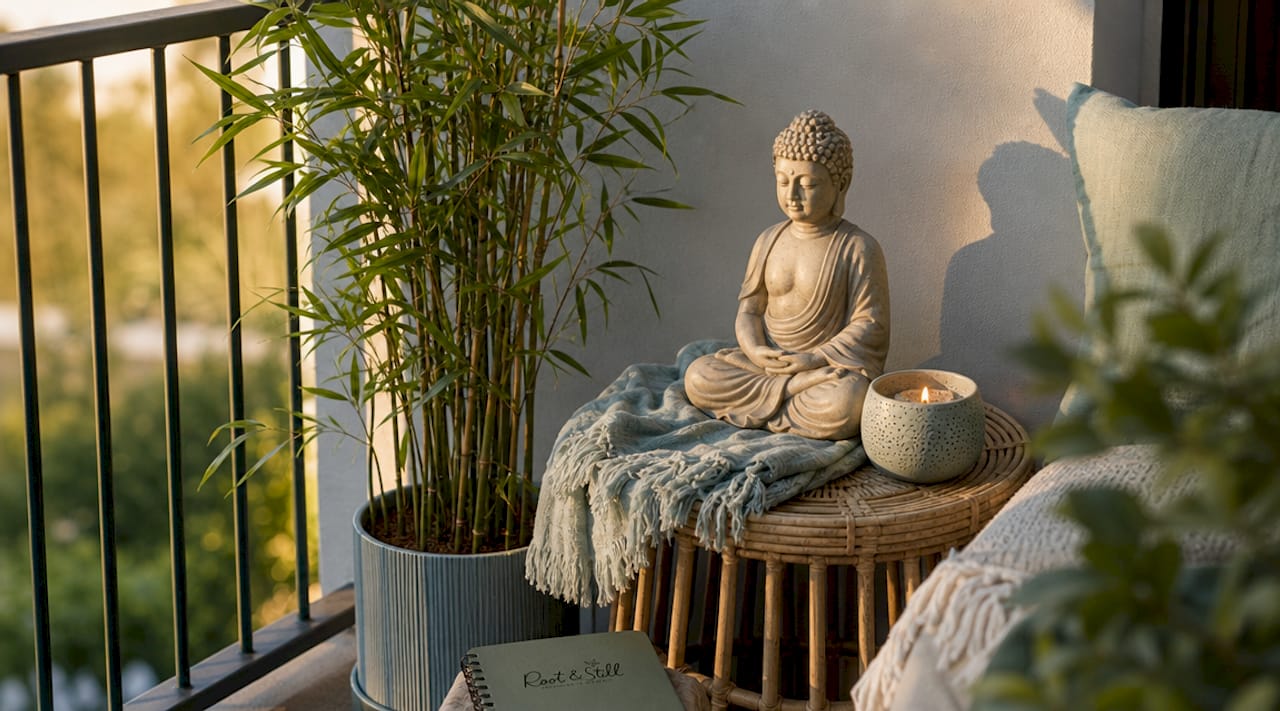
The material’s versatility of finish is equally significant. Resin accepts matte, satin, and gloss coatings, as well as textured effects that mimic aged stone, raw concrete, or brushed metal. This means a single material can feel at home in a minimalist Scandinavian interior, an earthy, rattan-filled living room, or a more industrial space with exposed brick and dark tones. Resin’s clean, versatile finishes align directly with modern interior design priorities, which is one reason resin art popularity has grown steadily alongside the rise of curated, intentional home styling.
There is also a social dimension worth acknowledging. Resin surfaces, particularly those with glossy highlights or subtle translucency, photograph exceptionally well. The light-catching qualities of a well-finished resin piece translate beautifully to Instagram and Pinterest, which has accelerated their visibility among decorators who share their spaces online. A piece that looks restful in person and striking in a photograph earns its place twice over.
- Choose a finish that complements your existing materials. Matte resin sits quietly beside linen and wood; gloss resin adds presence against darker, more dramatic backdrops.
- Use resin statues as anchoring pieces rather than accessories. Place them where you want the eye to settle, not where there is simply empty space.
- Consider scale carefully. A 30cm figure on a low shelf reads differently from the same piece elevated on a plinth, even in the same room.
- Allow the piece room to breathe. Resin statues styled with too many surrounding objects lose their sense of calm presence.
Pro Tip: If you are styling a resin statue for a mindful or meditation-inspired corner, pair it with natural textures like stone, dried botanicals, or unglazed ceramic to let the piece feel settled rather than displayed.
How does resin perform outdoors compared to stone and bronze?
Resin is the most practical choice for most garden and outdoor settings, particularly in the UK climate. Quality resin does not absorb water, does not rust, and resists cracking through freeze-thaw cycles that damage porous stone. Resin lasts 15 to 30 years outdoors with minimal maintenance, typically requiring nothing more than an occasional wipe with a damp cloth. That lifespan is comparable to cast stone and significantly more forgiving in terms of day-to-day care.
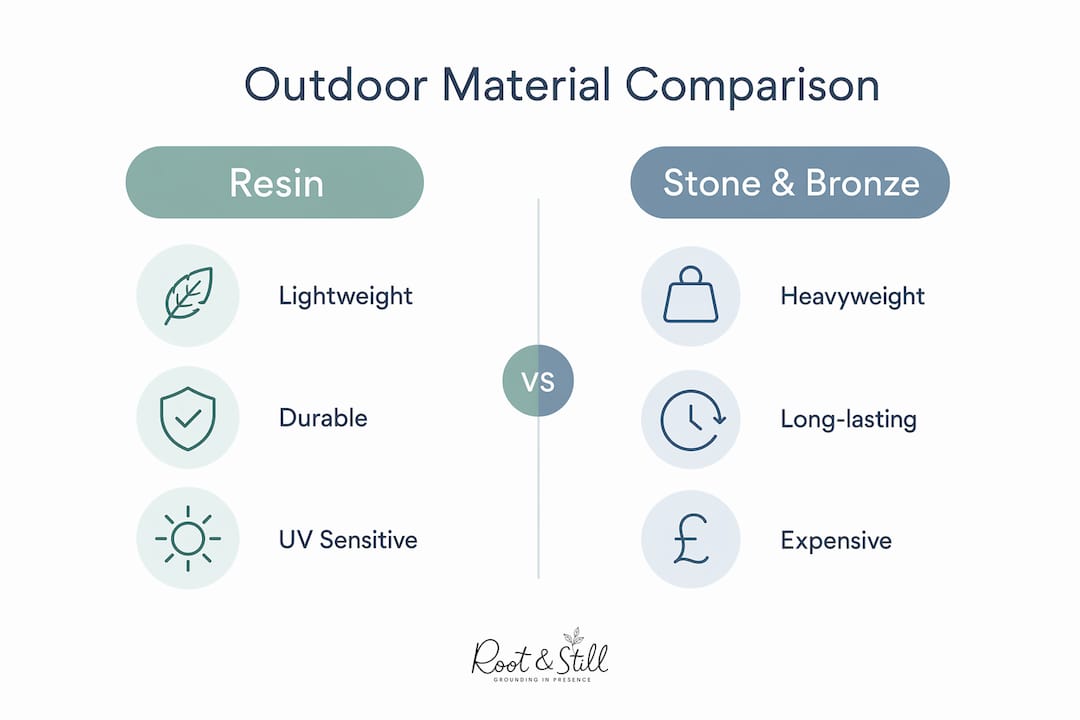
The weight advantage is considerable. A resin garden statue that would weigh 40 kilograms in stone or bronze might weigh 4 to 8 kilograms in resin, making installation and repositioning straightforward without specialist equipment. For decorators who like to refresh their outdoor space seasonally, this is a genuine benefit rather than a minor convenience.
| Feature | Resin | Cast stone | Bronze |
|---|---|---|---|
| Weight | Light (4–8 kg typical) | Heavy (30–60 kg typical) | Very heavy (20–80 kg typical) |
| Weather resistance | Excellent with UV coating | Good but porous | Excellent but prone to patina |
| Maintenance | Occasional wipe-down | Periodic sealing | Regular polishing or patination |
| Detail retention | Very high | Moderate | Very high |
| Relative cost | Lowest | Mid-range | Highest |
| Lifespan outdoors | 15–30 years | 20–50 years | 50+ years |
The one genuine limitation of resin outdoors is UV sensitivity. Without proper protective coatings, resin can fade and become brittle under prolonged strong sunlight. UV protective coatings are not optional for outdoor pieces; they are the difference between a statue that holds its colour and texture for decades and one that chalks and cracks within a few years. Always verify that an outdoor resin piece explicitly states UV-stable finishes in its product specification.
Are resin statues worth it? Cost and quality compared
Resin statues are worth the investment for most buyers because they deliver the visual impact of stone or bronze at a fraction of the cost. Resin statues typically cost 20 to 40 percent of equivalent bronze pieces and 30 to 60 percent of stone equivalents. That price difference is not a sign of inferior quality. It reflects the lower material and production costs of resin casting, not a compromise in artistic detail or finish.
Quality varies significantly within the resin category itself, and understanding those distinctions protects your purchase. Higher-quality resin statues incorporate UV protectants, fibreglass reinforcement, or stone powder additives that improve rigidity, weight, and longevity. Lower-quality pieces, often identifiable by their unusually light weight and uniform, flat finishes, risk brittleness and colour fading within a few years of outdoor exposure.
- Higher-quality resin blends include fibreglass, stone powder, or UV stabilisers for improved durability
- Lower-quality resin pieces are prone to brittleness and fading, particularly outdoors
- The 20 to 40 percent cost advantage over bronze makes resin accessible without sacrificing visual presence
- Verify outdoor suitability explicitly through manufacturer specifications, not just product imagery
- Weight and finish consistency are reliable indicators of resin quality at the point of purchase
A useful rule of thumb: if a resin statue feels unusually hollow or flexes slightly under gentle pressure, the resin blend is likely thin. A well-made piece should feel solid and have a consistent surface texture without visible seam lines or uneven paint application.
How to choose and care for resin statues
Choosing a resin statue well begins with understanding where it will live. For indoor placement, finish type and scale matter most. For outdoor use, UV resistance and water drainage design (avoiding pooling on flat bases) are the non-negotiable criteria. A piece that looks beautiful in a product photograph but lacks explicit outdoor suitability claims should stay inside.
- Check the product specification for UV resistance and weather-proof finish before purchasing any outdoor resin piece.
- Examine mould quality through close-up images. Sharp, consistent detail in hair, fabric, or foliage indicates a high-quality silicone mould.
- For indoor pieces, consider the finish in relation to your existing palette. Matte and aged finishes recede gently; gloss and metallic finishes draw the eye.
- Clean resin statues with a soft, damp cloth and mild soap. Avoid abrasive cleaners, which can dull the finish over time.
- When moving a resin statue, support it from the base rather than lifting by protruding elements like arms or decorative details, which are the most vulnerable points.
Pro Tip: For outdoor resin pieces in the UK, bring them inside or cover them during prolonged frost periods. While quality resin handles freeze-thaw cycles well, repeated exposure to standing ice on decorative joints can cause stress fractures over time.
Signs of poor quality to watch for include visible mould seam lines that have not been sanded, paint that chips at the edges with light handling, and a hollow sound when tapped gently. Quality resin statues do not require resealing or repainting under normal conditions. If a seller recommends annual resealing as standard maintenance, that is a signal the base material or finish is not performing as it should. For further guidance on caring for decorative statues, the statue care principles that apply to wooden pieces translate well to resin in terms of placement, cleaning, and seasonal protection.
Key takeaways
Resin statues are popular because they uniquely combine fine artistic detail, weather-resistant durability, and versatile aesthetics at a cost that bronze and stone cannot match.
| Point | Details |
|---|---|
| Detail and collectible appeal | Silicone mould casting enables sharp textures and limited-edition runs that raise display value. |
| Versatile home styling | Resin mimics stone, ceramic, and metal while remaining light enough to reposition freely. |
| Outdoor durability | Quality resin lasts 15 to 30 years outdoors with minimal care, provided UV coatings are present. |
| Cost advantage | Resin statues cost 20 to 40 percent of bronze equivalents, offering strong visual impact accessibly. |
| Quality indicators | Solid weight, consistent finish, and sharp mould detail distinguish high-quality resin from lower-grade pieces. |
Resin, restraint, and the ‘display-first’ shift I keep noticing
Something has shifted in the way people approach decorative objects over the past few years, and resin sits at the centre of it. The buyers I observe are no longer choosing pieces purely for symbolic or sentimental reasons. They are choosing with a ‘display-first’ philosophy: the object must earn its place visually before anything else. Resin supports that instinct better than almost any other material at its price point, because it allows sculptors to prioritise surface quality and finish precision in ways that PVC and low-grade ceramic simply cannot.
What I find genuinely interesting is how resin has quietly repositioned itself from a budget alternative to a preferred material in its own right. The best resin Buddha statues I have encountered do not feel like substitutes for stone. They feel like a considered choice, lighter in the hand, sharper in the detail, and more at ease in a modern interior than a heavy cast-stone equivalent would be.
The sustainability question is one the industry has not yet answered satisfactorily. Polyurethane resin is petroleum-derived, and while its longevity reduces replacement frequency, it is not biodegradable. I think this will become a more prominent conversation as buyers become more intentional about what they bring into their homes. For now, choosing pieces built to last, rather than trend-driven impulse buys, is the most grounded response available. The role of statues in interior design is evolving toward permanence and meaning, and resin, at its best, supports exactly that.
— Dhriti
Discover grounded decorative pieces at Rootandstill
At Rootandstill, the focus has always been on pieces that bring a sense of stillness and balance into everyday spaces, whether that is a living room shelf, a garden corner, or a meditation-inspired nook. The collection includes Buddha statues crafted for both indoor and outdoor settings, alongside complementary accessories that help a space feel considered rather than assembled. If you are drawn to the calm presence a well-chosen statue can bring, explore the Buddha statue collection to find pieces suited to your space. You might also find that a terracotta incense plate alongside a statue completes the atmosphere in a way a single object rarely can.
FAQ
What makes resin better than PVC for decorative statues?
Resin is cast into flexible silicone moulds that capture far finer surface detail than the rigid steel moulds used for PVC. This allows resin pieces to hold textures like fabric folds and facial expressions that PVC production tends to flatten.
How long do resin statues last outdoors?
Quality resin statues with UV-stable finishes last between 15 and 30 years outdoors with minimal maintenance. Durability depends directly on the quality of the UV protective coating applied during manufacture.
Are resin statues worth buying compared to stone?
Resin statues cost 30 to 60 percent less than stone equivalents while offering comparable visual detail and significantly lower weight. For most decorators, that combination makes resin the more practical and versatile choice.
How do I tell if a resin statue is good quality?
Look for sharp, consistent detail in the moulded surface, a solid feel without flex or hollow sound, and an explicit UV resistance claim for any outdoor piece. Visible seam lines and uneven paint application indicate lower-grade production.
Can resin statues be used in a mindful or meditation space?
Resin statues work well in mindful spaces because their lightweight nature allows flexible placement and their finishes can complement natural materials like stone, wood, and linen. Choosing a matte or aged finish tends to create a quieter, more grounded atmosphere than high-gloss alternatives.


