

Mixing Buddha statues made from natural materials is the most effective way to create a home space that feels both grounded and visually alive. When you combine stone, wood, and bronze pieces thoughtfully, each material brings its own texture, weight, and symbolic resonance to the arrangement. The result is not simply decorative. It is a layered environment that speaks to intention and calm. This guide covers the key materials, how to match them to your purpose, and how to combine them without losing the quiet presence that makes natural material Buddha decor so compelling.
What materials are used in Buddha statues and what do they mean?
The most widely used natural materials in Buddha statues are stone, wood, and bronze or brass, each carrying distinct spiritual associations and practical qualities. Stone conveys permanence and stillness. Wood brings warmth and organic energy. Bronze and brass carry ceremonial weight and a sense of timeless tradition.
Natural stone varieties such as sandstone, granite, and marble are prized for their durability and honest texture. Authentic stone statues are heavier than resin replicas and show natural imperfections, which is precisely what makes them feel anchored and real. Green sandstone, for example, is handmade from genuine stone and develops a subtle patina indoors without fading, provided it stays dry. Stone suits meditation corners, garden settings, and any space where you want a sense of rooted stillness.

Shop Now: Resin Matt Mini Buddha Statue (Assorted Colours)
Wood is the material most associated with warmth and living energy. East Asian Zen traditions favour teak, sandalwood, and rosewood for spiritual decor, and for good reason. These timbers carry a natural grain that catches light gently and softens a room’s mood. A carved sandalwood Buddha placed on a linen-draped shelf feels entirely different from a stone piece on the same surface. Wood statues last decades indoors with proper care and suit feng shui principles that call for natural calmness.
Bronze and brass are the most durable of the three. Bronze and brass statues can last over a century, and stone statues endure even longer outdoors. The Kamakura Daibutsu in Japan illustrates how bronze ages beautifully. The 121-tonne gilt bronze statue has shed much of its original gold leaf through centuries of outdoor exposure, yet its patina has only deepened its presence. For home use, a small bronze Buddha on a shelf develops a similar quiet character over years.
| Material | Durability | Symbolism | Typical price range |
|---|---|---|---|
| Stone (sandstone, granite) | Centuries outdoors | Permanence, stillness | £65–£480 |
| Wood (teak, sandalwood) | Decades indoors | Warmth, natural energy | £30–£230 |
| Bronze or brass | 100+ years | Ceremony, tradition | £50–£620+ |
| Copper | Long-lasting | Healing, conductivity | £120–£950+ |
How to align material choice with your intention and space
Choosing a Buddha statue should begin with intention and pose, then move to material and size. This sequence matters because the material you choose will either reinforce or undermine the feeling you are trying to create. A meditation-focused space calls for different material cues than a living room display shelf.
Start by identifying what you want the statue to do in the space. A meditation corner benefits from a Dhyana mudra figure (hands resting in the lap, palms upward) in wood or bronze, both of which carry a grounded, inward quality. A Vitarka mudra figure (teaching gesture, one hand raised) works well in stone for a study or reading room, where its solidity reinforces focus and clarity. An Abhaya mudra piece (open palm, protective gesture) in stone or bronze suits an entrance hall, where its presence feels welcoming and settled.
Scale is equally important. A large stone Buddha in a small room will feel oppressive rather than restful. Equally, a small carved wood figure on a wide mantelpiece can feel lost. For practical guidance on matching size to room function, Rootandstill’s advice on choosing the right size is worth reading before you commit to a piece.
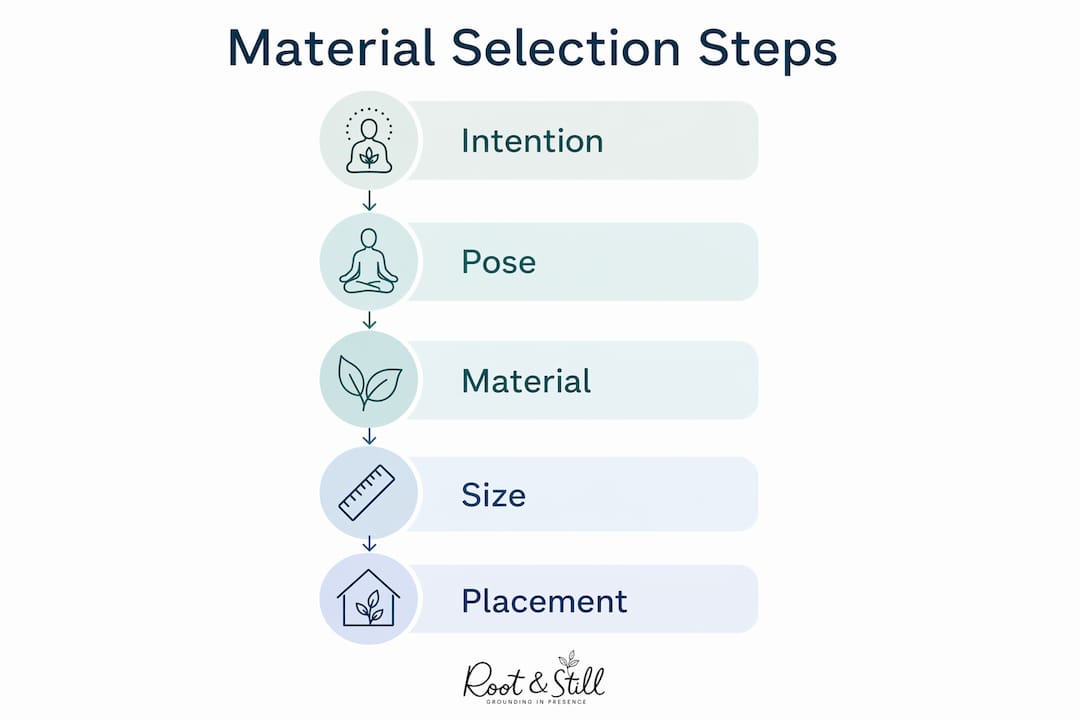
Consider the surrounding decor style as well. Stone pairs naturally with wabi-sabi interiors, where imperfection and natural ageing are celebrated. Wood suits Japandi or Scandinavian-influenced rooms, where warmth and simplicity coexist. Bronze reads well in both traditional and modern settings, particularly against neutral walls and natural textiles like linen or rattan.
How to mix Buddha statues made from natural materials tastefully
When you mix Buddha statues made from natural materials, the guiding principle is tonal and textural harmony rather than strict matching. You are not trying to create a uniform display. You are creating a conversation between materials that feels intentional rather than accidental.
Begin with colour tones. Stone tends towards grey, cream, or warm terracotta. Wood ranges from pale ash to deep rosewood. Bronze sits in warm amber and brown. When combining two or three materials, choose pieces whose tones sit within the same warm or cool family. A pale sandstone Buddha alongside a dark teak piece can feel restless unless the surrounding space provides a unifying neutral, such as a stone-coloured shelf or a natural linen cloth beneath both pieces.
Surface texture is the second consideration. Rough-hewn stone next to highly polished bronze creates a contrast that can feel jarring. A lightly sanded wood piece alongside a matte stone figure, however, creates a quieter dialogue. The textures complement without competing. If you want to include a polished bronze piece, give it room to breathe by placing it slightly apart from rougher-textured pieces.
Pro Tip: When arranging a mixed-material display, use odd numbers. Three pieces of different materials feel more settled than two or four. Place the largest piece slightly off-centre and let the smaller pieces anchor the composition from either side.
Placement strategies matter as much as material selection. A meditation corner benefits from a single focal piece in stone or bronze, with a smaller wood figure placed lower and to one side. A shelf display can carry two or three pieces if they vary in height and material. An altar arrangement works best when the central figure is the most substantial in both size and material weight, with complementary pieces framing it rather than competing with it.
Mixing materials also works beautifully in garden spaces. Stone weathers naturally and develops character outdoors. A stone Buddha placed among low planting, with a smaller bronze piece on a nearby surface, creates a layered outdoor sanctuary that feels considered rather than cluttered.
How should you care for natural material Buddha statues?
Material-specific care extends the lifespan of your statues and preserves both their appearance and their quiet presence in your home. The most common mistakes are treating all materials the same way and using chemical cleaners that damage natural surfaces.
For sandstone and other porous stone varieties, keeping the statue dry is the single most important rule. Moisture causes staining and can weaken the stone over time. Dust with a soft dry cloth and avoid placing stone pieces near sinks, humidifiers, or in bathrooms. If used outdoors, bring stone pieces inside during prolonged wet weather.
Wood statues require protection from both moisture and direct sunlight. Sunlight bleaches wood and causes cracking over time. A light application of natural beeswax or teak oil once or twice a year keeps the grain nourished and the surface from drying out. Avoid silicone-based polishes, which can clog the wood’s natural pores.
Bronze and brass benefit from occasional polishing with a soft cloth to maintain their warm lustre. Avoid acidic or abrasive cleaners, which strip the patina that gives bronze its character. If you prefer the aged look, simply dust regularly and leave the patina to develop naturally.
| Material | Key care rule | What to avoid |
|---|---|---|
| Sandstone | Keep dry, dust with soft cloth | Moisture, chemical cleaners |
| Wood (teak, sandalwood) | Beeswax or teak oil annually | Direct sunlight, silicone polish |
| Bronze or brass | Soft cloth polish, allow patina | Acidic or abrasive cleaners |
| Stone (general) | Dry placement, gentle dusting | Prolonged outdoor wet exposure |
Why natural material Buddha statues make meaningful gifts
Natural-material Buddha statues make meaningful and durable gifts because they offer the recipient something that functions as both a beautiful object and a quiet anchor in their home. Unlike mass-produced ornaments, a handcrafted stone or wood Buddha carries the marks of its making. That authenticity is felt, even if the recipient cannot articulate why.
When selecting a statue as a gift, begin with the recipient’s intention and living space rather than your own aesthetic preferences. A person who meditates regularly will appreciate a Dhyana mudra figure in wood or bronze, placed at eye level when seated. Someone who values protection and calm at home may respond more to a stone Abhaya mudra piece near their entrance. The material choice signals care and thoughtfulness in a way that a generic gift cannot.
Presentation matters too. Wrapping a handcrafted Buddha figurine in natural materials, such as unbleached cotton or recycled paper, honours the craftsmanship and reinforces the eco-friendly values that often draw people to organic Buddha art in the first place. A short note explaining the mudra and its meaning transforms the gift from decorative object to something genuinely considered.
Key takeaways
Mixing natural materials in Buddha statues creates the most harmonious and meaningful decor when material choice, spiritual intention, and tonal balance are considered together from the outset.
| Point | Details |
|---|---|
| Start with intention | Identify the purpose of the statue before selecting material, pose, or size. |
| Match tones, not materials | Combine stone, wood, and bronze within the same warm or cool colour family for visual harmony. |
| Verify authenticity | Real stone statues are heavier and show natural texture variation; resin replicas are lighter and uniform. |
| Care is material-specific | Keep sandstone dry, oil wood annually, and polish bronze gently to preserve patina and longevity. |
| Gifting gains meaning from material | Handcrafted natural material statues carry authenticity that mass-produced pieces cannot replicate. |
What I have learned from living with mixed-material Buddha statues
I used to think that consistency was the key to a calm display. One material, one finish, one aesthetic. What I found, after years of working with and living alongside these pieces, is that a single-material arrangement can feel flat. It reads as decoration rather than presence.
The moment I placed a rough sandstone Dhyana figure alongside a small polished bronze piece on the same shelf, something shifted. The contrast between the two surfaces created a quiet tension that made both pieces more interesting. The stone felt more ancient. The bronze felt more alive. Neither competed with the other because they were united by intention: both were meditation figures, both faced the same direction, both sat at a similar scale.
What I would caution against is mixing materials without a unifying thread. Three pieces in three different materials, three different poses, and three different scales will feel restless regardless of how beautiful each individual piece is. The thread can be material tone, mudra, or simply the feeling you want the arrangement to hold. Find that thread first, and the mixing takes care of itself.
The growing interest in eco-friendly Buddha statues and handcrafted Buddha figurines reflects something real: people want objects in their homes that feel honest. Natural materials age, develop character, and carry the marks of their origin. That is not a flaw. It is precisely what makes them worth choosing.
— Dhriti
Explore handcrafted Buddha statues at Rootandstill
Rootandstill curates a collection of Buddha statues in stone, wood, and bronze that are selected for their craftsmanship, material authenticity, and quiet presence. Each piece is chosen to work as both a spiritual object and a considered design element, whether you are styling a meditation corner, a living room shelf, or a garden sanctuary. The standing Buddha statue at one metre tall makes a grounding focal point for larger spaces, while the hand-carved 30cm Buddha suits shelves and intimate corners beautifully. If you are looking for a thoughtful gift or a piece to anchor your own space, the Rootandstill collection is a good place to begin.
FAQ
What natural materials are most commonly used in Buddha statues?
Stone (including sandstone, granite, and marble), wood (particularly teak, sandalwood, and rosewood), and bronze or brass are the most widely used natural materials. Each carries distinct spiritual associations and practical qualities suited to different spaces and intentions.
How do I know if a stone Buddha statue is genuine?
Authentic stone statues are noticeably heavier than resin replicas and show natural texture variations and minor imperfections across the surface. Uniform colour and a lightweight feel are the clearest signs of a composite resin piece rather than genuine stone.
Can I mix different materials in one Buddha statue display?
Yes, and mixing materials often creates a more layered and meaningful arrangement than a single-material display. The key is to align all pieces by spiritual intention and complementary mudras, and to keep colour tones within the same warm or cool family to maintain visual harmony.
How long do natural material Buddha statues last?
Bronze and brass statues last over a century with basic care, stone statues can endure for centuries outdoors, and wood statues last several decades indoors when kept away from direct sunlight and treated with natural oils periodically.
Are natural material Buddha statues suitable as gifts?
Natural material statues make particularly thoughtful gifts because their handcrafted quality and authentic materials carry a presence that mass-produced pieces cannot replicate. Selecting a statue based on the recipient’s intention and living space, rather than purely on appearance, makes the gift genuinely considered.


