Choosing the right outdoor garden ornaments feels both exciting and quietly overwhelming. The sheer range of types, materials, and styles available means that what works beautifully in one garden can feel entirely out of place in another. Whether you want a classical stone birdbath anchoring a cottage border, a sleek corten steel sculpture for a modern courtyard, or a serene Buddha figure that brings stillness to a shaded corner, the decision involves more than aesthetics alone. This guide walks you through the main types of outdoor garden ornaments, their materials, costs, and style suitability, so you can choose with clarity and confidence.
Key takeaways
| Point | Details |
|---|---|
| Material determines longevity | Granite and marble last 100+ years; resin pieces typically need replacing or repainting within a decade. |
| Style should match your garden | Cottage gardens suit weathered cast stone; modern spaces benefit from corten steel or aluminium pieces. |
| Less is genuinely more | Limiting ornaments to two or three per area creates a natural, timeless look rather than a cluttered one. |
| Budget shapes your choice | Resin ornaments start from as little as £6, while substantial natural stone pieces can reach £5,000 or more. |
| Placement and safety matter | Heavy ornaments often require stable foundations or anchoring, particularly in exposed or frost-prone UK gardens. |
1. How to choose garden ornaments: a practical framework
Before you explore the types of outdoor garden ornaments available, it helps to have a clear set of criteria in mind. Material, durability, style compatibility, maintenance, and budget each play a role in whether an ornament feels at home in your garden or simply takes up space.
Material is perhaps the single most consequential decision. Natural stone weathers beautifully but demands a higher upfront investment. Resin is affordable and lightweight but requires repainting every 3-5 years to stay looking its best. Cast stone, metal, and concrete each occupy their own position on the durability and cost spectrum, which this guide explores in detail.
Style compatibility is equally worth thinking through. Traditional English and cottage gardens call for warm, weathered textures. Contemporary courtyard gardens respond well to clean geometric forms and industrial finishes. Rustic or Provençal-inspired spaces suit terracotta, aged iron, and limestone. There is no universal answer, only what fits the mood you are building.
Pro Tip: Think in terms of cost per year rather than upfront price. A £400 cast stone birdbath that lasts 40 years costs £10 per year. A £30 resin equivalent replaced every five years costs £6 per year but demands repainting time and looks less distinguished.
Larger ornaments such as tall pedestals or heavy stone urns often require a concrete pad or mounting anchor for stability, especially in windier or frost-prone parts of the UK. Placing a heavy piece on soft lawn without a solid base can lead to tilting, cracking, or injury. Safety is rarely the first thing people think about when browsing garden decor, but it deserves consideration from the outset.
2. Cast stone and natural stone ornaments
Stone ornaments represent some of the most enduring decorative garden features you can invest in. Natural stone varieties including granite, marble, limestone, and sandstone each have distinct characters. Granite withstands frost below -25°C, resists salt spray in coastal gardens, and requires almost no maintenance beyond occasional brushing. It is heavy and expensive, but it earns its place over generations.

Marble is visually striking, with a refined, classical presence. It does require careful cleaning with acid-free products to avoid surface degradation, but it ages with quiet grace. Limestone and sandstone are softer and more porous, which means they gather moss and lichen more readily. This can be charming in a cottage setting but may feel unkempt in a more formal space.
Cast stone is a widely used and cost-effective alternative to quarried natural stone. It is made from a cement and aggregate mixture that mimics the look and weight of real stone, typically lasting 30 to 50 years with proper placement. Popular forms include sundials, classical urns, animal figures, and birdbaths. It weathers attractively and suits cottage and traditional English garden styles particularly well.
Cottage gardens especially favour wildlife-themed ornaments in natural materials. Hedgehogs, rabbits, and birds in weathered cast stone feel rooted in their surroundings rather than imported. Shiny or factory-new stone pieces tend to look out of place in these settings until they gather some weathering. If you are buying new cast stone ornaments, placing them in a damp, shaded spot accelerates that natural ageing process.
You can explore a broader range of stone garden sculpture types for further guidance on matching stone pieces to specific UK garden styles.
3. Resin and polyresin ornaments
Resin ornaments dominate the accessible end of the garden decoration market, and understandably so. They reproduce fine surface detail with impressive accuracy, making them particularly useful for ornate figurines, deity statues, and decorative animal figures. Resin pieces start from as little as £6, which makes them a practical starting point for gardeners who want to experiment with placement and style before committing to heavier investments.
Their portability is a genuine advantage. You can move resin ornaments between spaces, bring them indoors over winter, or rearrange them seasonally without strain. This matters in UK gardens where seasonal garden decorations often need rotating or storing during harsh weather.
The main drawback is longevity. Resin fades and can become brittle over time, particularly with prolonged UV exposure. Most polyresin pieces benefit from UV-protective sealant applied annually. Expect to repaint or replace them within a decade, sooner if they face full south-facing sun throughout summer.
Pro Tip: If you like the look of a natural stone Buddha or classical figure but are not ready for the cost, choose a high-quality polyresin piece finished in stone-effect paint. Apply an outdoor sealant before it goes outside and again each spring. It will not last as long, but it will hold its finish significantly better.
4. Metal ornaments: bronze, cast iron, aluminium, and corten steel
Metal ornaments offer one of the widest ranges of outdoor decor styles available, from delicate verdigris bronze figures to bold geometric corten steel forms. Each metal behaves quite differently in a UK garden environment, so the choice deserves careful thought.
Bronze is widely regarded as the best garden sculpture material for longevity and beauty combined. It develops a protective verdigris patina over 6 to 18 months that is not just decorative but self-healing, making it far more durable than iron in damp UK conditions. Bronze pieces suit classical, formal, and even contemporary gardens, and they age in a way that feels earned rather than neglected.
Cast iron brings weight and gravitas to a garden. It does require treatment against rust, typically an application of wax or specialist oil annually, but it holds its form and detail beautifully over decades. Cast iron is best suited to sheltered spots where it will not face constant moisture without cover.
Aluminium is worth considering if weight is a concern. It is rust-proof, lightweight, and relatively affordable, though it lacks the tactile richness of bronze or iron. Corten steel takes a different approach entirely: it is designed to rust on the surface, forming a stable, warm amber coating that protects the steel beneath. Corten suits modern minimalist gardens and works particularly well as abstract or architectural garden sculpture.
After the Chelsea Flower Show lifted its ban on garden gnomes in 2026, whimsical ornaments saw renewed interest across the UK. Metal and resin gnomes, animals, and playful figures are now finding their way back into gardens without apology. Personality in a garden is never something to resist.
5. Concrete, ceramic, and water features
Concrete ornaments offer a budget-friendly durability that is easy to underestimate. Cast concrete is weather-resistant, substantial in weight, and capable of holding painted or textured finishes well. It does not have the refined detail of cast stone or bronze, but for straightforward forms like planters, stepping stones, and simple animal figures, it performs reliably and requires little maintenance beyond occasional cleaning.
Ceramic and terracotta pots function as ornaments as much as containers. Glazed ceramics add colour, shine, and texture to a planting scheme, particularly in Provençal or Mediterranean-inspired gardens where layering weathered terracotta alongside natural stone creates an authentic, warm character. Unglazed terracotta is more porous and may crack in hard frost, so in colder UK regions, it is worth bringing terracotta indoors between November and March or choosing frost-resistant equivalents.
Water features function as both decorative garden features and sensory anchors. The sound of moving water changes the atmosphere of a garden profoundly, adding calm and masking street noise in urban settings. Stone, reconstituted stone, and resin water features are all widely available. A well-placed water feature in a shaded spot can become the focal point an entire garden is oriented around.
Mixing materials across a garden adds depth that single-material approaches rarely achieve. A cast stone birdbath alongside ceramic pots and a bronze figure creates the kind of layered, curated character that feels genuinely personal rather than assembled from a catalogue. For inspiration on displaying ceramics thoughtfully, this guide on displaying fine ceramics is worth a read.
6. Comparison of ornament types and materials
Choosing between materials becomes clearer when you see them side by side. This table summarises the key characteristics of the main outdoor garden ornament materials to help you match your choice to your garden conditions, style, and budget.
| Material | Lifespan | Typical cost | Maintenance | Best garden style |
|---|---|---|---|---|
| Granite / marble | 100+ years | £300 to £5,000+ | Very low | Formal, coastal, classical |
| Cast stone | 30 to 50 years | £50 to £400 | Low | Cottage, traditional English |
| Bronze | 50 to 100+ years | £200 to £2,000+ | Very low | Classical, contemporary, formal |
| Cast iron | 30 to 60 years | £50 to £500 | Moderate | Traditional, rustic |
| Aluminium | 20 to 40 years | £30 to £300 | Very low | Modern, coastal |
| Corten steel | 30 to 50+ years | £100 to £1,000+ | Very low | Modern minimalist |
| Resin / polyresin | 5 to 10 years | £6 to £50 | Moderate | Flexible, experimental |
| Concrete | 20 to 40 years | £10 to £150 | Low | Rustic, budget-conscious |
| Ceramic / terracotta | 5 to 30 years | £15 to £200 | Moderate | Provençal, Mediterranean |
For cottage gardens, weathered cast stone wildlife figures and aged metal lanterns sit naturally among borders and hedgerows. Modern courtyard gardens benefit most from corten steel sculptures, aluminium planters, and minimalist concrete forms. Coastal UK gardens call for granite or aluminium, given their resistance to salt spray. If budget is the primary consideration, concrete and resin offer durability and style at accessible prices, particularly when you lean into weathered finishes and limit the total number of pieces.
That last point matters more than most people expect. Limiting ornaments to two or three per area and allowing planting to partially obscure them creates a far more considered, timeless result than filling every corner. Space is as important as the ornament itself.
My honest take on choosing garden ornaments
I have spent years looking at UK gardens, and the most lasting ones share a quality that is difficult to name precisely. They feel as though the garden has been tended rather than decorated. The ornaments look as if they have always been there.
In my experience, the biggest mistake people make is buying too many pieces too quickly, then arranging them in a row or cluster without considering how planting softens and integrates them. An ornament half-hidden by lavender or emerging from a ground cover of thyme has far more presence than the same piece sitting exposed on bare paving.
I have also found that authentic, weathered finishes do something that shiny or pristine surfaces cannot. They signal permanence. Matching resin sets from a garden centre catalogue tend to look exactly like what they are. A thoughtfully curated mix of cast stone, aged bronze, and terracotta, each with its own history, creates something that feels genuinely personal.
My honest view on resin is that it has its place, particularly for gardeners who enjoy rotating pieces seasonally or who want to try a style before committing. But if you are choosing one centrepiece, invest in stone or bronze. Buy fewer things, buy them better, and let the planting do the rest of the work.
— Dhriti
Bring stillness to your garden with Rootandstill
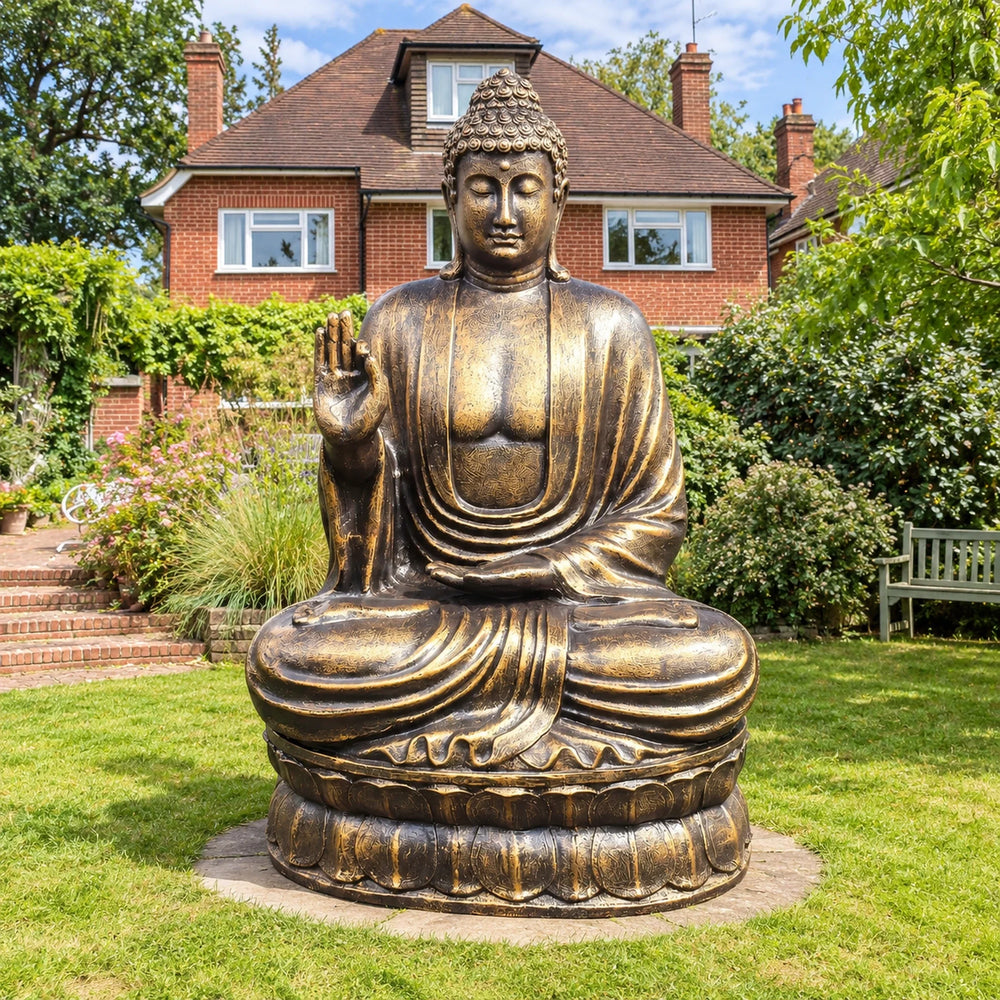
If you are looking for garden ornaments that feel genuinely considered rather than mass-produced, Rootandstill’s curated range of statues and decorative pieces is worth exploring. The collection centres on beautifully crafted figures, including standing and seated Buddha statues finished in stone-effect, aged bronze, and vivid glazed tones, each designed to anchor a garden space with quiet presence.
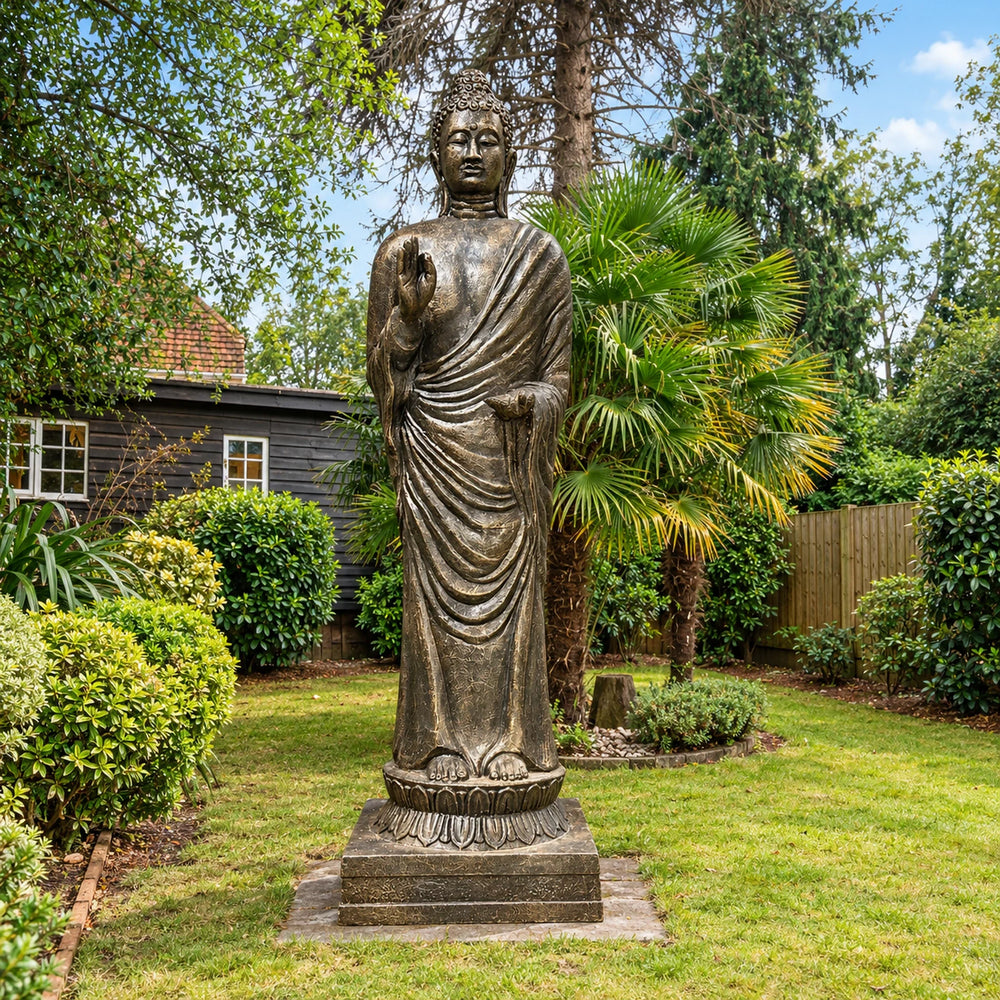
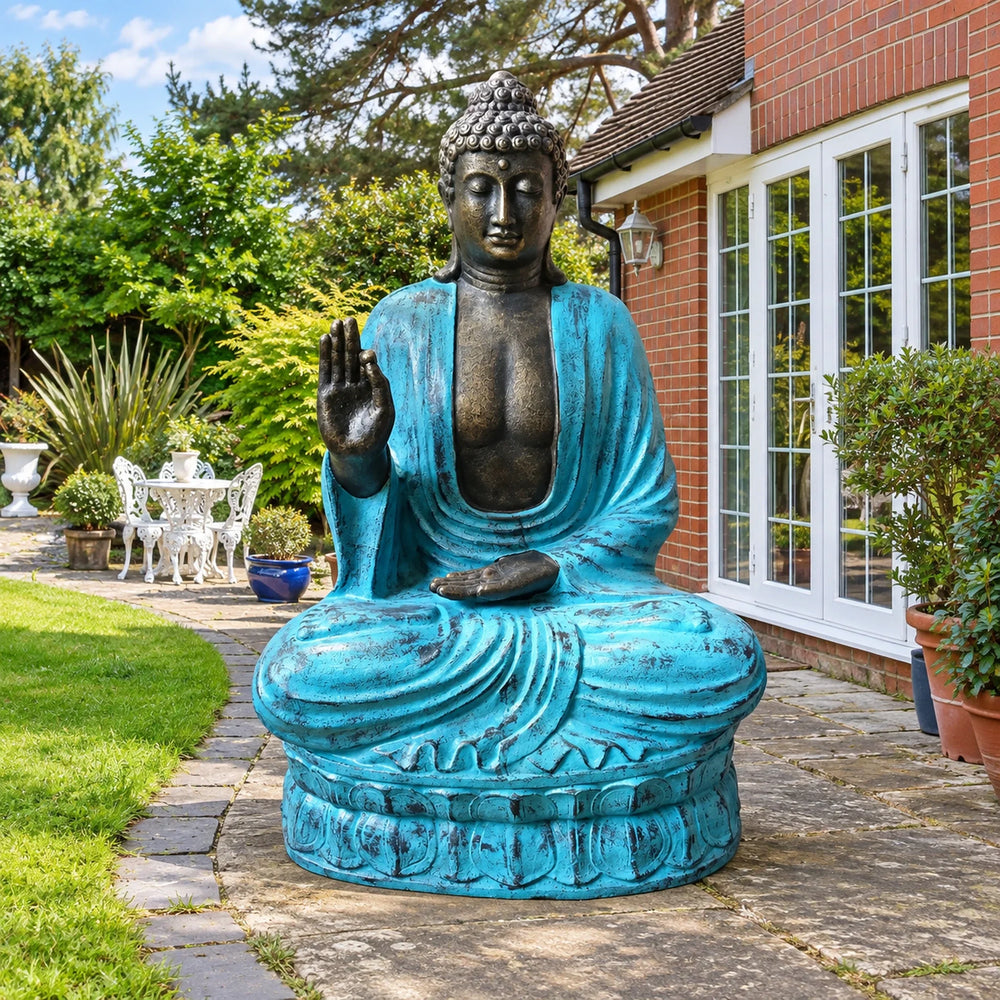
The standing Buddha statue at 1 metre tall works particularly well as a focal point in a sheltered border or shaded courtyard, where its form gradually settles into the surrounding planting. For colour and warmth, the turquoise praying Buddha at 1.2 metres brings an unexpected richness to garden schemes. For guidance on identifying quality craftsmanship before you buy, Rootandstill’s article on spotting quality figurines offers practical, honest advice.
FAQ
What are the most durable types of outdoor garden ornaments?
Granite and marble are the most durable materials, lasting well over 100 years with minimal maintenance, followed closely by bronze, which develops a protective patina and resists corrosion naturally.
How do I choose garden ornaments for a small UK garden?
Limit yourself to one or two well-placed pieces and allow surrounding planting to partially frame them. Smaller cast stone figures, ceramic pots, and compact water features work well in confined spaces without overwhelming the garden.
Are resin garden ornaments worth buying?
Resin ornaments offer excellent value for experimenting with styles and are easy to move between spaces. They do require repainting every few years and are best treated as medium-term rather than permanent additions.
What garden ornaments suit a cottage garden?
Weathered cast stone wildlife figures such as hedgehogs, rabbits, and birds suit cottage gardens best, alongside aged metal lanterns and limestone birdbaths that develop natural patina over time.
Do garden ornaments need to be brought inside during winter?
Terracotta and resin ornaments benefit from indoor storage during hard frost periods. Granite, cast stone, and bronze are generally frost-resistant and can remain outdoors year-round across most UK regions.