

A wooden Buddha statue does more than occupy space. It anchors a room, softens the atmosphere, and holds a quiet presence that synthetic materials simply cannot replicate. But wood is a living material, and without proper care, even the most beautifully carved piece can crack, fade, or warp over time. If you want to care for your wooden Buddha statue in a way that genuinely preserves it, you need more than a quick dust. You need the right knowledge, the right tools, and a little consistency.
Key takeaways
| Point | Details |
|---|---|
| Dust regularly with a soft cloth | Dry, soft dusting weekly prevents surface buildup that gradually damages wood fibres. |
| Avoid direct sunlight | Placing your statue away from windows prevents cracking and colour loss over time. |
| Maintain stable humidity | Both excessively dry and damp environments can warp or split your statue’s wood. |
| Use natural oils or wax for protection | Applying a natural oil or wax finish every few months keeps wood nourished and protected. |
| Inspect routinely for damage | Checking for cracks, insect activity, or finish wear early means you can act before damage becomes serious. |
Caring for your wooden Buddha statue: what to know first
Before you reach for a cloth, it helps to understand what your statue is actually made of. Most wooden Buddha statues are carved from teak, rosewood, mango wood, albesia, or suar wood. Each has a different density, grain, and natural oil content, which affects how the wood responds to moisture, heat, and cleaning products. Teak, for example, is naturally oily and highly durable, whereas mango wood is more porous and slightly more vulnerable to humidity fluctuations.
The environment your statue lives in matters just as much as the material. Wood responds to its surroundings constantly. Rooms with central heating in winter pull moisture from the air, and that dryness can cause wood to contract and crack. A bathroom or kitchen with high moisture levels poses the opposite risk. Neither extreme is kind to carved wood.
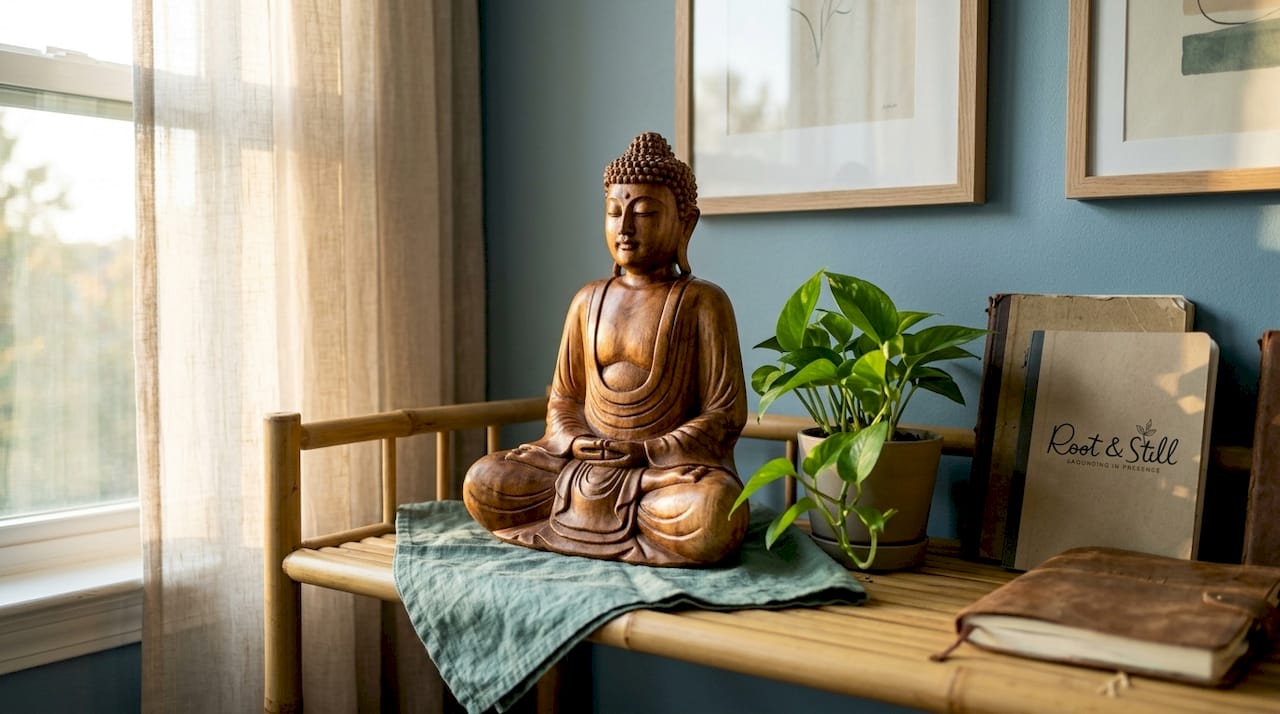
Before starting any care routine, gather your materials in one place. You will need a soft, lint-free cloth, a clean natural-bristle brush for detailed areas, a wood-safe oil such as linseed or tung oil, and optionally a natural beeswax polish. A small bowl of lukewarm water and a second cloth can be useful for occasional damp cleaning, used sparingly.
| Tool or material | Purpose |
|---|---|
| Soft lint-free cloth | General dusting and dry cleaning |
| Natural-bristle brush | Reaching carved grooves and fine detail |
| Linseed or tung oil | Nourishing and protecting the wood |
| Beeswax polish | Adding a gentle protective finish |
| Lukewarm water and second cloth | Spot cleaning stubborn marks, used minimally |
Pro Tip: Before applying any oil or polish to your statue, test it on a small, hidden area first. Some finishes can slightly darken certain wood types, and it is better to discover this on an unseen spot than on the front of the piece.
Routine cleaning: keeping the surface fresh
The simplest and most overlooked part of wooden Buddha care is regular dusting. Dust does not just sit on the surface. Over time it works into the grain and finish, dulling the wood’s natural warmth and, if left long enough, causing surface degradation. Dusting once a week with a soft dry cloth takes less than two minutes and makes a measurable difference to how your statue ages.
Follow these steps for a thorough but safe clean:
- Begin with the natural-bristle brush to sweep dust from all carved recesses, folds in the robes, and the face. Work from top to bottom so loosened dust falls rather than settles back onto cleaned areas.
- Follow with your soft cloth, using gentle circular movements across flat surfaces and the base. Do not press hard. Let the cloth glide.
- For any visible dirt or marks, dampen a second cloth very lightly. It should feel barely moist, not wet. Gently wipe the mark, then immediately follow with a dry cloth to absorb any residual moisture.
- Allow the statue to dry fully in a well-ventilated spot before returning it to its display position.
Harsh chemicals and abrasives are genuinely damaging to wooden statues. Bleach-based sprays, multi-surface cleaners, and even some polishing cloths pre-treated with silicone products can strip the finish or leave a residue that attracts more dust. If you would not use it on antique furniture, do not use it on your statue.
Pro Tip: A natural-bristle shaving brush or a clean, soft paintbrush works beautifully for reaching the intricate carved details on Buddha faces and hands without applying pressure that could scratch the surface.
Protecting the wood over the long term
Cleaning removes what has already settled on your statue. Protection is what prevents damage from accumulating in the first place. The two work together, and neglecting the second makes the first less effective.
Direct sunlight causes cracking and fading in wooden statues, and this is not a slow, subtle process. UV exposure can noticeably bleach and dry out wood within a matter of months. If your statue currently sits near a south-facing window, moving it even a metre or two back from the light source will make a real difference.
Humidity control is the other major factor. Humidity extremes warp and split wooden objects over time. The ideal indoor humidity range for preserving wood is generally between 40% and 60%. In winter, when heating systems dry the air significantly, a small humidifier placed in the same room can help maintain that balance. In humid climates or damp rooms, a dehumidifier or moisture absorber will protect against swelling and mould.
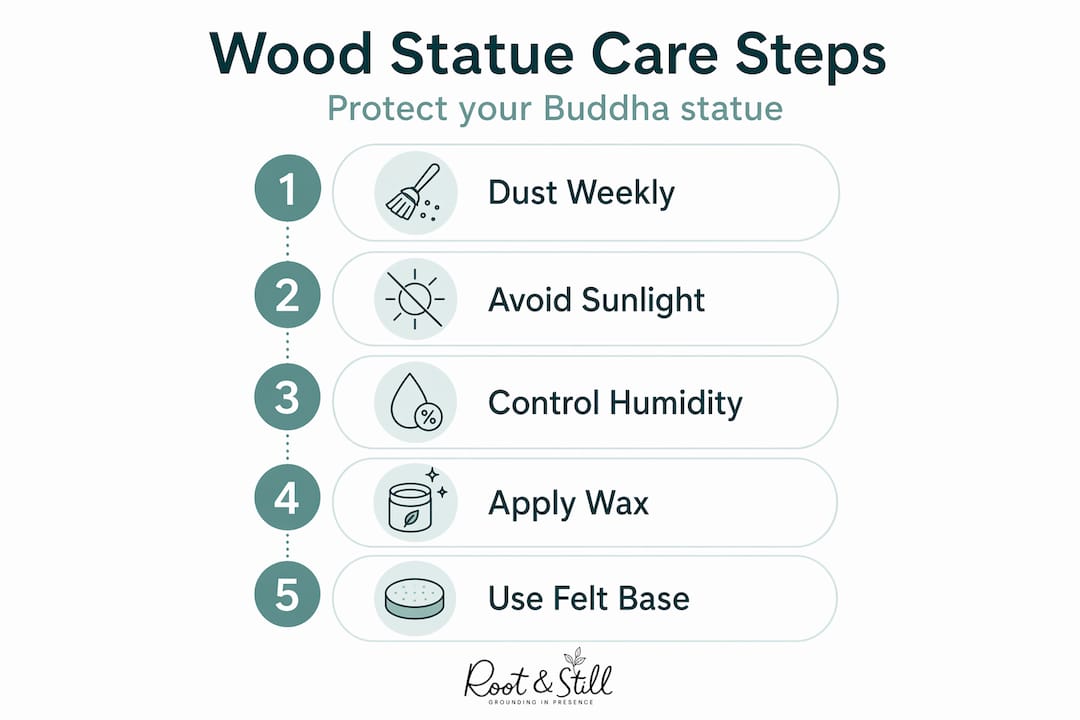
Beyond placement, applying a protective finish is one of the most effective things you can do. Natural oils and waxes nourish the wood, seal the surface against moisture fluctuation, and restore the warmth of the grain. Apply a small amount of linseed or tung oil to a soft cloth and work it gently into the wood in the direction of the grain. Allow it to absorb for 20 to 30 minutes, then buff away any excess with a clean cloth. Repeat every three to four months, or whenever the wood starts to look dry or dull.
Beeswax polish can be layered over oil as an additional barrier. Apply a thin coat, allow it to set for a few minutes, then buff to a soft sheen. It gives a gentle protective layer without making the statue look artificially shiny.
Common mistakes that accelerate wear include placing statues directly on cold stone surfaces without a felt base, storing them in garages or lofts where temperature and humidity swing dramatically, and using spray polish that leaves a silicone film. Each of these seems minor but compounds into visible deterioration over a couple of years.
Pro Tip: Place a thin piece of felt or a small natural-fibre mat beneath your statue. This protects both the base of the statue and the surface it rests on, and it also allows just enough airflow underneath to prevent moisture from collecting.
Troubleshooting signs of damage
Even with careful attention, things can go wrong. Knowing what to look for means you can respond before a small issue becomes a significant one.
Signs that warrant immediate attention:
- Fine surface cracks: Often caused by low humidity or a sudden change in temperature. Keep the environment stable and apply a nourishing oil to help the wood slowly recover moisture.
- Warping or bowing: This suggests the wood has been exposed to uneven humidity over time. Move the statue to a more stable environment and allow it to adjust slowly.
- White powdery marks or dark spots on the surface: These can indicate early mould growth, usually from excess moisture. Wipe gently with a cloth very lightly dampened with a solution of water and white vinegar, then dry immediately and improve ventilation in the room.
- Small holes or fine sawdust-like residue near the base: This is a sign of wood-boring insects. Regular inspection is the key to catching this early. Isolate the statue from other wooden objects and consult a professional immediately.
- Peeling or flaking of gold leaf or painted finish: Do not attempt to reapply paint or gilding yourself. This is a specialist area where well-meaning intervention often causes more harm than good.
For anything beyond surface cleaning and minor moisture recovery, seek out a professional furniture conservator or a specialist in carved wooden artefacts. Professional conservation is especially worth pursuing for pieces with cultural, spiritual, or monetary significance. A conservator will assess the extent of the damage and apply techniques that stabilise the wood without compromising the original carving or finish.
Caring for a wooden Buddha statue is not only a practical act. It is a form of respect. Approaching restoration with patience and the right expertise honours both the craftsmanship and the symbolism held within the piece.
My honest perspective on caring for these pieces
I have found that people tend to fall into one of two habits with wooden statues. They either over-clean, using too much moisture and too many products in an effort to keep things pristine, or they under-attend, leaving the statue untouched for months and wondering why it looks tired. Neither approach serves the wood well.
What I have come to believe is that caring for a wooden Buddha statue is more like tending to a relationship than following a maintenance schedule. You give it a little attention regularly, you notice when something feels off, and you respond with care rather than force. A weekly dust takes thirty seconds and tells you immediately if anything has changed.
One thing that genuinely surprises new owners is how much placement matters. I have seen statues in direct sun fade noticeably within a single summer, and I have seen pieces moved into a calmer spot on a shelf and visibly improve in texture and warmth over the following months as the wood restabilises. Understanding your statue’s role in a room’s design is not just an aesthetic consideration. It is a care decision.
The cultural and spiritual dimension of these objects also changes how I approach them. A Buddha statue is not furniture. Treating its maintenance with a degree of intentionality, taking your time, handling it gently, makes the process feel more grounded and less like a chore.
— Dhriti
Find the right piece and care for it well
At Rootandstill, the belief is simple: a beautiful statue deserves to be treated with the same care and intention that went into making it. Whether you are looking for your first wooden piece or adding to a considered collection, the 1m standing Buddha statue is one of the most loved pieces in the range. It is crafted with real attention to texture and form, and it responds beautifully to the care routine outlined in this article. For those drawn to something with more visual depth and colour, the turquoise praying Buddha brings a grounded richness to any calm space. Browse the full collection at Rootandstill and find the piece that feels right for your home.
FAQ
How often should I clean a wooden Buddha statue?
Dust your statue with a soft, dry cloth at least once a week. A deeper clean with a barely damp cloth can be done every few months, or when you notice surface dirt that dusting alone does not remove.
Can I use furniture polish on a wooden Buddha statue?
Avoid silicone-based polishes, as these leave a film that attracts dust and can dull the wood’s natural finish. Use a natural oil such as linseed or tung oil, or a light beeswax polish, applied sparingly every three to four months.
What is the best place in the home to display a wooden Buddha statue?
Place your statue away from direct sunlight and away from heat sources such as radiators. A stable, well-ventilated spot with consistent temperature and humidity levels will preserve the wood most effectively. For more guidance, choosing the right spot for your statue is covered in detail in the Rootandstill placement guide.
What should I do if my wooden statue develops cracks?
Small surface cracks are usually a sign of low humidity. Move the statue away from heat sources, apply a nourishing natural oil, and introduce a humidifier if the room is very dry. If cracks deepen or spread, consult a professional conservator rather than attempting to fill them yourself.
Is the care routine different for brass or stone Buddha statues?
Yes, meaningfully so. To care for a brass Buddha statue, you would use a soft cloth with a mild brass cleaner and avoid water exposure. To clean a stone Buddha statue, a natural-bristle brush with plain water works well, with no oils or waxes needed. Wood requires the most consistent environmental attention of the three materials.


