

Choosing the right types of indoor garden decorations is rarely as simple as picking what looks beautiful in a shop. You are balancing plant health, room conditions, and the atmosphere you want to live inside every day. For those of us drawn to calmer, more intentional interiors, that balance matters deeply. This guide walks you through the main categories of indoor garden decor ideas available to UK homeowners, from practical container choices to living walls and miniature landscapes, so you can make considered decisions that bring lasting stillness into your space.
Key Takeaways
| Point | Details |
|---|---|
| Planter variety | Choosing from plastic, terracotta, ceramic, and other pot types influences your indoor garden’s look and function. |
| Terrarium types | Closed terrariums support humidity-loving plants with low maintenance, while open terrariums suit dry-loving succulents. |
| Miniature decor | Using small themed accessories creates calming mini garden scenes that enhance mindfulness. |
| Living walls | Vertical gardens transform walls using styles from simple pockets to hydroponic towers, with varied upkeep needs. |
| Plant and decor match | Successful indoor gardens thrive when decorations align with plant care requirements and room conditions. |
Types of indoor garden decorations by container type
Your container is not just a vessel. It is often the first decorative decision you make, and it shapes everything from soil moisture to the mood of a shelf or windowsill. Six distinct planter types are widely recognised for indoor gardening, and understanding each one helps you choose with confidence rather than guessing at what will suit your home.
Plastic pots are the most accessible starting point. They come in almost every colour imaginable, hold moisture well, and are light enough to move around freely. They are not always the most elegant choice, but they work reliably and cost very little. Terracotta pots carry a warmth that plastic simply cannot replicate. Their earthy, Mediterranean quality grounds a room and softens harder surfaces around them. They are porous, which means they let soil breathe and dry between waterings, making them particularly well-suited to drought-tolerant plants.
Ceramic pots bring a more finished, polished look. Their glazed surface holds moisture more effectively than terracotta, which suits humidity-loving varieties like ferns or peace lilies. For anyone thinking about stylish UK garden sculpture ideas, ceramic planters with a matte or hand-finished glaze sit beautifully alongside stone and resin decorative pieces. Hanging baskets in wicker, macramé, or brushed metal are the go-to choice when floor and surface space is limited. The key detail most people overlook is drainage. Hanging planters need either a removable inner pot or a lined basket to prevent water damage.
Orchid pots are a specialist option, designed with side ventilation slots that allow air to circulate around the roots of epiphytic plants. They are not just functional; their latticed sides have a quiet, considered look. Finally, indoor garden systems are self-watering setups that use reservoirs or hydroponic principles to feed plants with minimal input from you.
Pro Tip: If you prefer a unified look across a shelf or windowsill, choose planters in the same material but allow variation in size. Three terracotta pots at different heights feel collected and calm rather than matchy.
Exploring terrariums: open and closed styles for serenity and ease
Terrariums offer something that most other types of indoor garden decorations cannot match: a world contained within glass. They are inherently meditative to build and to look at, which makes them a natural fit for anyone cultivating a mindful home.
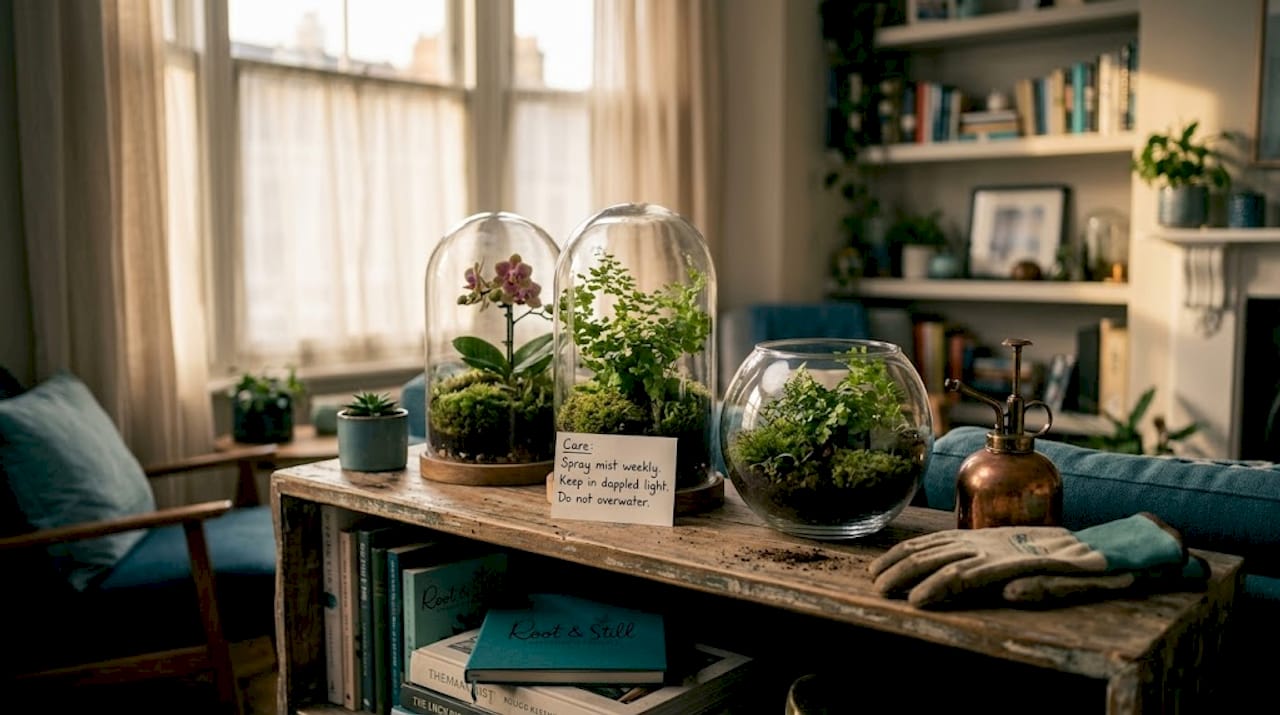
Closed glass terrariums function as sealed ecosystems. Moisture evaporates from the soil, condenses on the glass, and falls back down as a gentle internal rain cycle. Once established, they need watering only a handful of times each year. That low-maintenance rhythm suits the unhurried quality of a mindful living space beautifully.
Open terrariums work on a different principle. Air circulates freely, so the growing environment is drier and better suited to succulents, cacti, and air plants. They are more forgiving for beginners and allow for a wider range of arrangements and sculptural displays. Closed terrariums are popular in the UK for their humid microclimates and ease of care, but both styles have genuine merit depending on what you want to grow.
Building either type follows a consistent layered approach:
- A base layer of drainage gravel to allow excess water to settle away from roots
- A thin layer of activated charcoal to keep the environment fresh and prevent bacterial growth
- Sphagnum moss to act as a barrier between the drainage layer and the growing medium
- Compost or specialist terrarium soil suitable for your chosen plants
- Decorative elements such as stones, driftwood, or small figurines to anchor the scene
For closed terrariums, fittonia, maidenhair fern, and cushion moss thrive in the humidity. Open versions welcome haworthia, echeveria, and tillandsia air plants. Tucking a small mini Buddha figurine into the finished arrangement adds a quiet focal point that feels settled and intentional rather than decorative for decoration’s sake.
A well-built terrarium asks almost nothing of you. That is exactly the point. It grows quietly while you get on with living, and it is still there, green and unhurried, when you stop to look.
Pro Tip: For open terrariums, layer fine white sand or decorative grit on the surface. It helps with drainage and gives the arrangement a clean, gallery-like quality that feels genuinely considered.
Miniature garden accessories: crafting magical mini worlds
There is something disarming about a miniature garden. It invites you to slow down, look closely, and invest a small amount of creativity into something that does not demand urgency. As miniature garden decor uses small accessories and figurines to create scaled-down landscapes, the act of arranging these pieces becomes a gentle, grounding ritual in itself.
The core elements you might work with include:
- Tiny wooden or stone benches that suggest rest and stillness
- Pebble or gravel pathways that guide the eye through the arrangement
- Miniature bridges, arches, or gateways that create a sense of journey
- Moss mats and ground-cover plants that soften the scene
- Small water features or reflective dishes that introduce movement and sound
- Figurines, animals, or lanterns that give the landscape personality
The theme you choose shapes the emotional register of the space. A Zen garden built around raked sand, smooth stones, and a single seated figure holds a quiet, contemplative quality. A fairy garden planted with creeping thyme and dotted with tiny cottages feels whimsical and gentle. A beach scene using fine sand, shells, and trailing succulents brings a coastal calm indoors.
What makes these arrangements particularly useful for mindful homes is the way they shift your relationship with indoor gardening. Rather than tending to plants as a chore, you are curating a small world. A tabletop water feature placed at the centre of a Zen arrangement adds sound as well as sight, layering sensory calm into the design.
The most effective miniature gardens follow a simple principle: choose a theme, select three or four anchor pieces, and leave space around them. Density crowds the effect. Restraint lets each element breathe.
Living walls and vertical gardens: styles and systems for vibrant indoor greenery
Flat surfaces disappear when you bring greenery upward. Living walls and vertical gardens are among the more visually striking indoor garden decor ideas available, and they serve a practical purpose in smaller UK homes where floor space is limited. Indoor garden wall options for 2026 span a wide range, from simple DIY pallet arrangements to technically managed hydroponic tower systems.
| System type | Maintenance level | Cost range | Best suited for |
|---|---|---|---|
| Modular pocket planters | Low to medium | £20 to £80 | Trailing plants, herbs, small ferns |
| Macramé hangers | Low | £10 to £40 | Single specimen plants, trailing vines |
| Wall-mounted terrariums | Low | £30 to £100 | Air plants, succulents, moss |
| Pallet planter (DIY) | Medium | £0 to £30 | Herbs, small trailing varieties |
| Moss panel | Very low | £40 to £150 | Preserved or living moss, no watering needed |
| Hydroponic tower | High | £150 to £400+ | Herbs, salad leaves, compact vegetables |
Choosing between these systems depends on three honest questions: how much time you want to spend on upkeep, how much light your wall receives, and what visual outcome matters most to you. A preserved moss panel, for example, requires no watering at all and holds its rich green colour for years. It is perhaps the most genuinely low-effort option, and it looks quietly beautiful in almost any interior.
Macramé hangers and modular pockets sit at the other end of the aesthetic spectrum, feeling more gathered and alive. They suit spaces where you want a sense of growth and movement. For anyone considering broader garden wall design ideas, mixing a living element with a stone or ceramic decorative piece on the same wall creates a layered, considered composition that holds the eye without overwhelming it.
Decorating with low-maintenance indoor garden systems
Modern indoor garden systems have made it possible to keep thriving greenery in rooms that would once have been considered unsuitable for plants. These are not just practical solutions. Used thoughtfully, they become part of the decorative scheme, particularly when paired with considered accessories that reinforce a calm, grounded aesthetic.
Self-watering planters work by drawing moisture up from a reservoir through the soil via capillary action. You fill the reservoir every week or two rather than watering the plant directly. Indoor garden systems provide this self-watering setup while enhancing year-round growth with minimal maintenance, which suits mindful households that want greenery without daily obligation.
| System type | Watering frequency | Suitable plants | Light needed |
|---|---|---|---|
| Self-watering planter | Every 1 to 2 weeks | Most houseplants, herbs | Natural or artificial |
| Hydroponic system | Nutrient refill every 2 weeks | Herbs, salad leaves, peace lily | Grow lights recommended |
| Wicking planter | Every 1 to 3 weeks | Ferns, pothos, spider plants | Low to medium natural light |
| Aquaponic mini tank | Water top-up weekly | Aquatic plants, herbs | Natural light preferred |
These systems also allow you to grow herbs and salad leaves year-round, something particularly valuable during the shorter daylight months common to the UK. A small hydroponic herb unit on a kitchen shelf, placed beside a Buddha head decoration, creates a functional and serene vignette: fresh scent, living green, and a quiet sculptural presence all in one arrangement.
Pro Tip: Place self-watering systems inside a decorative outer pot made from rattan, stone, or linen-textured ceramic. The technical inner workings stay hidden, and the overall composition feels warm and intentional rather than utilitarian.
A fresh view on choosing indoor garden decorations for mindfulness
Here is something most indoor garden guides quietly skip over: your decor choices can only sustain a serene atmosphere if the plants inside them are actually healthy. A drooping, yellowing plant in a beautifully chosen pot does not create calm. It creates low-level anxiety.
The RHS frames indoor plant success as a match between plant needs and the specific conditions in each room, and this is the insight that should shape every decorative decision you make. Before you select a container style, a terrarium type, or a vertical system, ask what light, temperature, and humidity the space genuinely offers. Then choose plants that suit those conditions. Then build the decor around them.
This reverses the way most people approach creative indoor plant displays. The common instinct is to choose what looks appealing, buy the plants, and hope they survive. The more considered approach, and the one that actually delivers lasting serenity, starts with the room and works outward to the decoration.
More plants and more elaborate setups do not automatically create more calm. A single, thriving peace lily in a handsome stone pot, placed where it genuinely has the light it needs, will bring more stillness to a room than a crowded shelf of struggling specimens. Restraint and attention to plant and decor synergy are the quiet hallmarks of a truly mindful indoor garden.
The honest truth is that trend-driven buying, the impulse to follow what is popular on social media, rarely produces the stillness people are actually looking for. A home that feels genuinely grounded is built slowly, with intention, one considered piece at a time.
Discover mindful indoor garden decorations at Root & Still
If you are building an indoor garden space with calm and intention at its centre, the decorative pieces you place alongside your plants matter as much as the plants themselves. At Root & Still, every piece in our collection is chosen to complement living greenery with warmth, texture, and quiet presence. A standing Buddha statue anchors a plant-filled corner with stillness. A Buddha head decoration adds sculptural depth to a shelf without competing with the greenery around it. For terrarium displays and miniature Zen gardens, our tabletop water feature introduces the soft sound of moving water, turning a decorative arrangement into something genuinely felt.
Frequently asked questions
What are the benefits of using closed terrariums indoors?
Closed terrariums create a sealed, humid environment that requires minimal watering and supports tropical plants, making them ideal for low-maintenance indoor gardening in the UK. Once established, they need watering only a few times per year.
Which planter type is best for hanging indoor plants?
Hanging baskets made from wicker, metal, or macramé make excellent use of vertical space, but the key is ensuring proper drainage. As drainage is trickier with hanging planters, look for styles that are lined or accommodate a removable inner pot.
How do indoor garden systems reduce maintenance efforts?
Indoor garden systems use self-watering reservoirs and hydroponic setups to provide plants with consistent moisture and nutrients, significantly reducing the need for daily care. Self-watering gardens give you thriving greenery with minimal intervention, and no soil is even required in some systems.
What miniature garden themes promote mindfulness indoors?
Zen gardens, fairy gardens, and beach-inspired scenes are among the most effective themes for creating calm indoors. Popular miniature decor themes use small figurines, pathways, and water features to encourage creativity and a gentle, unhurried focus.


