

Statues are defined in therapeutic and environmental psychology as physical attentional anchors that reduce mind-wandering, lower cortisol, and support emotional regulation through mindful observation. The role of statues in stress relief goes well beyond decoration. Research published in 2026 shows that biophilic art environments incorporating sculptures produced measurable reductions in both depression and anxiety over nine months, with morning cortisol levels dropping significantly in participants. Frameworks such as Mindfulness-Based Stress Reduction (MBSR), Stress Reduction Theory (SRT), and the ASBA protocol all recognise sculptural art as a legitimate tool for calming the nervous system. Whether you place a stone Buddha in a quiet corner or a textured polyresin figure on your desk, the effect on your body and mind is grounded in real science.
How do statues biologically and psychologically reduce stress?
The physiological mechanism is direct. Biophilic art activates the parasympathetic nervous system, which lowers heart rate and blood pressure while reducing circulating cortisol. This is the same system engaged during deep breathing or gentle yoga, and statues trigger it passively, simply through visual contact. Stress Reduction Theory explains this as the body’s natural response to non-threatening, nature-connected stimuli.

Psychologically, statues function as what mindfulness traditions call drishti, a Sanskrit term for a focused gaze point. In both CBT-informed practices and home mindfulness routines, statues anchor awareness externally, pulling attention away from repetitive thought loops and reducing emotional instability. This is not a passive or incidental effect. It is a deliberate mechanism used in structured therapeutic settings.
One of the most useful concepts here is soft fascination, drawn from environmental psychology. Statues hold attention gently, without demanding cognitive effort, which allows the mind to rest and recover during or between demanding tasks. Unlike scrolling a phone or watching television, gazing at a sculpture requires nothing of you. That effortlessness is precisely what makes it restorative.
- Parasympathetic activation lowers heart rate and reduces cortisol through passive visual engagement with sculptural art.
- Soft fascination allows micro-recoveries during mentally taxing work, reducing the cumulative build-up of burnout.
- Statues serve as drishti focal points in mindfulness and CBT practices, anchoring attention and steadying emotional responses.
- Biophilic sculptures combining natural textures with organic forms amplify the calming effect by connecting the viewer to nature.
Pro Tip: Place a textured stone or ceramic figure within your natural sightline at your desk. Even a few seconds of unfocused gazing during a work pause activates the soft fascination response and gives your mind a genuine rest.
What types of statues are most effective for calm and relaxation?
Not all statues produce the same effect, and the differences matter when you are choosing pieces for a mindful home. The table below compares the most common types by their psychological and sensory qualities.
| Statue type | Material | Primary effect | Best suited for |
|---|---|---|---|
| Buddha figurines | Polyresin, stone, ceramic | Emotional calm, compassion, tranquillity | Meditation corners, living rooms |
| Abstract sculptures | Metal, resin, wood | Analytical relaxation, open contemplation | Studios, reading nooks |
| Figurative nature forms | Clay, terracotta | Tactile stress release, grounding | Desks, therapy spaces |
| Garden statues | Stone, weathered resin | Biophilic calm, outdoor restoration | Gardens, terraces, balconies |
Buddha statues occupy a particular place in this conversation. Their facial expression and posture are deliberately designed to evoke tranquillity and compassion, and research supports the idea that these symbolic cues generate positive emotional states that ease stress. This is not purely cultural. The visual language of a serene, settled figure communicates safety to the nervous system regardless of your background.
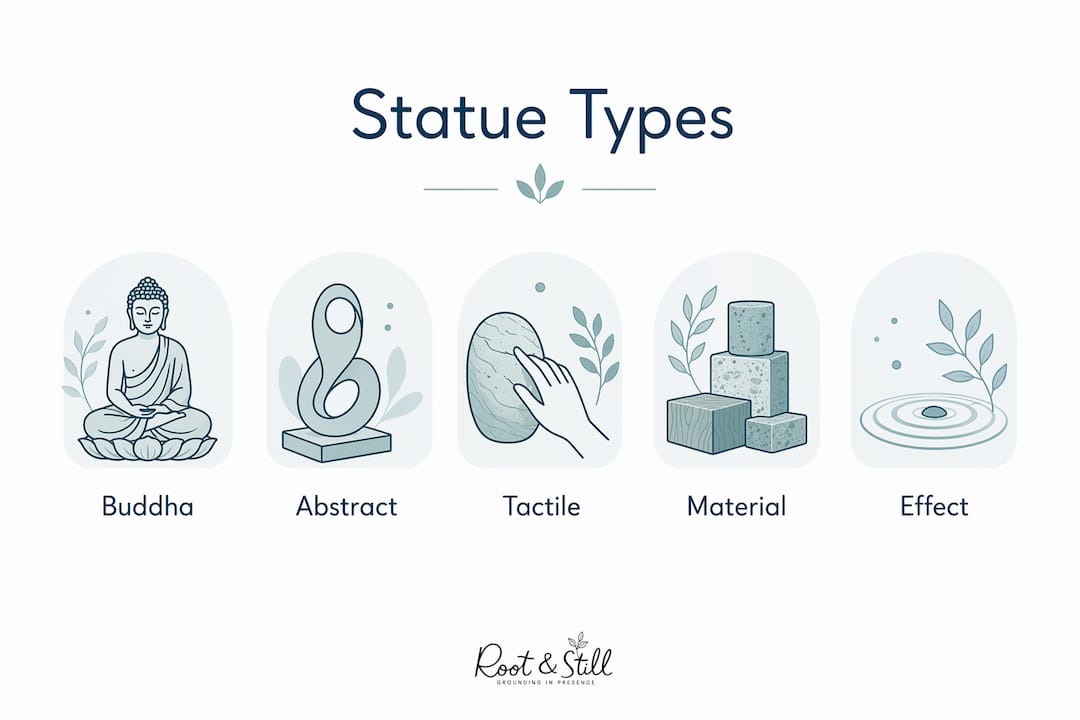
Abstract sculptures work differently. They invite open-ended contemplation rather than directing emotion toward a specific feeling, which suits people who find figurative art too prescriptive. The relaxation they produce tends to be more analytical and spacious, less emotionally directed. Neither approach is superior. The right choice depends on what resonates with you personally.
Tactile statues made from clay or polyresin serve a third function entirely. Popularised in stress-management practices in Thailand and beyond, interactive clay figures can be safely touched, squeezed, or even struck for physical anger release. This is a legitimate form of somatic stress relief, and it works because the body needs somewhere to put tension that the mind cannot always resolve through thought alone.
Where should you place statues to maximise their calming effect?
Placement is not an afterthought. The environment surrounding a statue shapes how effectively it functions as a stress-relief tool. A beautiful figure tucked behind a pile of books or placed in a high-traffic, noisy corridor will not deliver the same effect as one positioned with intention.
-
Choose a quiet sightline. Position your statue where your eyes naturally rest during moments of pause, at the end of a hallway, on a low shelf opposite your reading chair, or at the centre of a meditation corner. The goal is effortless visual contact, not a display piece you have to seek out.
-
Use natural light where possible. Soft, indirect daylight brings out the texture of stone, ceramic, and polyresin, and natural light itself has a calming effect on the nervous system. A figure placed near a north-facing window or in dappled garden light feels more alive and grounded.
-
Pair with complementary elements. Statues work best when they are part of a considered sensory environment. Combine them with living plants, an incense holder, a candle in a warm-toned vessel, or a small singing bowl. Each element reinforces the others, deepening the atmosphere of calm. You can find practical guidance on this in Rootandstill’s guide to styling a Buddha statue in your living room.
-
Create a dedicated anchor point. Use your statue as a daily visual cue to begin a mindfulness practice. Sitting quietly and resting your gaze on the figure for two to three minutes before starting work or before bed trains your nervous system to associate that visual with calm. Consistency matters more than duration.
-
Consider outdoor placement. Gardens and terraces offer the added benefit of natural surroundings, which amplify the biophilic effect. A stone figure among plants or beside water creates a genuinely restorative micro-environment that you can return to throughout the day.
Pro Tip: Avoid placing a mindfulness statue in the same room as your television or primary work screen. Competing visual stimuli dilute the attentional anchor effect and make it harder for the piece to do its quiet work.
How do statues compare with other art-based stress-relief methods?
Art therapy and stress relief overlap in several ways, but statues occupy a distinct and accessible position within that broader field. The key distinction is between passive observation and active creation.
Active creative practices such as clay modelling, painting, or collage engage the hands and require sustained concentration. They are effective for emotional processing and can produce significant reductions in anxiety, but they also demand time, materials, and a certain willingness to engage. Not everyone has that capacity at the end of a difficult day.
Statues, by contrast, ask nothing of you. Mindful observation of sculptures bypasses the effortful concentration required by breath-focused meditation, making sculptural art an effective attentional anchor even for complete beginners. This accessibility is one of the strongest arguments for statues as a stress-relief tool in everyday home environments.
Museum-based mindfulness protocols such as the ASBA protocol have formalised this insight. Engaging with sculptural art in museum settings reduced anxiety with large effect sizes (d = 1.07 to 1.27) during brief structured sessions. Cortisol reduction accounted for up to 31% of the intervention effect on anxiety symptoms. These are not modest results. They suggest that the act of attentive, unhurried looking at a three-dimensional form is genuinely therapeutic.
Urban biophilic art environments take this further. Participants exposed to sculpture-integrated green spaces over nine months reported that 67% saw improvements in depression symptoms and 72% in anxiety. These figures reflect long-term, cumulative exposure rather than a single session, which reinforces the case for living with statues rather than simply visiting them.
Key takeaways
Statues reduce stress by activating the parasympathetic nervous system, anchoring mindful attention, and providing soft fascination that allows genuine mental recovery throughout the day.
| Point | Details |
|---|---|
| Physiological stress reduction | Statues activate the parasympathetic nervous system, lowering cortisol, heart rate, and blood pressure. |
| Soft fascination effect | Gentle visual engagement with sculptures allows restorative micro-breaks without cognitive effort. |
| Placement shapes impact | Quiet sightlines, natural light, and complementary elements like plants or incense deepen the calming effect. |
| Buddha statues and symbolism | Serene posture and facial expression communicate safety to the nervous system, easing emotional tension. |
| Accessibility over active therapy | Passive observation of statues is effective for beginners and requires no materials, training, or sustained effort. |
Why statues deserve more credit than we give them
I have spoken with many people who initially dismissed the idea of using a statue for stress relief as wishful thinking or aesthetic indulgence. They assumed that anything genuinely therapeutic had to involve effort, a breathing exercise, a journalling practice, a therapist’s appointment. The idea that simply resting your eyes on a well-placed figure could shift your nervous system felt too quiet to be real.
What changed their minds, and what I find most compelling about the research, is that the mechanism is not mystical. It is physiological. The parasympathetic nervous system does not care whether you believe in the process. It responds to the stimulus. A serene, grounded form in your sightline during a stressful afternoon is not a placebo. It is a signal.
The misunderstanding I see most often is treating statues purely as objects to be styled rather than tools to be used. A Buddha figure placed beautifully on a shelf but never actually looked at with intention is just decor. The same figure used as a daily anchor point, a place to rest your gaze for two minutes before a difficult meeting or after a hard conversation, becomes something genuinely useful. The difference is not the object. It is your relationship with it.
My advice is to experiment without pressure. Start with one piece in one location. Notice whether your eyes find it naturally. Notice whether the room feels different when it is there. You do not need to build a meditation room or adopt a spiritual practice. You need a quiet corner and something worth looking at.
— Dhriti
Bring stillness home with Rootandstill
If you are ready to bring this kind of quiet presence into your space, Rootandstill has curated a collection of pieces designed to do exactly that. The Buddha Feng Shui Set in Elegant Grey combines symbolic calm with modern interior styling, making it a natural anchor for any meditation corner, living room shelf, or garden terrace. For those who want to deepen the sensory atmosphere, the handcrafted incense burner pairs beautifully with a statue to create a genuinely restful environment. Every piece in the Rootandstill collection is chosen to bring stillness and balance into everyday life, not as ornament, but as presence. Explore the full range and find what feels right for your home.
FAQ
What is the role of statues in stress relief?
Statues serve as physical attentional anchors that activate the parasympathetic nervous system, lower cortisol, and reduce mind-wandering through a process known as soft fascination. Research shows that mindful observation of sculptural art produces measurable reductions in anxiety and stress hormones.
Which type of statue is best for reducing anxiety at home?
Buddha statues are particularly well-suited for anxiety relief because their posture and facial expression are designed to communicate tranquillity and compassion, generating positive emotional states that ease tension. Biophilic sculptures incorporating natural textures and organic forms also produce strong calming effects.
Where is the best place to put a calming statue at home?
Position your statue within a natural sightline during moments of rest, such as opposite a reading chair, at the centre of a meditation corner, or near a window with soft natural light. Pairing it with plants, an incense holder, or a candle deepens the restorative atmosphere.
Can statues replace other forms of art therapy for stress?
Statues complement rather than replace active art therapy practices such as painting or clay modelling. Their primary advantage is accessibility. Passive observation requires no materials or training and is effective even for beginners, making statues a practical daily stress-relief tool rather than a substitute for structured therapy.
How long does it take for statues to have a calming effect?
Brief, intentional sessions of two to three minutes of mindful gazing are sufficient to begin activating the soft fascination response. Longitudinal research found that sustained exposure over nine months produced significant reductions in both depression and anxiety, suggesting that consistency amplifies the benefit over time.


