

The role of Buddha in positive energy is the deliberate cultivation of wholesome mental states through ethical conduct, loving-kindness, and mindful effort, producing natural joy, calm, and healing as by-products. This is not about forcing cheerfulness or repeating affirmations. Buddhist philosophy and positivity are inseparable because the teachings address the root causes of mental suffering directly, removing what blocks well-being rather than papering over it. Practices like metta (loving-kindness meditation), the Brahmaviharas, and the Medicine Buddha tradition each offer a structured path toward genuine positive energy, and modern research is beginning to confirm what contemplatives have observed for centuries.
How do Buddha’s teachings cultivate positive energy?
Buddhist positivity emerges from removing harmful mental habits rather than trying to forcibly induce happiness, which means the wholesome states arise naturally once the conditions are right. Think of it less like switching on a light and more like clearing the windows so the light already present can come through. This distinction matters enormously, because many people approach positivity as something to manufacture, and that effort alone creates tension.
The mechanics follow what Theravada texts describe as an upward spiral. Virtuous conduct leads to freedom from remorse, which opens into delight, then joy, then calm, and finally deeper concentration. Each stage supports the next. Joy in Buddhist practice arises from clarity about the nature of things and the path out of suffering, progressing from gladness through calm to clear seeing and freedom. This is a sequential, trainable process, not a mood.
Right Effort, one of the eight factors of the Noble Eightfold Path, provides the practical framework. Right effort comprises four distinct actions: preventing unwholesome states from arising, abandoning those that have already arisen, cultivating wholesome states, and maintaining them once present. This makes positive energy in Buddhism a managed system rather than a fleeting feeling. Effort without direction causes exhaustion or no results at all, which is why the four-part structure is so precise.
Wholesome states worth cultivating include generosity, compassion, and patience. Each of these, when practised consistently, creates a mental environment where calm and joy can settle. They are not virtues to perform for others but conditions you create for your own mind first.
Pro Tip: When working with Right Effort, focus on one unwholesome pattern at a time rather than trying to overhaul your entire mental life at once. Sustained, gentle attention to a single habit yields more lasting change than broad, exhausting effort.
What is metta and how does it generate healing positive energy?
Metta, translated as loving-kindness or goodwill, is the Buddha’s most direct teaching on generating positive energy toward oneself and others. It is a meditation practice and a way of orienting the mind throughout daily life, not only on the cushion. The Buddha taught metta as both a path to inner peace and a form of protection, and the tradition records a striking example: the Buddha is said to have tamed an aggressive elephant by radiating goodwill toward it, with the animal calming completely in his presence.
Practising metta yields eleven specific rewards, including peaceful sleep, waking happily, freedom from nightmares, protection by deities, and a radiant complexion. These benefits span the physical, psychological, and relational. The breadth of this list reflects how deeply the tradition understood the connection between mental states and physical well-being, long before modern psychoneuroimmunology arrived at similar conclusions.
A 2026 study using a mindfulness and loving-kindness framework found that positive affect increased by 66% and negative affect decreased by 56% in adults with obstructive sleep apnoea. The positive-to-negative affect ratio improved by 256% after combined course and home practice. These are not marginal improvements. They suggest that Buddha’s influence on well-being operates through measurable psychological mechanisms, not solely through faith or belief.
Metta practice extends outward in widening circles: from yourself, to those you love, to neutral acquaintances, to difficult people, and finally to all beings without exception. When paired with wisdom and equanimity, metta can dispel fear and restore health, contributing to both protective and healing positive energy. The combination of these three qualities is what gives the practice its depth and staying power.
Pro Tip: Follow the proper metta sequence starting with yourself before extending goodwill to others. Skipping this step often leads to sentimental or strained positivity because the mind has not yet been primed with genuine self-compassion.
How do the Brahmaviharas form a balanced system for well-being?
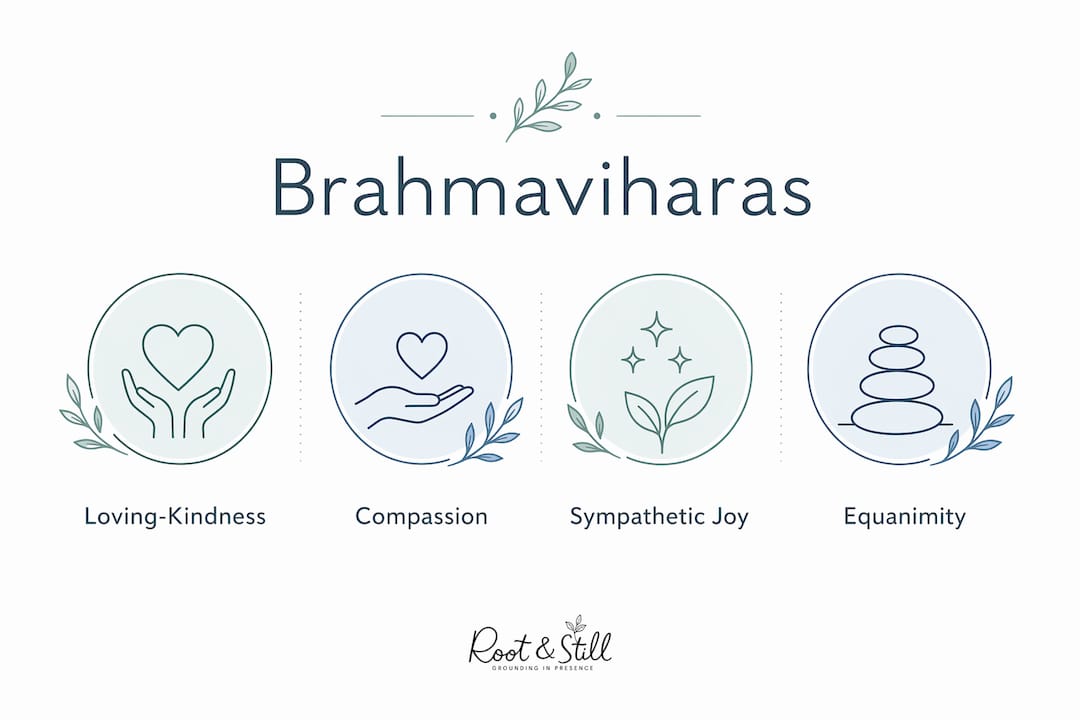
The Brahmaviharas, often translated as the four divine abodes or four immeasurables, are the Buddha’s most complete emotional training system. They are loving-kindness (metta), compassion (karuna), sympathetic joy (mudita), and equanimity (upekkha). Together, they form a balanced emotional system where each quality supports and corrects the others, much like four legs of a table. Remove one and the whole structure becomes unstable.
| Brahmavihara | Meaning | What it corrects |
|---|---|---|
| Metta (loving-kindness) | Goodwill toward all beings | Ill will and resentment |
| Karuna (compassion) | Wish to relieve suffering | Cruelty and indifference to pain |
| Mudita (sympathetic joy) | Delight in others’ happiness | Envy and competitive bitterness |
| Upekkha (equanimity) | Balanced, non-reactive presence | Attachment and aversion |
A common misunderstanding is that equanimity means emotional flatness or detachment. It does not. Equanimity is the quality that keeps loving-kindness from becoming possessive, compassion from collapsing into despair, and sympathetic joy from tipping into excitement. It is the steadying quality that allows the other three to remain clear and sustainable over time.
These qualities are trainable skills, not fixed personality traits. Practising the Brahmaviharas builds what the texts call a “brahma-dwelling” here and now, a quality of presence that feels genuinely spacious and warm. Research on loving-kindness meditation has shown measurable changes in brain regions associated with empathy and emotional regulation, which supports the tradition’s claim that these are not merely philosophical ideals but practical tools for reshaping how the mind responds to experience.
What role does the Medicine Buddha play in healing and positive energy?
The Medicine Buddha, known in Sanskrit as Bhaisajyaguru, is the Buddha of healing and medicine, and his tradition represents one of the most focused expressions of Buddha’s influence on well-being in the physical and psychological sense. His image is typically depicted in deep lapis lazuli blue, holding a bowl of healing nectar and a myrobalan plant, both symbols of the medicine he offers to those who suffer.
The Medicine Buddha’s vows promise physical and mental healing for those suffering from diseases and lack of support, ensuring perfect health and protection once his name reaches them. These vows, recorded in the Sutra of the Medicine Buddha, are not passive promises. They describe an active spiritual force generated by the Buddha’s compassion and the practitioner’s own sincere engagement with the practice.
The healing focus of this tradition is both psychological and ethical. Medicine Buddha practice integrates spiritual healing vows with ethical living and mindful conduct, understood as complementary to medical interventions and focused on the suffering conditions that aggravate illness. Mental agitation, harmful habits, and unresolved emotional pain are recognised as factors that intensify physical disease. The practice addresses these directly.
Positive energy practices in Buddhism connected to the Medicine Buddha include:
- Reciting his mantra or name with sincere intention to generate healing goodwill
- Visualising his lapis blue form to cultivate a sense of spacious, healing presence
- Observing ethical precepts as a foundation for the practice to take root
- Dedicating the merit of practice to others who are suffering
This tradition makes clear that the role of Buddha in positive energy extends beyond mood or mindset. It reaches into the body, relationships, and the conditions of daily life, offering a path toward genuine restoration rather than surface-level calm.
Key takeaways
Buddha’s teachings generate positive energy by removing harmful mental states and cultivating wholesome ones through structured practices including metta, the Brahmaviharas, Right Effort, and the Medicine Buddha tradition.
| Point | Details |
|---|---|
| Positivity arises naturally | Removing harmful mental habits allows joy and calm to emerge without force. |
| Right Effort is a system | Four-part mental training prevents, abandons, cultivates, and maintains wholesome states. |
| Metta has measurable benefits | Loving-kindness practice improved positive affect by 66% in a 2026 study. |
| Brahmaviharas balance each other | Loving-kindness, compassion, sympathetic joy, and equanimity form a self-correcting emotional system. |
| Medicine Buddha complements healing | This tradition addresses psychological and ethical roots of suffering alongside physical illness. |
Why I think we misunderstand Buddhist positivity entirely
Most people who come to Buddha’s teachings looking for positive energy are searching for a feeling. They want to feel better, lighter, less anxious. That is a completely understandable starting point. But what I have found, both in my own practice and in watching others engage with these teachings, is that the moment you chase the feeling directly, it recedes. The tradition is quite precise about this. You do not cultivate joy by trying to feel joyful. You cultivate the conditions, and joy follows.
The concept of Right Effort changed how I understood this entirely. It reframes positivity not as a mood but as a maintenance practice, something you tend to daily the way you tend a garden. You pull weeds (unwholesome states), you water what is growing (wholesome states), and you do not expect the garden to look the same every morning. Some days the metta practice feels warm and alive. Other days it feels dry and mechanical. Both are part of the training.
What I also find underappreciated is the role of physical space in supporting this inner work. The symbolism in Buddha imagery is not decorative in the shallow sense. A well-placed statue or a candle holder that anchors a corner of the room can genuinely shift the quality of attention you bring to that space. It is not magic. It is the same principle as the meditation hall: the environment shapes the mind before the mind shapes the environment. If your home feels restless and cluttered, your practice will feel that way too. If it feels settled and intentional, you arrive at the cushion already halfway there.
The Brahmaviharas, in particular, deserve more attention as a lifelong emotional fitness regimen rather than a beginner’s exercise. Equanimity is the one most people skip, and it is the one that makes everything else sustainable.
— Dhriti
Bring positive energy into your home with Rootandstill
If these teachings have resonated with you, the next step is creating a physical space that supports the practice. Rootandstill curates handcrafted-looking Buddha decor designed to bring stillness and grounded presence into everyday rooms. The Buddha Feng Shui Set in Elegant Grey combines symbolic elements to anchor calm in your living space, while the Buddha Candle Holder in White offers a quiet focal point for evening reflection or meditation. These are not ornamental imports. They are pieces selected to hold meaning and soften the mood of a room, the way a good practice softens the mind. Explore the full collection at Rootandstill and find what feels right for your space.
FAQ
What is the role of Buddha in positive energy?
The Buddha’s role in positive energy is to provide a structured path for cultivating wholesome mental states through practices like metta, Right Effort, and the Brahmaviharas, which remove the conditions that block natural joy and calm.
Can Buddha’s teachings help with stress and anxiety?
Yes. Loving-kindness meditation, a core positive energy practice in Buddhism, has shown measurable reductions in negative affect and improvements in emotional well-being, including in adults with stress-related sleep conditions.
What are the Brahmaviharas and why do they matter?
The Brahmaviharas are four trainable emotional qualities: loving-kindness, compassion, sympathetic joy, and equanimity. Together they form a self-correcting system that sustains positive energy without tipping into sentimentality or emotional exhaustion.
What is the Medicine Buddha and how does it relate to healing?
The Medicine Buddha is a Buddhist figure whose vows focus on relieving physical and mental suffering. His practice integrates ethical living and mindfulness as complementary support to medical care, addressing the psychological roots of illness.
How does metta meditation generate positive energy?
Metta generates positive energy by training the mind to extend genuine goodwill first to oneself, then outward to all beings. Practised in the correct sequence, it yields benefits including peaceful sleep, reduced fear, and a measurable increase in positive affect.


