Theravada Buddhism is the oldest surviving school of Buddhism, focused on cultivating virtue (sila), concentration (samadhi) and wisdom (panna) to realise Nibbana and end the cycle of rebirth known as samsara. Its doctrinal foundation rests on the Four Noble Truths, the Noble Eightfold Path, and the Pali Canon (Tipitaka) as its principal scripture. For anyone choosing a Buddha statue or building a mindful corner at home, understanding these values matters: they point directly toward the qualities of intentionality, simplicity, and respectful display that make a space feel genuinely settled rather than merely styled.
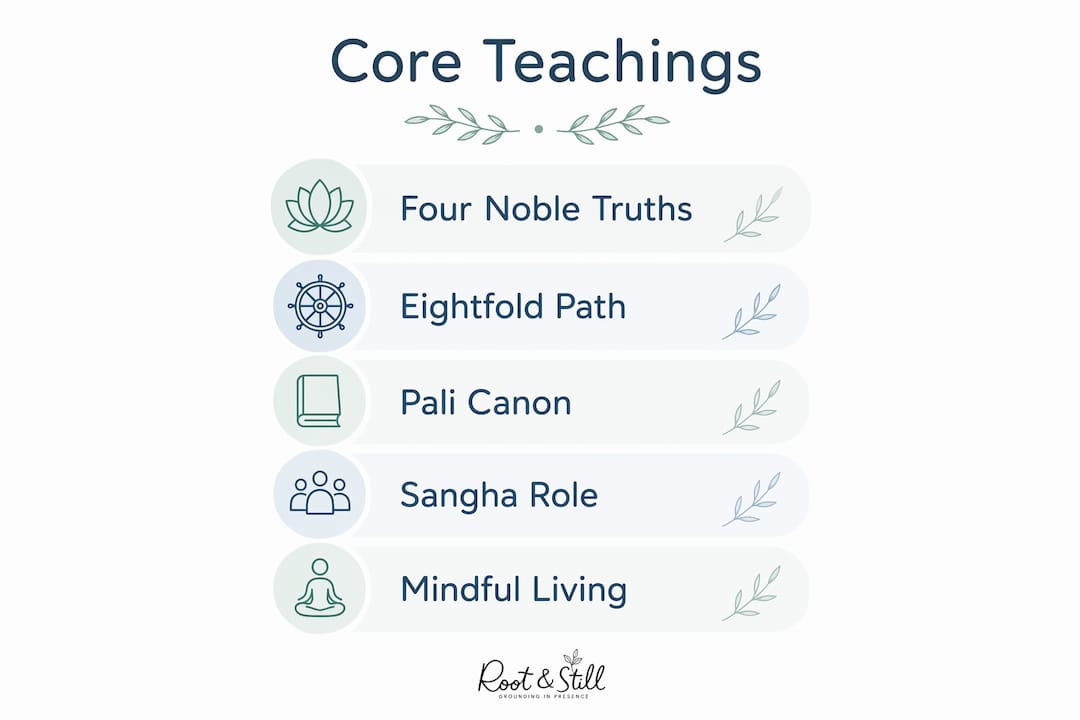
What Theravada Buddhism teaches: the Four Noble Truths and the Eightfold Path
The Four Noble Truths form the doctrinal backbone of Theravada Buddhism principles:
- Dukkha — suffering and unsatisfactoriness are woven into ordinary experience.
- Samudaya — craving and attachment are the root cause of that suffering.
- Nirodha — suffering can be brought to an end.
- Magga — the Noble Eightfold Path is the way to end it.
The Eightfold Path organises into three areas of training: ethical conduct (sila: right speech, action, livelihood), mental cultivation (samadhi: right effort, mindfulness, concentration), and wisdom (panna: right view, intention). For a mindful home, these three areas translate naturally into restraint in what you bring into a space, focused attention on how it is arranged, and clear seeing about why it is there at all.
The Pali Canon and the role of the sangha
Theravada draws its authority from the Pali Canon, also called the Tipitaka, composed of three collections:
- Sutta Pitaka — the discourses attributed to the Buddha and his close followers.
- Vinaya Pitaka — the monastic code governing the lives of monks and nuns.
- Abhidhamma Pitaka — detailed philosophical and psychological analysis.
The Tipitaka texts are considered the oldest surviving records of the Buddha’s teachings, first committed to writing around 29 BCE. The monastic community (sangha) remains central to Theravada life. Laypeople support monks through dana (generosity), and monks in turn offer teachings and ritual support. This mutual relationship shapes how sacred images are treated: a Buddha statue is not merely decorative but a focal point for practice and respect.
Key Theravada practices: vipassana, ethical living, and the three marks
Lived Theravada practice centres on three interconnected areas.
- Vipassana (insight) meditation — the practitioner observes experience directly to perceive the three marks of existence: anicca (impermanence), dukkha (unsatisfactoriness), and anatta (no-self). This direct observation, rather than intellectual study alone, is what Theravada emphasises as the path to liberation.
- Ethical conduct (sila) — laypeople observe five precepts: refraining from harming living beings, stealing, sexual misconduct, false speech, and intoxicants. These precepts create the stable ground from which meditation can deepen.
- Dana and lay practice — generosity toward the sangha and toward others is a foundational act. Small offerings at a home altar, a moment of gratitude before sitting, or choosing ethically sourced decor all resonate with this spirit. Dana as a practice structurally links laity and monastics; at home, it can be as simple as a symbolic offering of flowers or incense at a dedicated corner.
Theravada today and what it means for UK buyers
Theravada predominates in Sri Lanka, Thailand, Myanmar, Laos and Cambodia and has spread significantly to the West, with estimates of over one hundred million practitioners worldwide. In the United Kingdom, Theravada communities are active in cities including London, Birmingham, and Manchester, often centred around Thai, Sri Lankan, or Burmese temples. The vipassana revival has also brought insight meditation into secular wellness settings across the UK, making Theravada principles more accessible than ever.
If you visit a Theravada temple in the UK, a few points of etiquette matter:
- Dress modestly: cover shoulders and knees.
- Remove shoes before entering the shrine room.
- Sit with your feet pointing away from the Buddha image.
- Speak quietly and move calmly within the space.
Cultural sensitivity extends to your home, too. Choosing a statue because it resonates with genuine values rather than as a trend piece makes a real difference to how the space feels and how the tradition is honoured.
Pro Tip: Before buying, spend a few minutes reading about the posture or mudra of the statue you are drawn to. That small act of curiosity is itself a form of respect.
How Theravada values translate into mindful home decor
Theravada emphasises practical skills over doctrinal accumulation, which means the objects in your home should support practice, not just signal it. A few guiding principles:
- Intentionality — place only what you genuinely connect with. A single, well-chosen statue carries more presence than a crowded shelf.
- Simplicity — natural materials (stone, wood, unglazed resin) and neutral tones align with the restrained aesthetic that Theravada values embody. Rootandstill’s Buddhist colour symbolism guide offers a helpful starting point for choosing hues that feel grounded rather than decorative.
- Ethical sourcing — choosing handmade or fairly traded items reflects the sila principle of not causing harm.
- Respectful scale — a statue placed at or above eye level when seated feels anchored; one placed on the floor beside shoes does not.
- Functional use — a dedicated meditation corner, however small, signals to your mind that this space is for stillness. Even a cushion, a small statue, and a candle can hold that intention.
Pro Tip: A dedicated corner does not need to be large. A shelf at seated eye height, cleared of clutter, with one statue and a small singing bowl is enough to create a genuine sense of arrival when you sit down.
How to choose and display a Buddha statue respectfully
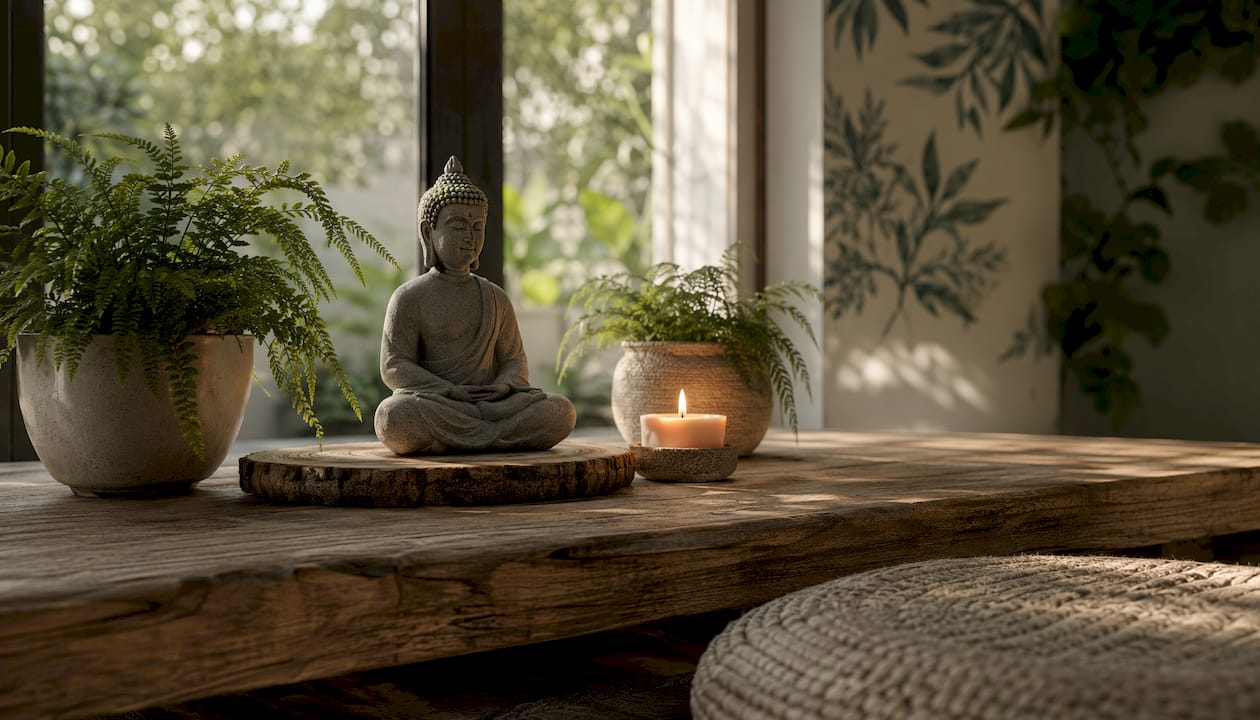
Posture meanings at a glance
| Posture | Traditional meaning | Suggested placement |
|---|---|---|
| Seated, hands in lap (meditation) | Concentration and inner stillness | Meditation corner, study |
| Earth-touching (bhumisparsha) | The moment of enlightenment | Living room, altar shelf |
| Reclining | Parinibbana; peace at life’s end | Bedroom, restful spaces |
| Standing, hand raised | Protection and reassurance | Entrance hall, garden |
| Buddha head | Wisdom and presence | Mantel, bookshelf |
Buying checklist
- Verify the seller’s provenance: handmade or fairly traded items are preferable to mass-produced imports with no clear origin.
- Choose a posture whose meaning resonates with the room’s purpose.
- Match scale to the space: a small figurine suits a desk or shelf; a larger piece needs room to breathe.
- Prefer natural or traditional materials: stone, wood, brass, or quality resin.
Placement dos and don’ts
- Do place the statue at or above seated eye level.
- Do give it a clean, uncluttered surface with a little space around it.
- Don’t place it on the floor, near shoes, or in a bathroom.
- Don’t position it facing a wall or in a dark corner with no light.
For living-room ideas, Rootandstill’s guide to serene living room decor shows how scale and placement work together in real spaces.
Short daily practices you can do with a statue or mindful corner
- A five-minute sit — settle in front of your statue, close your eyes, and follow your breath. No technique required; simply arriving is the practice. This reflects the samadhi strand of the threefold training.
- A daily act of dana — place a small offering (a flower, a lit candle, a stick of incense) before sitting. The gesture shifts your attention from receiving to giving, which is the heart of Theravada lay ethics.
- A singing bowl cue — strike the bowl once at the start and once at the end of your sit. The sound marks a boundary between ordinary activity and intentional stillness, supporting the sila of mindful conduct throughout the day.
For consistency, attach the practice to something you already do: morning tea, the moment before your desk work begins, or the last five minutes before bed. Habit stacking keeps a short practice alive far longer than willpower alone.
Where to learn more and where to find the right pieces
Trustworthy starting points for further reading:
- Access to Insight — free translations of Pali suttas and clear introductory essays; begin with the short introductory article before moving to individual suttas.
- Lion’s Roar: Theravada — accessible modern introductions to practice and tradition.
- Buddhanet — broad educational resource covering history, geography, and practice.
- Oxford Research Encyclopaedia of Religion — scholarly depth on Theravada’s historical and social dimensions.
For decor guidance, Rootandstill’s meditation corner decor guide pairs well with the product pages below. If you are buying as a gift, the mindful gifting guide offers thoughtful framing for choosing something genuinely meaningful.
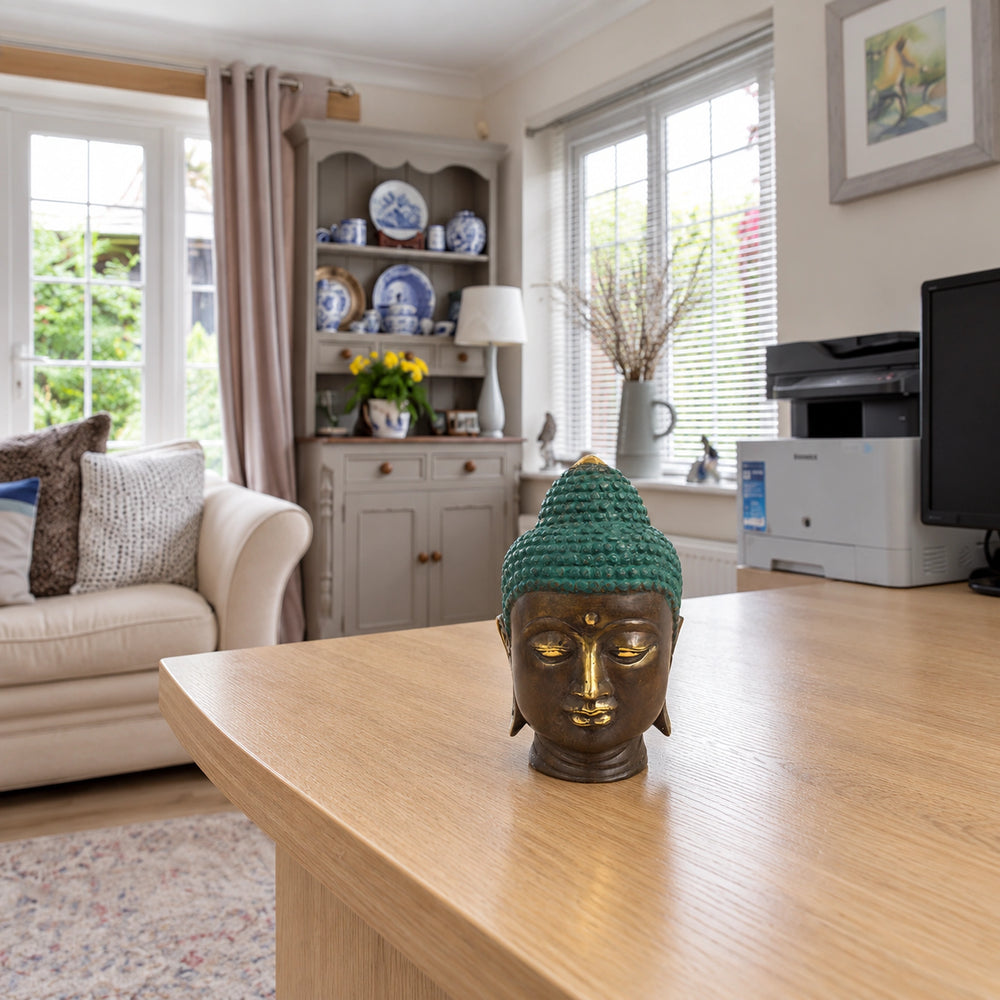
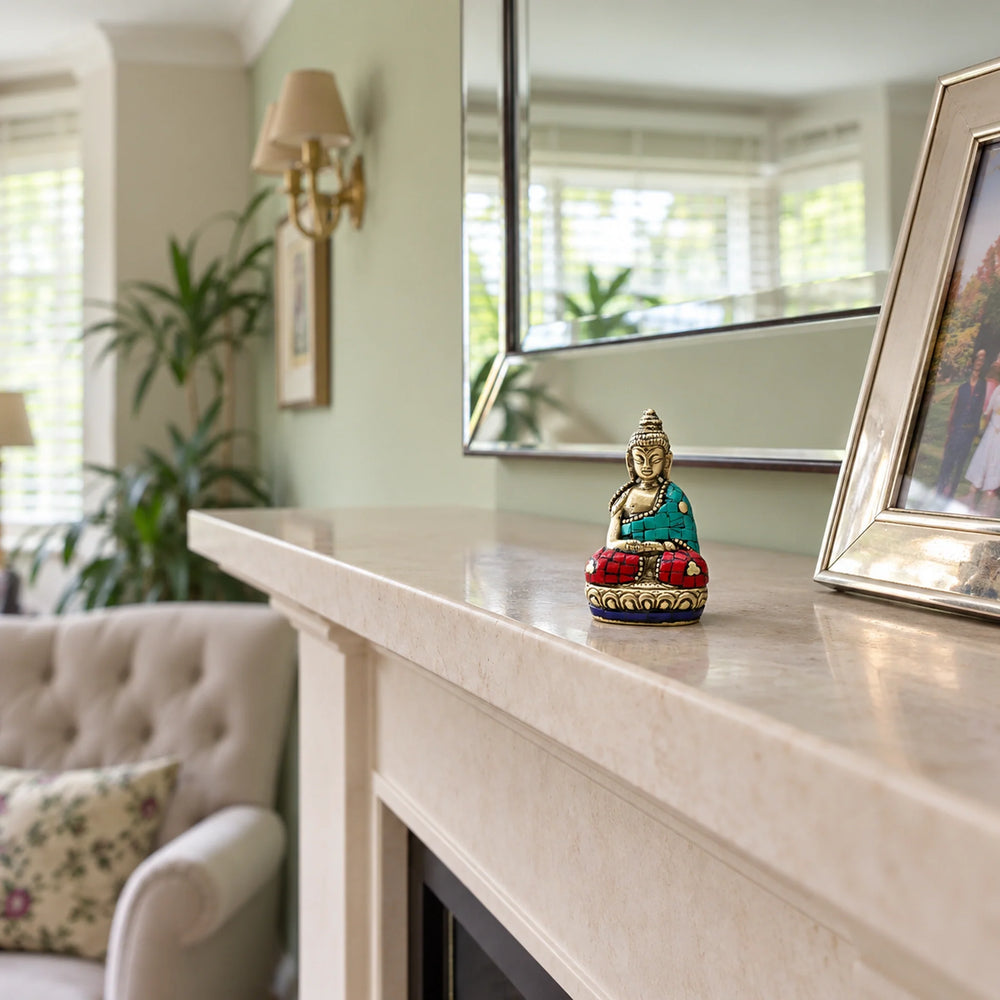
Rootandstill carries handmade pieces suited to the principles above, including the Antique Small Buddha Figurines for altar or meditation corners, and the Tranquility Buddha Head Statue in Green Copper for a mantel or shelf. Ethical sourcing matters: always ask whether a piece is handmade, who made it, and under what conditions.
Key festivals and rituals observed in Theravada Buddhism
Theravada’s ritual calendar is woven around the lunar cycle and the life of the Buddha. For laypeople, three festivals are particularly significant:
Vesak (Buddha Day) falls on the full moon of May and marks the Buddha’s birth, enlightenment, and passing. Laypeople visit temples, offer flowers and incense, and observe the precepts more strictly for the day. In the UK, Vesak celebrations are held at Theravada temples in London and other cities.
Vassa (Rains Retreat) is a three-month period during which monks remain in their monasteries. Laypeople increase their support through offerings and attend more teachings. The end of Vassa, Kathina, is marked by the offering of robes to the monks.
Uposatha days occur on the new and full moon each month. Laypeople may visit the temple, take the eight precepts for the day, and meditate. These observances connect the domestic and monastic spheres in a rhythm that grounds practice in ordinary life.
Sourcing Buddha statues ethically and the question of authenticity
Authenticity in Theravada tradition is not primarily about age or rarity. It is about whether an object supports genuine practice and is treated with appropriate respect. Theravada’s conservatism in preserving its textual tradition does not translate into rigid rules about materials or styles for laypeople; local ritual practices have always varied across Sri Lanka, Thailand, Myanmar, and beyond.
What matters ethically when sourcing a statue:
- Provenance — know where the piece was made and by whom. Handmade items from skilled artisans carry a different quality of attention than factory-produced replicas.
- Fair conditions — buying from suppliers who pay fair wages and work with traditional craftspeople honours the sila principle of not causing harm.
- Appropriate use — a statue bought as a focal point for practice or respectful display is used as the tradition intends. One bought purely as a trend accessory, placed carelessly, is not.
Complementary wellness objects such as crystal accessories can sit alongside a statue without conflicting with Theravada values, provided the overall space remains simple and intentional rather than cluttered.
Key takeaways
Theravada Buddhism is a practice tradition built on virtue, concentration, and wisdom, and those same values offer a clear framework for choosing and displaying Buddha images at home with genuine care.
| Point | Details |
|---|---|
| Core framework | The Four Noble Truths and Noble Eightfold Path organise all Theravada practice into ethics, meditation, and wisdom. |
| Scripture authority | The Pali Canon (Tipitaka) is the principal text; its three baskets cover discourses, monastic rules, and philosophy. |
| Respectful display | Place statues at or above seated eye level, on a clean surface, away from shoes and bathrooms. |
| Ethical sourcing | Choose handmade or fairly traded pieces; ask about provenance and the conditions under which they were made. |
| Rootandstill | Rootandstill curates handmade Buddha statues and mindful accessories chosen to support genuine practice and respectful display. |
Why these principles matter to how we curate
There is a tendency, in the UK home decor market, to treat Buddha statues as interchangeable aesthetic objects: serene faces, pleasing shapes, neutral tones. The tradition behind them is richer and more specific than that framing suggests. Theravada is not a mood board. It is a structured path with a clear aim, and the objects associated with it carry that weight whether or not the buyer is a practitioner.
That does not mean you need to be Buddhist to display a Buddha statue respectfully. It means the choice deserves a moment of genuine consideration: what posture, what material, what placement, and why. A statue chosen with that kind of attention tends to feel more settled in a space. It gives the room something to anchor to.
The pieces that hold up over time are the ones that were chosen slowly, placed with care, and given room to breathe.
Rootandstill: handmade pieces for a genuinely calm home
Rootandstill was built around a simple conviction: that the objects you live with should be chosen with the same care you bring to practice itself. Every statue and accessory in the collection is handmade or carefully sourced, with natural materials and traditional craftsmanship at the centre.
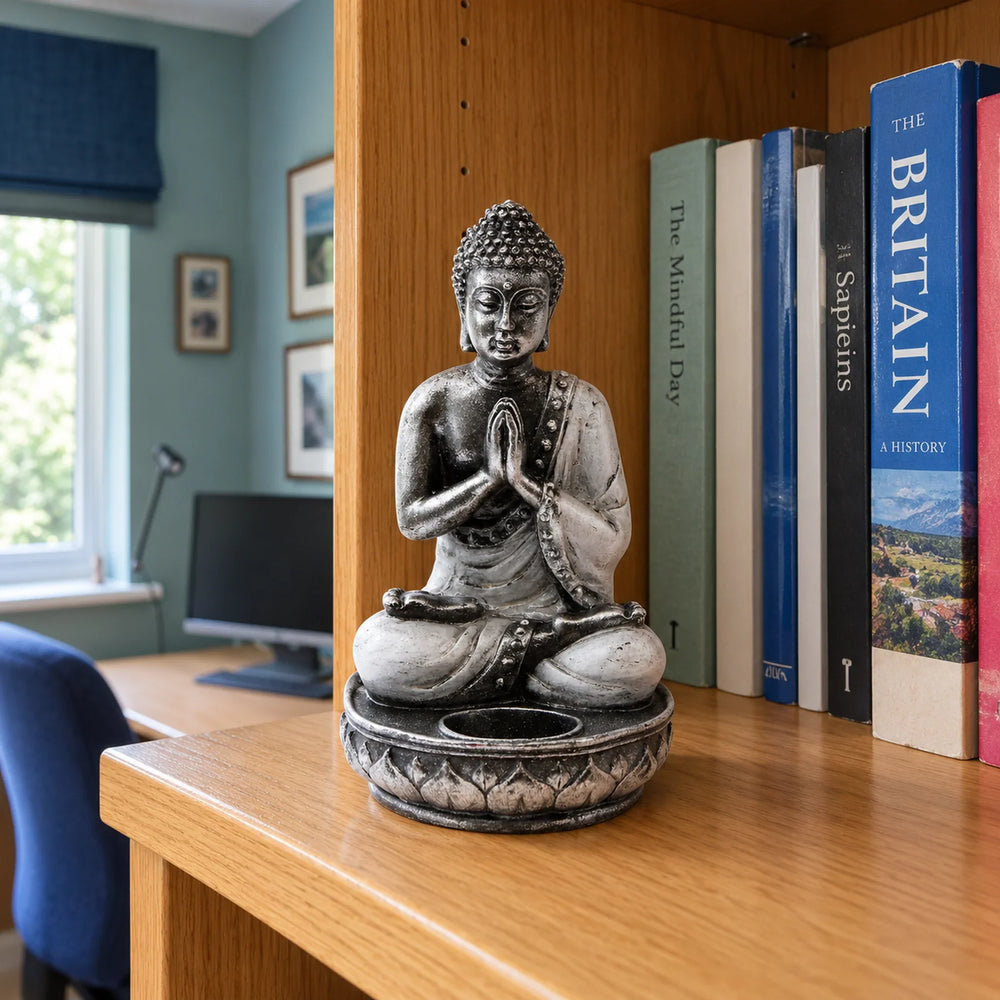
For a meditation corner, the Antique Small Buddha Figurines offer a grounded, classic presence that suits both dedicated practice spaces and quiet shelves. The Resin Silver Mini Buddha Statue works beautifully on a desk or bedside table. Browse the full collection at rootandstill.com and, if you would like guidance on placement or styling, get in touch directly for personalised advice.
FAQ
What does Theravada Buddhism mean?
Theravada translates as “the doctrine of the elders.” It is the oldest surviving school of Buddhism, rooted in the Pali Canon and practised primarily in Sri Lanka, Thailand, Myanmar, Laos, and Cambodia.
How does Theravada differ from Mahayana Buddhism?
Theravada focuses on individual liberation through the Eightfold Path and the ideal of the arahant, while Mahayana emphasises the bodhisattva path of seeking enlightenment for the benefit of all beings. The two traditions also draw on different scriptural canons.
Is it respectful to display a Buddha statue at home in the UK?
Yes, provided the statue is placed thoughtfully: at or above seated eye level, on a clean surface, and away from shoes or bathrooms. Choosing a handmade or ethically sourced piece and understanding the posture’s meaning adds a further layer of respect.
What is the Pali Canon?
The Pali Canon (Tipitaka) is Theravada’s principal scripture, composed of three collections: the Sutta Pitaka (discourses), Vinaya Pitaka (monastic rules), and Abhidhamma Pitaka (philosophical analysis). It was first committed to writing around 29 BCE.
Which Buddha statue posture suits a meditation space?
The seated meditation posture, with hands resting in the lap, represents concentration and inner stillness and is the most natural choice for a dedicated meditation corner or study.
Useful sources and recommended reading
- Access to Insight — the most accessible free library of Pali Canon translations in English. Start with the short introductory essay on Theravada before exploring individual suttas.
- Lion’s Roar: Theravada — clear, modern introductions to practice, tradition, and the three marks of existence. Good for readers new to Buddhist ideas.
- Buddhanet — broad educational resource covering history, geography, and the relationship between monks and laypeople.
- Oxford Research Encyclopaedia of Religion — scholarly depth on Theravada’s historical development and social institutions; recommended for readers who want more than an introduction.
- Rootandstill blogs — for practical decor guidance, the meditation room decor guide and the mindful decor trends post offer styling context grounded in the values above.