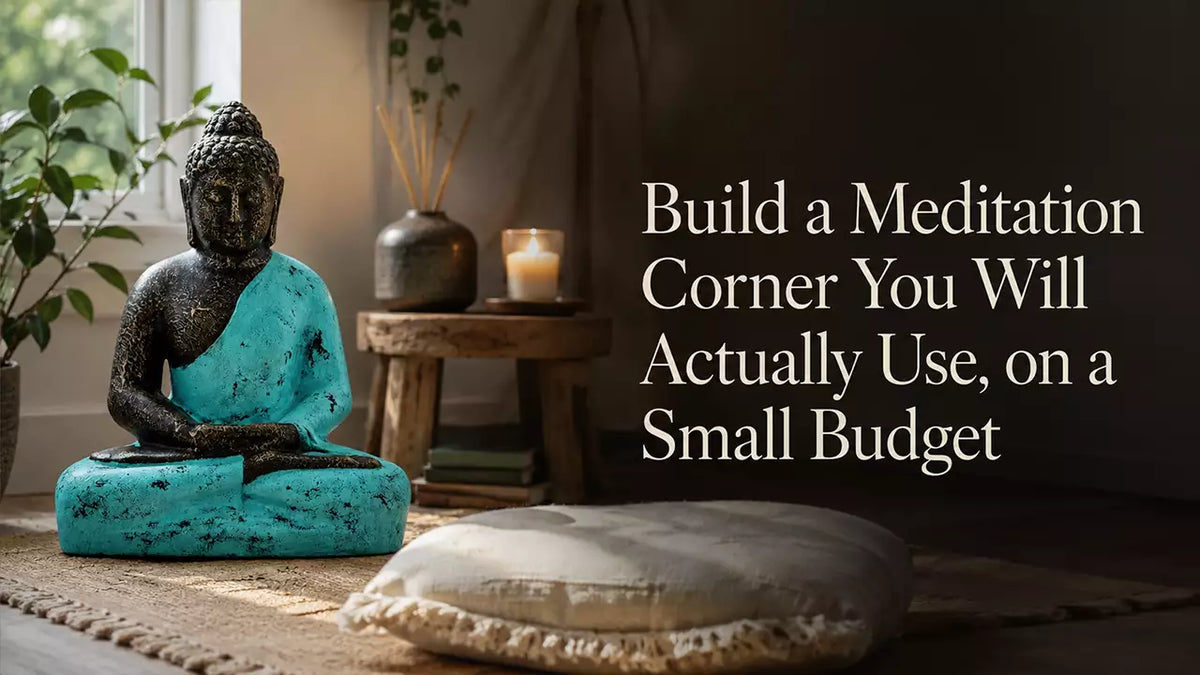
A meditation corner can begin with a suitable chair and a place where you can sit without blocking everyday activity. It does not require a statue, fragrance, special lighting or a complete set of accessories.
Plan the space around the practice you want to learn and your own comfort. A decorated corner is not a guarantee of a particular mental or physical outcome.
Choose the practical location first
Try a quiet part of a room you already use. Check whether the location remains accessible when other people are home and whether it can be cleared without moving heavy furniture. A shared room can work if the arrangement is easy to set up and put away.
Keep doors and walking routes clear. If floor seating is uncomfortable or unsuitable, use an appropriate chair rather than assuming a particular posture is required by the décor.
Use what you have before spending
Make a short list of what is actually missing. Existing seating, a room lamp and a place to keep instructions may be enough. Try the arrangement before buying objects to fill it.
| Priority | Low-cost starting point |
|---|---|
| A place to sit | Suitable seating already available |
| Usable light | Daylight or an existing compatible lamp |
| Fewer interruptions | A practical arrangement with others who use the room |
| Easy storage | A shelf or box for items you actually use |
Set a budget from current prices rather than relying on a fixed online promise that every setup costs a particular amount.
Add one optional focal point
If you enjoy a visual focus, choose one object with a meaning or appearance you value. Keep enough space around it for safe support and ordinary cleaning. For a religious practice, follow the relevant community’s guidance about imagery.
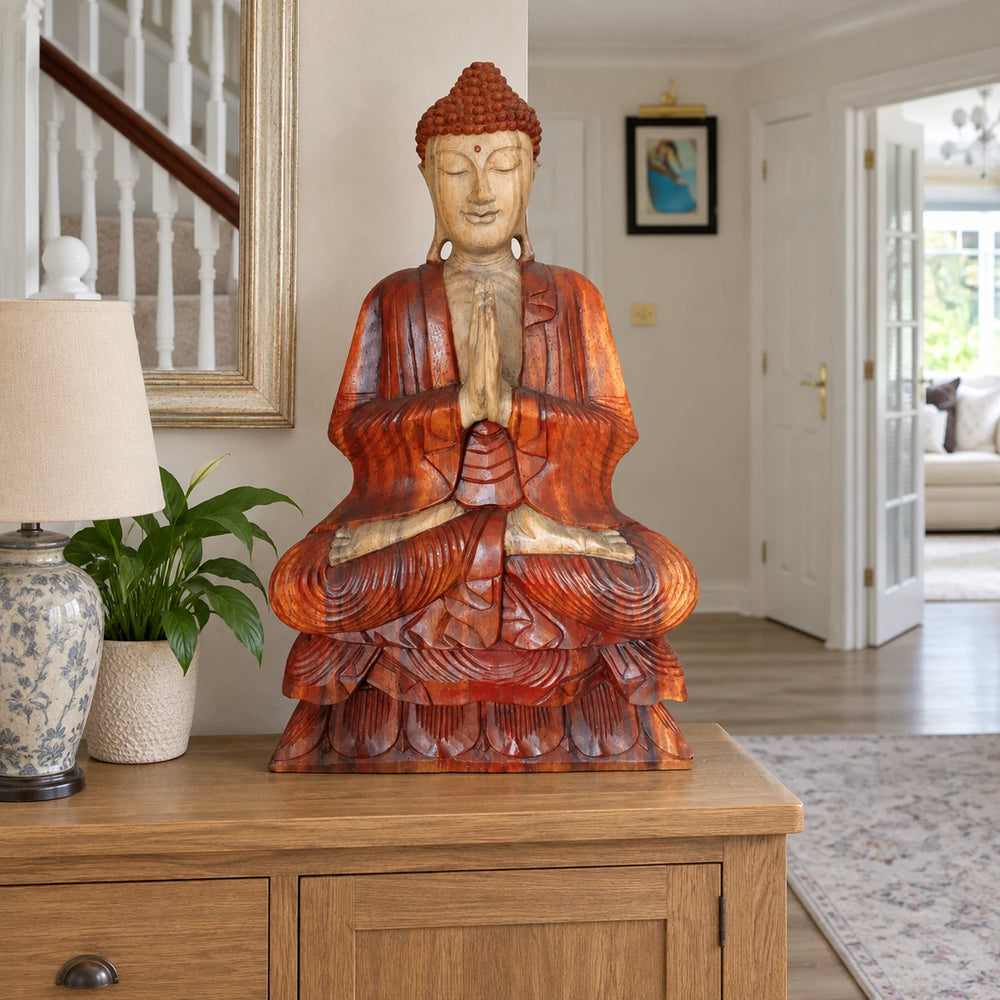
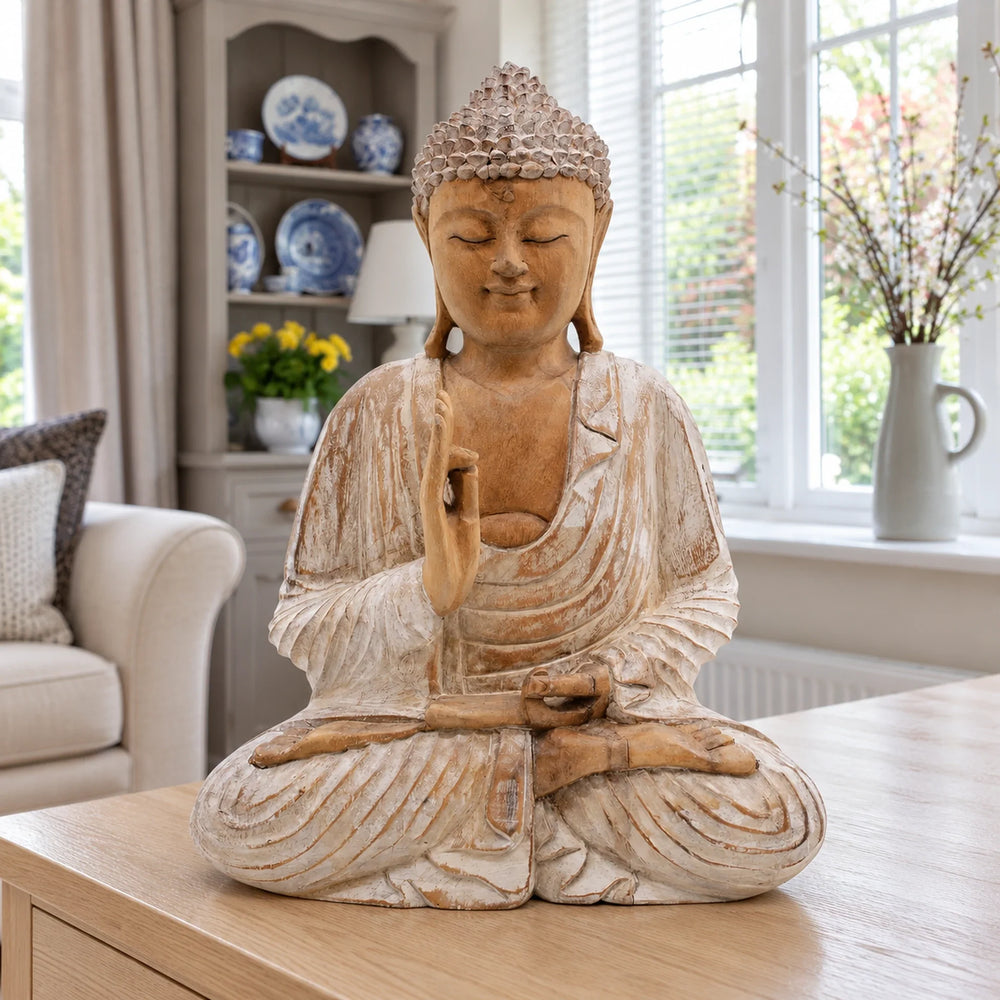
Our resin Buddha statues provide individual designs to compare by size, depiction and finish. Owning an image is separate from learning a meditation practice.
Keep sound and fragrance optional
Do not add a fountain, candle or incense simply because a styled photograph includes one. Each brings its own care or operating requirements. A flame-free, fragrance-free space can be a useful choice, particularly when you want fewer things to manage.
Review the arrangement after using it
Ask practical questions: was the seating suitable, was the light useful, and was putting everything away easy? Change what gets in the way before buying more. If learning meditation, use appropriate teaching rather than treating decorating advice as instruction.
Frequently asked questions
Do I need a dedicated room?
No. A convenient part of a shared room may be enough.
Do I need a Buddha statue?
No. It is an optional choice, with religious meaning to consider.
What should I buy first?
First try what you own, then address a specific practical gap.