

Slow living is defined as a mindful lifestyle movement that prioritises quality, presence, and intentional attention over speed, busyness, and constant productivity. Rooted in the Italian Slow Food movement, it has grown into a broader cultural response to the pressures of modern life and relentless technology. The philosophy centres on a concept called tempo giusto, an Italian phrase meaning “the right tempo,” which signals that slow living is not about doing everything slowly. It is about finding the pace that genuinely fits each moment, each task, and each season of life. The benefits are real: reduced stress, clearer thinking, and a deeper sense of well-being.
What is slow living and what principles guide it?
Slow living is not laziness dressed up as a lifestyle. Carl Honoré, the writer most closely associated with popularising the slow movement, describes it as a quality-before-quantity mindset. The goal is not to reject modern life but to engage with it more consciously and vividly.
The concept of tempo giusto sits at the heart of this philosophy. Some tasks deserve unhurried attention: a shared meal, a walk in the park, a conversation with someone you love. Others are perfectly suited to efficiency. Slow living asks you to tell the difference and act accordingly.
A few principles define the slow living lifestyle:
- Presence over productivity. The cultural myth that busyness equals importance is one slow living directly challenges. Depth of attention matters more than volume of output.
- Intentional environment design. Slow living means designing your time, home, and phone habits to reduce artificial urgency. Notifications, cluttered spaces, and packed schedules all create a sense of pressure that is not always real.
- Single-tasking. Focusing on one thing at a time is not inefficient. Research consistently shows that divided attention reduces the quality of every task it touches.
- Mindful attention. Slow living asks you to notice what is actually happening around you, rather than rushing through experience to reach the next item on a list.
Pro Tip: Start by identifying one moment in your day that already feels unhurried, perhaps a morning cup of tea or an evening walk. That moment is your anchor. Build from there rather than trying to overhaul everything at once.
What are the well-being benefits of slow living?
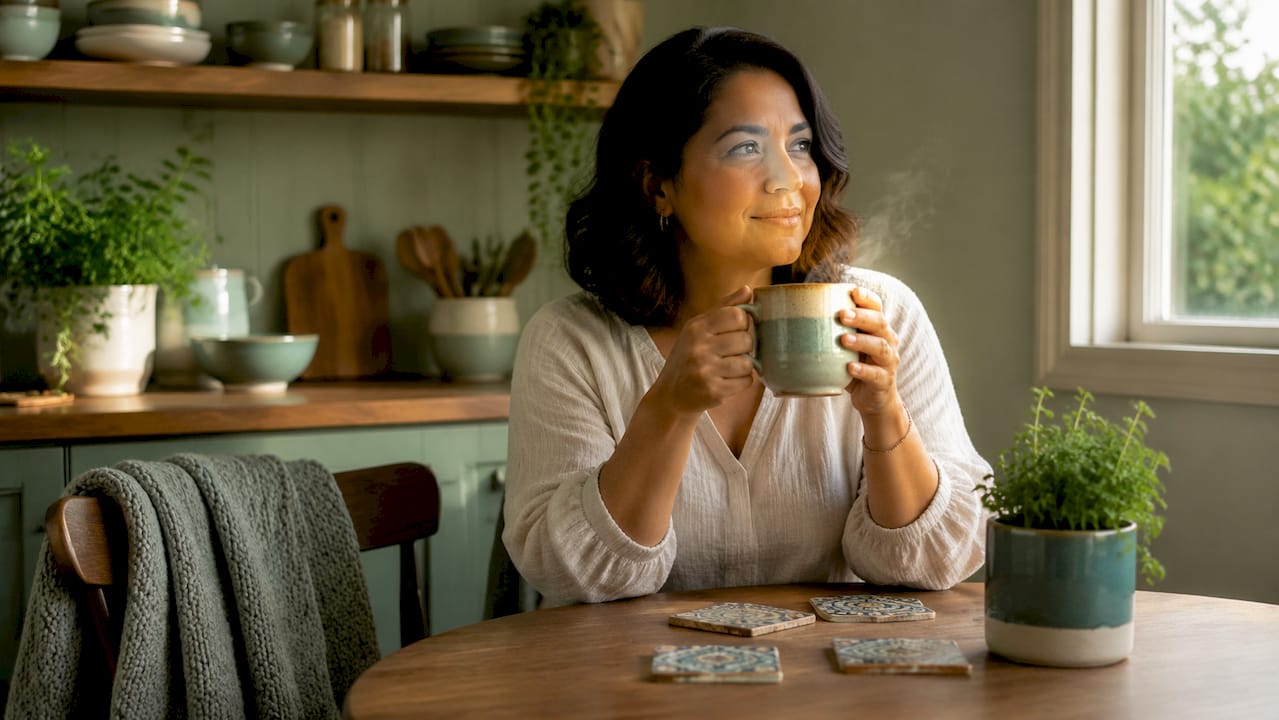
The benefits of slow living reach well beyond a vague sense of calm. Adopting a slower pace is associated with reduced stress and anxiety, improved focus and mental clarity, better sleep quality, stronger digestion, and more meaningful relationships. These are not minor lifestyle perks. They reflect measurable shifts in how the body and mind function day to day.
One of the most significant mechanisms is nervous system regulation. Repeated calm, unhurried actions signal safety to the nervous system over time, gradually reducing the chronic stress response that many people carry without realising it. This is why slow living practitioners often report feeling more settled not just during their quiet rituals, but throughout the entire day.
The relational benefits are equally worth noting. When you are not perpetually rushed, you are more present with the people around you. Conversations feel less transactional. Shared meals become genuinely nourishing rather than functional. These small shifts accumulate into a noticeably different quality of daily life.
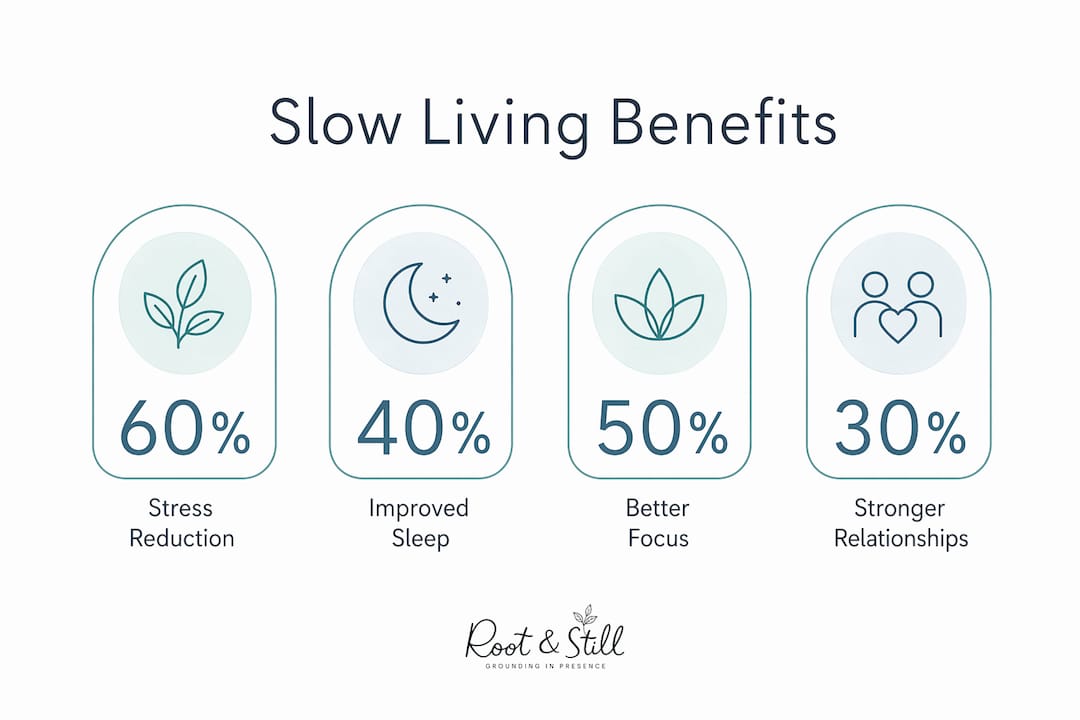
Slow living also supports better sleep, partly because winding down becomes a practised habit rather than an afterthought. When your evenings are not crammed with screens and stimulation, your body has the space to prepare for rest naturally.
How does slow living compare with related lifestyle approaches?
Slow living shares territory with minimalism, mindfulness, and sustainable living, but each approach has a distinct focus. Understanding the differences helps you choose what fits your life most naturally.
| Approach | Core focus | Relationship to slow living |
|---|---|---|
| Slow living | Pace, presence, and intentional attention | The parent framework |
| Minimalism | Reducing possessions and simplifying space | Overlaps in simplicity; minimalism is object-focused |
| Mindfulness | Present-moment awareness, often through practice | A tool within slow living, not the whole picture |
| Sustainable living | Ethical consumption and environmental impact | Shares intentionality; slow living often leads here |
Slow living and minimalism are frequently confused. Minimalism asks what you own. Slow living asks how you spend your attention. You can live slowly in a full, warmly decorated home. You can also own very little and still feel perpetually rushed.
Mindfulness, in the formal sense, refers to meditation-based practices developed within traditions like Vipassana and popularised through programmes such as Mindfulness-Based Stress Reduction. Slow living draws on the same quality of present-moment awareness but applies it to the rhythm of an entire day rather than a seated practice. The two complement each other well.
Sustainable living overlaps with slow living most naturally in the area of consumption. When you slow down, you tend to buy less and choose more carefully. Ethical sourcing, sustainable gifting, and reduced waste often follow as natural consequences rather than imposed rules.
How can you start practising slow living in everyday life?
The most common mistake people make when beginning a slow living lifestyle is trying to change everything at once. Incremental change focused on one or two friction points in your daily routine is far more sustainable than a complete overhaul. New stress caused by trying to eliminate stress defeats the purpose entirely.
A practical starting point is identifying what practitioners call a “slow pocket”: a brief, repeatable window of time each day that you protect from urgency. Building this daily ritual creates a habitual cue for calm, and over time it begins to soften the mood of the hours around it.
Here are five grounded steps to begin:
- Create a no-phone morning ritual. Even fifteen minutes of quiet before checking your phone changes the tone of the entire morning. Use that time for tea, gentle movement, or simply sitting by a window.
- Eat at least one meal without a screen. Mindful eating is one of the most accessible slow living examples because it requires no equipment and no extra time. It simply asks for your full attention.
- Single-task deliberately. Choose one task, close everything else, and give it your complete focus for a set period. Notice how different the quality of your work and your energy feels afterwards.
- Spend time in nature regularly. A short walk without headphones, a few minutes in a garden, or simply sitting near a window with a view of trees all reduce physiological stress markers. Nature connection is one of the most well-supported slow living practices.
- Design your home environment for calm. Your surroundings shape your nervous system. Natural textures, soft lighting, and objects with meaning, such as a hand-carved wooden Buddha or a singing bowl, give a room a quality of stillness that supports slower, more restful living.
Pro Tip: Protect your slow pockets the same way you would protect a meeting. Put them in your calendar. Tell the people around you. Treat them as non-negotiable, at least until the habit is established.
Slow living does not require a rural retreat or a dramatic change of circumstances. It asks for attention, and attention is something you can practise anywhere.
Key takeaways
Slow living is the practice of choosing the right pace for each moment, not the slowest pace, and it produces measurable benefits for mental health, physical well-being, and the quality of everyday relationships.
| Point | Details |
|---|---|
| Rooted in tempo giusto | Slow living means finding the right pace for each task, not moving slowly through everything. |
| Nervous system benefits | Repeated unhurried actions signal safety to the body, reducing chronic stress over time. |
| Distinct from minimalism | Slow living focuses on attention and pace; minimalism focuses on possessions and space. |
| Start with slow pockets | Identify one repeatable, protected window of calm each day and build from there. |
| Environment shapes rhythm | A calm, intentionally designed home actively supports a slower, more restful daily pace. |
What slow living actually taught me
I came to slow living the way most people do: through exhaustion. I had filled every hour with something purposeful, or at least something that felt purposeful, and I was tired in a way that sleep did not fix. Reading about tempo giusto was the first thing that genuinely shifted my thinking. The idea that the goal was not to slow down universally but to match my pace to what each moment actually required felt both obvious and revelatory.
The change that made the biggest practical difference was the no-phone morning. I was sceptical. Fifteen minutes seemed trivial. But the quality of attention I carried into the rest of the day was noticeably different, calmer and more settled, within about a week. The second shift was environmental. I began paying attention to what my home felt like rather than just what it looked like. Adding objects with genuine weight and meaning, things made by hand from natural materials, changed the atmosphere of my rooms in a way I had not expected. A space that feels anchored and restful makes it easier to be anchored and restful yourself.
The honest challenge is that slow living requires you to resist a culture that rewards busyness. That resistance is ongoing. But the rewards, better sleep, clearer thinking, and the simple pleasure of actually tasting your food, are worth the friction. Slow living is not a destination. It is a practise you return to, gently, every day.
— Dhriti
How Rootandstill supports a mindful, slow living home
Creating a home that feels genuinely calm is one of the most grounding steps you can take towards a slower, more intentional life. Rootandstill designs and curates handmade pieces built for exactly this purpose. Each antique Buddha figurine and hand-carved wooden statue is crafted from natural materials with spiritual symbolism that gives a room a quality of stillness. These are not decorative afterthoughts. They are objects made to anchor a space and soften its mood. If you are building a home environment that supports holistic, intentional living, Rootandstill’s collections offer a considered starting point.
FAQ
What does slow living mean in simple terms?
Slow living means choosing to pay full attention to what you are doing rather than rushing through life to reach the next task. It is a mindset centred on presence, intentionality, and finding the right pace for each moment.
Is slow living the same as doing nothing?
Slow living is not about inactivity. As Carl Honoré describes, it is a quality-before-quantity approach that engages with modern life more consciously, not one that withdraws from it.
What are the main benefits of slow living?
Slow living benefits include reduced stress and anxiety, improved sleep, better focus, stronger relationships, and long-term nervous system regulation.
How do I start slow living without overhauling my life?
Begin with one small, repeatable ritual each day, such as a no-phone morning or a screen-free meal. Gradual, incremental change is more sustainable than attempting a complete lifestyle shift at once.
Can slow living work in a busy city environment?
Slow living is a mindset, not a location. Practising single-tasking, protecting quiet pockets of time, and designing a calm home environment all support a slower rhythm regardless of where you live.


