

Holistic home design is the practice of treating your home as a unified ecosystem, where architecture, interiors, outdoor spaces, and daily lifestyle work together to support your physical, emotional, and environmental wellbeing. Unlike conventional approaches that treat each room or discipline separately, this integrated method, often led by a Registered Architect, considers how every element affects the whole. UK Healthy Homes guidance from the government identifies ventilation, daylight, low-VOC finishes, and overheating control as core design factors. When these foundations are in place, your home does not just look considered. It feels genuinely settled and restorative.
What is holistic home design and its core principles?
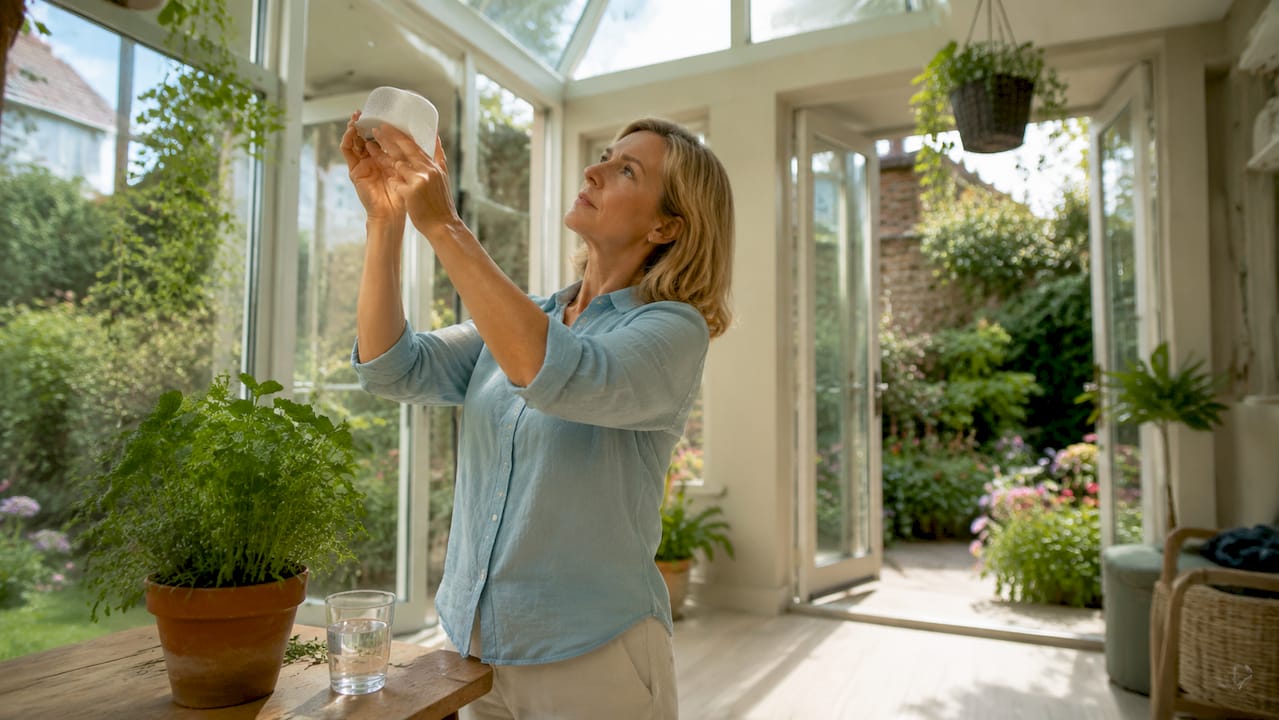
Holistic home design treats the house as one ecosystem across structure, interiors, and landscape rather than separate disciplines. This is the defining difference from conventional design, which tends to address rooms in isolation. A kitchen renovation, a new bathroom, a garden redesign: each project is handled independently, and the result often feels fragmented. A whole-home approach asks how each space connects to the next, and how the building itself supports the people living inside it.
The foundational principles are:
- Whole-home integration: Architecture, interiors, landscape, and daily routines are planned together from the outset.
- Environmental health first: Ventilation, daylight, and thermal comfort are addressed before aesthetics, not after.
- Biophilic design: Real plants, natural materials such as stone, rattan, and linen, and views of greenery are woven into the interior to support emotional calm.
- Low-impact materials: Finishes are chosen for their effect on indoor air quality, not just their appearance.
- Sustainability: The home is designed to age well, reduce energy use, and adapt to changing lifestyle needs.
- Sensory harmony: Lighting, texture, colour, and sound are considered together to create a coherent atmosphere.
Pro Tip: Start any whole-home project by auditing air quality and moisture risk before selecting finishes or furniture. Addressing ventilation first prevents new decor from worsening existing damp or allergen problems.
How does holistic home design benefit wellbeing?
The benefits of this approach are grounded in evidence, not aspiration. UK Healthy Homes guidance links ventilation, daylight, and low-VOC finishes directly to physical and mental health outcomes. This matters particularly in Britain, where older housing stock and wet winters create persistent risks of damp and poor air circulation.
“Homes that lack proper daylight and thermal management often feel uncomfortable, diminishing serenity and long-term occupant health.” — UK Healthy Homes guidance
The English Housing Survey 2023 to 2024 found that poorly ventilated homes were far more likely to show damp and mould than those with adequate airflow. Damp is not merely an aesthetic problem. It is a health risk that affects respiratory function and mental wellbeing, particularly for children and older residents.
Biophilic design adds a measurable layer of benefit. A 2025 study published in Scientific Reports found that exposure to real living walls produced higher physiological relaxation than non-biophilic objects during cognitively demanding tasks. Heart rate variability and self-reported emotional state both improved significantly. This means that a well-placed indoor plant or a stone feature wall is not decorative indulgence. It is a functional tool for stress reduction.
Material choices carry nuance too. Low-VOC paint formulations defined under the EU Paints Directive range from approximately 50 to 250 g/L VOC, with zero-VOC products sitting below 5 g/L. A 2026 peer-reviewed paper cautions that initial VOC reduction does not guarantee full indoor air safety, as secondary chemistry may affect air quality over time. Choosing low-VOC finishes is a sound starting point, but it is worth pairing that choice with good ventilation rather than treating it as a complete solution.
How to create a holistic home: practical steps
Creating a home that supports wellbeing requires a clear sequence. The most common mistake is beginning with aesthetics and working backwards. Practitioner guidance from the English Housing Survey consistently shows that prioritising environmental controls prevents new finishes from worsening damp or allergen levels.
The table below maps key design elements to their intended wellbeing benefits.
| Design element | Wellbeing benefit |
|---|---|
| Mechanical ventilation with heat recovery | Reduces damp, mould, and airborne allergens |
| North and south-facing glazing | Maximises daylight while managing overheating risk |
| Low-VOC paints and natural finishes | Supports cleaner indoor air over time |
| Real plants and living walls | Lowers physiological stress and improves mood |
| Warm, layered lighting | Creates emotional calm and supports circadian rhythm |
| Natural textures: stone, linen, rattan | Adds sensory grounding without visual noise |
| Flexible, multi-function storage | Reduces clutter and supports mental clarity |
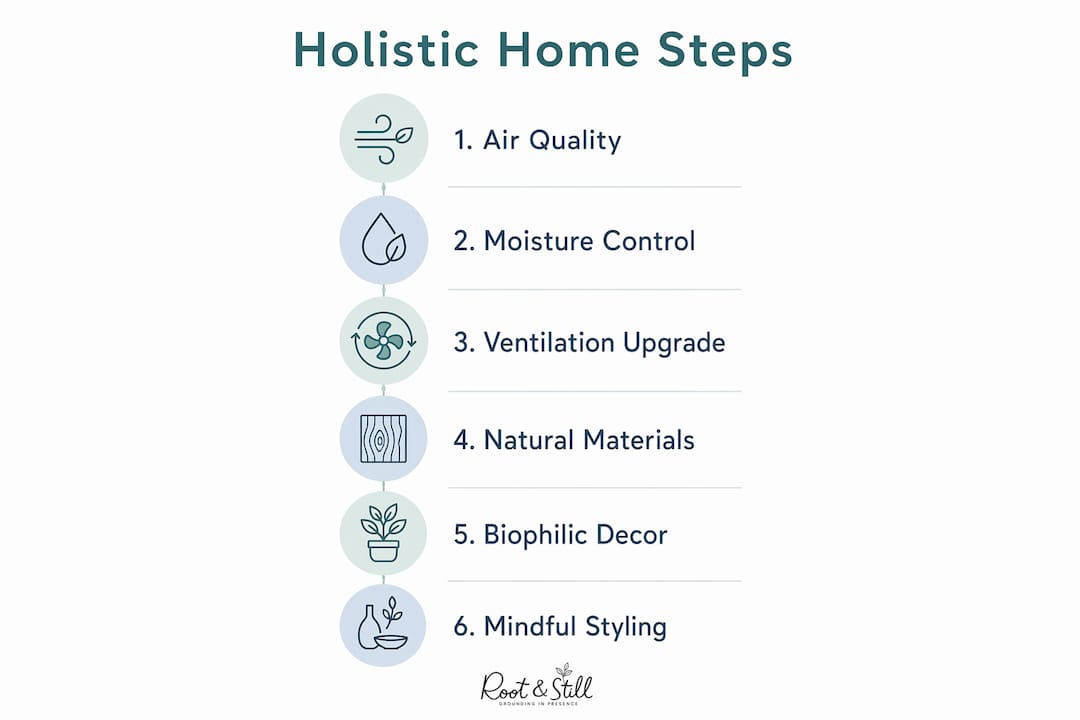
Start with air quality and moisture management. Install or upgrade ventilation before redecorating, particularly in bathrooms, kitchens, and bedrooms. Then address natural light: consider where the sun moves through your home across the day and plan window treatments accordingly. Sheer linen curtains diffuse light softly without blocking it entirely.
Once the environmental foundations are in place, layer in natural materials and biophilic decor. Stone surfaces, wooden shelving, and woven textiles give a room tactile warmth. Real plants, particularly species suited to lower UK light levels such as peace lilies and ferns, bring the physiological benefits confirmed by biophilic research.
Pro Tip: Plan your garden or outdoor view into the interior design from the start. A sightline from the kitchen or living room to a planted outdoor space gives the room a sense of depth and calm that no interior feature can fully replicate.
What holistic home decor tips support serenity and intentional living?
Decor is where the principles of whole-home design become visible and personal. The choices you make at this stage should reinforce the environmental and structural work already done, not contradict it. A beautifully ventilated, light-filled room can feel unsettled if it is cluttered or filled with objects that carry no meaning.
The most grounding decor choices share a few qualities:
- Purposeful restraint: Each object earns its place. Decluttering is not minimalism for its own sake. It is the practice of giving each piece room to breathe and be noticed.
- Natural textures and materials: Stone, wood, ceramic, and woven fibres connect a room to the natural world without requiring outdoor space.
- Warm, layered lighting: A single overhead bulb flattens a room. Combine floor lamps, table lamps, and candles to create pools of warmth that shift with the time of day.
- Mindful objects: Statues, particularly Buddha figures in home decor, carry spiritual symbolism that supports a calm, intentional atmosphere. Research on statues confirms their role as tools for stress relief in everyday living spaces.
- Eco-conscious accessories: Choosing sustainably sourced items, from beeswax candles to hand-carved wooden pieces, aligns your decor with the environmental values that underpin whole-home design.
Colour also plays a quiet but powerful role. Soft, muted tones such as warm stone, sage green, and pale clay soften the mood without draining natural light. These shades work particularly well in UK homes, where grey skies make warmth in the interior palette especially welcome. For readers interested in the broader philosophy behind these choices, spiritual home decor offers a thoughtful companion framework. Sustainable home accessories from eco-conscious brands can also complement this approach, as explored in eco-friendly decor ideas for UK homes.
Key takeaways
A home designed as a unified ecosystem, where ventilation, daylight, natural materials, and mindful decor work together, delivers measurably better wellbeing outcomes than one assembled room by room.
| Point | Details |
|---|---|
| Start with environmental health | Address ventilation and moisture before choosing finishes or furniture. |
| Daylight is a design tool | Plan glazing and window treatments to maximise natural light and manage overheating. |
| Biophilic elements reduce stress | Real plants and natural materials produce measurable physiological relaxation. |
| Low-VOC finishes need ventilation | Pair healthier paints with good airflow for lasting indoor air quality. |
| Mindful decor anchors the space | Purposeful objects, natural textures, and warm lighting complete the whole-home approach. |
Why I think most UK homeowners start in the wrong place
The most common pattern I see is homeowners investing in beautiful finishes before the environmental basics are sorted. A freshly painted bedroom with new linen curtains is genuinely lovely. But if the room has poor ventilation, that new paint may be contributing to a slow build-up of indoor pollutants, and the curtains will eventually carry the faint smell of damp. The room looks right but does not feel right, and most people cannot identify why.
The UK climate makes this especially pressing. Our winters are long, our homes are often older, and the temptation to seal draughts and add insulation without upgrading ventilation is understandable. But that combination is precisely what creates the damp and mould conditions that the English Housing Survey flags as so damaging to health.
What I find genuinely moving about the whole-home approach is how it reframes the home as a living thing. When you treat your house as an ecosystem rather than a collection of rooms, every decision carries more weight and more care. The choice of a hand-carved wooden statue or a real fern in the corner is no longer decorative whimsy. It is part of a considered response to how you want to feel inside your own walls. That shift in thinking is, in my experience, the most transformative thing a homeowner can do.
— Dhriti
Rootandstill: curated decor for a settled, intentional home
Rootandstill brings together handmade Buddha statues, Feng Shui accessories, and natural home objects designed to support the calm and intention that whole-home design calls for. Each piece is chosen for its spiritual symbolism and tactile quality, making it a natural fit for UK homes where the environmental foundations are already in place. The Antique Buddha Classic Statue and the Hand Carved Buddha Statue both bring a grounded, meditative presence to living rooms, reading corners, and garden spaces. For those drawn to Feng Shui principles, the Buddha Feng Shui Set offers a considered starting point for balancing energy and intention across the home.
FAQ
What is holistic home design in simple terms?
Holistic home design treats your home as a single, integrated system where architecture, interiors, outdoor spaces, and lifestyle all work together to support wellbeing. It contrasts with conventional design, which addresses each room or discipline separately.
Where should I start when creating a holistic home?
Start with ventilation and moisture control before making any aesthetic changes. Practitioner guidance consistently shows that addressing environmental health first prevents new finishes from worsening existing damp or air quality problems.
Does biophilic design actually make a difference to wellbeing?
A 2025 study in Scientific Reports found that exposure to real living walls produced significantly higher physiological relaxation than non-biophilic objects. Heart rate variability and self-reported mood both improved, confirming that plants and natural materials are functional wellbeing tools, not just decoration.
Are low-VOC paints enough to improve indoor air quality?
Low-VOC paints reduce initial chemical emissions, but a 2026 peer-reviewed paper warns that secondary chemistry may still affect indoor air over time. Pairing low-VOC finishes with adequate ventilation gives the most reliable result.
How does mindful decor fit into whole-home design?
Mindful decor, including natural textures, purposeful objects such as Buddha statues, and warm layered lighting, reinforces the sensory and emotional calm that environmental design creates. It is the final layer of a whole-home approach, not the starting point.


