In Buddhism, balance means the Middle Way: an active, discerning path that avoids both sensual indulgence and harsh self-denial, not a bland compromise between two extremes.
- The Middle Way is not moderation for its own sake. As Ṭhānissaro Bhikkhu explains, it involves finding the right calibration across multiple continua simultaneously: virtue, concentration, and discernment.
- Two wings sustain the path. Bhikkhu Bodhi describes renunciation (releasing craving) and compassion (avoiding harm to others) as mutually reinforcing qualities, each incomplete without the other.
- This matters at home. Rootandstill’s mindful decor pieces work best when they function as genuine anchors for this inner balance, not simply as ornaments.
What does balance mean in Buddhism, at its doctrinal roots?
The Middle Way sits at the heart of Buddhist teaching. After years of palace luxury followed by severe asceticism, the Buddha recognised that neither extreme leads to liberation. What he taught instead was a path of active, intelligent calibration.
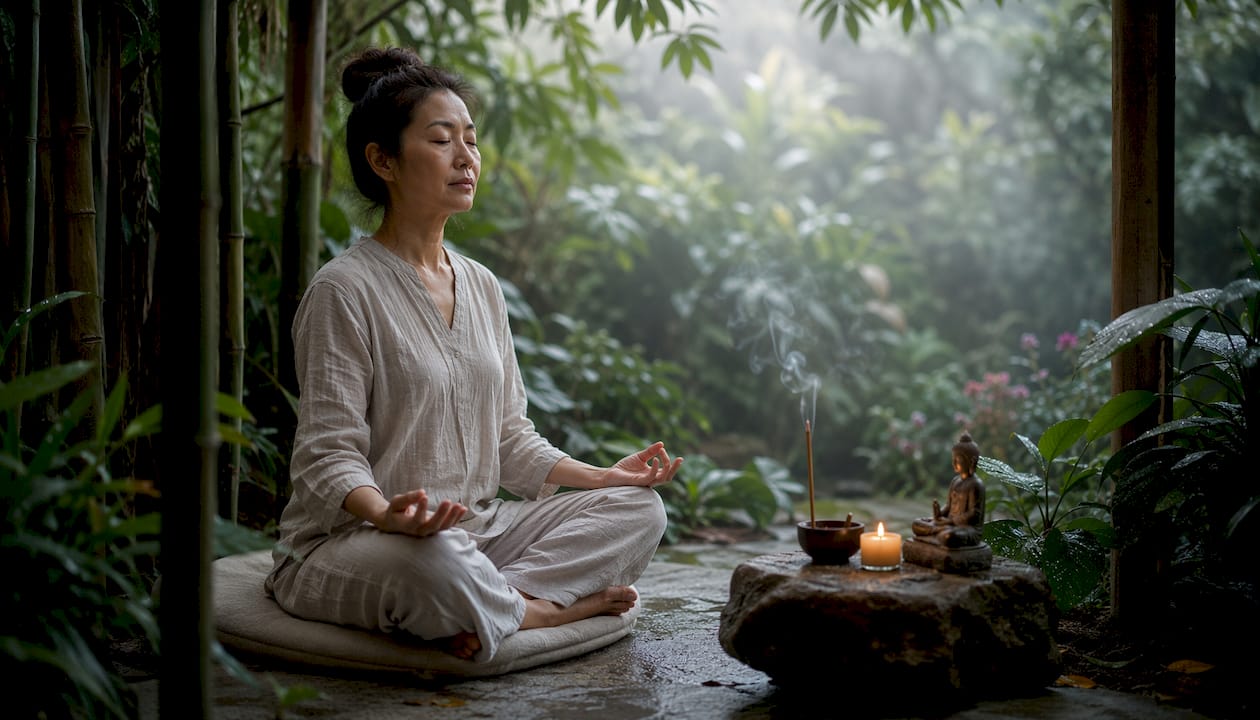
Bhikkhu Bodhi’s two-wings metaphor makes this vivid. Renunciation and compassion look like opposites: one turns inward, the other reaches outward. Yet they nurture each other — compassion without restraint becomes sentimental; renunciation without compassion becomes cold withdrawal. Both wings are needed for the bird to fly.
Buddhadasa Bhikkhu adds a felt dimension: when the mind is balanced, it moves beyond pairs of opposites and rests in clear, present-moment awareness. Jack Kornfield calls this quality “complete non-referential ease.” It is not numbness; it is steadiness.
Quick definitions for reference:
| Term | Meaning |
|---|---|
| Middle Way (Majjhimā Paṭipadā) | The path avoiding extremes; the Noble Eightfold Path |
| Renunciation | Releasing craving and excess; letting go with wisdom |
| Compassion (karuṇā) | Active care that avoids harm to self and others |
| Equanimity (upekkhā) | Steady, unshakeable presence; not indifference |
Daily practices that cultivate Buddhist balance
Three faculties sustain balance in practice: virtue, concentration, and discernment. Each requires its own form of daily attention.
A simple practice sequence for home use:
- Morning mindfulness sit. Settle in a quiet corner, feel the breath, and notice where the mind pulls toward excess or avoidance.
- Short metta practice. Offer goodwill to yourself, then to someone close, then outward. This activates the compassion wing.
- Ethical check on desire. Before a purchase or a second helping, pause and ask: is this craving or genuine need? This is renunciation in daily life.
- Effort calibration. Ṭhānissaro Bhikkhu offers practical guidance on this: a torpid mind needs gentle rousing through analysis or a sense of quiet interest; an over-aroused mind needs calming through slower breath and softer attention.
- Evening review. One quiet minute to notice where balance held and where it slipped, without self-criticism.
Balance is not a one-time achievement. Continuous recalibration is the practice itself.
Pro Tip: Use ordinary domestic moments as mindfulness bells. The kettle boiling, a candle being lit, or a glance at a small Buddha figurine on your shelf can each serve as a cue to take three conscious breaths and return to the present.
How Buddhist balance translates into mindful home decor
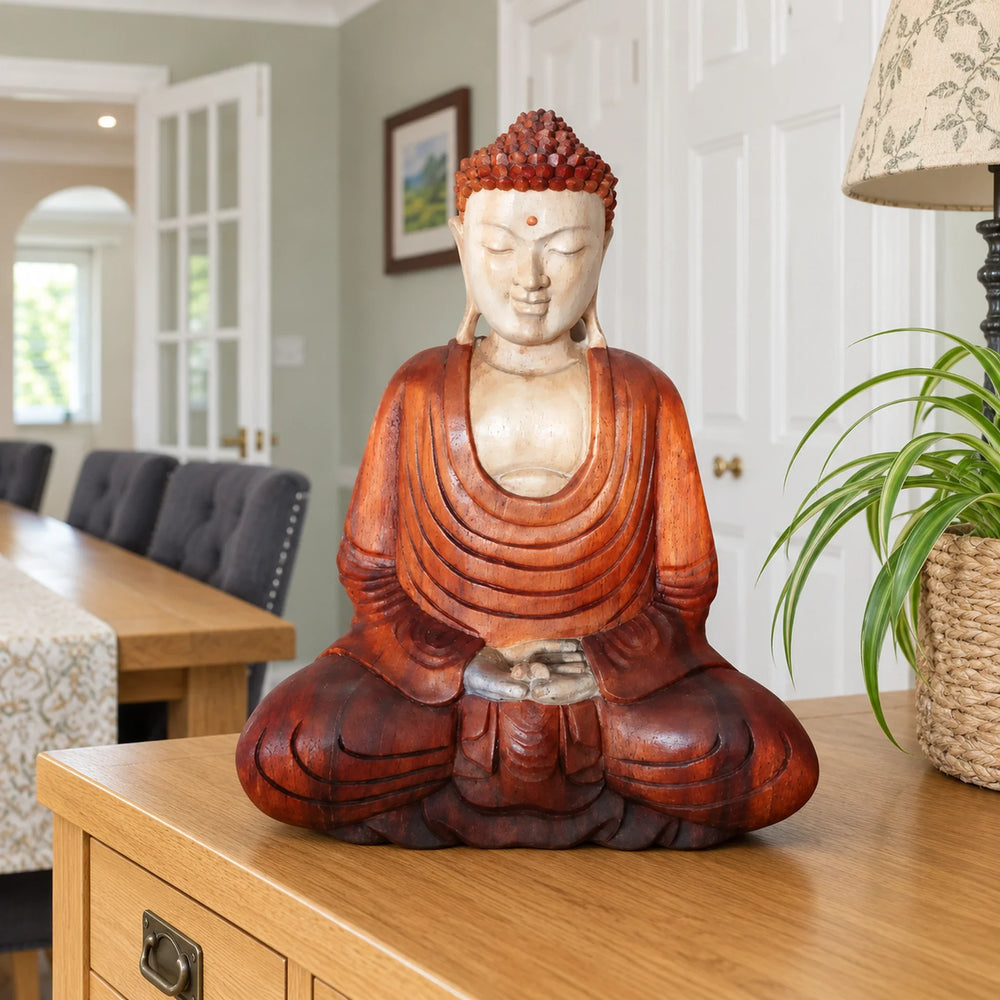
Decor supports balance when it functions as a prompt rather than a prop. A Buddha statue placed with intention invites you back to presence each time you notice it. The same statue placed for aesthetic effect alone does neither harm nor good.
Shambhala’s guidance on home shrines makes this concrete: objects work best when paired with a short, repeated action, three mindful breaths or a simple offering, so the object becomes a behavioural anchor rather than background decoration.
Respectful use matters. Displaying a Buddha image carries cultural weight. Place it at eye level or above, never on the floor, and approach it with the same intention you bring to practice: sincerity over style. For more on Buddhist colour symbolism and how specific palettes support calm, Rootandstill’s guide is a useful companion.
Sensory choices reinforce the effect. Soft, diffused light settles the nervous system more than bright overhead bulbs. Natural textures, stone, rattan, unglazed ceramic, give the eye somewhere restful to land. A single stick of incense or a singing bowl’s tone can mark the beginning of a sit as clearly as a timer. Avoid clustering too many objects; a crowded surface creates the visual equivalent of a busy mind.
What balance is not: clearing up common myths
Balance is not compromise, and it is not passivity. These misreadings are worth naming directly.
- Myth: balance means moderation, splitting the difference. Correction: Ṭhānissaro Bhikkhu explicitly warns against this reading. The Middle Way can demand radical commitment when the situation calls for it.
- Myth: balance means staying neutral and detached. Correction: Bhikkhu Bodhi notes that compassion must be guided by wisdom, not suppressed by it. Equanimity is not indifference.
- Myth: balance is a fixed state you reach and keep. Correction: Jack Kornfield and Buddhadasa Bhikkhu both describe it as a living, moving quality, more like a skilled acrobat’s constant micro-adjustments than a statue’s stillness.
- Myth: a calm home automatically creates inner balance. Correction: the environment supports practice; it does not replace it. Objects anchor attention; the work of recalibration remains yours.
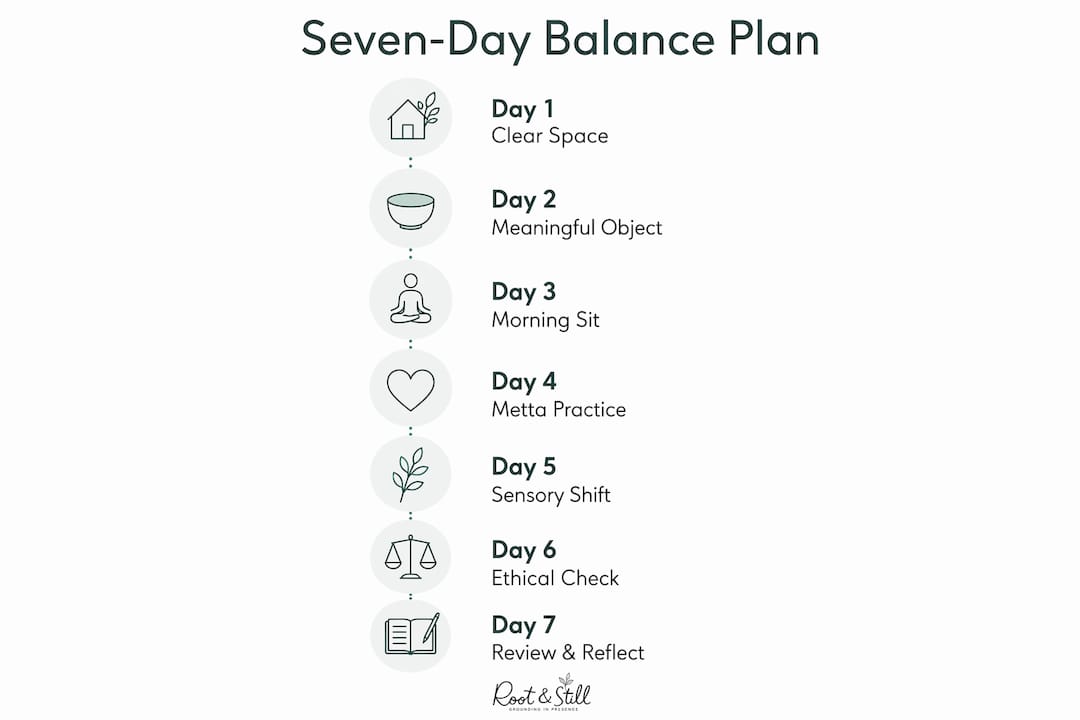
A simple seven-day plan to bring balance into your home
Start this week. Each day asks for one small, low-friction shift.
Day 1 is about clearing intention. Choose one surface, a windowsill, a side table, and remove everything that does not feel purposeful. Less visual noise gives the mind room to settle.
Day 2, place a single meaningful object in that cleared space: a small figurine, a stone, a candle. Let it be your mindfulness anchor for the week.
Day 3, begin a morning sit near that object. You are not trying to achieve anything; you are simply arriving.
Day 4, add a brief metta practice after the sit. Offer goodwill inward first, then outward. This is the compassion wing in motion.
Day 5, adjust the sensory quality of one room: soften the lighting, open a window, or light a single stick of incense. Notice how the body responds.
Day 6, apply an ethical check before any non-essential purchase. Ask whether it serves clarity or feeds craving. This is renunciation made practical.
Day 7, review the week without judgement. Where did steadiness feel natural? Where did it slip? Balance requires continuous adjustment, so the review is not a report card; it is the next calibration.
If you are naturally energetic, lean into the renunciation practices: decluttering, ethical restraint, simplifying. If you are more reflective, lean into compassion: metta, sharing the calm space with others, creating a mindful home that feels welcoming rather than austere.
Key takeaways
Balance in Buddhism is the Middle Way: an active, discerning calibration across virtue, concentration, and discernment, not a fixed midpoint or bland moderation.
| Point | Details |
|---|---|
| Middle Way is dynamic | Balance requires continuous recalibration, not a one-time achievement. |
| Two wings work together | Renunciation and compassion are mutually reinforcing; neither is complete alone. |
| Objects as anchors | Decor supports balance when paired with intention and a short repeated action. |
| Start small | One cleared surface, one object, one ten-minute sit is enough to begin. |
| Cultural respect matters | Display Buddha images at eye level or above, with sincerity over style. |
| Rootandstill’s role | Rootandstill’s handmade statues and accessories are designed to function as mindful anchors, not ornaments. |
A note on objects and intention
What strikes me most about Buddhist teachings on balance is how practical they are. The Middle Way is not a philosophical abstraction; it is a moment-by-moment skill, as immediate as the breath. Bhikkhu Bodhi’s two-wings image captures something that most decor advice misses entirely: that a calm home is not the goal. It is the training ground. The object on your shelf is not there to signal serenity to visitors; it is there to catch your attention mid-afternoon, when the mind has drifted, and bring you back.
That is why intention in choosing and placing objects matters so much. A piece chosen because it is beautiful will fade into the background within a week. A piece chosen because it reminds you of something you are practising will keep working. Rootandstill’s collections are built around this distinction, and it is one worth holding onto whenever you are deciding what to bring into your space.
Rootandstill’s mindful anchor pieces
These three pieces are worth considering as functional anchors, each suited to a different kind of space and practice.
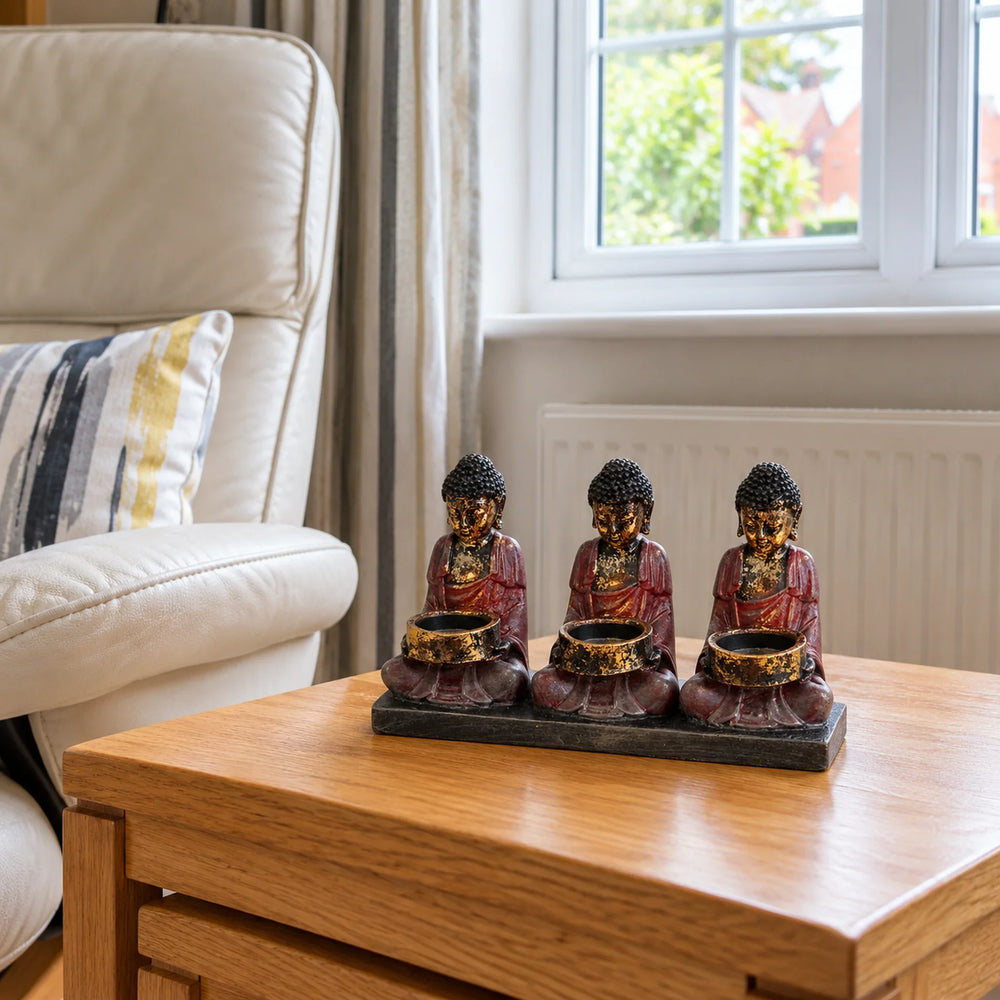
The Antique Small Buddha Figurines Classic Statue works well on a cleared desk or bedside table. Its modest scale means it does not dominate the space; it simply holds a quiet presence. Pair it with a single candle and use the act of lighting it as your daily mindfulness cue.
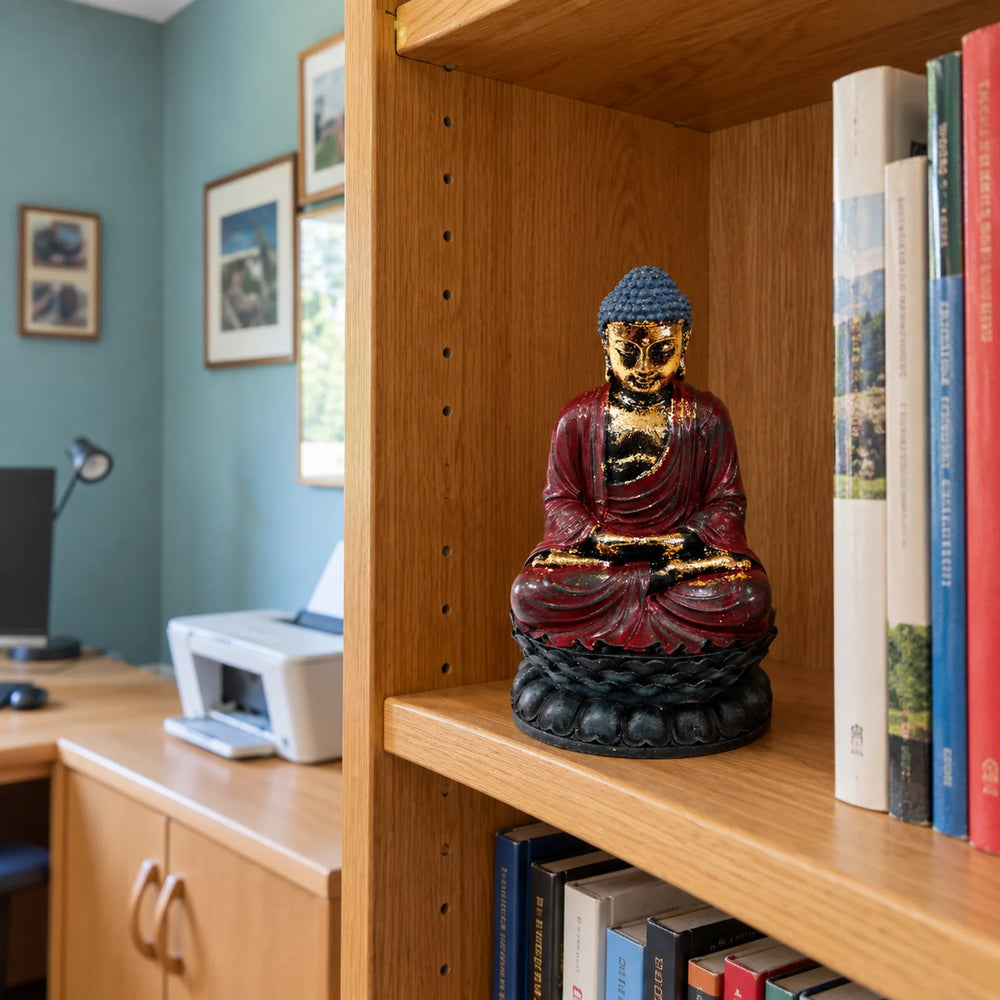
The Resin Silver Mini Buddha Statue is versatile enough for a small shelf, a bathroom ledge, or a gifted intention-setting corner. Its compact form makes it easy to place where you will actually see it, which is the single most important factor in whether an anchor works.
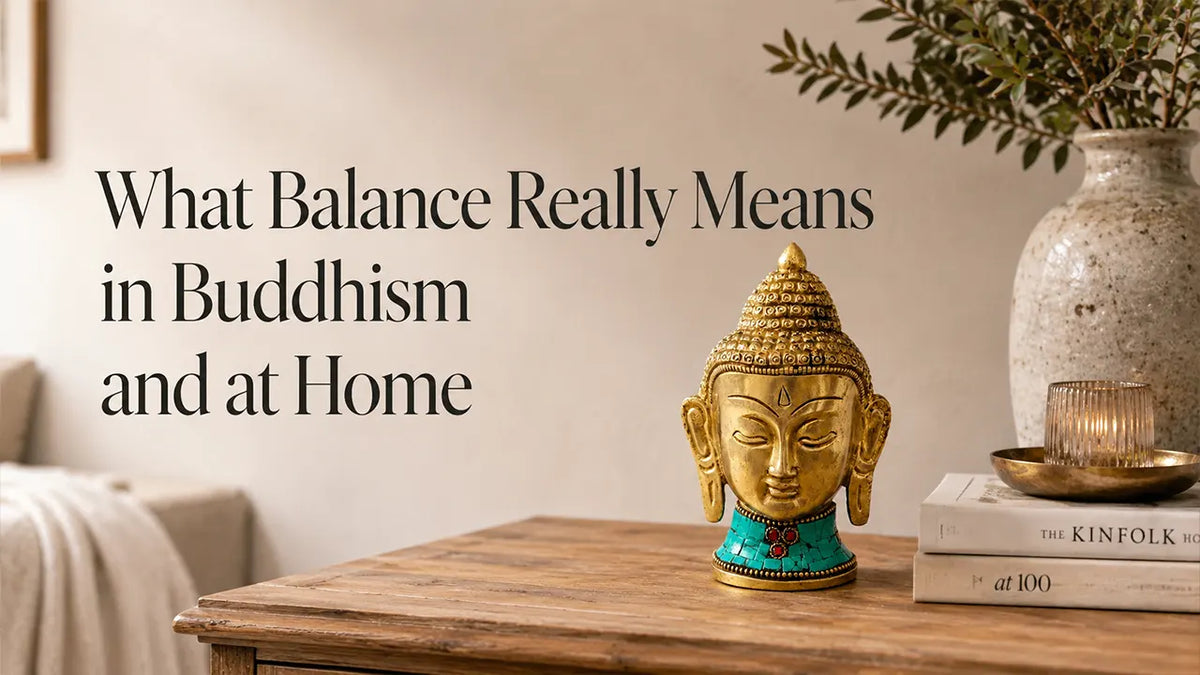
The Tranquility Buddha Head Statue in Green Copper brings a more sculptural quality suited to a living room or a calm patio corner. The green copper finish has a natural, grounded quality that sits well alongside stone, linen, and wood. For more ideas on pairing pieces with intention, Rootandstill’s guide on mindful living room decor offers practical starting points.
Useful sources
- The Balanced Way, Bhikkhu Bodhi: the two-wings teaching on renunciation and compassion, with guidance on how they sustain each other.
- Beyond All Directions, Ṭhānissaro Bhikkhu: detailed practical instruction on the middles of the Middle Way and balancing concentration.
- Finding the Middle Way, Jack Kornfield: an accessible account of balanced mind states and moving beyond dualities.
- The Middle Way, Buddhadasa Bhikkhu: a clear explanation of how defilements disturb natural balance and how the mind returns to steadiness.
- Buddhist home shrines, Shambhala: practical guidance on setting up intentional home shrines and using objects as mindfulness anchors.
- Introduction to the Middle Way, Buddhadhamma: a concise doctrinal overview situating the Middle Way within the broader Buddhist path.
- Keep Your Balance, Tricycle: The Buddhist Review: a beautifully written exploration of the bamboo acrobat teaching on self-care and interdependence.
FAQ
What does balance mean in Buddhism in one sentence?
Balance in Buddhism is the Middle Way: an active, discerning path that avoids extremes of indulgence and deprivation, sustained by renunciation and compassion working together.
Is the Middle Way the same as moderation?
Not quite. Ṭhānissaro Bhikkhu explicitly cautions against reading the Middle Way as bland moderation; it can demand radical commitment when the situation calls for it.
How do I use a Buddha statue to support balance at home?
Place it where you will genuinely see it, at eye level or above, and pair it with a short repeated action such as three mindful breaths, so it functions as a behavioural anchor rather than decoration.
What are the two wings of Buddhist practice?
Bhikkhu Bodhi describes renunciation (releasing craving) and compassion (avoiding harm) as the two wings that sustain spiritual practice, each incomplete without the other.
How long does it take to feel more balanced using these practices?
Balance is a continuous process of recalibration rather than a destination. Even one week of small, consistent shifts, a cleared surface, a daily sit, a metta practice, can produce a noticeable settling in the home and the mind.