
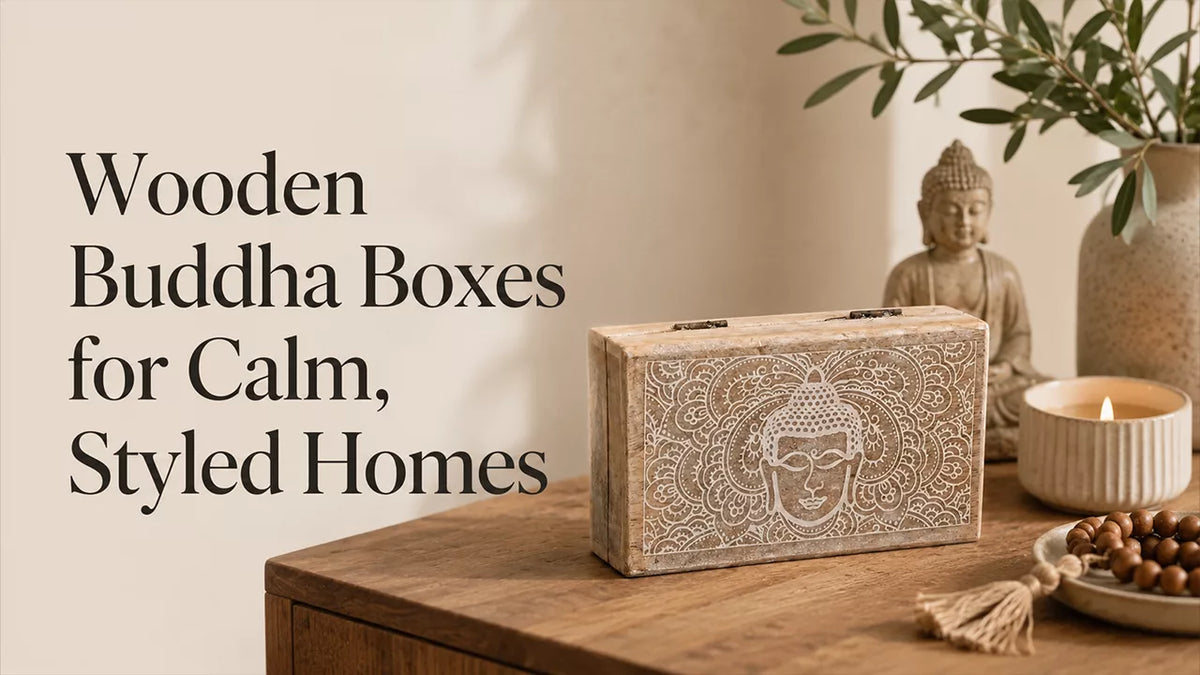
A small object can change the feel of a room more than people expect. Wooden buddha boxes do that especially well. They bring together texture, symbolism and purpose in a way that feels gentle rather than decorative for decoration’s sake.
In a home that already holds enough visual noise, a wooden box with a Buddha motif offers something steadier. It can sit on a console, bedside table or shelf and quietly soften the atmosphere while keeping everyday pieces tucked away. That balance matters. A calm home is rarely empty - it is simply considered.
Why wooden buddha boxes feel so grounding

There is something naturally reassuring about wood in an interior. It absorbs light differently from glass or metal, adds warmth without demanding attention, and tends to age beautifully. When paired with Buddha imagery, that warmth takes on another layer. The piece starts to feel less like storage and more like a small ritual object - something that invites a slower mood.
That does not mean every home needs overtly spiritual decor. In fact, for many people, the appeal of wooden buddha boxes is less about religion and more about presence. They suggest stillness, reflection and care. In a living room, they can anchor a vignette of candles and ceramics. In a bedroom, they can hold jewellery or keepsakes without making the space feel busy.
The best pieces have a quiet confidence. They do not compete with the rest of the room. They support it.
Choosing wooden buddha boxes that suit your space
A well-chosen box should feel at home both visually and emotionally. Size is the first thing to consider. A compact box works beautifully on a side table or bathroom shelf, while a larger piece can hold its own on a coffee table or wide mantel. If the box is too small for the setting, it can disappear. If it is too large, it can feel heavy.
The finish matters just as much. Lighter woods tend to suit airy, natural interiors with linen, pale ceramics and soft neutral tones. Darker woods can bring depth to richer spaces, especially where there are layered textures, moodier colours or antique accents. Neither is better. It depends on whether you want the box to blend softly into the room or provide a deeper focal point.
Carving style also changes the feeling of the piece. Some wooden buddha boxes feature intricate hand-finished detail, while others are simpler and more contemporary. Detailed carving often adds a more traditional, collected feel. Cleaner lines tend to work well in modern homes where restraint is part of the appeal. If your space already has patterned textiles, framed prints or sculptural decor, a simpler box may create better balance.
Material and finish make a difference
Not all wooden decor feels the same. Some woods have a raw, tactile character that leans rustic, while others are smoother and more polished. If you are creating a relaxed meditation corner, a more natural finish may feel especially right. In a styled living room, a refined finish can sit more comfortably alongside modern decor.
It is also worth noticing whether the box feels handcrafted in the best sense - subtle variations, softly irregular carving and a finish with depth can all make it feel more personal. Pieces that look overly glossy or mass-produced can lose some of the quiet charm that makes this style so appealing in the first place.
Think about what it will hold
The practical side should not be overlooked. A box that stores incense cones, matches, prayer beads, jewellery, affirmation cards or other small essentials becomes part of your daily rhythm. That sense of use gives it more meaning.
If you plan to place it in a hallway or living area, it may need to hold the loose things that tend to gather there - keys, tealights or spare bits that quickly create clutter. In a bedroom, it might become a more personal piece for keepsakes and treasured objects. The right choice depends on whether you want it to serve a decorative purpose first, or a functional one.
Where wooden buddha boxes work best at home
These pieces are surprisingly versatile, but placement changes their effect.
In a living room, a wooden Buddha box can add calm to a shelf styling arrangement. Placed beside a candle holder, a low vase or a Buddha statue, it creates a layered look that feels intentional without becoming overworked. The box brings shape and grounding, especially if the surrounding decor is softer or lighter.
In a bedroom, it can make a bedside table feel more settled. Jewellery, hand cream, oils or small sentimental items can be tucked away, leaving the surface cleaner and quieter. That matters more than it sounds. Visual calm often supports mental calm.
A hallway is another good setting, particularly if it tends to collect clutter. A small decorative box gives the eye somewhere restful to land while offering hidden storage. It turns a practical surface into something more composed.
For a meditation or reading corner, the effect is even more natural. Here, wooden buddha boxes can hold incense, a lighter, mala beads or written intentions. The box becomes part of the pause itself - an object you reach for slowly, rather than simply pass by.
Styling without making the space feel themed
This is where restraint matters. A home inspired by mindfulness should still feel like a home, not a set. One beautifully chosen Buddha box can often do more than several symbolic pieces grouped together.
Try pairing it with materials that echo its calm presence - stone, linen, ceramic, rattan or softly aged metal. Keep the surrounding palette gentle and natural if you want the look to feel cohesive. If your room already includes a Buddha statue, let the box support that focal point rather than compete with it.
There is also a cultural sensitivity to keep in mind. Buddha imagery carries meaning, and many people prefer to style it with care rather than treat it casually. That can be as simple as choosing a respectful placement, keeping the surrounding area tidy, and avoiding overcrowding. When a piece is given space, it tends to feel more considered.
What to avoid when buying wooden buddha boxes
The most common mistake is choosing purely on appearance and forgetting proportion. Online, a carved box can look substantial but arrive much smaller than expected. Checking dimensions is always worth it, especially if you have a specific surface in mind.
Another issue is buying a piece that is too ornate for the room around it. If your home leans minimal, a heavily detailed box may feel disconnected from the rest of your decor. The opposite can happen too. In a richly layered interior, a very plain box might lack presence.
Quality is another deciding factor. Hinges should feel secure, the lid should sit well, and the wood should have a finish that feels intentional rather than brittle or overly processed. A decorative object that is also handled regularly needs to age well.
Price can be a clue, but not a guarantee. Some pieces cost more because of better craftsmanship, and some simply because of presentation. It helps to look for balance - something beautiful enough to elevate the room, but durable enough to be lived with.
A small detail with lasting impact
The appeal of a wooden Buddha box is not only what it stores. It is the way it changes the tone of a surface, a corner or a room. It adds warmth. It suggests care. It gives ordinary items a place to rest.
For homes that are meant to feel calmer, softer and more rooted, those details matter. At Root & Still, that is often where the shift begins - not with a full redesign, but with one considered object that makes the room feel more like a place to pause, breathe and reconnect.
If you choose one, let it be something you genuinely want to live with every day. The right piece will not ask for attention. It will simply keep bringing the room back to stillness.