

A digital-free zone is a designated physical space in your home where all digital devices are deliberately excluded to restore calm, focus, and genuine presence. This is not about rejecting technology entirely. It is about carving out one or two rooms where your nervous system can genuinely rest. Bedrooms and dining areas are the most common starting points, and the mental health case for them is well established. Research from Georgetown University shows that even short-term screen separation improves attention spans and reduces anxiety. Rootandstill designs its collections with exactly this kind of intentional living in mind.
What is a digital-free zone, and what does it actually mean?
A digital-free zone is a designated physical space where smartphones, tablets, laptops, and televisions are intentionally absent. The term is sometimes used interchangeably with “device-free area” or “screen-free space,” though all three describe the same core idea. The goal is not abstinence from technology across your whole life. It is the creation of a specific room or corner that gives your mind permission to slow down.

Shop Now: Buddha Feng Shui Set - Hamsa - Grey
The concept sits within the broader practice of digital detox, which refers to any deliberate reduction in screen time to support mental and physical wellbeing. A digital-free zone makes that practice physical and permanent rather than occasional. You are not relying on willpower in the moment. You are designing your environment so that the default is calm.
Bedrooms and dining rooms are the most natural starting points because they already carry a social expectation of presence. A bedroom is for rest. A dining table is for connection. Removing devices from these spaces simply reinforces what those rooms are already meant to do.
What are the benefits of digital-free zones for mental health?
The benefits of digital-free zones are grounded in how your brain responds to constant digital stimulation. Every notification triggers a cortisol spike, the same stress hormone released during a physical threat. That means your nervous system is running a low-level stress response for much of the day, simply because your phone is nearby.
Phone-free zones interrupt that cycle. When the device is absent, the brain shifts from an alert, reactive state back to a calmer baseline. That shift is not just subjective. It has measurable effects on sleep, attention, and mood.
“Digital-free zones not only remove devices but restore attention by breaking the constant demand for cognitive resources.” — Georgetown University research
Sleep is one of the clearest benefits. Screens emit blue light that suppresses melatonin, the hormone that signals your body to sleep. Keeping devices out of the bedroom removes that interference entirely, without requiring any change in behaviour beyond the initial decision.
Cognitive recovery is equally significant. Participants who halved their screen time improved their attention spans and showed signs of reversing age-related cognitive decline. That is a striking finding. It suggests that the damage done by constant connectivity is not permanent, and that even partial separation makes a real difference.
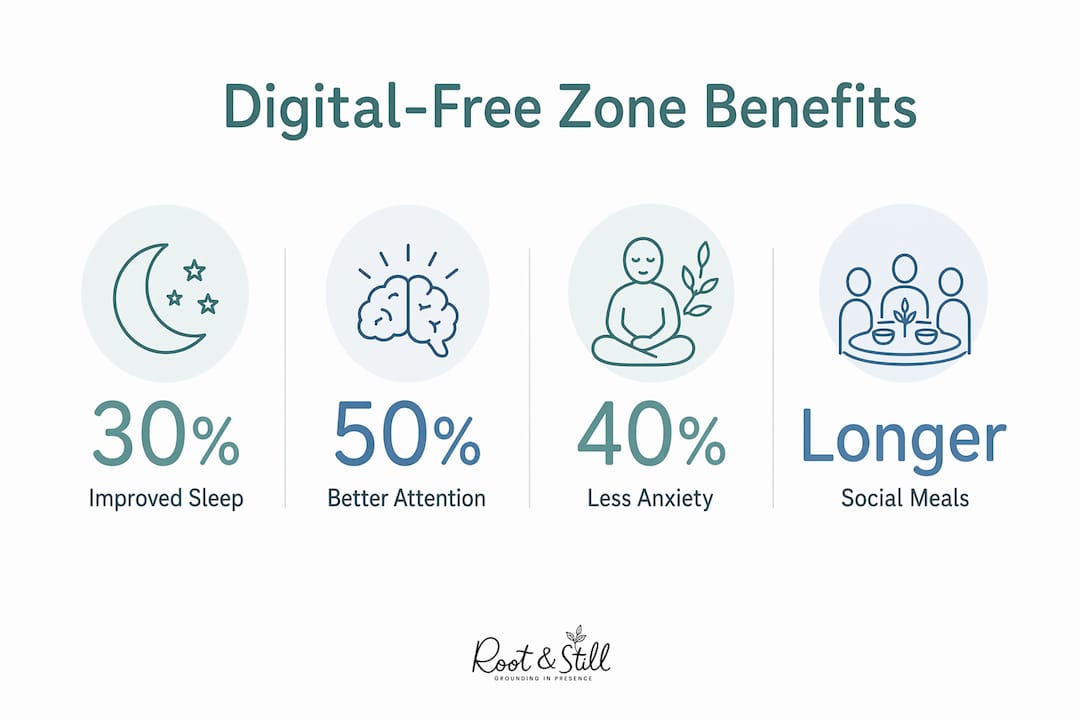
The social benefits are quieter but just as meaningful. Meals eaten without phones tend to be longer, more conversational, and more satisfying. Children in households with device-free dining areas report feeling more heard by their parents. The absence of a screen creates space for the kind of unhurried attention that builds genuine connection.
How to create a digital-free zone at home
Creating a device-free area works best when you treat it as an environmental design project rather than a willpower challenge. The steps below move from decision to habit in a way that is sustainable.
-
Choose one room to begin. The bedroom is the most effective starting point because sleep benefits are immediate and motivating. Commit to that single space for 30 days before expanding.
-
Set a clear physical boundary. The rule needs to be simple and visible. “No phones past the bedroom door” is clearer than “try not to use your phone in bed.” Clarity removes the need for negotiation every evening.
-
Agree on the rules as a household. A zone that one person follows and another ignores will not hold. A brief, calm conversation about the purpose and the boundary makes the decision shared rather than imposed.
-
Replace digital items with analog ones. A physical alarm clock removes the most common excuse for keeping a phone in the bedroom. A stack of books, a journal, or a set of cards gives your hands and mind something to reach for instead.
-
Create a charging station outside the zone. A hallway shelf or kitchen worktop works well. Storing devices externally removes the temptation before it arises, rather than asking you to resist it in the moment.
-
Add time-based boundaries alongside physical ones. A rule such as no phones after 9 p.m. complements the physical zone and helps the whole household wind down together.
Pro Tip: Start with the bedroom for 30 days before adding a second zone. The sleep improvements you notice in the first week will give you the motivation to keep going.
Common challenges when establishing digital-free zones
The most common reason digital-free zones fail is that people rely on willpower alone. Willpower is insufficient as a long-term strategy because it depletes across the day. By evening, when the urge to scroll is strongest, the mental resource needed to resist it is at its lowest.
Environmental design is the answer. When the phone is not in the room, there is nothing to resist. The decision has already been made, and the environment enforces it quietly.
A second challenge is the “phantom phone” sensation, the urge to check a device even when you know it is not there. This is a conditioned response, and it fades with time. The most effective way to manage it is to give your hands and attention something else to settle on. A journal, a warm drink, a piece of tactile decor, anything that anchors you in the physical space.
Vague rules are another pitfall. “We try to keep phones out of the bedroom” is not a zone. A zone has a clear, agreed boundary that does not require interpretation each time.
Pro Tip: If you find yourself drifting back to your phone in the first week, place a small object, a candle, a stone, or a figurine, in the spot where your phone used to sit. The physical presence of something calming fills the gap and gently redirects your attention.
Gradual expansion is the most sustainable path. Starting with one zone and stabilising it before moving to a second creates a habit rather than a rule. Habits do not require daily decisions. Rules do.
What are the best items and decor for a digital-free zone?
The importance of digital-free environments lies not just in what you remove but in what you put in their place. Intentional design means filling the space with analog items that are genuinely inviting, so the room feels like a reward rather than a restriction.
Physical books are the most obvious choice, and they work because reading is absorbing enough to replace scrolling without requiring a screen. A well-chosen novel or a beautifully illustrated reference book gives your mind the stimulation it craves in a form that does not spike cortisol.
Journals serve a different purpose. Writing by hand slows thought down in a way that typing does not. A journal in a digital detox space becomes a place to process the day, set intentions, or simply notice what is present.
Ambient objects carry their own quiet power. Calm lighting, natural textures like linen or stone, and mindful decor pieces all contribute to an atmosphere that feels worth staying in. A Buddha statue or a glow lamp does not demand your attention. It simply holds the mood of the room steady.
Rootandstill’s hand carved wooden Buddha statues and Buddha oil burners are particularly well suited to digital detox spaces because they bring a sense of grounded stillness without visual noise. Natural materials age well and feel settled in a room, which is exactly the quality a device-free area needs.
Board games and card games are worth including if the zone is a shared living space. They offer structured engagement for two or more people, which makes the absence of screens feel social rather than isolating. For families with children, calm analog activities are especially valuable in creating a shared sense of presence.
Key takeaways
A digital-free zone works because it removes the environmental trigger for screen use, replacing it with analog items and calm design that support genuine rest and attention.
| Point | Details |
|---|---|
| Definition is physical | A digital-free zone is a specific room or area where devices are absent by design, not by willpower. |
| Cortisol and calm | Every notification spikes cortisol; removing devices from a space allows the nervous system to genuinely recover. |
| Start with the bedroom | A 30-day bedroom zone produces immediate sleep benefits and builds the habit before expanding further. |
| Design over discipline | Analog replacements and external charging stations outperform willpower as long-term strategies. |
| Decor matters | Inviting, tactile objects like books, journals, and mindful statues make the zone feel worth choosing over a screen. |
Why I think digital-free zones are one of the most underrated home decisions you can make
I have spent a long time thinking about how physical spaces shape the way we feel, and the evidence on digital-free zones is more persuasive than most home design advice. The bedroom is the clearest example. Most people know, in principle, that phones disrupt sleep. But knowing and designing are different things. The moment you move the charger to the hallway, the decision is made. You do not have to make it again every night.
What surprises people most is how quickly the psychological shift happens. Within a week of keeping devices out of the bedroom, most people report not just better sleep but a different quality of morning. Slower. More settled. Less reactive. That is not a placebo effect. It is what happens when your nervous system is not primed by notifications before you have even opened your eyes.
The social dimension is the part I find most moving. A dining table without phones is a genuinely different experience. Conversations go deeper. Meals last longer. Children talk more. These are not small things. They are the texture of a life that feels connected rather than distracted.
My honest advice is to start smaller than you think you need to. One room. Thirty days. Notice what changes. The temptation is to overhaul everything at once, but a zone-by-zone approach is what actually sticks. And when you are ready to make the space feel genuinely inviting, the objects you choose matter more than you might expect. A room that feels beautiful and calm is one you will want to be in. That is the whole point.
— Dhriti
How Rootandstill can help you shape a calmer space
Building a digital detox space is as much about what you add as what you remove. Rootandstill’s collection of handmade Buddha statues, glow lamps, and scented candles is designed to bring a settled, grounded quality to any room. A hand carved wooden Buddha statue placed in a bedroom or reading corner gives the space a focal point that is warm and still, without competing for your attention. For something smaller, the silver mini Buddha statue works beautifully on a bedside table or shelf, holding the mood of the room quietly. Each piece is made with natural materials and genuine craft, which is exactly the quality a mindful home deserves.
FAQ
What is a digital-free zone in simple terms?
A digital-free zone is a physical space in your home where all screens and devices are intentionally removed. The goal is to create a room where your mind can rest without the pull of notifications or scrolling.
Which room is best to start a device-free area?
The bedroom is the most effective starting point because removing devices improves sleep almost immediately. Keeping the bedroom screen-free is one of the simplest changes with the most consistent results.
Do digital-free zones actually improve mental health?
Yes. Short-term digital detoxing reduces anxiety, improves attention span, and supports better sleep. Even partial separation from devices produces measurable cognitive and emotional benefits.
How do I stop reaching for my phone in a screen-free space?
Replace the phone with an engaging analog item such as a book, journal, or board game. Environmental nudges outperform willpower, so filling the space with inviting alternatives is more effective than simply removing the device.
How many rooms should a digital-free zone cover?
Start with one room and maintain it for at least 30 days before expanding. A zone-by-zone approach builds sustainable habits rather than rules that are difficult to keep.


