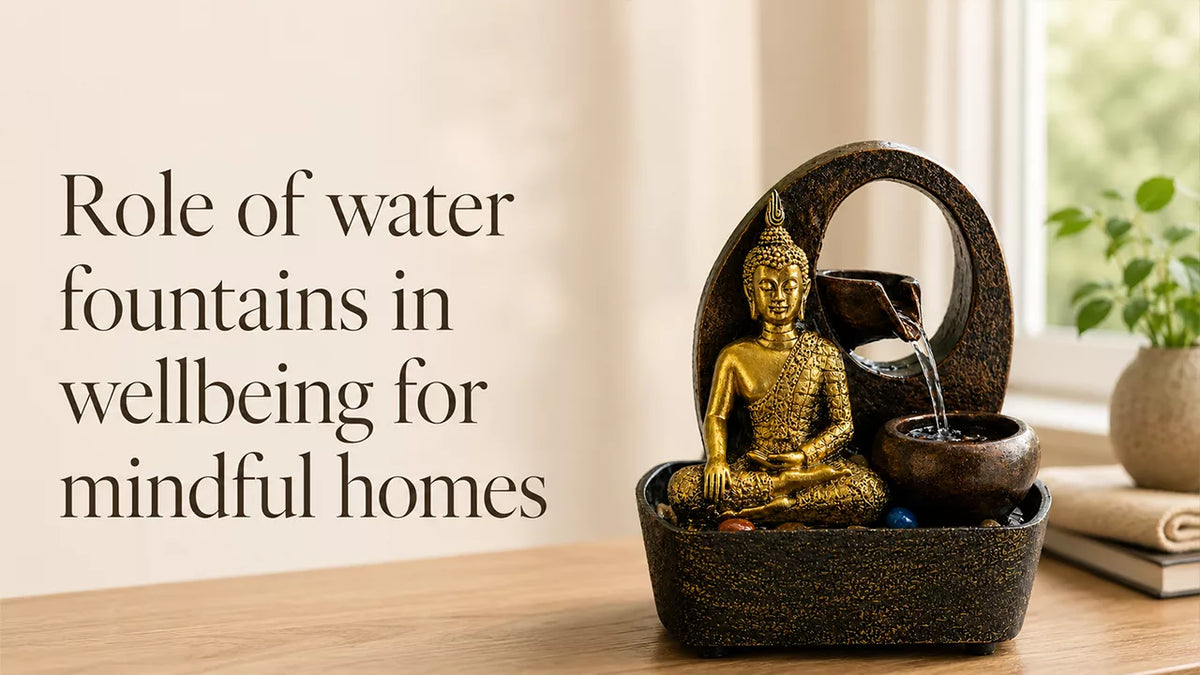
A small tabletop water fountain can reliably reduce stress and support mindful routines at home by anchoring attention and shaping a calmer sensory environment. Design and wellbeing sources confirm that the sound of moving water helps regulate the nervous system, lower cortisol, and mask distracting noise — all from a feature that sits comfortably on a shelf or side table. The role of water fountains in wellbeing is not decorative in the superficial sense; it is physiological, psychological, and deeply practical.
How do tabletop fountains actually influence your wellbeing?
The mechanism is simpler than it sounds. Moving water produces a soft, broadband sound that the brain processes as non-threatening. Rather than demanding attention the way a notification or a raised voice does, it offers a gentle focal point that lets the nervous system settle. Research into interior water features consistently links this kind of ambient sound to reduced stress and anxiety, with participants reporting a measurable shift in perceived calm.
Sound profile matters more than most people realise. Laminar flow — where water glides smoothly over a surface — creates a soft, consistent hum that suits restoration and focused meditation. High-splash designs, by contrast, raise cognitive load in quiet rooms and can feel unsettling rather than soothing. A gentle cascade sits between the two: rhythmic enough to anchor attention, quiet enough to recede into the background when you need to concentrate.
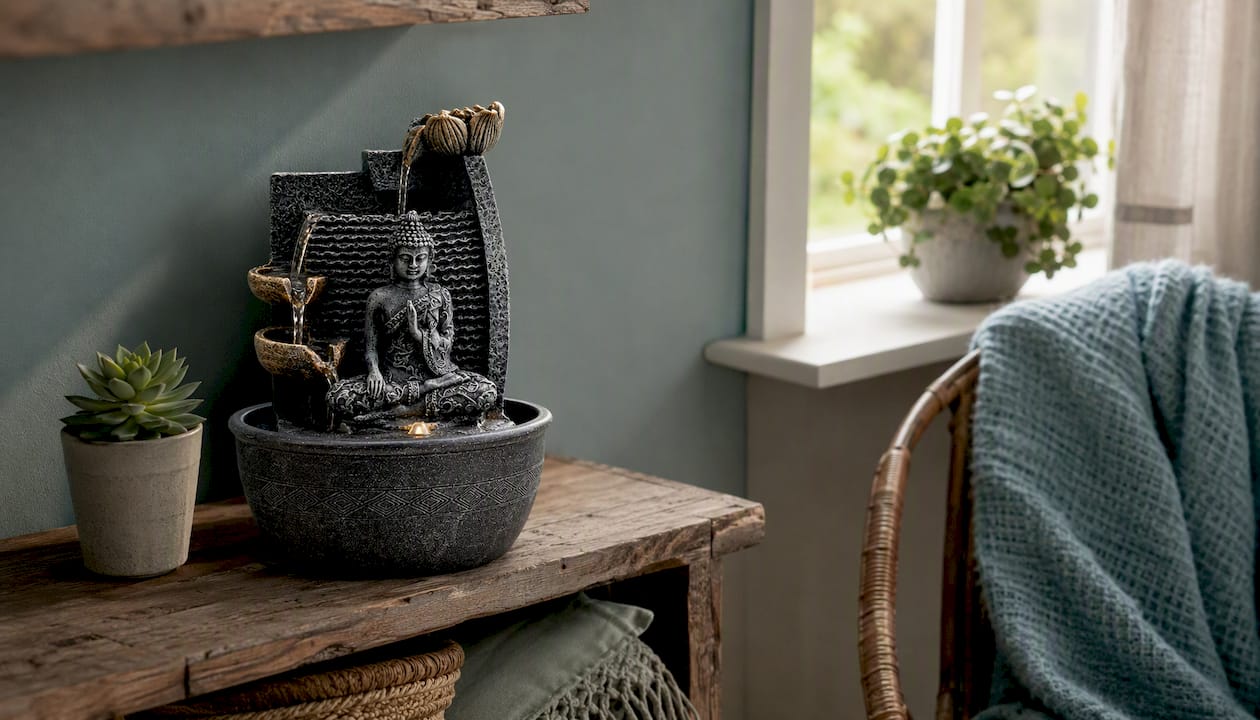
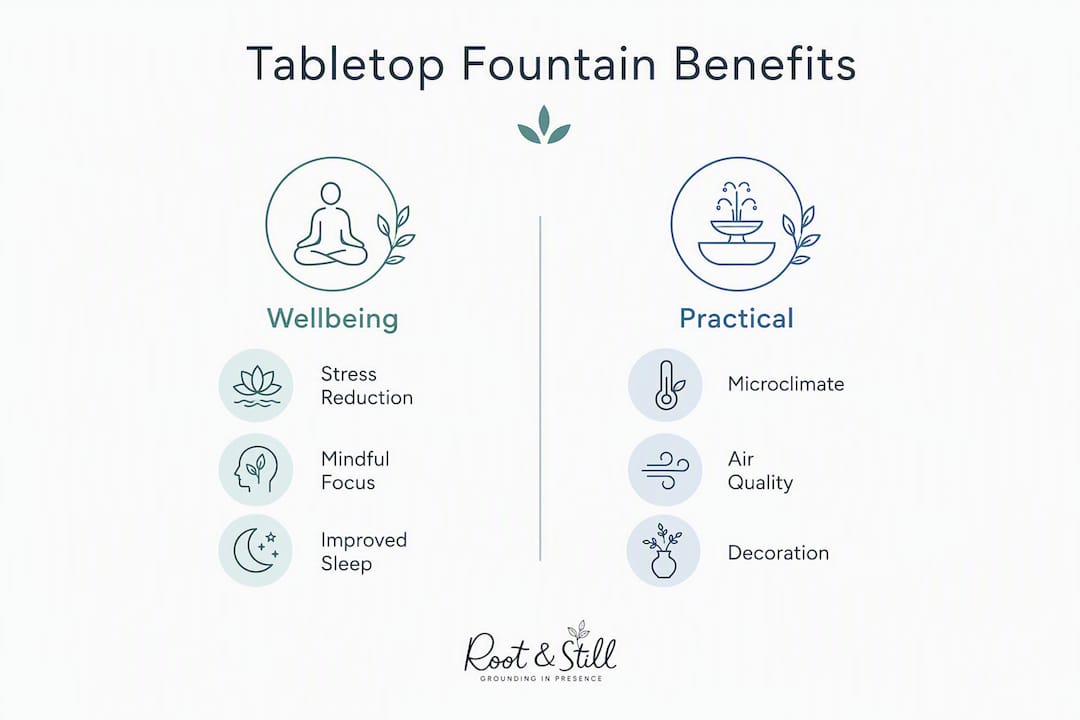
Water movement also affects the microclimate around it. Circulating water traps dust and airborne particles while raising local humidity, which makes the air feel fresher and supports any nearby indoor plants. This is the biophilic dimension of the benefit: the fountain does not just sound like nature, it recreates a small fragment of it.
Matching movement to practice is worth considering from the start. Subtle bubbling suits informal or playful routines; a gentle cascade suits focused meditation. Both mask unwanted background noise, but they do so with a different quality of sound.
Choosing the right tabletop fountain for calm and mindfulness
The single most useful selection principle: prioritise sound quality first, then size for the space, then ease of maintenance. A fountain that is too loud for a small bedroom, or too fussy to clean, will become a source of irritation rather than rest.
A practical buying checklist:
- Sound profile — listen before you buy, or check customer descriptions. Laminar or soft-cascade sounds suit most home settings.
- Flow control — an adjustable pump lets you tune the volume to the room and the moment.
- Pump noise rating — the pump itself should be near-silent; a rattling motor undermines the whole effect.
- Materials — stone, glazed ceramic, and resin hold up well and feel grounded; avoid thin plastic that amplifies vibration.
- Footprint and height — a 19–28 cm piece suits a desk or bedside table; a 30–35 cm piece works better as a shelf or console focal point.
- Power supply — confirm UK-compatible plug and, for any location near water, an RCD-protected socket.
- Maintenance needs — removable pump and accessible basin make weekly top-ups and monthly cleans straightforward.
Budget tiers give you a useful frame. Entry-level pieces in basic ceramic or resin cost less and suit a first purchase, though pumps may need replacing within two to three years. Mid-range options with better pumps and natural stone or glazed ceramic finishes tend to last four to six years with proper care. Handcrafted or artisan pieces, such as hand-finished stone or symbolic Buddha features, sit at the premium end and, with attentive maintenance, can last considerably longer. What shortens lifespan in every tier is hard tap water: mineral build-up clogs pumps faster than almost anything else.
Compared with essential-oil diffusers or sound machines, a fountain offers something neither can: genuine movement and a living microclimate. A diffuser adds scent but no sound; a sound machine plays recorded water but produces no humidity or air-cleaning effect. When your priority is a layered, multisensory anchor — something you can both see and hear — a fountain is the more complete sensory tool. A sound machine remains a reasonable alternative for bedrooms where any moisture is unwanted.
Where should you place a tabletop fountain at home?
Position the fountain where you can both see and hear it from your primary relaxation spot: a sofa, reading chair, or meditation corner. That sightline is what makes it a genuine anchor rather than background furniture.
Setup is straightforward:
- Unpack and inspect the pump before placing it in the basin.
- Set the fountain on a stable, level surface with a waterproof mat beneath it.
- Fill with distilled or softened water to limit mineral deposits.
- Test the flow and adjust rocks or internal fittings until the movement is laminar and quiet.
- Route the power cable safely, plugging into a UK-compliant socket protected by an RCD.
Keep the fountain away from prolonged direct sunlight, which accelerates algae growth. Interior design guidance also recommends keeping it clear of fabrics and electrical sockets that could be reached by splashes.
A short mindful routine pairs naturally with the setup. Approach the fountain, take three slow breaths while listening to the water, then name one thing you are ready to set aside for the next hour. Two minutes, no equipment beyond the fountain itself.
Pro Tip: Place the fountain near a small cluster of indoor plants. The fountain’s humidity supports the plants, and the layered greenery and water sound together deepen the biophilic effect considerably.
Maintenance, electrical safety, and practicalities for UK homes
Simple, regular upkeep keeps the feature restful rather than a chore. The maintenance rhythm that works best for most UK homes:
- Weekly: top up with distilled water and skim any surface debris.
- Fortnightly: wipe the basin and reposition rocks if the flow has shifted.
- Monthly: remove and rinse the pump, check for mineral build-up, and clean the basin thoroughly.
- Seasonally: if the fountain is placed outdoors or in an unheated space, drain and store the pump before temperatures drop below 5°C.
UK electrical safety points to keep in mind:
- Always use an RCD-protected socket, particularly in rooms where water is present.
- Keep cables dry and routed away from the basin.
- Check the pump manufacturer’s guidance on IP rating before placing any fountain outdoors.
- Use only UK-rated plugs and adaptors; never use an unearthed travel adaptor as a permanent solution.
Using distilled water and softening cartridges limits mineral build-up and extends pump life. Replacement pumps for most tabletop fountains are widely available from UK aquatic and garden suppliers; keep a note of the pump’s flow rate (in litres per hour) so you can match it when the time comes.
For households with pets or young children, choose a shallow basin and a stable, weighted base. Resin and glazed ceramic are more forgiving than stone if knocked; place the fountain on a low shelf rather than a high one to reduce the risk of a fall.
How to use a tabletop fountain in mindful practices and daily routines
Use the fountain as an anchor for short sensory practices that fit around ordinary life, not as a commitment that requires a separate ritual space. Even two minutes of deliberate attention to the sound can shift your state noticeably.
Three short guided prompts to try:
- Breathing prompt — sit within earshot of the fountain and let your out-breath slow to match the rhythm of the water. Three to five cycles is enough.
- Noticing prompt — name three layers of what you perceive: the sound of the water, the movement you can see, and the slight coolness in the air near the basin.
- Gratitude prompt — identify one thing the sound helps you set aside, and one thing you are glad to return to when the session ends.
Design and wellbeing sources link regular low-volume water sound exposure to improved sleep and reduced arousal, particularly when used consistently as part of an evening wind-down. A short daily session of 2–10 minutes is enough to build the association; leaving the fountain running at low volume during high-stress periods or before bed extends the benefit without requiring active attention.
Pair the fountain with a chair positioned to face it, a personal meaningful object placed nearby, and, if you use music, a soft instrumental playlist that complements rather than competes with the water sound. Therapeutic environment guidance supports combining familiar, meaningful objects with sensory stimulus as the most effective approach to a restorative home space.
What do experts and customers say about water features and wellbeing?
Multiple design and wellbeing sources identify sound and movement as calming, though rigorous clinical trials focused specifically on tabletop fountains remain limited. The broader evidence base is solid: a scoping review of artificial water features found that interactions with indoor water features promoted psychological health, with types, characteristics, and surroundings all influencing outcomes. Research from the University of Waterloo confirms that desktop fountains can help reduce stress and increase a sense of calm.
Design practitioners consistently note that pairing water with indoor plants heightens the biophilic effect, and that circulating water’s passive air-cleaning properties add a tangible environmental benefit beyond sound alone. Customers who bring a Buddha tabletop water feature into their homes commonly report increased calm, an easier transition into meditation, and a sense that the room feels more settled. The air quality perception shift is a recurring theme, particularly in rooms that previously felt still or stale.
For wider mindful room curation, pairing a fountain with calming wall art and natural-material decor creates a layered sensory environment that reinforces the restorative effect of the water sound.
Key takeaways
A tabletop water fountain works because laminar sound anchors the nervous system, masks distracting noise, and raises local humidity, making it one of the most complete sensory tools for a calm home.
| Point | Details |
|---|---|
| Sound profile first | Choose laminar or soft-cascade flow; high-splash designs increase cognitive load in quiet rooms. |
| Placement matters | Position where you can see and hear the fountain from your primary relaxation spot, away from direct sunlight. |
| Use distilled water | Distilled or softened water limits mineral build-up and extends pump life across all budget tiers. |
| Short daily practice | Two to ten minutes of deliberate listening is enough to build a calming association over time. |
| Rootandstill options | Rootandstill’s handcrafted Buddha tabletop fountains are curated for symbolic resonance and quiet, laminar flow. |
Why the “just add a fountain” advice misses the point
Most wellbeing guides treat a tabletop fountain as an afterthought — a nice finishing touch once the room is otherwise sorted. That framing gets it backwards. The fountain is most effective when it is placed with the same intention you would give a reading chair or a piece of meaningful art: positioned deliberately, chosen for its sound rather than its appearance alone, and used as a genuine anchor for a short daily practice.
The symbolic dimension matters too, and it is often dismissed as purely aesthetic. A Buddha or lotus motif is not decoration for its own sake. It carries a visual cue that primes a particular quality of attention before you have even heard the water. That priming effect is real, and it is why Rootandstill curates fountains that combine quiet, laminar flow with considered symbolic form. The Buddha tabletop water features in the collection are chosen because both dimensions — the sound and the symbol — work together. Neither alone is as effective as both combined.
Rootandstill’s tabletop water features for calm UK homes
Rootandstill curates a small, considered range of Buddha tabletop water features designed for exactly the kind of intentional home environment this guide describes. Each piece is chosen for quiet laminar flow, meaningful symbolic form, and materials that feel grounded rather than generic.
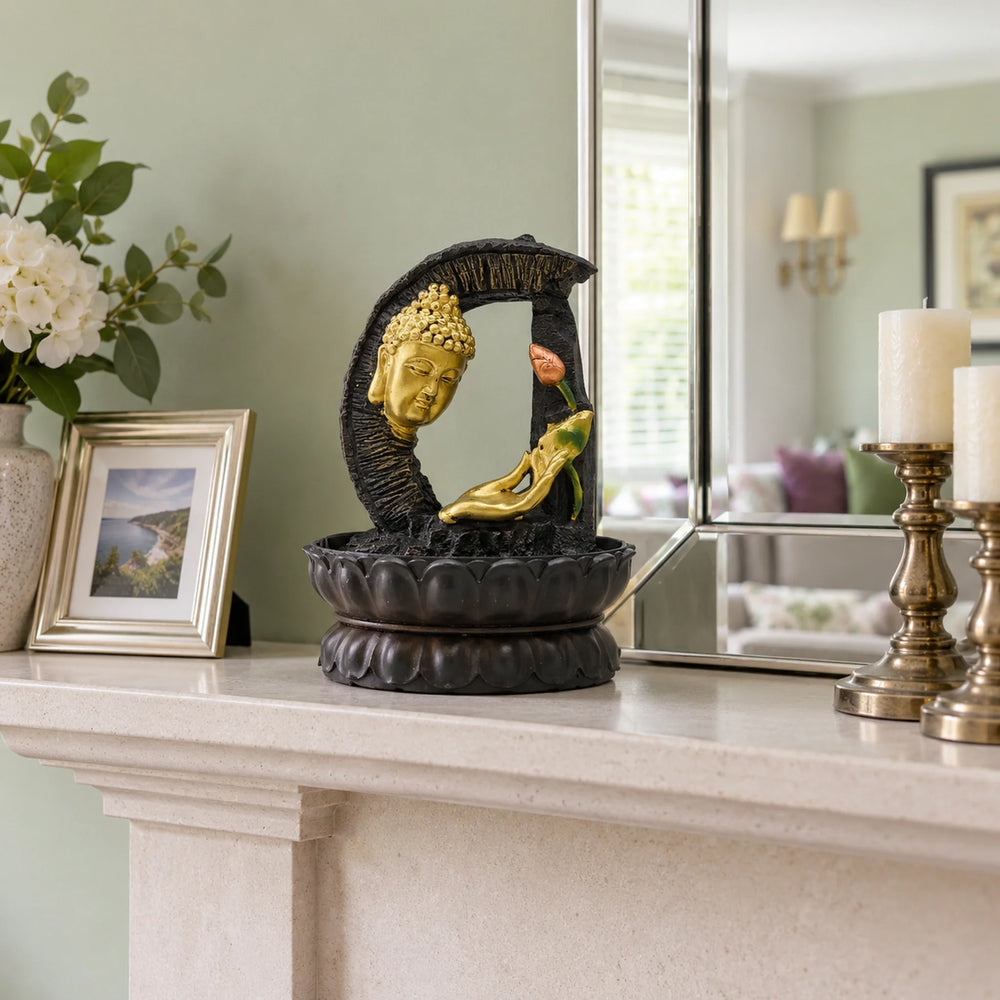
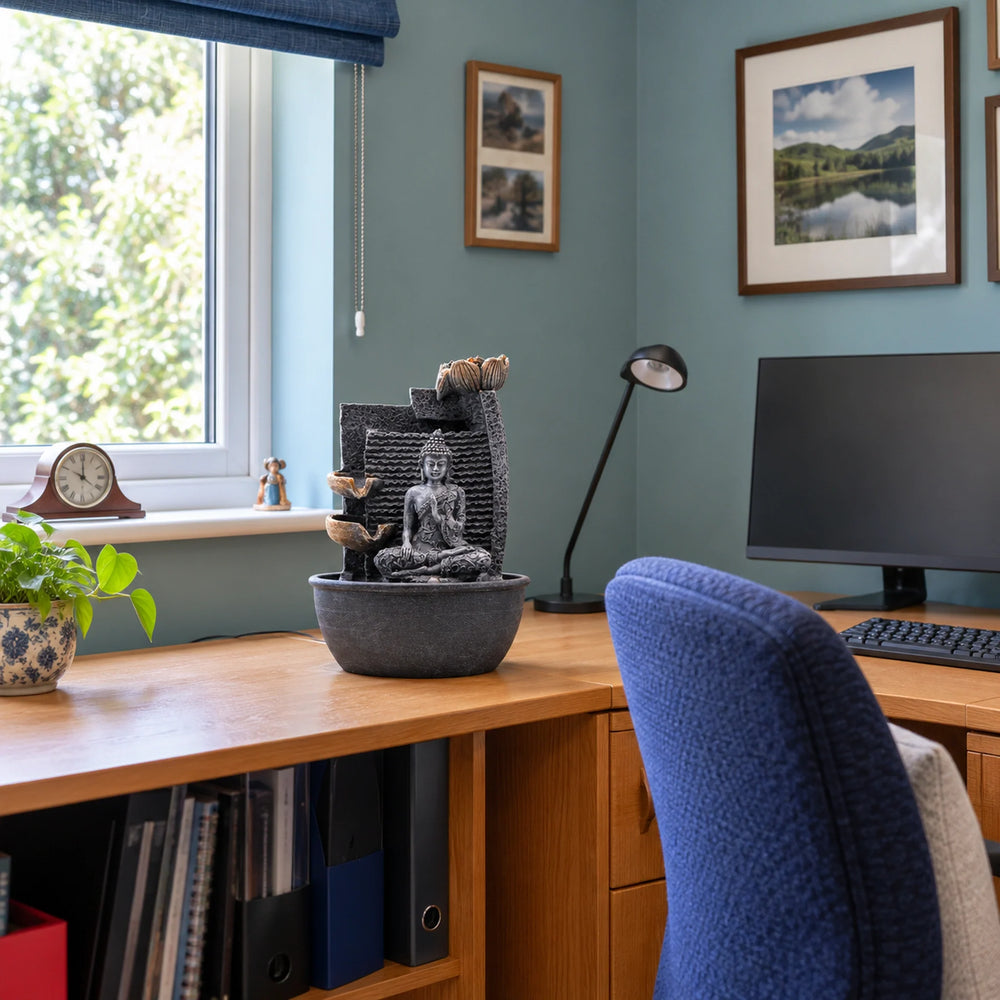
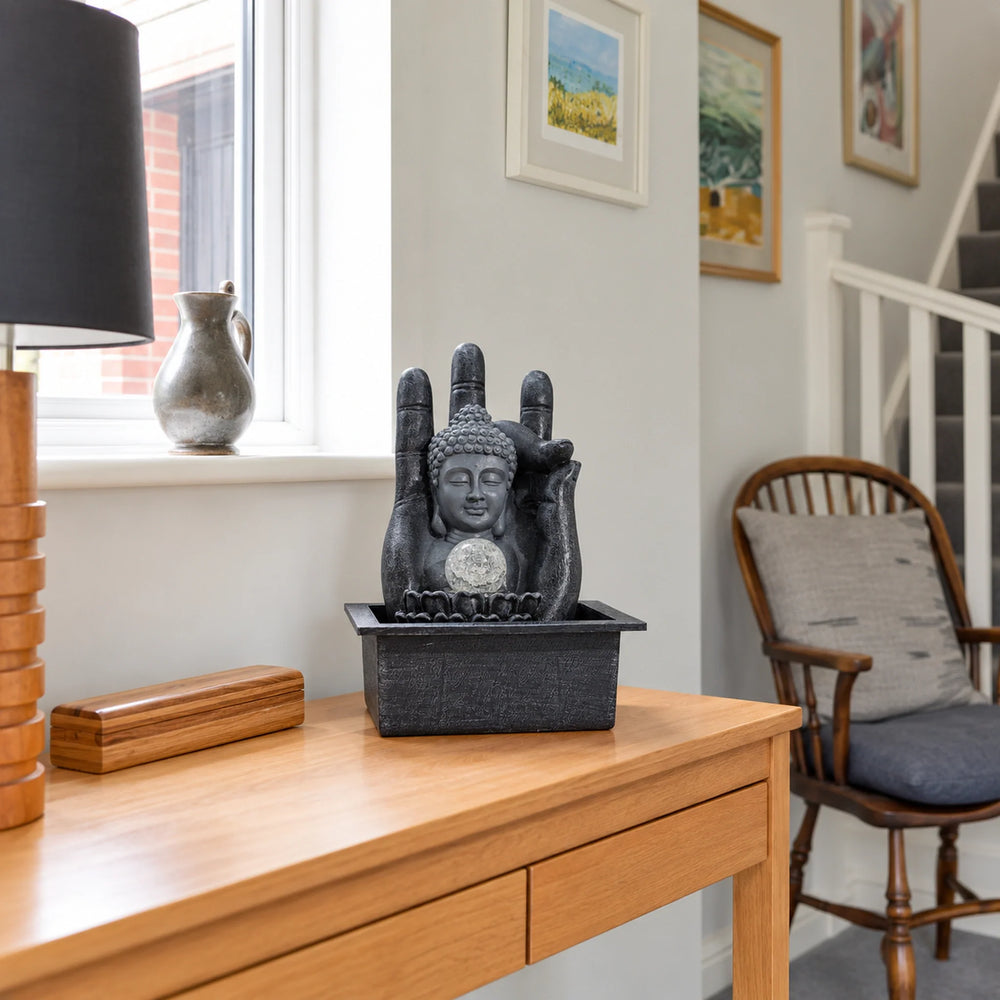
The 19x19x28cm Buddha Lotus Flower Cascading Potsx suits a desk, bedside table, or meditation corner where space is limited but the need for calm is real. The 30cm Golden Meditating Buddha is the handcrafted choice for a dedicated meditation space or a living-room shelf where the fountain will serve as a focal point. For a stronger visual presence, the 35cm Silver Buddha Cascade & Crystal Ball brings a refined, layered aesthetic to a console or mantelpiece.
Browse the full mindful decor collection to find the piece that fits your space, then bring it home and let the water do the rest.
Further reading and sources
- How You Can Create a Healing Environment at Home — University of Minnesota, Taking Charge of Your Wellbeing
- Indoor Water Fountains and the Psychology of Sound — Dragon Lighthouse
- The Cascading Calm: Interior Water Features and Stress — Zenodo peer-reviewed study
- Interactions with Artificial Water Features: A Scoping Review — ScienceDirect
- Can Artificial Water Features Improve Your Well-being? — University of Waterloo Engineering Wellness Programme
- How to Incorporate Water Features into a Modern Home — AV Architects & Builders
- Garden Water Features for Tranquillity — Linda Crammond Interiors
For UK electrical safety guidance on RCD-protected sockets and IP-rated fittings, refer to the Electrical Safety First website, which covers domestic installation standards applicable to water-adjacent appliances.
FAQ
Do tabletop water fountains genuinely reduce stress?
Yes. Multiple studies, including a scoping review of artificial water features, found that indoor water features promote psychological health and reduce perceived stress, particularly through their ambient sound.
What flow type is best for a calm home environment?
Laminar flow — where water glides smoothly over a surface — produces the softest, most consistent sound and is recommended for meditation and restoration over high-splash designs.
How often should I clean a tabletop fountain?
Top up with distilled water weekly, wipe the basin fortnightly, and do a full pump clean monthly. Using distilled or softened water significantly reduces mineral build-up between cleans.
Are tabletop fountains safe to use near UK plug sockets?
Use an RCD-protected socket and keep cables dry. Check the pump’s IP rating before placing any fountain in a damp or outdoor location, and use only UK-rated plugs.
Which Rootandstill fountain suits a small meditation space?
The 19x19x28cm Buddha Lotus Flower Cascading Potsx is designed for compact spaces, offering a gentle cascade and symbolic form without requiring a large footprint.