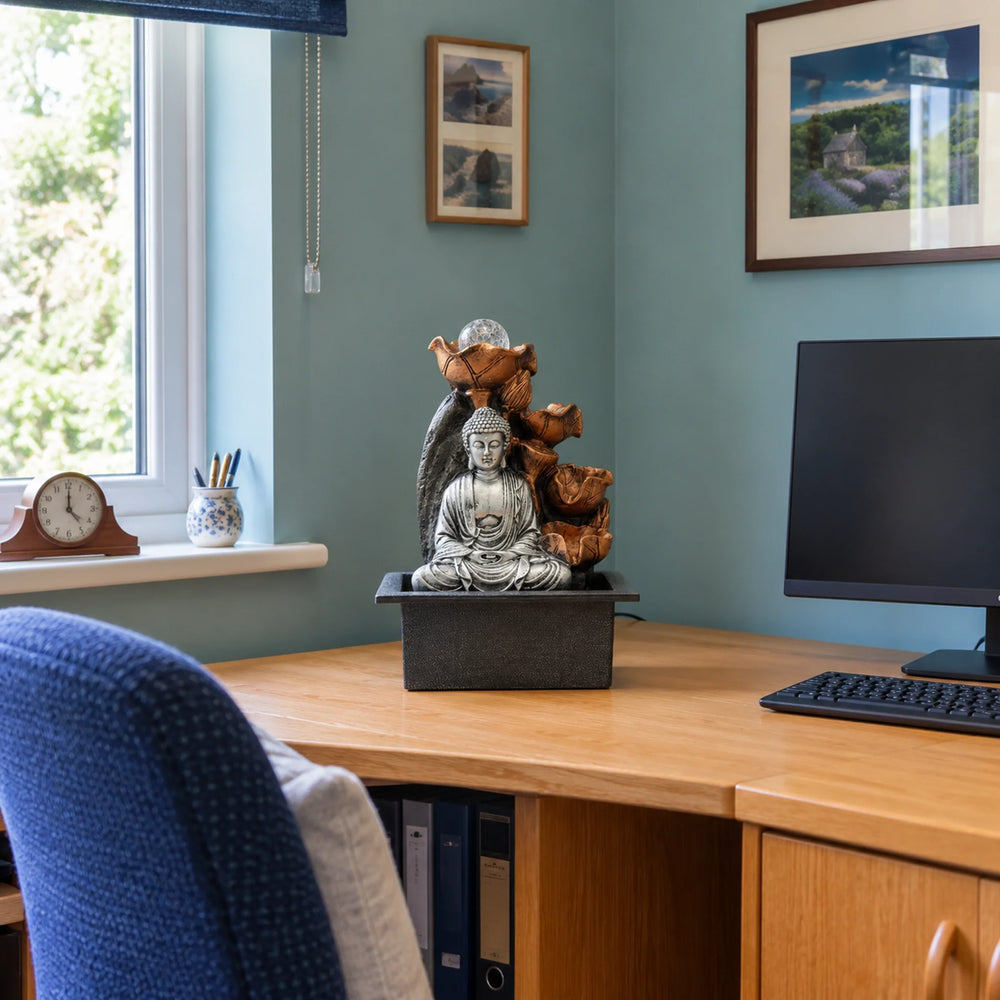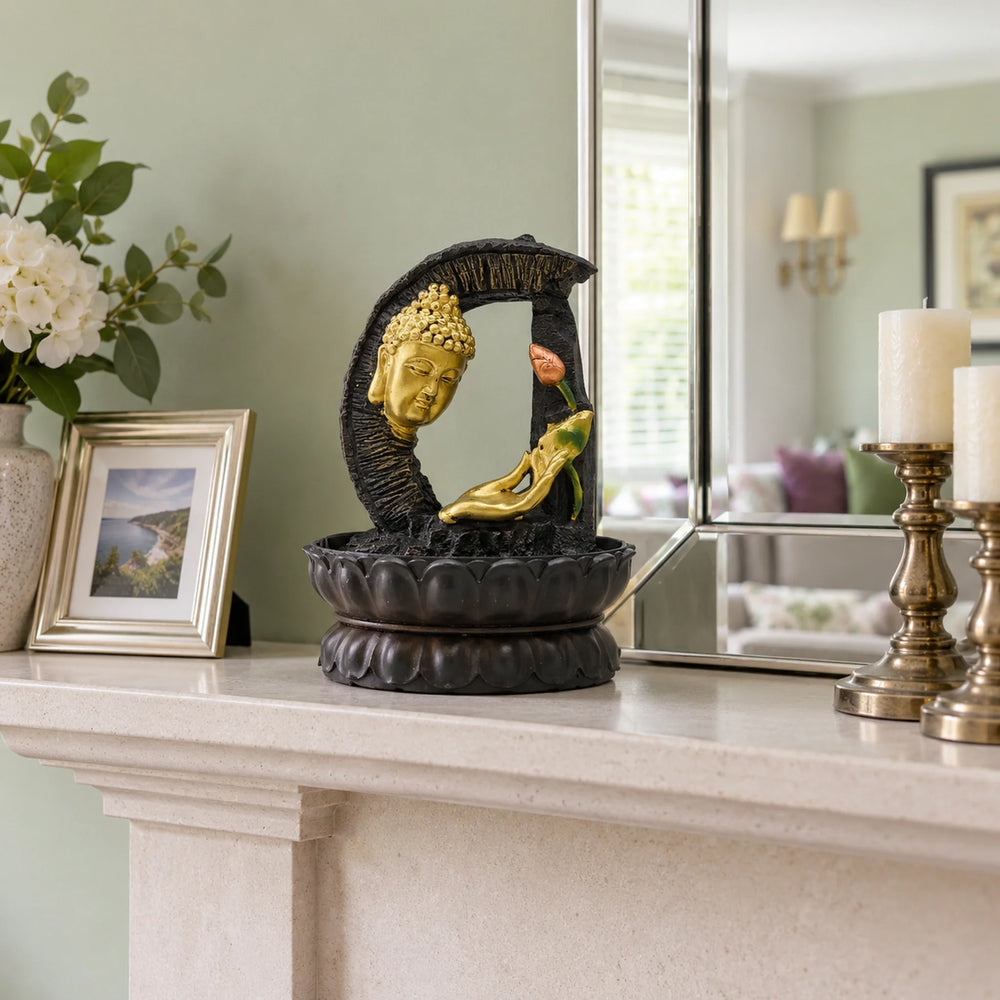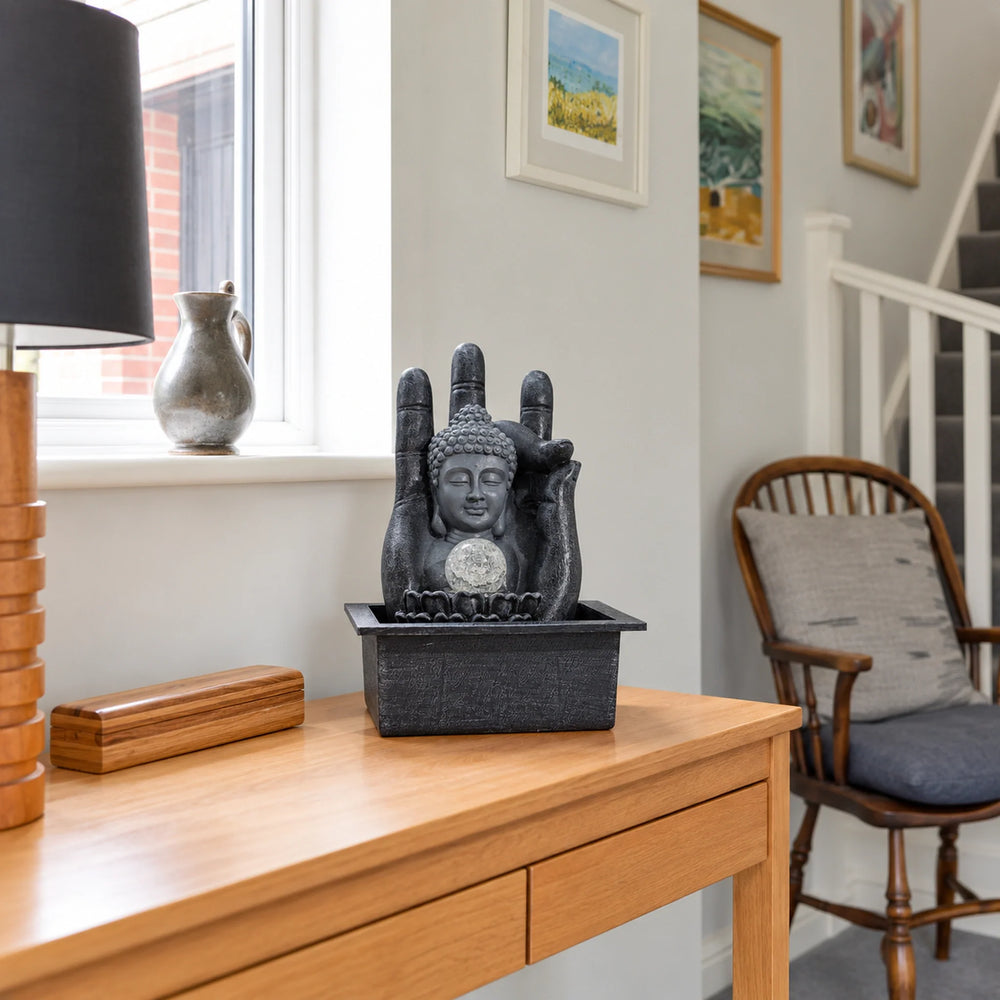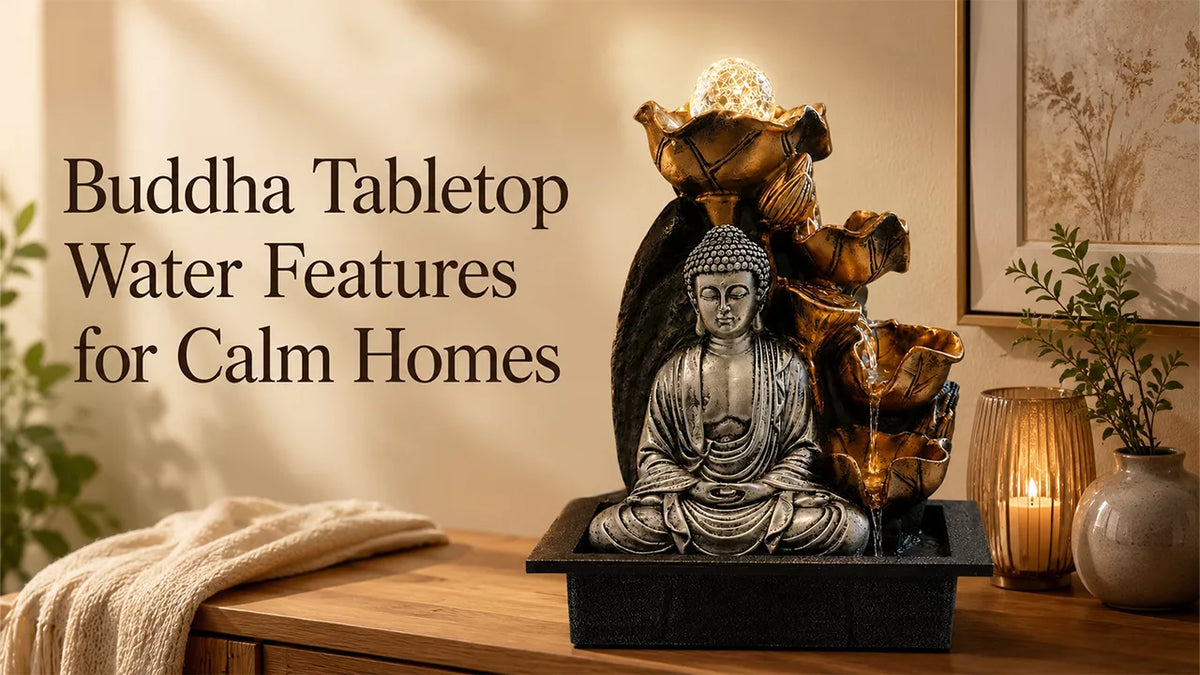
Some rooms look beautiful and still feel unsettled. The styling is right, the palette is soft, and yet something is missing. Buddha tabletop water features often fill that gap in a way few decorative pieces can, bringing together gentle movement, quiet sound and a sense of presence that changes how a space feels, not just how it looks.
For homes that need less visual noise and more ease, a small water feature can become a natural focal point. It draws the eye without demanding attention. It softens sharp corners, breaks up silence in the gentlest way, and introduces an element that feels alive. When paired with a Buddha form, the effect is especially grounded - calm, reflective, and quietly restorative.
Why buddha tabletop water features feel so calming
Part of the appeal is sensory. Water has a way of changing a room immediately. The low, continuous sound can make a living room feel less exposed, a hallway less flat, or a meditation corner more settled. It is subtle enough for everyday living, but noticeable enough to shift the atmosphere.
The Buddha element adds another layer. For many people, it is less about religion and more about symbolism - stillness, balance, compassion, inner calm. In a design-led home, that symbolism matters. It gives a decorative object emotional weight, so the piece feels intentional rather than ornamental.

Shop Now: Buddha Tabletop Indoor Water Fountain Feature - 30cm - Golden Meditating Buddha
There is also the contrast itself: still figure, moving water. That pairing creates tension in the best sense. One represents steadiness, the other flow. Together, they bring a room a feeling of balance that works beautifully in spaces designed for rest, reading, quiet conversation or mindful routines.
Where a small water feature works best
The beauty of a tabletop piece is flexibility. You do not need a garden, a dedicated wellness room or a large property to enjoy one. In fact, smaller water features often work best when they are used with restraint.
In a living room, place one on a console, sideboard or substantial shelf where it has space around it. It should feel composed, not squeezed between framed photos, remotes and everyday clutter. If the room already has several statement pieces, choose a simpler design with clean lines and a softer stone-effect finish.
In a bedroom, the mood matters more than the scale. A compact feature on a chest or low table can make the room feel more cocooning, especially when styled with linen textures, warm lighting and muted ceramics. That said, some people find any sound distracting at night, so it depends on whether you want it running only during your evening wind-down or into the small hours.
For a meditation nook, reading corner or spare room used for yoga, buddha tabletop water features can help define the purpose of the space. Even in a modest flat, one thoughtful object can signal a shift from busy routine to pause and reconnection.
Choosing a style that suits your home
Not every Buddha water feature creates the same feeling. Some lean ornate and traditional, with carved detailing and dramatic rock forms. Others are pared back, with smoother silhouettes and finishes that sit more naturally in modern interiors. The right choice depends less on trends and more on the overall mood of your home.
If your space is light, neutral and minimal, look for a design that feels tactile rather than busy. Stone-look textures, soft charcoal tones, sand hues and simple bowls tend to sit well with modern British interiors. They add depth without making the room feel themed.
If your home already includes layered natural materials such as wood, rattan, clay and woven textiles, a more textured feature can work beautifully. In these spaces, the water feature becomes part of a wider story - grounded, warm and intentionally collected.
Scale is just as important as style. A piece that is too small can disappear, while one that is too tall for a side table can feel oddly dominant. As a guide, a tabletop water feature should complement the furniture beneath it and leave enough breathing room for the eye. Calm interiors rarely come from filling every surface.
Materials and finish matter more than people think
A good finish changes everything. Resin is common for tabletop designs, and when done well it can convincingly mimic weathered stone or carved concrete while staying practical and manageable in weight. Poorer finishes can look shiny or artificial, which weakens the quiet, grounded effect many people want.
Look for surfaces with depth rather than gloss. Matt textures, natural colour variation and softly aged details tend to feel more elevated. The aim is not perfection. A little irregularity often makes a piece feel warmer and more believable in a lived-in home.
How to style buddha tabletop water features without clutter
This is where restraint makes the biggest difference. A water feature already combines sculpture, sound and movement, so it rarely needs much around it. Let it breathe.
A candle holder nearby can add warmth in the evening, especially if the tones are complementary rather than matching too closely. An incense dish, a small stack of books or a single plant can also work, but only if the arrangement still feels spacious. Too many accessories will dilute the sense of calm.
Think about the backdrop as well. Against a plain wall, the feature stands out with quiet confidence. In front of a heavily patterned wallpaper or crowded shelf, its effect is reduced. If you want the piece to create a place to pause, the surrounding area should support that intention.
Lighting deserves attention too. Soft lamp light tends to flatter water and texture far better than harsh overhead bulbs. During the evening, the reflection on moving water can make a room feel noticeably gentler.
Practical things worth considering
Even the most serene decorative object has practical needs. Before choosing one, think about where the plug will go and whether the cord can be kept discreet. A visible tangle of wires can undermine the whole mood, particularly in a carefully styled room.
Sound level varies more than many people expect. Some tabletop fountains produce a quiet trickle, while others create a more obvious stream. Neither is wrong, but they suit different spaces. In a busy family room, a slightly stronger sound may feel soothing. In a bedroom or compact home office, something softer is usually better.
Maintenance is modest, but not non-existent. Water features need topping up, occasional cleaning and sensible placement away from anything that should not get damp. If you want beauty without fuss, choose a design that is easy to access and wipe down. The most useful decor pieces are the ones you can actually live with.
Are they right for every home?
Not always, and that honesty matters. If your space is already visually full, adding a feature may create more stimulation rather than less. If you strongly prefer crisp silence, the sound of water may not relax you at all. And if you know you will not keep up with basic care, a simpler Buddha statue might suit your lifestyle better.
But for many homes, especially those that feel a little flat or energetically busy, the right water feature can make a noticeable difference. It introduces rhythm. It creates a focal point with feeling. It asks very little, while giving back a sense of softness and calm.
Creating a home that feels rooted in stillness
Decor has its deepest value when it changes the atmosphere of daily life. That is why pieces like these resonate so strongly. They do more than fill a corner or complete a shelf. They shape the mood of a room in quiet, lasting ways.
Buddha tabletop water features are at their best when chosen with care - not because they are fashionable, but because they reflect how you want to live. A calmer living room. A gentler evening routine. A corner that invites you to pause for a breath before the day moves on.
If that is the feeling you want from your home, start small and choose well. One thoughtful piece, placed with intention, can be enough to make a space feel more grounded, more balanced and far more your own.