Why bronze belongs at the heart of spiritual home decor
Bronze carries a quality that few other materials can match in a mindful home: it feels grounded, unhurried, and quietly alive. As a copper and tin alloy, it has been used for centuries in sacred objects, ritual idols, and temple statuary precisely because its weight and warmth communicate permanence. In spiritual practice, that sense of permanence matters. A bronze Buddha statue or ritual bowl does not feel like a decorative afterthought; it feels like an anchor.
The role of bronze in decor goes well beyond aesthetics. Spiritual practitioners have long distinguished between bronze and brass for good reason. Bronze grounds energy, while brass, made from copper and zinc rather than tin, radiates it outward with its brighter, more golden lustre. Both have their place, but bronze tends to suit spaces where stillness and contemplation are the intention.
Common bronze and brass decorative elements in mindful homes include:
- Buddha statues in sitting, standing, and meditating poses
- Ritual bowls used for offerings or sound healing
- Oil lamps and incense holders
- Architectural accents such as door handles and shelf brackets
- Small idols representing deities from Hindu, Buddhist, and Taoist traditions
Solid cast bronze idols are particularly valued for ritual use because their weight and density allow them to withstand cleansing practices without damage. That durability is part of what makes bronze so fitting for a long-term mindful space.
How bronze shaped the story of UK interior decor
Bronze’s presence in British interiors has deep roots. By the early 19th century, the demand for bronze statues grew as commemorating wartime heroes and political leaders through public monuments became customary. At much the same time, a taste developed for bronze statuettes in domestic interiors, a shift that brought the material from public squares into private drawing rooms.
The late Victorian period deepened this relationship considerably. Scholars have noted that the 1880s and 1890s saw British sculptors focus a substantial part of their output on statuettes and smaller objects expressly identified as decorative and domestic in character, labelled at the time as ‘household sculpture’ and ‘appropriate ornaments for the modern drawing-room’. Bronze was celebrated for its warm tones, resilience, and ability to combine artistic expression with functional strength.
That heritage has not faded. Today, bespoke bronze metalwork sits alongside stone, timber, and linen in contemporary UK interiors, bridging period craftsmanship with minimalist modern design. Whether in a Georgian townhouse or a pared-back new build, a well-placed bronze piece carries the same quiet authority it always has.
What makes bronze’s natural patina so special in a mindful space
Bronze does not stay still. Over time, its surface shifts from a warm, reddish-brown to deeper ochres and eventually to the greenish tones most people associate with aged statuary. This is not deterioration; it is the material’s character revealing itself. Designers advise embracing bronze’s natural patina as it evolves with time and light, deepening the connection between the object and the household it inhabits.
In spiritual decor, that ageing process carries real meaning. The patina becomes a kind of record, a visible skin that reflects the energy and intention of the space. A bronze Buddha that has sat on your altar for five years feels different from one just unwrapped, and that difference is the point.
Caring for bronze patina well means resisting the urge to polish it bright. Instead:
- Dust gently with a soft, dry cloth
- Apply a thin coat of natural wax or linseed oil occasionally to protect the surface
- Avoid harsh chemical cleaners, which strip the patina and the character with it
- Keep bronze away from prolonged moisture to prevent uneven corrosion
Brass, by contrast, is often polished to maintain its golden brightness, which suits spaces where a more radiant, energising quality is desired. The two materials serve different moods, and knowing which you want shapes how you care for them.
Pro Tip: If your bronze piece develops a small patch of green patina, resist the instinct to remove it. In many spiritual traditions, this colouring is considered a mark of the object’s age and accumulated blessing, not a flaw.
Practical ways to bring bronze spiritual decor into your home
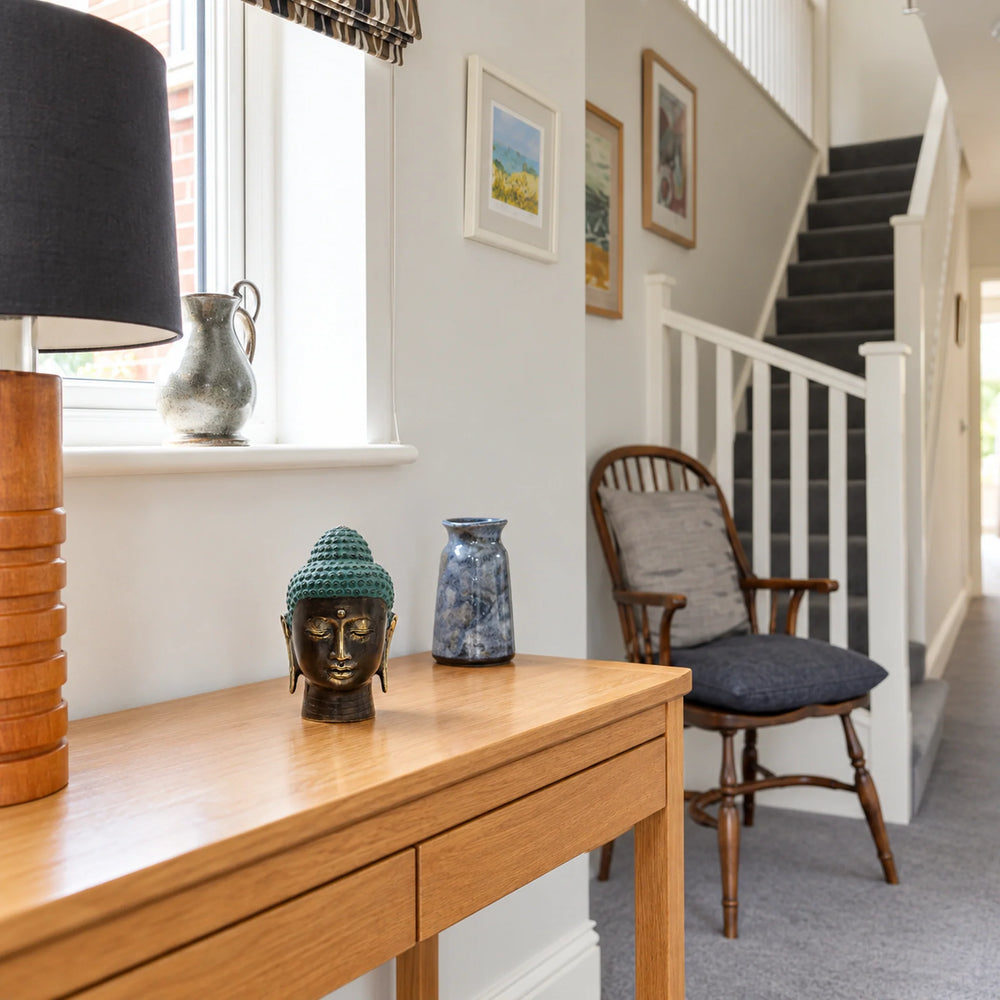
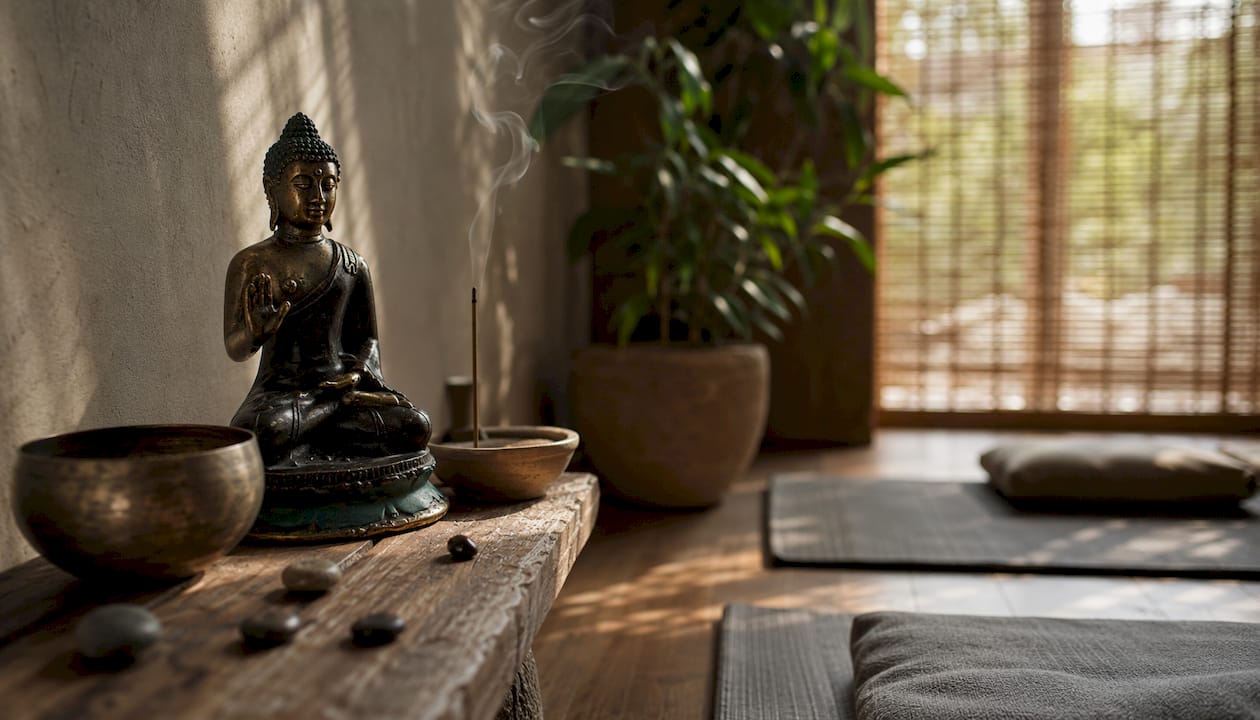
Placement shapes how a bronze piece feels. A sitting meditation Buddha placed at eye level in a dedicated corner creates a focal point that draws the eye downward and inward, naturally encouraging a slower pace. The same figure placed on a high shelf loses that intimacy. Think about where you naturally pause in your home and let that guide you.
Bronze works beautifully alongside natural materials. Pair it with unfinished wood, smooth river stones, rattan, or undyed linen to keep the palette grounded. The warmth of bronze against pale stone or raw timber is particularly restful, and the contrast between the metal’s solidity and softer organic textures gives a room a sense of balance rather than weight.
Beyond Buddha statues, bronze and brass decor extends to:
- Tibetan singing bowls, which serve both as decor and as sound healing tools
- Oil burners and incense plates that anchor a ritual corner
- Tabletop water features with bronze or brass fittings
- Glow lamps with warm metallic bases that soften evening light
Scale matters too. A single medium-sized figure tends to anchor a space more effectively than several small pieces competing for attention. Give your bronze room to breathe, and the whole area will feel more settled.
Pro Tip: Incorporate a simple weekly ritual of wiping your bronze pieces with a soft cloth. The act of tending to them reinforces mindful attention and, practically, keeps dust from dulling their surface over time.
Rootandstill’s handcrafted bronze and brass collection for mindful homes
Rootandstill was built around the belief that the objects you live with should carry meaning. Curated by Dhriti, the collection brings together handcrafted brass and bronze pieces chosen for their spiritual authenticity and their ability to bring genuine calm into a home. Customers consistently describe a noticeable shift in the atmosphere of their spaces after introducing these pieces, a quieter, more anchored feeling that generic decor rarely achieves.
Three pieces from the collection stand out for anyone beginning or deepening a mindful home practice:
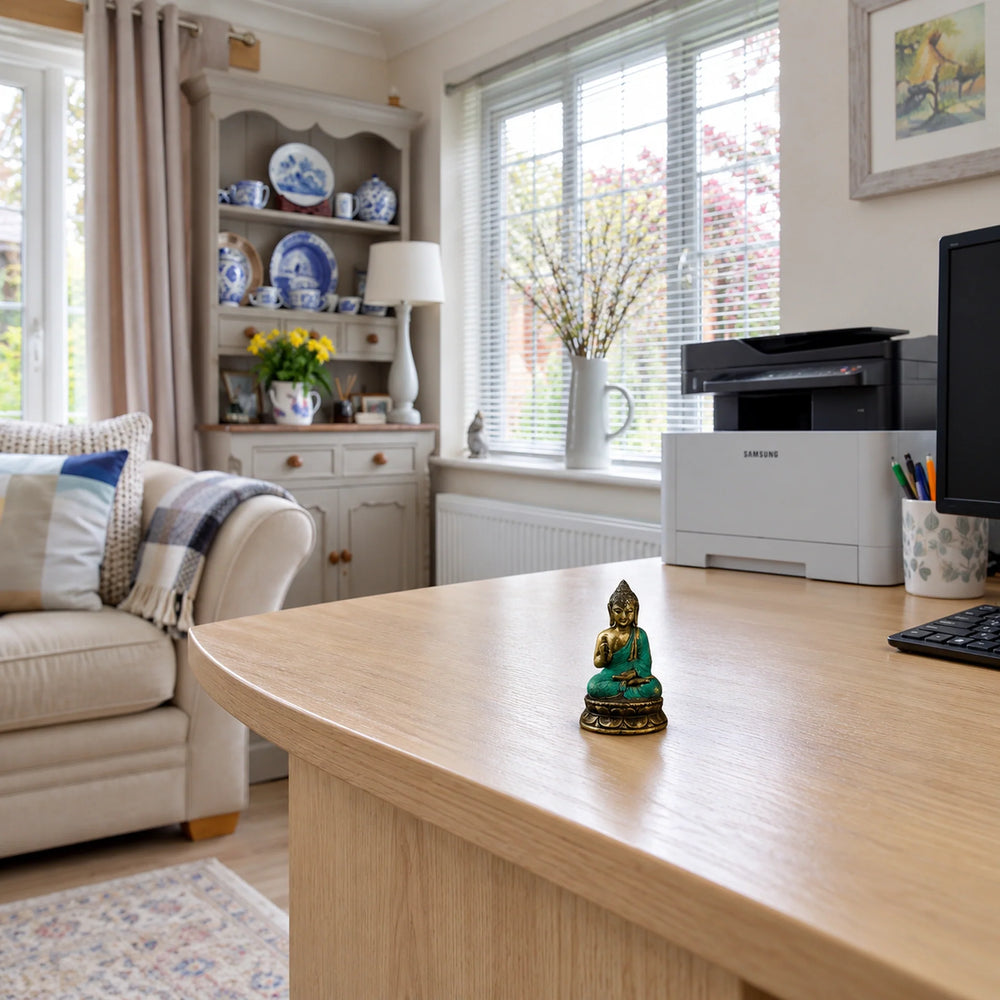
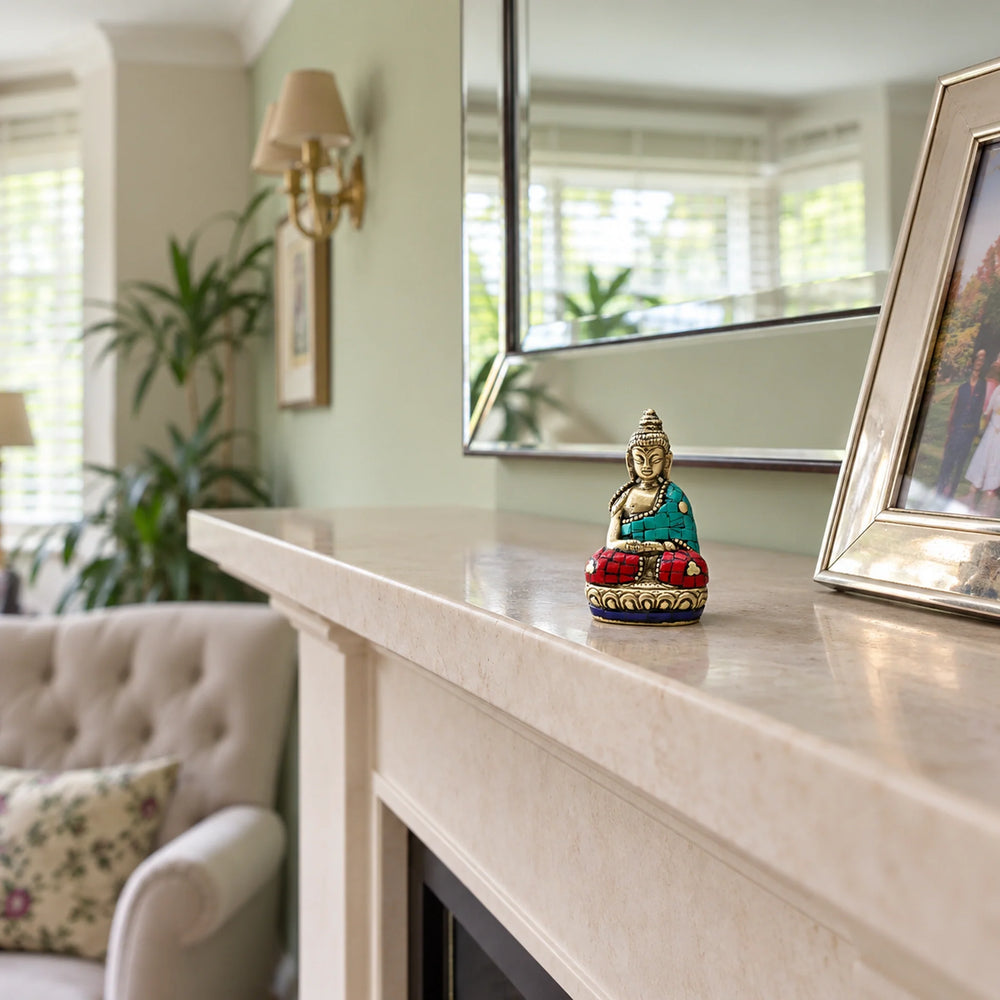
- The Med Hand Up Sitting Brass Buddha Figure, whose raised hand gesture (Abhaya mudra) traditionally conveys protection and fearlessness, making it a grounding presence in an entrance hall or living room.
- The Med Standing Brass Buddha Figure, which brings an upright, composed energy suited to spaces where you want a sense of gentle alertness rather than deep stillness.
- The Med Meditation Sitting Brass Buddha Figure, perhaps the most quietly powerful of the three, designed for meditation corners, altars, or any space where you want to encourage inward reflection.
Each piece is handcrafted by artisans using traditional methods, and Rootandstill provides care guidance to help you preserve both the spiritual significance and the physical beauty of your pieces over time. For a broader view of what brass figures can bring to a home, the brass Buddha figures guide on the Rootandstill blog is a thoughtful starting point.
What bronze means across different spiritual traditions
Bronze holds sacred significance across a remarkable range of traditions, and understanding that breadth helps you choose pieces with real intention.
In Tibetan Buddhism, bronze statues are considered vessels of blessing energy and are valued for their durability when consecrated. The material’s density is understood to hold and transmit spiritual power, which is why consecration rituals are taken seriously before a statue is placed in a home. In Hindu practice, bronze and brass idols have been cast using the lost-wax method for over a thousand years, with the Chola bronzes of South India representing perhaps the most celebrated tradition of sacred metal sculpture in the world. In Taoist and Chinese folk traditions, bronze vessels and figurines carry associations with longevity, protection, and the harmonising of elemental forces. Even in Western esoteric traditions, bronze’s copper content links it to Venus and to qualities of love, harmony, and beauty. Across all these contexts, the common thread is that bronze is not merely decorative. It is considered a living material, one that participates in the spiritual life of a space.
How different bronze finishes affect the mood of a room
The finish on a bronze or brass piece changes its energy considerably, and it is worth understanding the options before you choose.
A natural or raw bronze finish retains the metal’s original warm, reddish-brown tone and is the most likely to develop a rich patina over time. This finish suits meditation spaces and altars where depth and authenticity matter most. An antique bronze finish replicates the look of aged patina through a chemical or hand-applied process, giving a piece immediate visual weight and gravitas without waiting years for natural ageing. It works well in period-style interiors or alongside darker wood tones. A polished brass finish sits at the brighter end of the spectrum, reflecting light and radiating warmth outward. This suits living rooms and entrance halls where you want the piece to draw the eye and lift the energy of the space. A brushed or satin finish sits between polished and raw, offering a quieter gleam that feels contemporary and understated, well suited to minimalist or Japandi-influenced interiors. For a complementary piece that echoes bronze’s warm, textured quality in a different medium, the copper patina abstract oil painting from Frame the World pairs naturally with bronze accents in a mindful living space.
Rootandstill: handcrafted spiritual decor for a calmer home
If you are looking for bronze and brass pieces that carry genuine spiritual weight rather than surface-level style, Rootandstill offers something distinct. Every piece in the collection is handcrafted, chosen for its authenticity, and accompanied by the kind of care guidance that helps you maintain both its beauty and its meaning over years of use. Unlike mass-produced decor, these are objects that settle into a home and become part of it.
Browse the full range of brass Buddha figures and spiritual home accents at rootandstill.com, and find the piece that feels right for your space.
Key takeaways
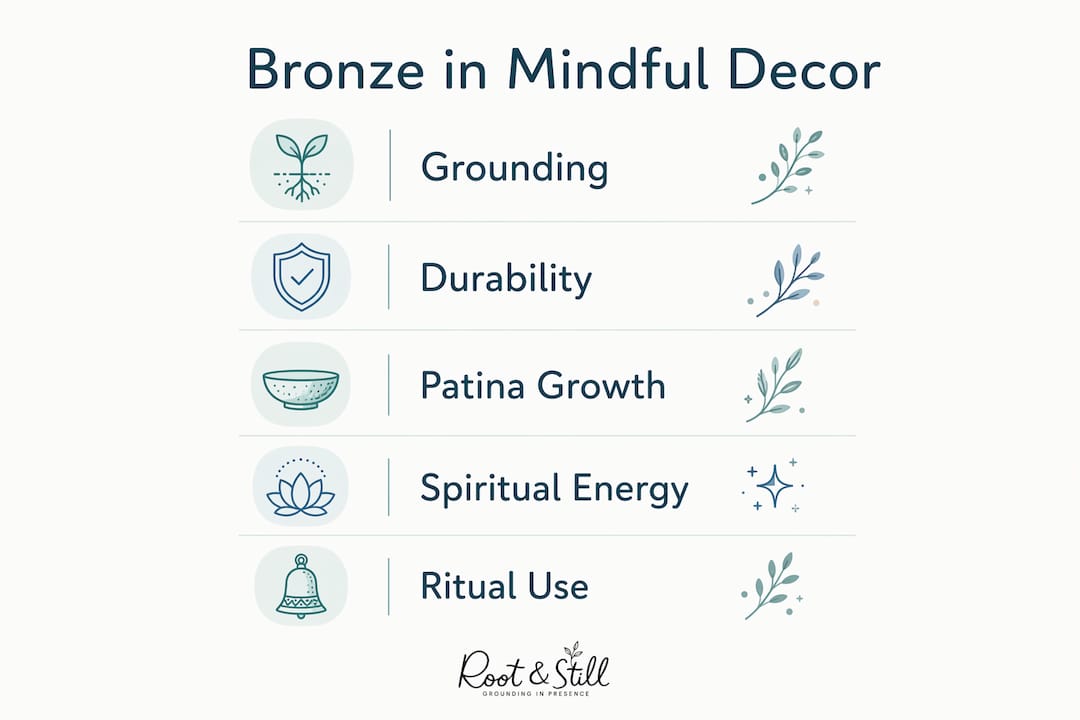
Bronze’s role in spiritual and mindfulness decor is rooted in its durability, grounding energy, and capacity to deepen in meaning as its natural patina develops over time.
| Point | Details |
|---|---|
| Bronze grounds, brass radiates | Bronze suits stillness and contemplation; brass suits spaces where outward, radiant energy is desired. |
| Patina is the point | Natural ageing deepens a bronze piece’s spiritual significance; preserve it with light cleaning and natural oiling rather than polishing. |
| Placement shapes feeling | Position bronze at eye level in spaces where you naturally pause to maximise its calming, anchoring effect. |
| Traditions agree on bronze | From Tibetan Buddhism to Hindu practice, bronze is considered a vessel of spiritual energy, not merely a decorative material. |
| Rootandstill’s collection | Handcrafted brass Buddha figures from Rootandstill bring authentic spiritual presence to mindful UK homes. |
FAQ
What is the spiritual significance of bronze in home decor?
Bronze is valued across Buddhist, Hindu, and Taoist traditions as a grounding, durable material that holds and transmits spiritual energy. In Tibetan Buddhism, consecrated bronze statues are considered vessels of blessing that can last over a century.
How does bronze differ from brass in spiritual decor?
Bronze, an alloy of copper and tin, is associated with grounding and stillness, while brass, made from copper and zinc, is considered more radiant and energising. Spiritual practitioners choose between them based on the quality of energy they want a space to hold.
Should I polish my bronze Buddha statue?
Avoid aggressive polishing. Preserving the natural patina with light dusting and occasional natural oiling maintains both the aesthetic character and the spiritual integrity of the piece.
Which bronze finish suits a meditation room best?
A natural or antique bronze finish tends to suit meditation spaces best, as the deeper, warmer tones and visible patina create a sense of depth and authenticity that supports inward reflection.
Where can I find handcrafted brass Buddha figures in the UK?
Rootandstill offers a curated range of handcrafted brass Buddha figures, including sitting, standing, and meditating poses, designed specifically for mindful and spiritual home environments.