

Gold in spiritual decor is defined as the intentional use of the metal’s reflective and symbolic properties to create sacred atmosphere, direct attention, and embody divine qualities within a living space. This is not a modern trend. Across Buddhism, Hinduism, indigenous cosmologies, and ancient Egyptian traditions, gold has served as a material bridge between the physical and the sacred. Understanding the role of gold in spiritual decor means recognising it not as a luxury statement but as a tool for shaping how a space feels, where the eye rests, and how the mind settles.
How does gold reflect spiritual symbolism across cultures?
Gold’s spiritual significance is grounded in two physical facts: it does not tarnish, and it reflects light with unusual warmth. These qualities made it the natural symbol for immortality, divine permanence, and solar power across cultures that had no contact with one another.
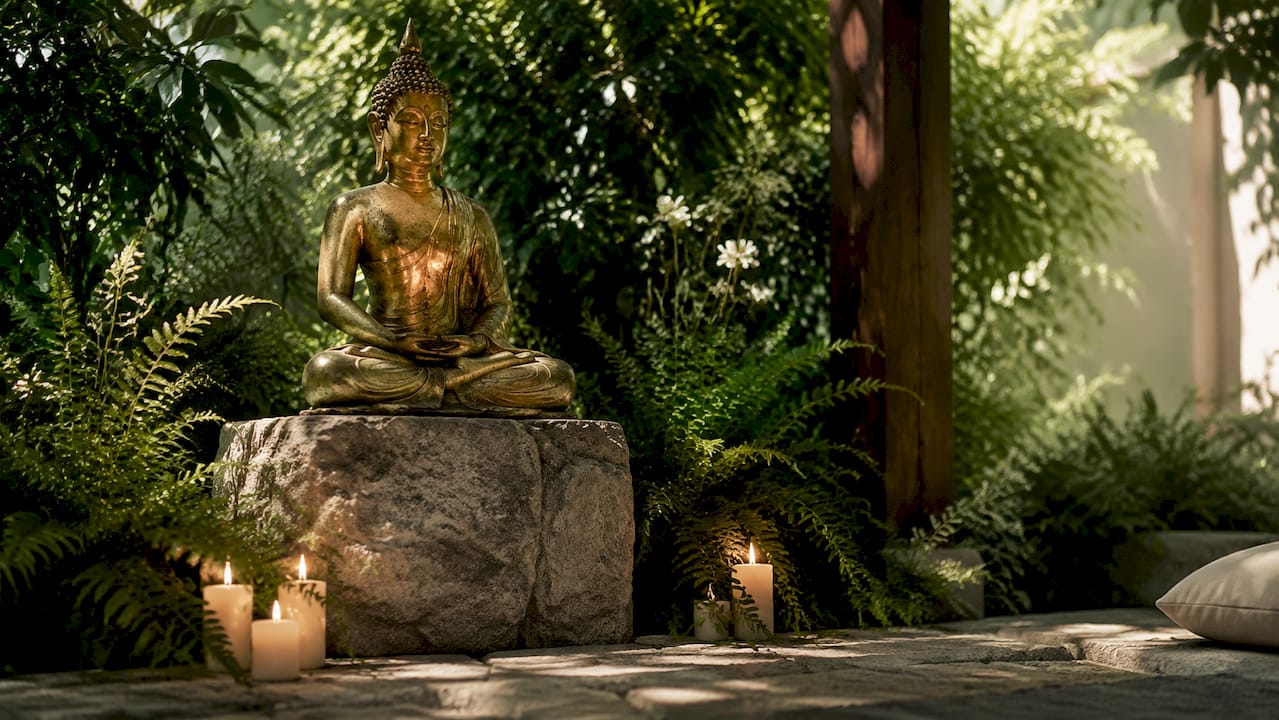
In Buddhist tradition, gold leaf on statues is not decorative. It functions as a lens for attention, gathering ambient light to draw the mind toward the Buddha image with reverence and gratitude. The gold does not represent wealth. It represents the quality of awakened consciousness: luminous, incorruptible, and present. Temples in Thailand, Japan, and Sri Lanka apply gold leaf to statues and shrines precisely because the material transforms the object into a focal point that quiets the mind.
In Hinduism, the connection runs equally deep. Tanjore paintings from South India use real gold foil applied directly to the garments and halos of divine figures. This is a theological statement, not an aesthetic one. The gold makes a visual argument about the nature of the deity: radiant, beyond the ordinary, clothed in light. Removing the gold from a Tanjore painting would not simply change its appearance. It would change its meaning entirely.
Indigenous cosmologies across the Americas view gold as sacred energy connected to the sun, cosmic balance, and spiritual transformation. Gold in these traditions was used collectively in rituals and sacred objects to channel divine forces and express cultural identity, not to accumulate personal wealth. This distinction matters when you bring gold into your home. The intention behind the object shapes its presence in the space.
The key symbolic threads across these traditions are worth holding together:
- Divine light: Gold mirrors the sun’s warmth and is used to represent enlightenment, clarity, and the presence of the sacred.
- Immortality: Gold does not corrode, making it a natural symbol for permanence and the enduring nature of the divine.
- Solar power: In witchcraft and solar-based spiritualities, gold is the metal of the sun, associated with growth, manifestation, and clarity.
- Sacred presence: In Egyptian, Buddhist, and Hindu traditions alike, gold marks the threshold between the ordinary and the holy.
Understanding these roots gives you a far more grounded reason to use gold in your home than aesthetics alone.
What practical roles does gold play in spiritual decor?
Gold’s practical function in a spiritual space is to create a focal point that gathers light and directs attention. This is why gold statues and altars act as visual anchors in traditional temples. The reflective surface catches changing light throughout the day, making the object feel alive and present rather than static. In a home setting, this same quality can transform a corner of a room into a place that feels genuinely settled and intentional.
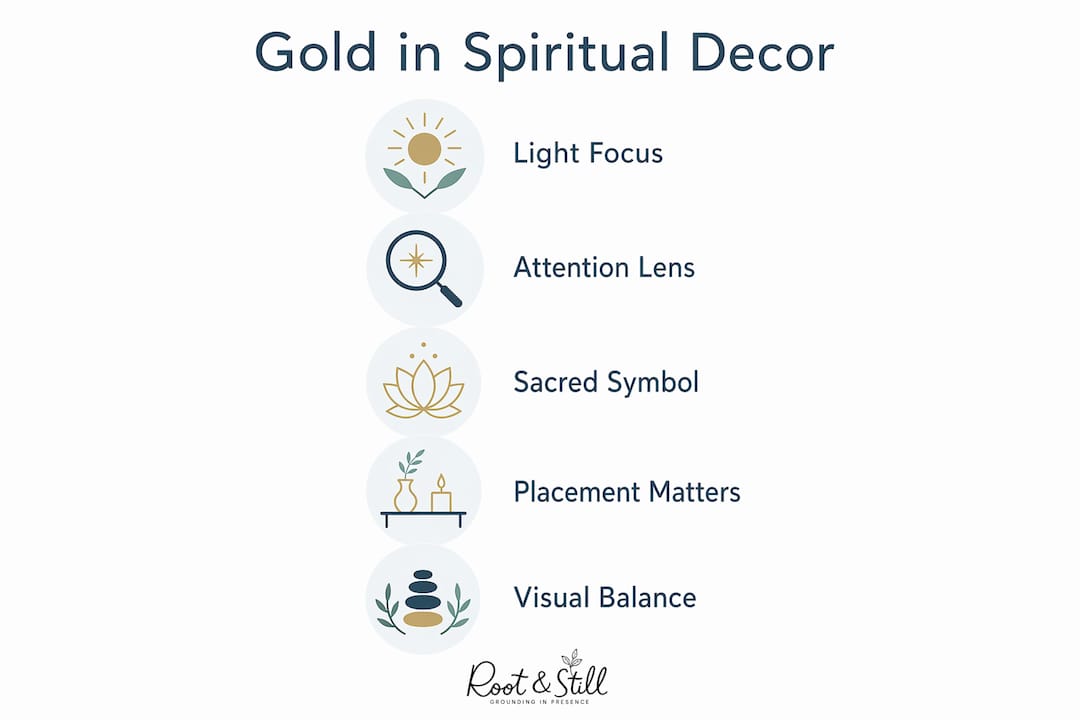
Placement is everything. A gold-finished Buddha statue positioned near a window will catch morning light differently from how it catches the warm tones of an evening lamp. This shifting quality is not accidental. Japanese gold leaf art changes its appearance with ambient light and the viewer’s position, making the gold an active presence rather than a fixed decoration. When you place a gold accent near your meditation space or altar, you are creating a point of return for the eye and the mind.
Some spiritual practitioners take this further by working with the timing of light itself. In solar-based traditions, charging gold objects under peak Sunday noon sun is considered the most potent way to imbue them with solar energy for clarity and growth. Whether or not you follow this practice literally, the underlying principle is sound: gold responds to light, and placing it where natural light reaches it most fully will maximise its presence in the room.
The risk with gold in spiritual spaces is overuse. Over-saturation with gold and warm brown tones can make a room feel heavy and dull rather than radiant. The sacred aesthetic depends on restraint. Gold works because it stands apart from its surroundings. When it becomes the dominant tone, it loses its ability to gather attention and instead flattens the room’s energy.
Pro Tip: Place a single gold-finished piece, such as a 25cm gold Buddha head, against a pale linen or stone-coloured wall. The contrast allows the gold to breathe and catch light without overwhelming the space.
How to incorporate gold into spiritual home decor effectively?
Bringing gold into your home with spiritual intention requires a different approach from simply choosing gold-coloured accessories. The following steps will help you use gold in a way that feels grounded and purposeful rather than decorative for its own sake.
-
Start with one anchor piece. Choose a single gold-finished object that holds genuine symbolic weight, such as a meditating Buddha statue or a handcrafted altar figure. This becomes the focal point around which the rest of the space is arranged.
-
Choose quality over quantity. Handcrafted pieces with real gold finishes or gold leaf carry a different presence from mass-produced metallic paint. The material quality matters because it affects how the object interacts with light and how it feels to live with over time.
-
Set gold against calm backgrounds. Pale walls in white, cream, stone, or soft grey allow gold to stand out without competing. Natural textures like linen, rattan, and unpolished stone complement gold without dulling it.
-
Position near natural light sources. Place gold accents where morning or afternoon light will reach them. A gold statue near a south-facing window will shift in appearance across the day, giving the space a quiet sense of rhythm and life.
-
Use ritual to deepen the connection. If it resonates with your practice, place small gold objects in direct sunlight at noon on a Sunday. This act of solar charging is rooted in traditions that view gold as a physical conductor of solar energy, and the ritual itself brings a moment of intentional attention to the object.
-
Avoid mixing too many metallic tones. Gold works best when it is the only metallic accent in a space, or when paired with a single contrasting finish such as matte black. Mixing silver, brass, copper, and gold in the same room dilutes the presence of each.
-
Reserve gold leaf for stationary focal points. Gold leaf requires careful application and is not suited to high-touch objects. Use it on pieces that will remain in place, such as a wall-mounted figure or a dedicated altar object, where it can maintain its sacred presence over time.
The most common mistake is treating gold as a colour rather than a material with specific qualities. When you choose gold for its light-reflective properties and its symbolic resonance, the decisions about placement and quantity become much clearer.
What do contemporary interpretations of gold in spiritual decor look like?
The current resurgence of gold in interiors is not simply a return to maximalism. It represents a counter-movement to minimalism that emphasises craftsmanship, historical context, and the spiritual story embedded in an object. People are choosing gold not because it signals wealth but because it carries weight, history, and a sense of something that endures.
Contemporary artists working with gold leaf in home settings describe the material as active infrastructure rather than decoration. A gold leaf panel does not simply hang on a wall. It responds to the room, shifting as the light changes and as the viewer moves. This quality makes it a living presence in the space, which is precisely what spiritual decor is meant to achieve.
“Gold leaf shifts appearance with ambient light and viewer position, making the gold an active presence rather than static decoration.” Art Again
This idea of gold as active and responsive aligns closely with how traditional cultures understood it. The gold on a Buddhist temple statue was never meant to be admired from a distance as a fixed, finished thing. It was meant to be encountered differently each time, depending on the quality of light, the time of day, and the state of the person looking. Bringing that understanding into a modern home changes how you relate to the objects you live with.
The most thoughtful contemporary uses of gold in spiritual decor tend to share three qualities: they are restrained in quantity, grounded in a specific cultural or spiritual tradition, and placed where light can reach them. A black and gold Buddha statue against a dark wall, for instance, creates a different kind of presence from the same piece against pale plaster. Both are valid. What matters is that the choice is made with awareness rather than habit.
Key takeaways
Gold’s role in spiritual decor is to direct attention, embody divine light, and create a focal point that shifts with the living rhythms of a space.
| Point | Details |
|---|---|
| Gold as a lens for attention | Place gold accents near altars or meditation icons to draw the mind toward stillness and reverence. |
| Restraint preserves sacred quality | Over-saturation with gold dulls a room’s energy; use it as a secondary accent against neutral backgrounds. |
| Material quality matters | Handcrafted pieces with genuine gold finishes interact with light differently from painted metallic surfaces. |
| Ritual deepens the connection | Solar charging of gold objects under Sunday noon sun is a practice rooted in solar-based spiritual traditions. |
| Cultural context grounds the choice | Gold’s spiritual significance spans Buddhism, Hinduism, indigenous cosmologies, and Egyptian traditions, each offering a distinct lens. |
Gold in spiritual decor: a personal reflection
by Dhriti
What strikes me most about gold in spiritual spaces is how often it is misread. People assume it signals wealth or opulence, and so they either avoid it entirely or use it without much thought. But when you look at how gold has been used in Buddhist temples, Tanjore paintings, or indigenous ritual objects, a completely different picture emerges. Gold was chosen because it does something no other material does quite as well: it gathers light and gives it back to you, slowly, differently each time.
I think the most honest way to use gold at home is to treat it as a lens rather than a statement. One well-placed piece, chosen for its craftsmanship and its symbolic resonance, will do more for the atmosphere of a room than a dozen gold accessories scattered without intention. The gold needs room to breathe. It needs a background that lets it speak.
What I find genuinely moving about this material is its continuity. The same qualities that led a craftsman in twelfth-century South India to press gold foil onto a deity’s garment are the qualities that make a gold-finished statue feel anchored and present in a modern living room. That thread across time is not something you can manufacture. You can only choose to honour it by selecting pieces that carry it forward with care.
— Dhriti
Bring gold’s spiritual presence into your home
If you are ready to introduce gold into your space with intention, Rootandstill offers a curated range of handcrafted Buddha statues and spiritual decor pieces that bring this symbolism to life. The meditating sitting Buddha is a considered starting point: a single, grounded piece with a warm gold finish that catches light gently and creates a natural focal point in any room. For smaller spaces or altar settings, the mini meditating Buddha offers the same quiet presence in a more compact form. Each piece is selected to function as both a design object and an atmosphere-setter, helping you build a home that feels genuinely still.
FAQ
What is the spiritual significance of gold in home decor?
Gold represents divine light, immortality, and sacred presence across Buddhist, Hindu, indigenous, and ancient Egyptian traditions. In a home setting, it functions as a focal point that gathers light and supports a quieter, more reverent atmosphere.
How do I use gold in decor without it feeling excessive?
Use gold as a secondary accent against neutral backgrounds such as pale linen, stone, or soft grey. One or two well-placed pieces with genuine gold finishes will create more presence than multiple gold-toned accessories spread across a room.
Does the placement of gold objects matter spiritually?
Placement near natural light sources and central spiritual icons is recommended across traditions. Gold placed where morning or afternoon light reaches it will shift in appearance throughout the day, creating a living, dynamic focal point rather than a static object.
Is gold in spiritual decor connected to wealth symbolism?
Traditional spiritual use of gold is grounded in its physical qualities of light reflection and durability, not wealth. In Buddhist temples and Tanjore paintings, gold communicates divine nature and sacred permanence rather than material prosperity.
What types of gold decor work best for meditation spaces?
Handcrafted gold-finished Buddha statues, gold leaf altar objects, and gold-accented lamps are the most effective choices. Stationary focal pieces in genuine or high-quality finishes interact with light most naturally and maintain their presence over time.


