

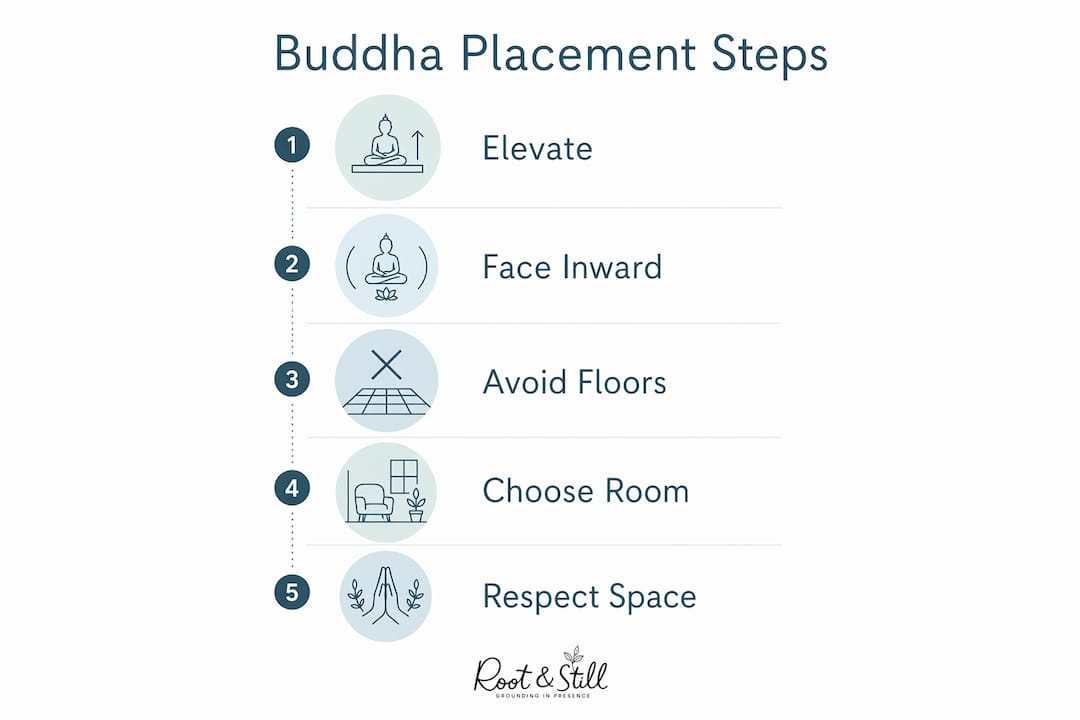
Place your Buddha statue at or above eye level, facing the main entrance or east, on a clean and dedicated surface. That single sentence covers the foundation of every tradition that addresses this question. The statue should be placed at a height that aligns it at or above seated eye level, which signals the respect the statue deserves. Beyond that, the guidance becomes room-specific, pose-specific, and in some cases, intention-specific.
The core rules at a glance:
- Place the statue at an elevated height from the floor on a shelf, mantel, or altar table.
- Face it toward the main entrance or orient it east, never toward a wall.
- Keep the surrounding area clean, uncluttered, and free from shoes or unrelated objects.
- Avoid bathrooms, kitchens, and any surface directly on the floor.
- Choose a pose that matches your intention for the space.
Feng shui rules and etiquette for Buddha statue placement
The two principles that appear across virtually every tradition are elevation and intentionality. A Buddha statue should face outward into the room, never toward a wall, so that it greets both visitors and incoming energy with an open presence. Feng shui theory holds that positive chi rises and concentrates at upper levels, which is why the 3-foot elevation rule aligns so naturally with the Buddhist principle of treating sacred images with reverence.
Directional placement draws from three distinct traditions, and they do not always agree. Feng shui recommends facing the main entrance so the statue interacts with incoming chi. Vastu Shastra favours east or northeast, aligned with the sunrise and the direction of spiritual awakening. Traditional Buddhist practice carries no fixed directional requirement at all, treating orientation as a cultural overlay rather than a doctrinal teaching. In practice, if east-facing fits your room naturally, that works well. If orienting the statue toward your entrance makes better compositional sense, that is equally valid.
The surface matters as much as the direction. Elevated, dedicated surfaces such as shelves, mantelpieces, or altar tables separate the statue from everyday objects and signal that the placement is intentional. A simple altar cloth or carved wooden tray beneath the figure reinforces that sense of care without requiring a full altar setup.
Dos and don’ts at a glance:
- Do place the statue on a clean, raised surface at or above eye level.
- Do face it toward the entrance or east.
- Do dust it regularly and keep the surrounding area tidy.
- Do use a dedicated cloth, tray, or platform beneath it.
- Don’t place it on the floor or below waist height.
- Don’t position it near shoes, in bathrooms, or beside kitchen appliances.
- Don’t use it as a surface for unrelated objects or place it in an ironic context.
- Don’t face it toward a wall.
Where to place your Buddha statue room by room
Living room
The living room is the most natural home for a Buddha statue, provided the placement is considered. A dedicated shelf, mantelpiece, or console table works well, with the statue facing the entrance to welcome positive energy and set a calm tone for anyone who enters. Keep the area around it uncluttered and avoid positioning it directly beside or below a television, where the visual noise undermines the stillness the figure is meant to hold.
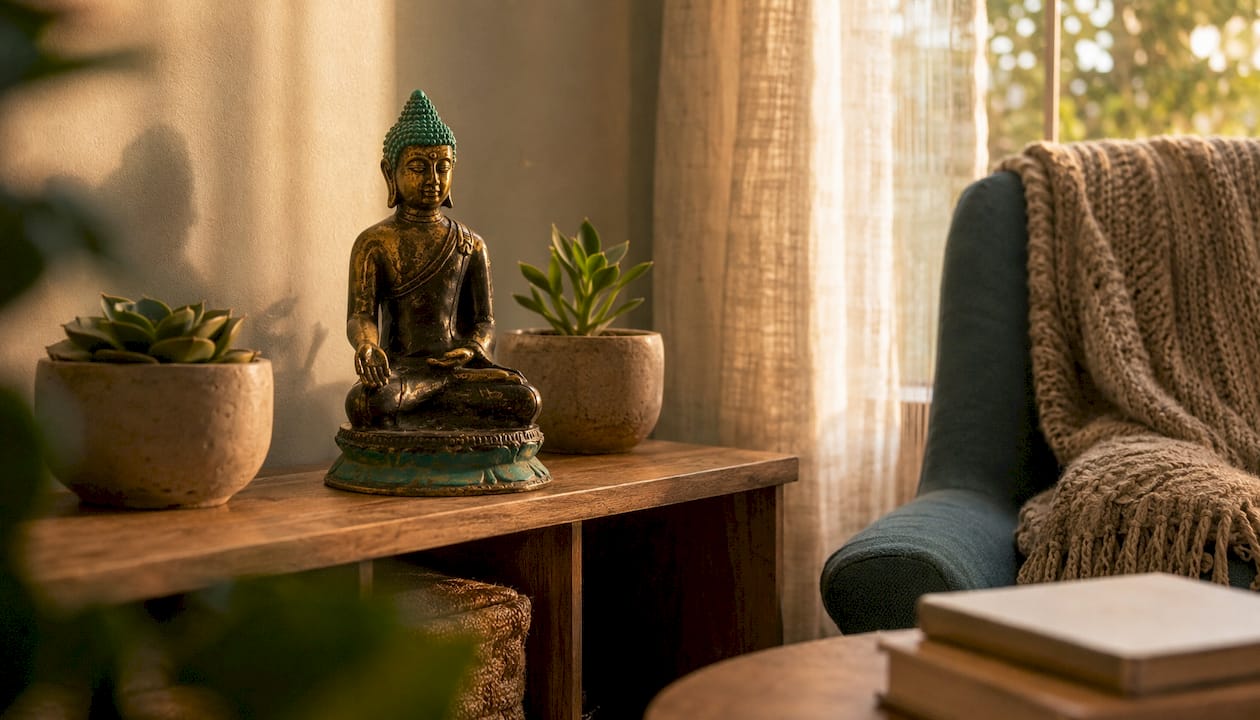
For a living room, a Varada Mudra statue (open downward palm, representing abundance and generosity) or an Abhaya Mudra figure (raised right hand, offering protection) both suit the space well. Size matters here too: a statue that looks refined in a product photo can disappear in a large room. For a console or mantel, a height of at least 36 inches (3 feet) from the floor is recommended to ensure the Buddha statue is positioned at or above seated eye level, as tradition holds.
Pro Tip: Give the statue room to breathe on either side. Crowding it between books or ornaments diminishes its presence and makes the placement feel accidental rather than intentional.
Entrance hall
Placing a Buddha near the front door is a widely practised choice in feng shui tradition. The statue should face inward, welcoming guests and drawing positive energy into the home rather than pushing it back out toward the street. An Abhaya Mudra figure is the traditional choice for this position, its raised hand offering a quiet sense of blessing and protection to all who enter.
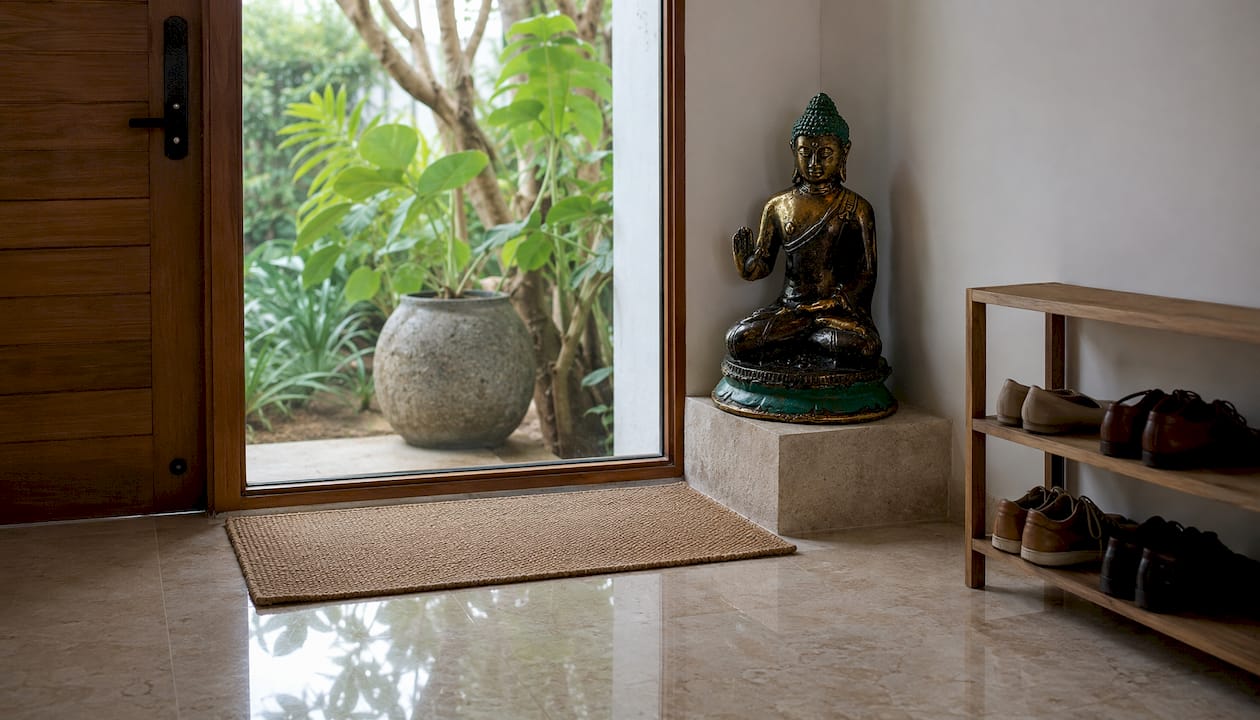
Keep this area particularly clean and free from clutter. Entrance halls accumulate shoes, bags, and post, and any of those items placed directly beside or beneath the statue undermine the respectful energy you are trying to establish.
Meditation or prayer room
A dedicated meditation space is the most naturally appropriate setting for any statue type. Here, the figure becomes a focal point rather than an accent, and the placement can be more formal: a central altar table with a small offering bowl, incense, and perhaps fresh flowers on either side. The Dhyana Mudra (hands resting in the lap, representing deep meditation) is the traditional choice for this setting. Pair the space with candles suited to meditation to deepen the atmosphere without overcrowding the altar.
Bedroom
The bedroom requires a more careful approach. There is no universal Buddhist prohibition on bedroom placement, and some practitioners maintain a bedside altar as part of their daily practice. That said, bathrooms and kitchens are avoided across virtually all sources, and the bedroom sits in a more nuanced middle ground. If the space feels comfortable and intentional, a Dhyana Mudra statue on a dresser or dedicated shelf is appropriate. Avoid positioning any statue directly facing the bed, and never place it at foot level or on the floor.
- Do place it on a dresser or side shelf at or above eye level.
- Do choose a calm, meditative pose such as the Dhyana Mudra.
- Don’t position it facing the bed directly.
- Don’t place it on the floor or at foot level.
Spaces to avoid entirely
Bathrooms and kitchens are considered impure or overly busy environments, and placing a Buddha statue in either is widely regarded as disrespectful across Buddhist and feng shui traditions alike. The kitchen’s association with food preparation and heat, and the bathroom’s association with waste, make both unsuitable regardless of how clean or well-kept they are.
How to place a Laughing Buddha for wealth and good fortune
The Laughing Buddha, or Budai, is a distinct figure from the historical Gautama Buddha, though the two are often conflated. In feng shui practice, Budai is treated as an auspicious symbol of abundance, happiness, and good fortune, and his placement follows specific directional logic tied to intention.
Laughing Buddha statues are best placed in the southeast corner of a room or home for wealth and financial prosperity. East or northeast placement supports health and peace. In an office, the southeast corner is again the preferred position for encouraging financial success. The figure should always face into the room, never toward a wall or window, and should be elevated on a clean surface just as with any other Buddha figure.
Pro Tip: Rubbing the Laughing Buddha’s belly is a well-known folk tradition said to bring good luck. If you choose to do this, keep the statue clean and handle it with care rather than treating it as a novelty object.
Placement tips for auspicious figures:
- Southeast corner of the living room or home for wealth.
- East or northeast for health, peace, and family harmony.
- Southeast of an office or workspace for financial focus.
- Always elevated, never on the floor.
- Keep the surrounding area clean and free from clutter.
- Face the figure into the room, toward activity and life.
The Laughing Buddha’s pose also carries meaning. A figure holding a sack represents stored abundance; one with arms raised suggests joy and celebration; one seated with children nearby relates to family happiness. Choosing the pose that matches your intention for the space gives the placement an added layer of purpose.
Garden Buddha placement: bringing calm to outdoor spaces
A garden Buddha can anchor an outdoor space beautifully, but the same principles of elevation and respect apply outdoors as they do inside. Place the statue on a raised platform or pedestal rather than directly on the ground. This keeps it above soil level, prevents moisture damage to the base, and maintains the respectful positioning that the figure deserves.
Garden Buddha statues are best oriented to face east or toward an area where morning light falls naturally, echoing the direction Shakyamuni Buddha faced during his enlightenment beneath the Bodhi Tree. A spot that receives gentle morning sun and is sheltered from harsh afternoon glare tends to feel most settled and serene.
Keep the statue clean and free from moss, lichen, or debris. A quick wipe-down with a soft cloth every few weeks preserves both the material and the respectful energy of the space. Avoid placing the statue near a compost heap, pet area, or garden waste bin, and keep the surrounding planting tidy rather than overgrown.
Complementary elements that work well nearby:
- A small water feature or stone basin, which introduces the water element and supports a sense of flow.
- Smooth river stones or gravel around the base, grounding the figure in natural texture.
- Low-growing plants or moss (kept trimmed) that frame the statue without crowding it.
- Soft outdoor lighting for evening hours, which gives the figure a gentle presence after dark.
For material choice outdoors, stone and bronze weather gracefully and carry a sense of permanence. The Bhumisparsha Mudra (earth-touching gesture) is particularly well-suited to garden settings, representing the moment of enlightenment and a deep connection to the ground beneath.
Rootandstill’s approach to mindful Buddha statue decor
Rootandstill was built around the idea that a Buddha statue should do more than look beautiful. Every piece in the collection is chosen with both aesthetic care and symbolic respect in mind, from hand-carved wooden figures that carry the warmth of natural grain to brass statues whose weight and finish give them a quiet authority in a room.
The Buddha feng shui set brings together the key elements of a considered placement in one curated collection, making it straightforward to create a space that feels both intentional and calm. For those drawn to the protective energy of the Abhaya Mudra, the brass hand-up sitting figure offers a refined presence that suits a living room shelf or entrance hall equally well. The standing brass Buddha carries a different quality, upright and grounded, well-suited to a meditation corner or a garden pedestal.
Rootandstill’s blog covers placement and symbolism in depth, including a detailed guide on Buddha statue placement at home and a practical resource on choosing the right statue size for every room. These guides are written with the same care that goes into the products themselves, grounded in Buddhist tradition and feng shui principles rather than generic decor advice.
Rootandstill: thoughtfully made statues for intentional spaces
Placing a Buddha statue well starts with choosing one that was made with care. Rootandstill offers handmade brass, wooden, and resin Buddha figures alongside a full range of complementary pieces, from incense plates and oil burners to tabletop water features and singing bowls, so you can build a space that feels genuinely settled rather than assembled from unrelated parts.
For readers coming from this guide, the feng shui Buddha set is a natural starting point: it takes the guesswork out of pairing a statue with the right supporting elements. Browse the full collection at rootandstill.com and find the piece that belongs in your space.
Key takeaways
Proper feng shui Buddha placement rests on three non-negotiable principles: elevated placement at or above seated eye level, an outward-facing orientation toward the entrance or east, and a clean, dedicated surface free from clutter.
| Point | Details |
|---|---|
| Minimum height | Place the statue at an elevated height, at or above seated eye level. |
| Facing direction | Orient the statue toward the main entrance or east; never face it toward a wall. |
| Spaces to avoid | Bathrooms, kitchens, and floor-level surfaces are unsuitable across all traditions. |
| Laughing Buddha placement | Southeast corner for wealth, east or northeast for health and family harmony. |
| Rootandstill | Handmade brass and wooden statues, curated feng shui sets, and placement guides for intentional home decor. |
FAQ
Which way should a Buddha face in your house?
The statue should face outward into the room, ideally toward the main entrance to welcome positive energy, or east to align with the direction of the Buddha’s enlightenment. The most important rule is that it never faces a wall.
Where should a Buddha be placed at home according to feng shui?
The living room, entrance hall, or a dedicated meditation space are the most suitable locations. Place the statue on an elevated, clean surface at least 36 inches (3 feet) from the floor, facing the entrance or east.
Where should you not put a Buddha statue?
Avoid bathrooms, kitchens, and any surface directly on the floor. These spaces are considered impure or overly busy, and placing a statue there is regarded as disrespectful across both Buddhist and feng shui traditions.
Which direction should a Laughing Buddha face?
The Laughing Buddha should face into the room, toward activity and life. For wealth, position it in the southeast corner; for health and peace, east or northeast is the preferred placement.
Can a Buddha statue go in the bedroom?
Yes, with care. A meditative Dhyana Mudra statue on a dresser or side shelf is appropriate, provided it sits at a respectful height and does not face the bed directly. If the placement feels uncomfortable, trust that instinct and choose another room.


