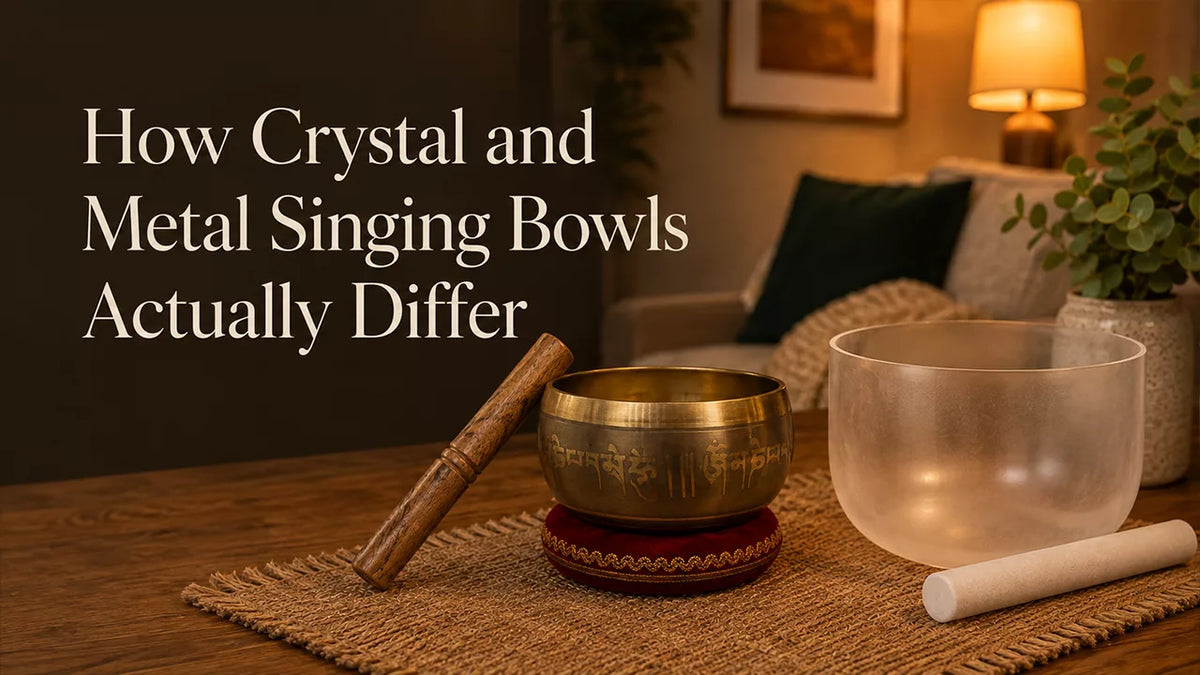
Crystal and metal singing bowls should be compared as individual instruments, not as two guaranteed sound profiles. The material matters, but a label alone does not tell you how loud a bowl will be, how long it will ring or how easily you will find it to play.
Listen beyond the material name
A useful comparison includes the onset of the sound, its changing tone as it fades and the response to different playing techniques. Ask for a recording of the exact bowl or a clearly identified representative model, played with the mallet that is supplied or recommended.
Research by Terwagne and Bush on the acoustics of Tibetan singing bowls examines their natural vibrational modes and excitation by striking or rubbing. It does not establish that every metal bowl sounds alike, or that every crystal bowl produces one pure tone.
Audio recordings are useful for character, but recording level, microphone and playback equipment affect what you hear. They are not a reliable comparison of room volume unless the recording conditions are controlled.
Pitch labels need context
If matching another instrument matters, ask how the stated note or frequency was measured, which part of the sound it describes and what tolerance the maker specifies. Do not assume that two bowls carrying the same note label will sound identical or form the combination you want.
For an unpitched personal choice, concentrate on whether you enjoy the sound at a comfortable listening level. Neither a material name nor a frequency label establishes a health benefit.
Ease of playing varies
The bowl, mallet, support and your technique all affect the result. There is no dependable rule that crystal takes a minute to learn while metal takes days. Ask for a demonstration and follow the maker's instructions instead of pressing harder or striking more forcefully to obtain a sustained tone.
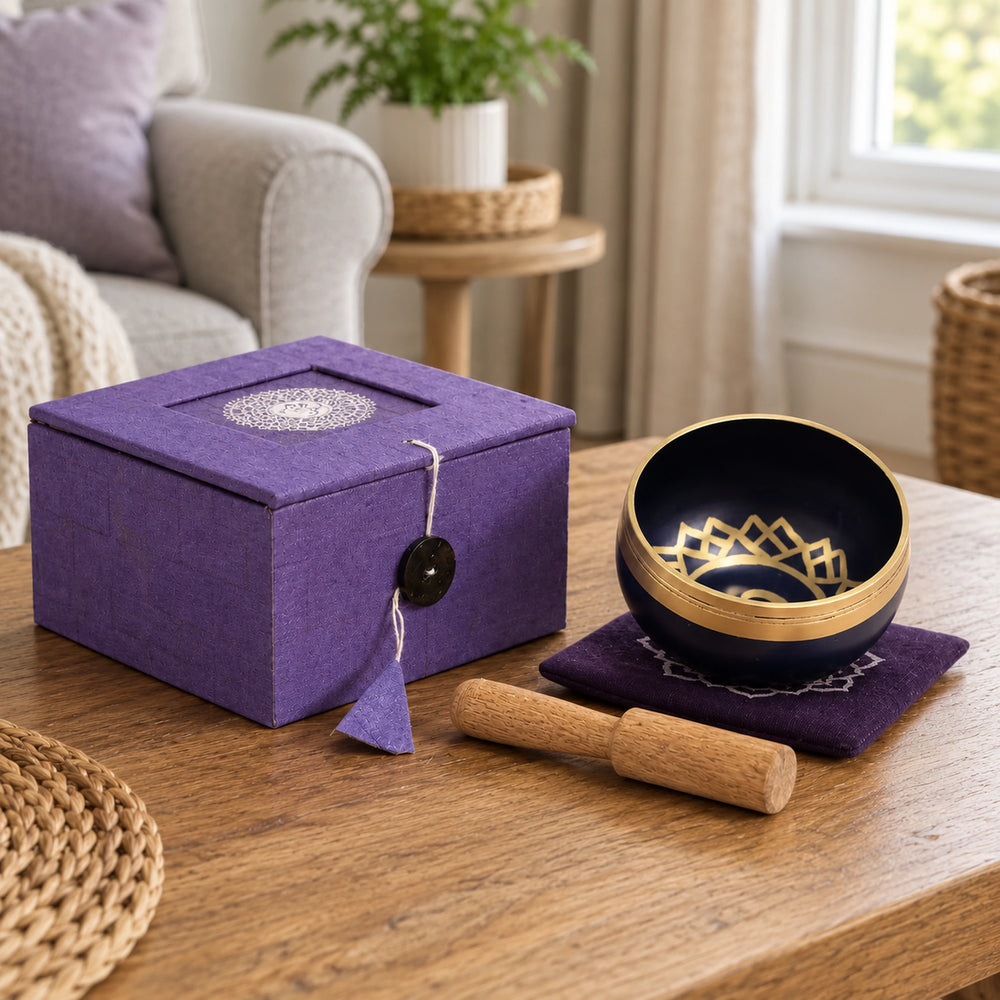
Our mallet guide explains why the contact material and technique deserve attention. Check whether the listed price includes a suitable mallet, cushion or support; do not assume accessories shown in a styled photograph are included.
Handling and transport
Do not treat a metal bowl as drop-proof or a crystal bowl as having one fixed level of fragility. Both need careful handling appropriate to their construction. A carpet is not protection against all impact damage, and being made of metal does not make an instrument a children's toy.
Check the actual diameter and weight, the recommended support and the maker's transport instructions. Use a suitable protective case and prevent pieces from striking each other. Avoid a lifetime claim based only on material. If the rim is chipped, cracked or sharp, stop using the bowl and contact Root & Still for advice.
Compare the full purchase
Make a shortlist using the exact material description, dimensions, weight, sound sample, supplied accessories, care information and current price. For Root & Still singing bowls, check each live listing. The collection name is not evidence that quartz-crystal bowls, every pitch or every size are stocked.
The better choice is the documented instrument that fits your space, handling needs and sound preference—not the one accompanied by the broadest promise about its material.