“Zen” is often used loosely in interiors to mean simple or quiet. Zen is also a Buddhist tradition, not just a decorating style. These are practical home ideas for reducing visual clutter and improving everyday use; no particular look or purchase is required.
1. Start with what interrupts the room
Notice the small frustrations: a blocked route, nowhere to put keys or a reading chair without enough light. Fix one of those before shopping. A comfortable room depends on how it works for the people who use it.
2. Clear one useful surface
Choose a bedside table, console or part of a kitchen worktop. Keep what you need there and give the remaining items a realistic home. An empty surface is optional; usefulness is the aim.
3. Make storage easy to reach
Put frequently used items where you naturally need them. A decorative tray or storage box may help, but check its usable internal space rather than only its outer size. Avoid adding a decorative container that makes the task harder.
4. Choose colours you enjoy
Use existing furniture and textiles as a starting point. A restrained palette can feel cohesive, but pale colours are not inherently healthier or calmer. Test the effect in your own daylight and evening light.
5. Keep lighting practical
Provide enough light for reading and moving safely, with softer options when you want them. A flame-free decorative light can add interest. Do not rely on candlelight as the only illumination for a route or task.
6. Add texture selectively
Timber, fabric, ceramic or other finishes can vary the appearance without adding many objects. A natural material is not automatically sustainable, durable or suitable for every location; use documented product information.
7. Leave breathing space around one focal point
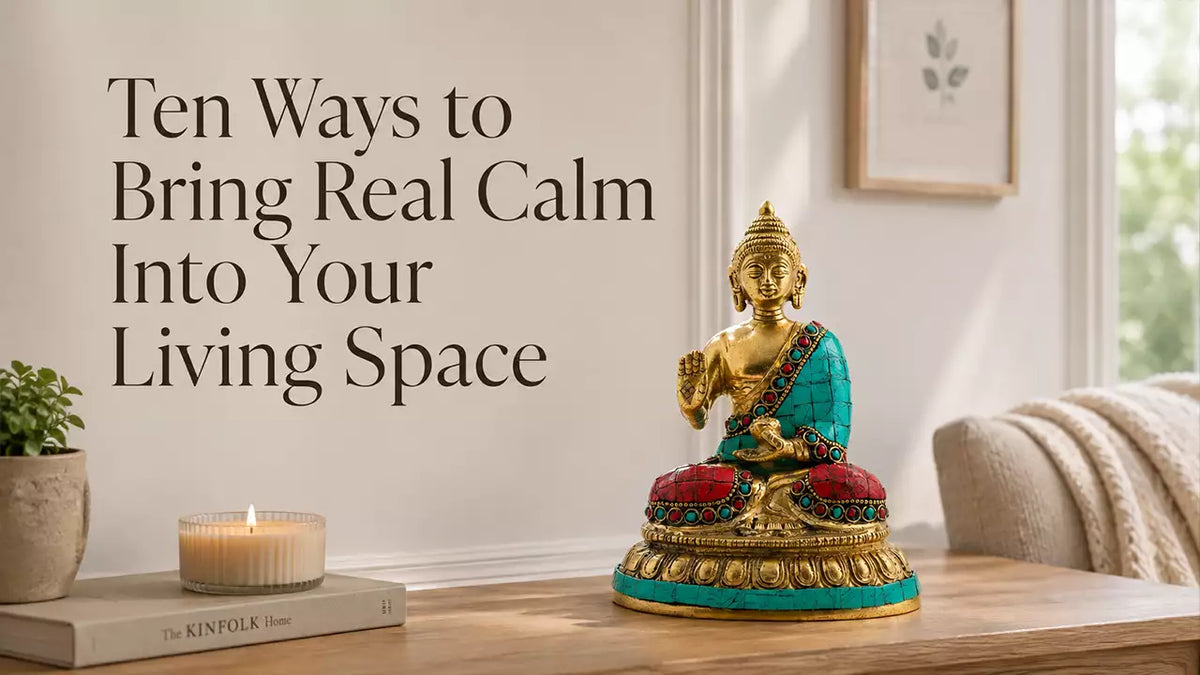
A picture or sculpture can be easier to appreciate when it is not surrounded by competing objects. If Buddhist imagery is meaningful to you, compare Buddha heads or wooden figures thoughtfully. Such objects do not promise a change in health or fortune.
8. Choose plants for their care needs
Select plants for the available light, space and your ability to care for them. They are not a substitute for ventilation or controlling indoor pollution. You can enjoy a view outside without adding houseplants at all.
9. Keep fragrance optional
Ask everyone sharing the space before using scent. Incense and candles produce indoor pollutants; an attractive ritual does not remove that consideration. If using flames, follow London Fire Brigade’s candle and incense guidance and keep fabric and other combustible objects clear.
10. Make time to use the space
A chair you actually sit in can matter more than another ornament. Try a small layout change, live with it and keep what helps. A calm-looking room does not have to be beige, minimal or permanently tidy to be comfortable.