A conservatory is indoors, but that does not automatically make it a suitable home for every wooden ornament. Before buying, check the conditions at the exact display position: direct sun, damp surfaces, nearby heating and how the room is used through the year all matter.
The useful question is not simply whether a piece is made from mango wood or suar wood. It is whether the whole object, including its finish and attached decoration, suits the place you have chosen. If that is unclear, choose another indoor location or ask Root & Still about the exact piece before ordering.
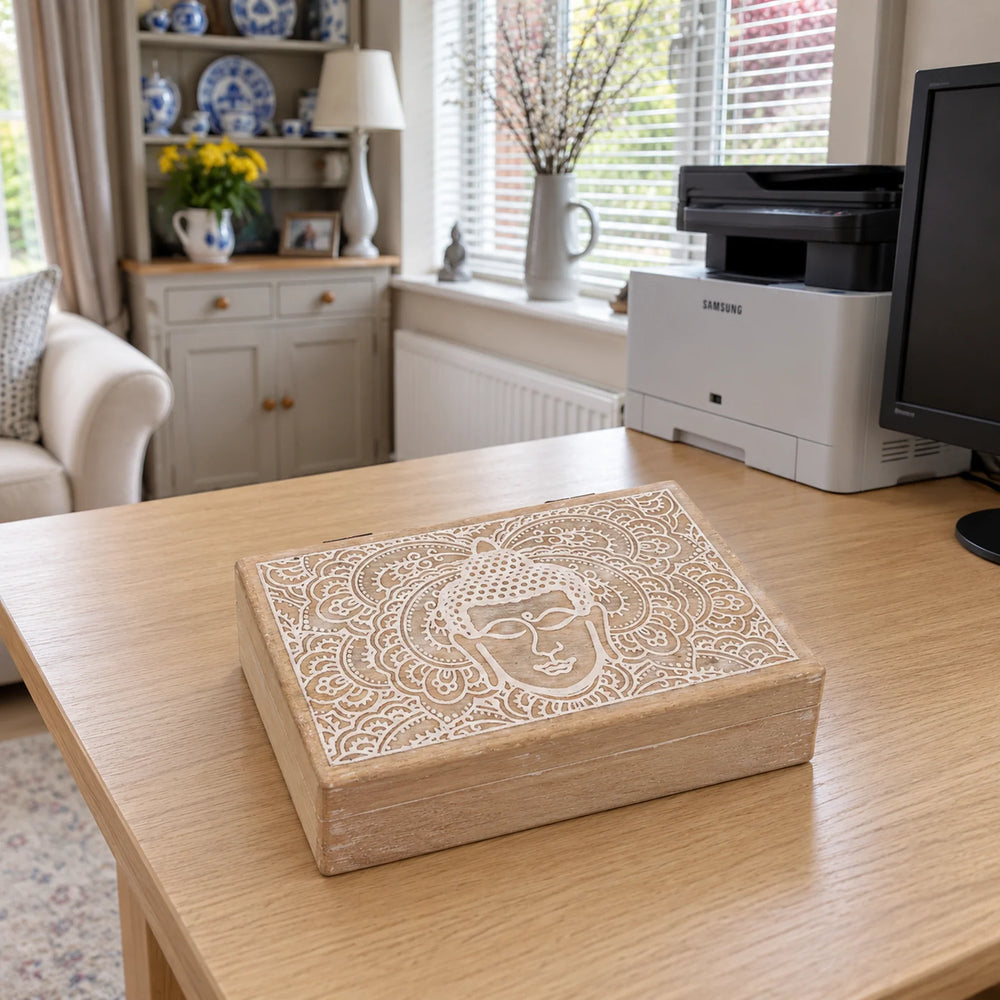
The feature image is an illustrative room setting, not confirmation that this product is suitable for every conservatory.
Start with the position, not the room label
A shelf against an internal wall and a sill beside the glazing can offer different conditions in the same room. Look at the proposed position at different times when you normally use the space. Note whether sunlight reaches it, whether water collects nearby, and whether a heater directs warmth towards it.
This is a practical screening exercise, not a test that certifies a product. One comfortable afternoon does not establish what the position will be like on a cold morning or during summer. If you have only recently moved in, allow for the seasons you have not yet experienced.
Separate light from heat and moisture
Icon's furniture-care guidance explains that daylight can change the colour of wood and pigments, and that this damage accumulates. It also recommends a stable environment and avoiding direct heat. This is general conservation guidance, not a guarantee about an individual modern ornament.
Moving an object out of the sun addresses one concern; it does not establish that the new position is dry or environmentally stable. Equally, a heated conservatory is not automatically suitable just because it feels comfortable to sit in. Consider the ornament's own care instructions alongside the conditions where it will stand.
The Australian Institute for the Conservation of Cultural Material's guide to wooden objects highlights the importance of understanding their different materials and finishes. A wooden figure with paint or metal decoration should be considered as a complete object, rather than judged by its toughest-looking component.
A three-outcome check before you buy
| What you find | Next step |
|---|---|
| The exact care instructions permit the intended conditions, and the position meets them. | Continue with the usual fit, support and access checks. Keep monitoring the position as the seasons change. |
| The position receives direct sun, splashes or heat that conflicts with the care instructions. | Choose a different position before choosing the ornament. Do not assume a pad, tray or extra coating makes it suitable. |
| You do not know the room's year-round conditions or the product's requirements. | Send Root & Still the product link and details of the position, or choose a more straightforward indoor location elsewhere. |
We do not prescribe one universal temperature, humidity reading or distance from the glass for every carving. A thermometer reading alone cannot tell you whether a particular paint, joint or decorative finish will tolerate the environment.
Compare how you will use the object
For a wooden Buddha statue, first check that the whole base will be supported and that the surface can carry the stated weight. For a lidded wooden box, also allow space to open it and reach its contents. For a wooden angel figurine, consider projecting details and whether it could be knocked when you open a window or move a chair.
These are ways to compare suitable positions, not a claim that every item in those collections is approved for a conservatory. Check the individual listing and care information. Nor should resin, brass or stone automatically be treated as a replacement that solves every exposure problem; coatings and other components still matter.
Three examples and what still needs checking
The 30 cm whitewashed Welcome Buddha is made from suar wood and has a stated net weight of 3.35 kg. Its care information calls for an indoor position away from damp and direct heat. A small shelf that looks right in a photograph still needs enough space and a suitable load capacity.
The whitewashed Buddha-face box is mango wood, approximately 21.5 × 14 × 6.3 cm. Those are the box dimensions, not a promise about usable interior space. Allow for the lid to open and keep it dry; do not use it as a tray for a plant pot or watering can.
The 18 cm whitewashed wooden angel combines mango wood, enamel and iron decoration. The presence of metal does not establish that the complete ornament tolerates a damp or hot position. Its approximate 8 × 2.5 × 18 cm dimensions also make the base and any risk of knocks worth checking.
None of these specifications is a conservatory performance rating. If the planned position remains uncertain, choose a different place for the piece before ordering.
Choose a display you can live with
Dhriti Howlader, founder of Root & Still, favours choosing pieces around the room and routine they will belong to. For a conservatory, that means considering the space through the year, rather than choosing only for how it looks on the day you shop.
If you need to keep moving a treasured piece to protect it, a permanent position elsewhere may be more practical. Our radiator-cover guide addresses the separate question of direct heat above a radiator. For the wider care routine, see mango wood over time. You can also contact Root & Still before ordering with a product link and a description of the proposed position.