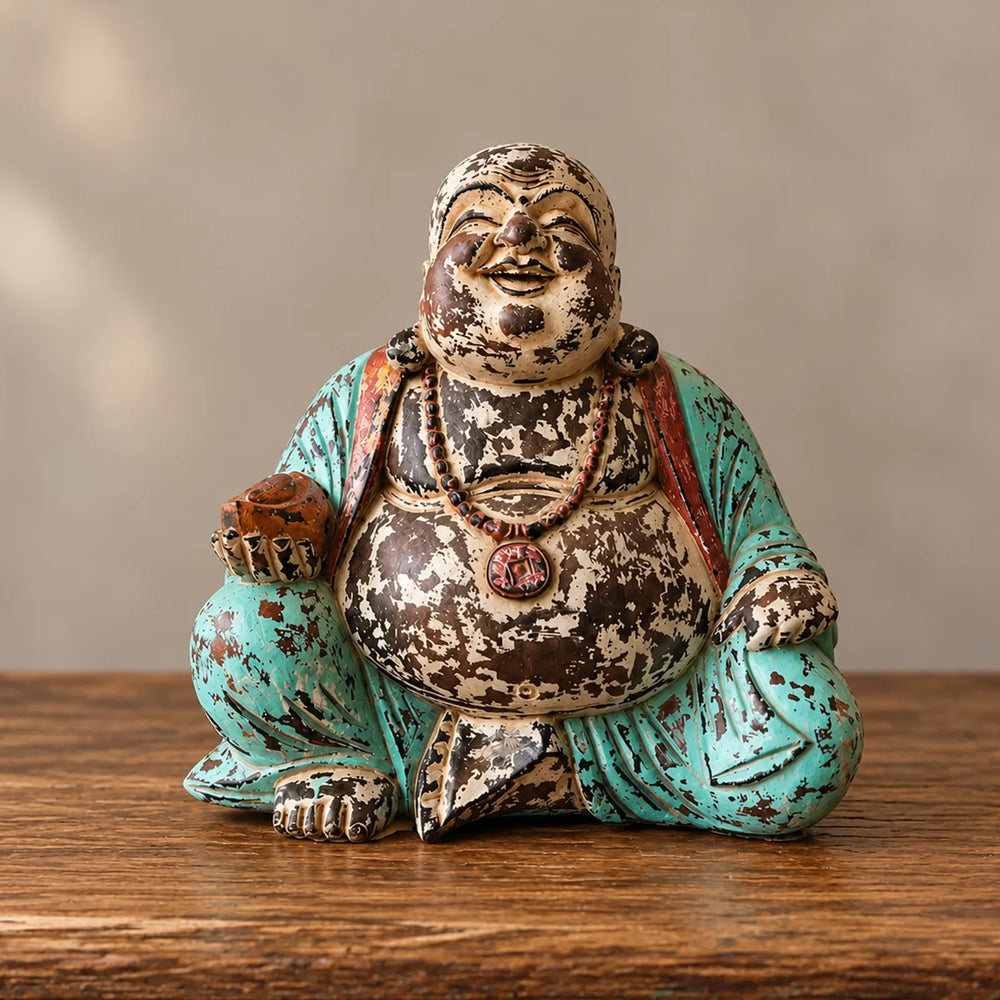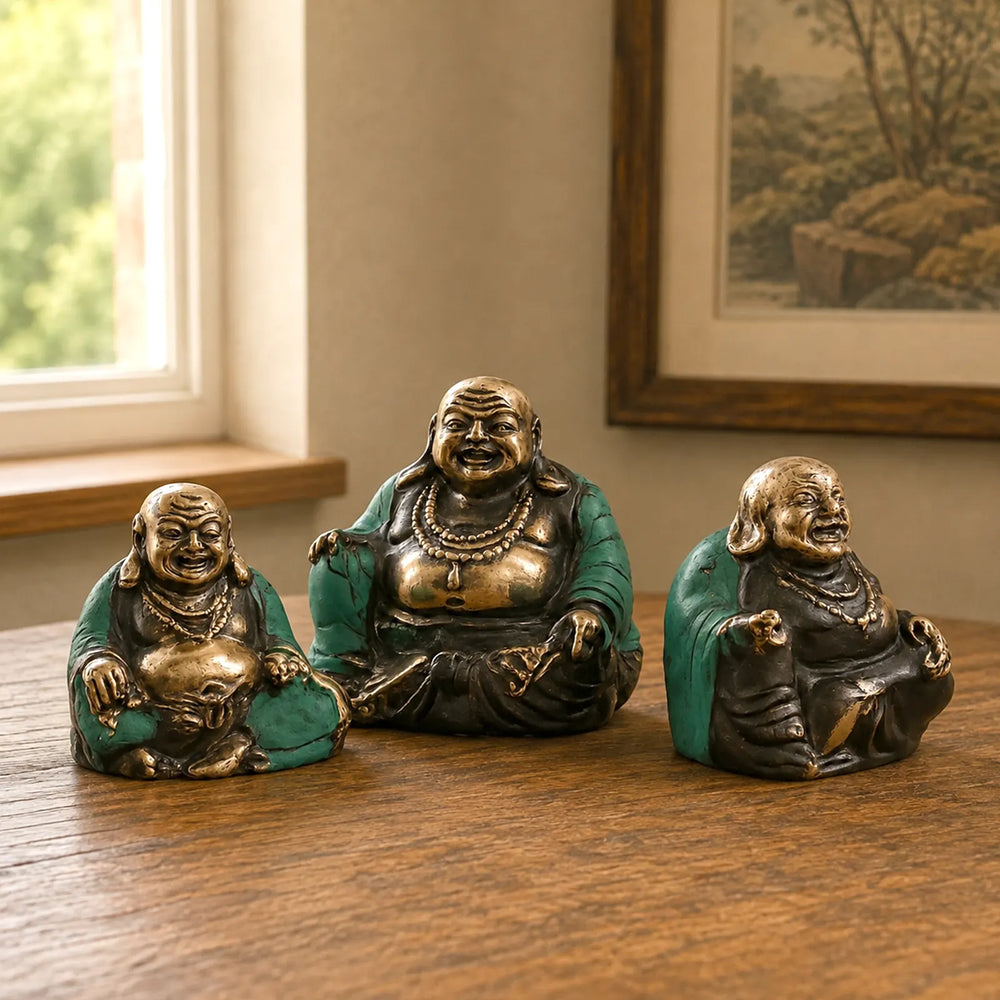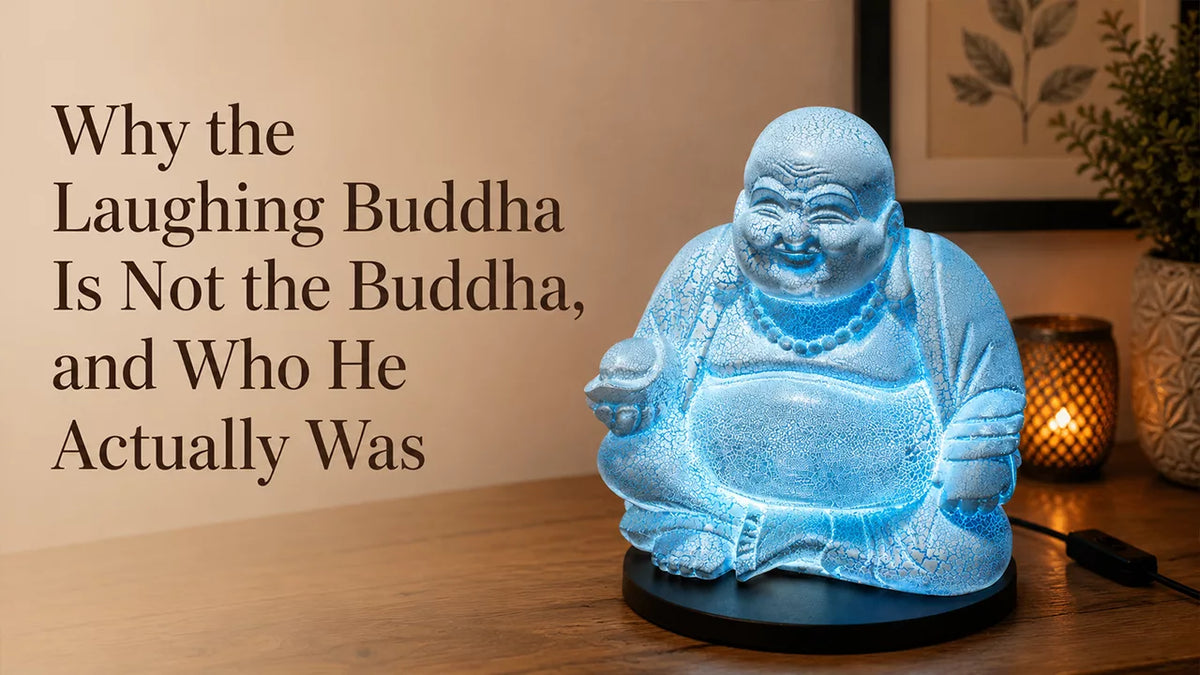
The round, smiling, generously proportioned figure sold across Britain as a Buddha is not the Buddha. He is a different person entirely, from a different country and a different millennium, and the confusion is so widespread that almost nobody who owns one knows it.
The actual history is more interesting than the assumption.
Budai, the monk with the sack
He was a Chinese Chan Buddhist monk, generally placed in the tenth century during the Later Liang dynasty, and the name Budai means cloth sack.
The accounts describe a wandering monk with a large belly and a permanent smile, carrying a sack containing whatever he owned along with sweets and small gifts he handed out, particularly to children. He slept where he found himself, refused to take much seriously, and was remembered for a laugh people found infectious rather than for any doctrine.
He is a historical or semi historical figure rather than a mythological one, and the eccentric wandering holy man is a recognisable type in Chan tradition, where unconventional behaviour was often read as evidence of a mind unattached to convention rather than as a failure of discipline.

How he became associated with Maitreya
The connection that gave him lasting significance. Maitreya is the Buddha of the future, the being who will appear when the teachings of the present age have been forgotten, and belief in his eventual arrival is widespread across Buddhist traditions.
After his death, Budai came to be regarded in China as an incarnation of Maitreya, and images of Maitreya in Chinese temples are frequently depicted in Budai's form rather than in the conventional style.
So there is a genuine connection to a Buddha figure, and it is not the historical Buddha. Budai is associated with the Buddha who has not yet come.
Hotei in Japan
He travelled. In Japan he became Hotei, and was absorbed into the Shichifukujin, the Seven Lucky Gods, a group drawn from Buddhist, Shinto, Taoist and Hindu sources.
Within that group Hotei is the god associated with contentment, abundance and good health, and the popularity of the seven gods in Japanese folk practice carried his image widely across East Asia.
How the West conflated him with the Buddha
Straightforwardly, by not asking. As Chinese and Japanese decorative objects reached Europe and America in quantity through the nineteenth and twentieth centuries, a smiling round figure in monastic robes was assumed to depict the Buddha, because he was a Buddhist figure and the West knew of only one.
The label stuck, and it produced a mild oddity: the historical Buddha, Siddhartha Gautama, is consistently depicted as slender after years of ascetic practice, while the figure most Westerners picture as the Buddha is round. Anyone who has noticed that contradiction has noticed the conflation without knowing it.

What he represents in Chinese practice
Contentment above all, and a particular kind of it: not the satisfaction of having enough but the ease of not needing much. The sack is everything he owns and he gives its contents away.
Abundance and good fortune attached to him later, partly through the Maitreya association and partly through the natural human tendency to associate a generous laughing figure with prosperity.
The tradition of rubbing his belly for luck is folk practice rather than doctrine, and it is a good deal more recent than the figure himself.
Why the distinction matters when you buy one
Practically, because it makes him the most comfortable Buddhist figure to own or give. Budai is a folk figure of good fortune rather than a devotional image, which is why a laughing Buddha in a non Buddhist British home raises no eyebrows anywhere.
It also explains the gifting tradition, which holds that a laughing Buddha received as a gift carries more fortune than one bought for yourself. That fits a figure who spent his life handing things out of a sack.
Our laughing Buddha collection includes the hand carved happy Buddha statues, the set of three at £45.99 and the soft glow lamps.
Questions people ask
Is the laughing Buddha the same as the Buddha?
No. He is Budai, a tenth century Chinese Chan monk. The historical Buddha, Siddhartha Gautama, lived roughly fifteen hundred years earlier in India and is depicted as slender rather than round.
Who was Budai?
A wandering Chinese monk remembered for a large belly, a permanent smile and a cloth sack of possessions and sweets that he gave away, particularly to children. His name means cloth sack.
What is the connection to Maitreya?
After his death Budai came to be regarded in China as an incarnation of Maitreya, the Buddha of the future, and Chinese temple images of Maitreya are frequently shown in Budai's form.
Who is Hotei?
The Japanese form of the same figure, absorbed into the Seven Lucky Gods as the deity of contentment, abundance and good health.
Why does the distinction matter?
Because it makes him a folk figure of fortune rather than a devotional image, which is why he is the most comfortable Buddhist figure to own or give in a non Buddhist home.