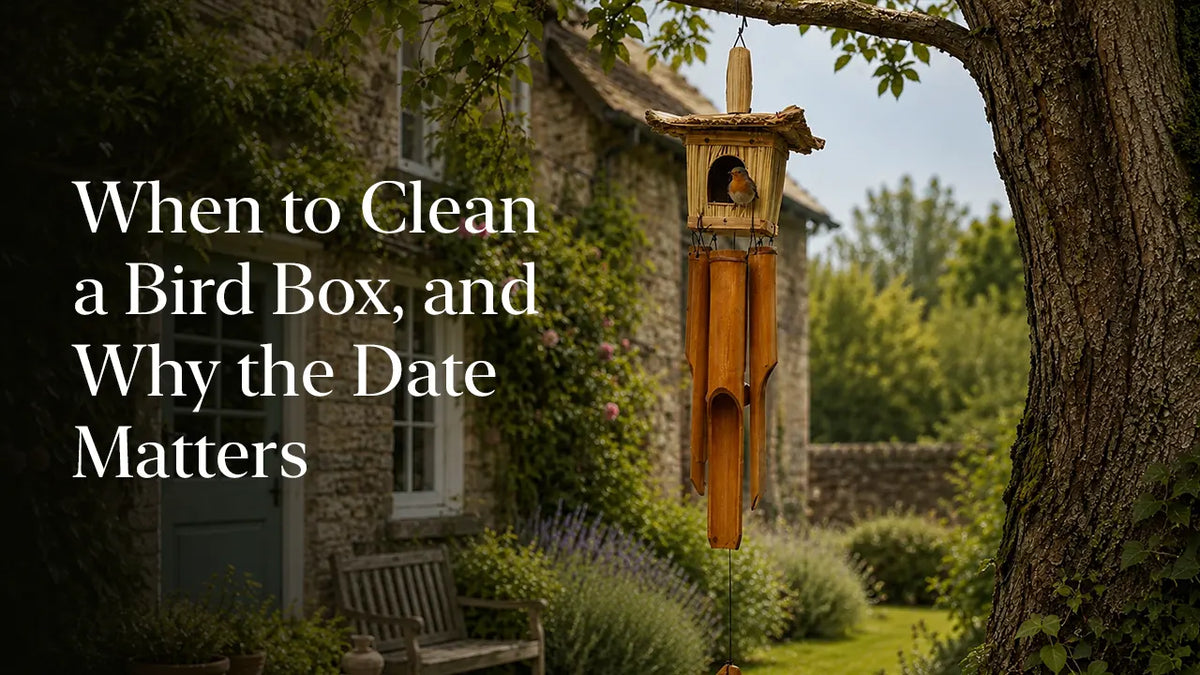
Cleaning a nest box is one of those garden jobs that is genuinely important and almost never done, partly because nobody is sure when they are allowed to.
The window
The generally recommended period in Britain is between the beginning of September and the end of January, once the breeding season is finished and before birds begin prospecting again in late winter.
Autumn is the better half of that window. Cleaning in September or October leaves the box empty, aired and available for winter roosting, which is how birds discover a box and decide about it for spring.
The legal position, in plain terms
Wild birds, their nests and eggs have legal protection. In England, this includes protection against intentionally taking, damaging or destroying a nest while it is being built or used; some species have additional disturbance protection. Do not clean a box that is in use.
That is why the timing matters and why the recommended window sits outside the breeding season. There are also specific provisions about unhatched eggs found in boxes, and the guidance is that they should be left alone or handled only in accordance with the relevant rules, which vary between England, Scotland, Wales and Northern Ireland.
Consult current RSPB nest-box guidance and the relevant national wildlife authority before handling unhatched eggs. A calendar date alone does not establish that a nest is inactive.

Always look before you open
Before doing anything, check whether the box is occupied. Birds roost in boxes through the winter, sometimes in numbers, and opening a box on a cold night can be seriously harmful.
Watch from a distance for signs of use before planning maintenance. Do not tap or open a box simply to make an occupant leave. If birds or other wildlife are present, postpone cleaning and seek appropriate guidance if unsure.
Why old nests must come out
Two reasons, both practical.
Parasites. Old nest material harbours fleas, mites and other invertebrates that overwinter in the debris and emerge in spring to feed on the next brood. Removing the nest removes most of them.
Volume. Nests accumulate. Two or three seasons of unremoved material raises the floor level, which reduces the depth below the entrance hole and makes the box less safe from predators.
How to clean it
For a conventional timber nest box, first establish that it is inactive and safe to access. Wear gloves, remove old nesting material in accordance with wildlife guidance, and use boiling water as recommended by the RSPB. Handle hot water carefully to avoid scalds. Do not apply this method to materials or components that cannot tolerate it; follow the particular box’s care instructions.
Then, and this is the part people skip, scald the inside with boiling water. That kills remaining parasites without leaving any residue. Do not use detergents, disinfectants, insecticides or bleach, which leave traces that are harmful to birds.
Let the box dry completely before it goes back up. Do not reassemble the box while its interior is still wet.
Repairs while it is down
The natural moment for maintenance. Check the roof for gaps and that it still overhangs the entrance. Check the floor for drainage holes and clear them. Check the fixing, which loosens over a season of weather. And check whether the entrance has been enlarged by squirrels, in which case fit a metal hole plate.
Do not add a preservative routinely. Follow the box maker’s care instructions; a generic “water-based” or “animal-safe” label does not establish suitability for nesting birds. Keep any treatment away from occupied boxes.
Nesting material and winter roosting
Nesting birds normally bring their own material. Winter roosting is a separate use: RSPB guidance permits a small amount of clean hay or wood shavings in a thoroughly dry box, but not straw. Do not pack a box with material or add it to an active nest.
Our boxes
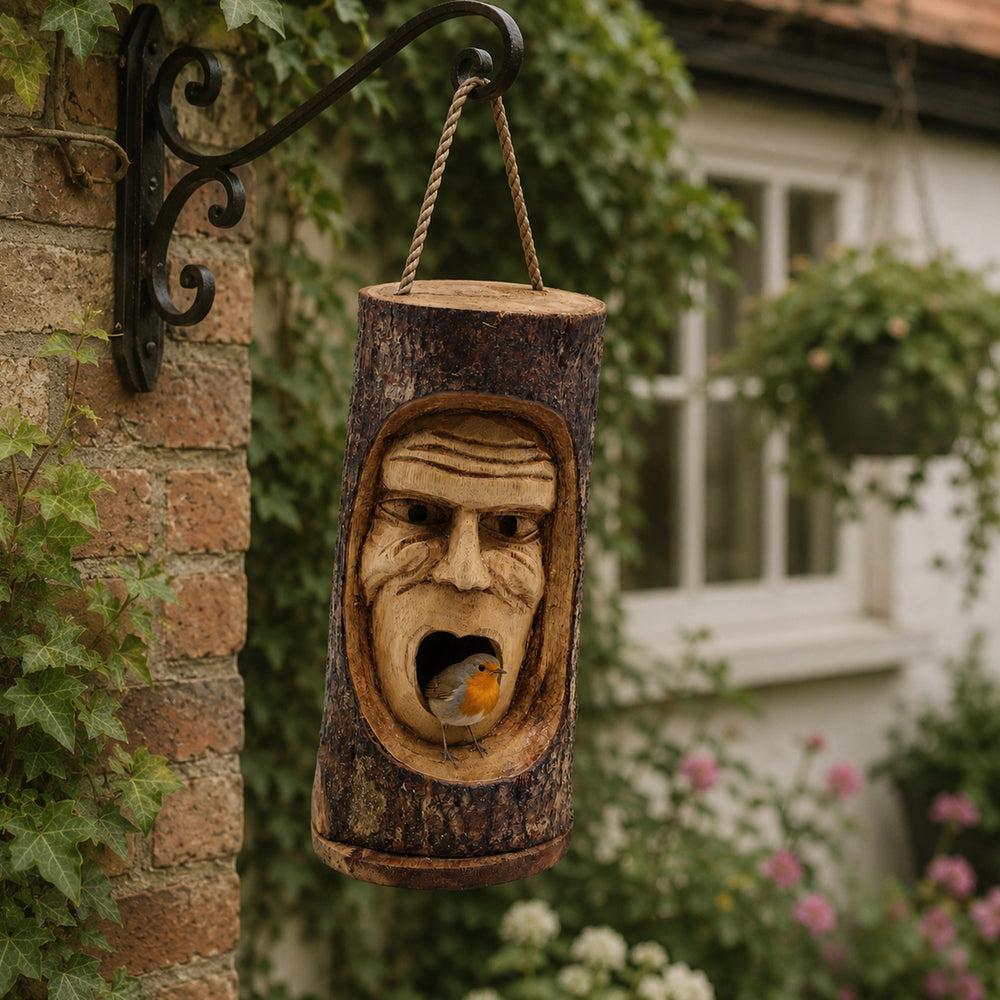
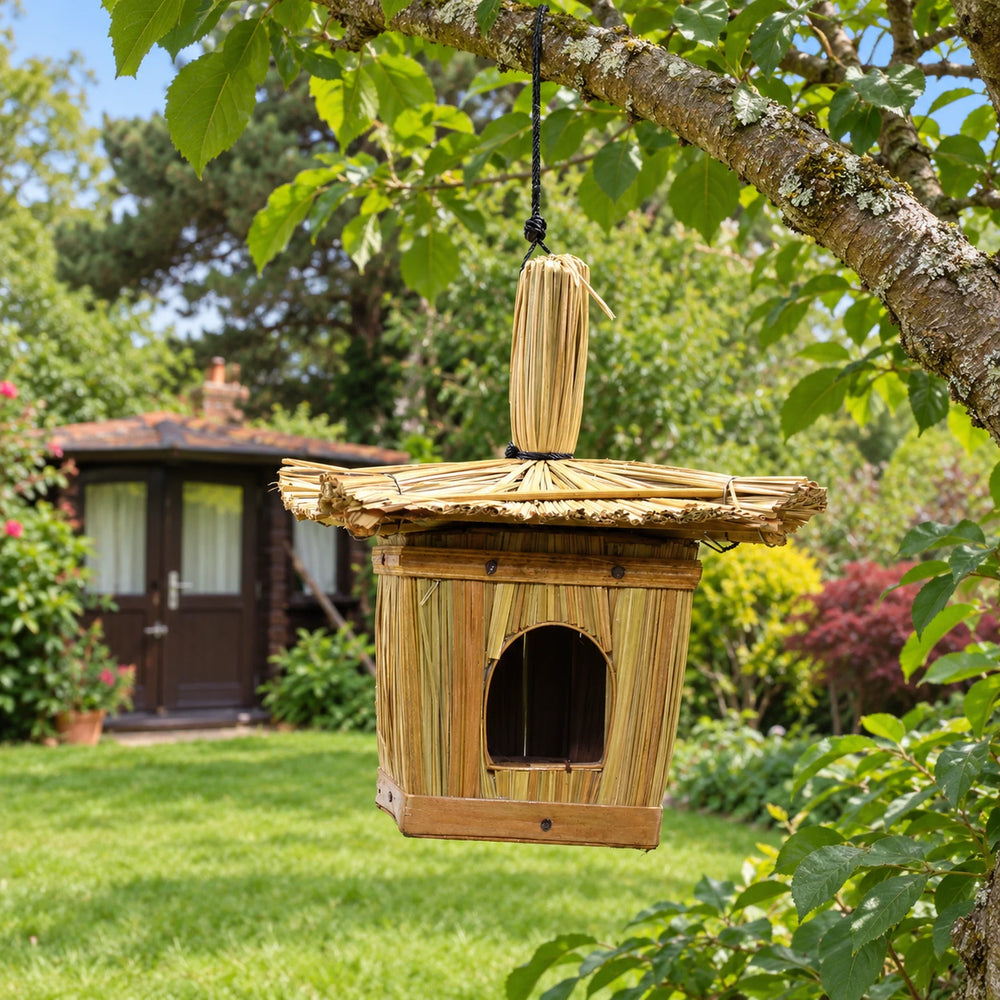
For our garden bird houses, check the care instructions for the particular material and construction. The boiling-water method for a conventional timber nest box is not automatically appropriate for woven seagrass, painted details or glued components. If wildlife is using a decorative house, leave it undisturbed and seek advice before maintenance.
Our guides to hole sizes and siting cover the rest.
Questions people ask
When can I clean out a bird box?
Autumn is generally a suitable time, but only after checking the box is inactive. Calendar dates are not permission to disturb a nest, and rules for unhatched eggs vary across the UK.
Is it illegal to clean a bird box at the wrong time?
Removing or damaging a nest in use can be unlawful, and some species have additional protection. Establish that the box is inactive and check the rules for unhatched eggs in your UK nation before cleaning.
What should I clean a nest box with?
RSPB recommends boiling water for conventional nest boxes after old material is removed. Wear gloves, avoid scalds and let the box dry fully. Follow material-specific care instructions; do not use insecticides or flea treatments.
Why does old nest material need removing?
It harbours fleas and mites that overwinter and emerge to feed on the next brood, and accumulated nests raise the floor level, reducing the safe depth below the entrance.
Should I add bedding to a clean box?
For nesting, birds usually provide their own material. Winter roosting advice is different: RSPB permits a small amount of clean hay or wood shavings in a fully dry box. Never add material to an active nest.