

A singing bowl is a bell-shaped sound instrument that produces resonant tones and vibrations used to support meditation, sound healing, and the creation of calm, intentional spaces. Knowing what is a singing bowl used for helps you choose the right bowl and get the most from your practice. Rooted in Tibetan and Himalayan traditions, these bowls are now recognised in the West as a form of vibroacoustic therapy, a complementary approach that uses sound and physical vibration to promote relaxation and mental wellbeing. Whether you are new to mindfulness or deepening an existing practice, a singing bowl offers a grounded, sensory anchor for your sessions.
What is a singing bowl used for in meditation and healing?
A singing bowl is used primarily to produce harmonic sound and vibration that settles the mind and body. The instrument works as a focal point during meditation, a centrepiece in sound healing sessions, and a gentle signal to begin or close a mindfulness practice. Singing bowl therapy is formally classified as a vibroacoustic modality, meaning the physical resonance of the bowl is as significant as the sound itself. That dual quality, both auditory and tactile, is what separates it from most other meditation tools.
The most common uses fall into three broad areas. First, singing bowls anchor attention during seated meditation by giving the mind a clear, fading tone to follow. Second, they are used in sound baths, where bowls create a relaxing sonic backdrop that helps people unwind deeply. Third, they mark transitions in yoga, breathwork, and therapeutic sessions, signalling a shift from activity to stillness.
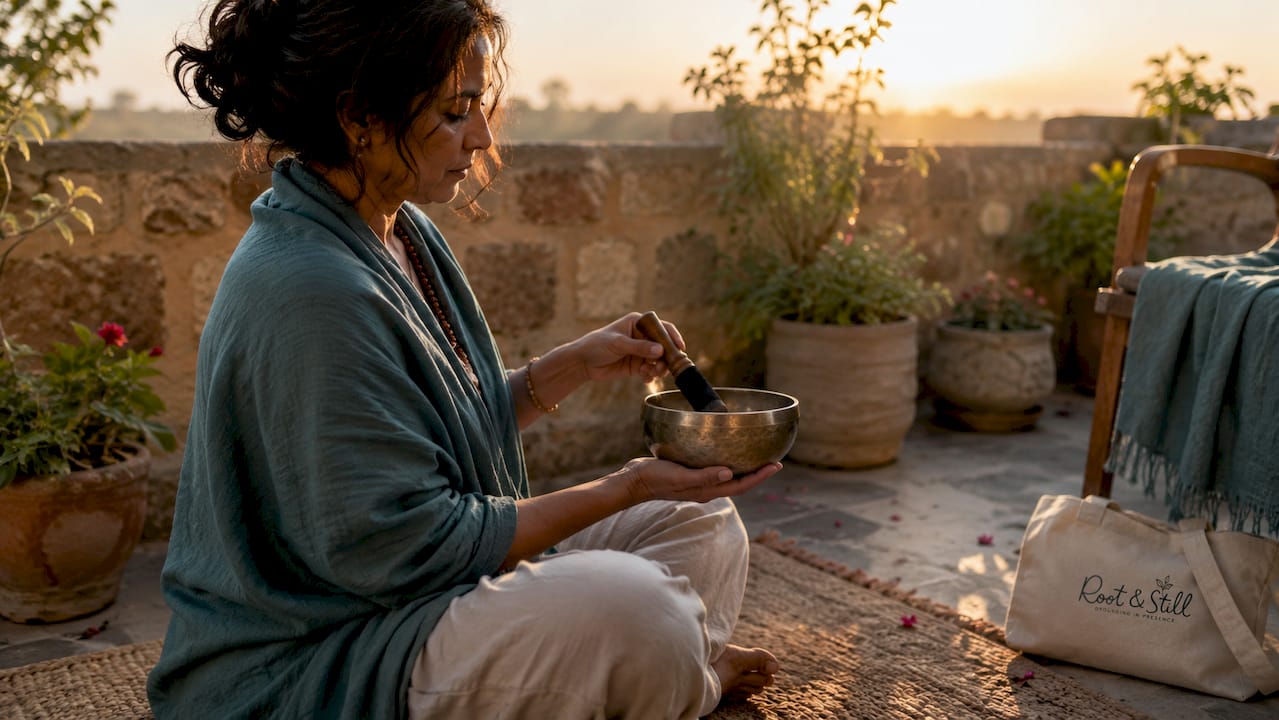
Shop Now: Large Chaken Handmade Tibetan Buddhist Singing Bowl (approx 800g) - 17cm
How do singing bowls produce sound and vibration?
Singing bowls produce sound through two techniques: striking the bowl with a mallet, or rubbing the mallet around the rim in a continuous circular motion. Striking or rubbing the rim with a wooden or leather mallet sets the bowl’s walls into vibration, generating a sustained, resonant tone. The frequency of that tone depends on the bowl’s material, wall thickness, and diameter. Larger, heavier bowls produce lower, slower frequencies. Smaller bowls ring at higher, brighter pitches.
The table below shows how material and size influence the sound you can expect.
| Material | Typical size | Tone quality | Common use |
|---|---|---|---|
| Seven-metal alloy | 15–25cm | Warm, complex, layered | Traditional meditation, sound healing |
| Brass | 10–20cm | Bright, clear, sustained | Beginners, home practice |
| Crystal (quartz) | 20–40cm | Pure, penetrating, high | Chakra work, sound baths |
| Aluminium | 15–25cm | Resonant, accessible | Everyday mindfulness, décor |
The choice of bowl material and size directly shapes the subjective experience of a session. A seven-metal alloy bowl carries overtones that feel rich and enveloping. A crystal bowl produces a single, clean frequency that cuts through mental noise with clarity.
Pro Tip: If your goal is deep relaxation, choose a larger metal bowl with a lower tone. If you want to sharpen focus or begin a morning practice, a smaller, brighter bowl tends to feel more activating.
What are the main benefits of singing bowls for wellbeing?
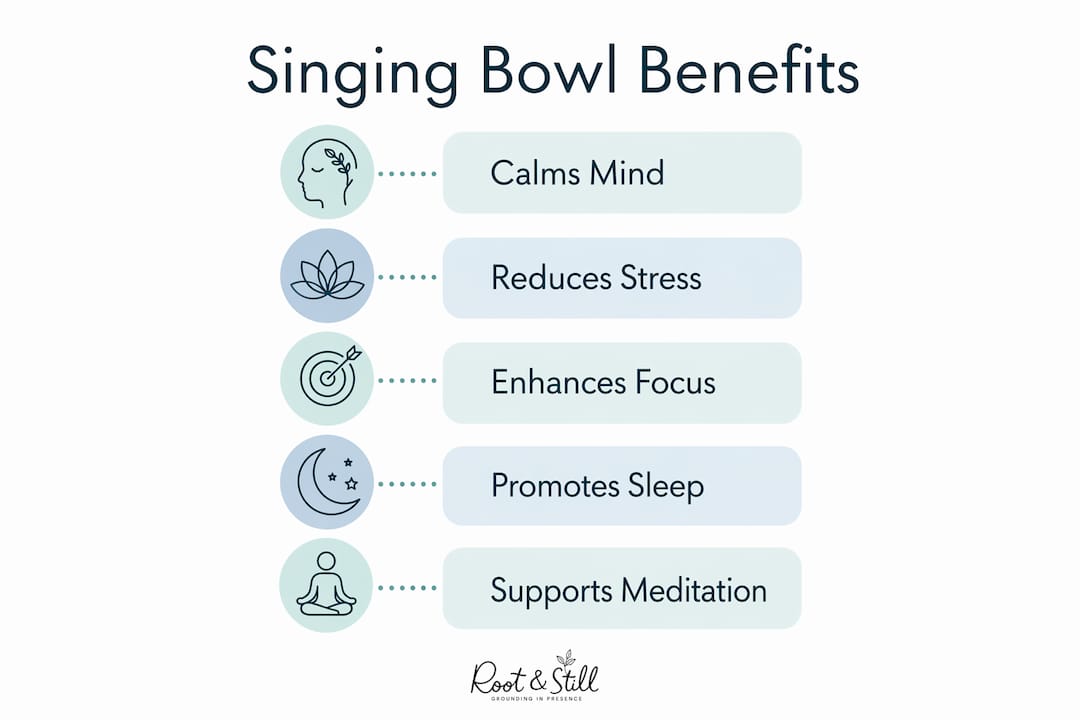
The benefits of singing bowls span both mental and physical wellbeing, though the evidence base is still developing. A 2025 systematic review found potential benefits for anxiety, depression, sleep quality, and cognitive function, while calling for higher-quality clinical trials to strengthen those findings. That context matters. The bowl is a genuine wellness tool, but it works best as part of a broader mindfulness routine rather than a standalone remedy.
The most consistently reported benefits include:
- Reduced stress and anxiety. The sustained tone gives the nervous system a clear, non-threatening stimulus to focus on, which interrupts the cycle of anxious thought.
- Improved sleep quality. Sound bath sessions using singing bowls are associated with a calmer pre-sleep state, making it easier to settle into rest.
- Better mood and emotional balance. Singing bowl therapy shows promising results for improving mood, though exact mechanisms are still under study.
- Sharper meditative focus. For beginners who struggle to quiet the mind, the fading resonance of a bowl gives attention something concrete to follow. Sound meditation anchors attention in the present moment, making it a particularly useful entry point into mindfulness practice.
- A sense of physical calm. The vibration felt through the hands or body during play has a grounding, settling quality that many people describe as deeply restful.
Singing bowl healing works on both levels at once, the sound reaching the ears and the vibration reaching the body. That combination is what makes a sound bath feel different from simply listening to music.
How to use a singing bowl effectively
Using a singing bowl well is straightforward once you understand the basics. The technique matters more than the setting, though a quiet, comfortable space always helps.
- Set up your space. Sit comfortably on the floor or in a chair. Place the bowl on a cushion or flat on your open palm if it is small enough. Remove distractions and dim the lights if that helps you settle.
- Hold the mallet lightly. Grip the mallet near its base with your dominant hand. A tense grip dampens the vibration. Let your fingers stay relaxed.
- Strike the bowl gently. Tap the outside of the bowl’s rim with the padded end of the mallet. Let the tone ring out fully before doing anything else. Simply listen as it fades.
- Try the rim-rubbing technique. Press the mallet lightly against the outside of the rim and move it in slow, even circles. Maintain consistent pressure. The tone will build gradually into a sustained hum.
- Anchor your attention on the sound. When your mind wanders, bring it back to the fading resonance. This is the core of singing bowl meditation: using the sound as a returning point for awareness.
- Allow silence after the tone fades. Do not rush to strike again. The silence that follows the sound is as much a part of the practice as the tone itself.
Effective sound bath facilitation depends on session design: volume management, participant positioning, and allowing that silence after the sound fades to deepen presence. These principles apply whether you are practising alone or guiding others.
Pro Tip: Practise at the same time each day, even for just five minutes. Consistency builds a conditioned response in the body, so the sound of the bowl begins to signal calm before you have even closed your eyes.
You can also explore mindfulness activities for adults that pair well with singing bowl sessions, such as breathwork or body scanning, to deepen your overall practice.
What types of singing bowls are there and how do you choose?
Singing bowls fall into two main categories: traditional metal bowls and crystal singing bowls. Each has distinct qualities that suit different intentions.
| Bowl type | Material | Tone character | Best for |
|---|---|---|---|
| Traditional Tibetan | Seven-metal alloy | Warm, layered, complex | Deep meditation, sound healing |
| Brass | Brass | Clear, bright, sustained | Beginners, home practice |
| Crystal | Quartz crystal | Pure, penetrating, resonant | Chakra work, sound baths |
| Aluminium | Aluminium alloy | Accessible, resonant | Everyday mindfulness, décor |
| Chakra-tuned sets | Metal or crystal | Matched to specific frequencies | Full sound bath sessions |
Traditional metal bowls, often called Tibetan singing bowls, carry a warmth and complexity that many practitioners find deeply settling. The layered overtones feel enveloping rather than sharp. Crystal bowls, by contrast, produce a single, clean frequency that can feel almost physical in its clarity. Practitioners tailor bowl choice to session intentions, selecting calming lower tones for relaxation and brighter frequencies for focus or energy work.
Size is the other key variable. A larger aluminium singing bowl, such as a 19cm model, produces a fuller, more resonant tone that fills a room. A smaller bowl, like the Mandala Buddha 16cm, is easier to hold in one hand and suits personal, seated practice. Chakra-tuned sets pair multiple bowls to specific frequencies, making them well suited to structured sound bath sessions where you want to move through different tonal qualities in sequence.
The uses of Tibetan singing bowls extend beyond formal meditation. Many people keep a bowl on a shelf or altar as a visual reminder of their practice, striking it at the start and end of the day as a simple mindfulness ritual.
Key takeaways
Singing bowls are most effective when used consistently as part of a broader mindfulness routine, combining sound, vibration, and intentional silence to support relaxation and mental clarity.
| Point | Details |
|---|---|
| Core purpose | Singing bowls produce resonant tones and vibrations used for meditation, sound healing, and relaxation. |
| Evidence base | Research shows potential benefits for anxiety, sleep, mood, and focus, though higher-quality trials are still needed. |
| Technique matters | Striking and rim-rubbing produce different tonal qualities; allow silence after each tone to deepen the effect. |
| Bowl choice shapes experience | Material and size determine frequency; match your bowl to your session goal, calming or focusing. |
| Complementary tool | Singing bowls work best alongside other mindfulness practices, not as a replacement for medical care. |
Why I think most people underestimate the silence
Most guides focus on the sound a singing bowl makes. What they rarely mention is that the silence after the tone is where the real work happens. When I first started using a bowl, I kept striking it again the moment the sound faded, as if the quiet was something to fill. It took time to understand that the fading resonance is a cue to stay present, not a gap to cover.
The other thing beginners often miss is that bowl selection genuinely changes the quality of a session. A bright, high-pitched bowl feels activating. A deep, warm bowl feels grounding. Neither is better. They serve different moments. Choosing the wrong one for your intention is a bit like trying to sleep with the lights on. The bowl’s material and size are not just aesthetic choices. They are functional ones.
Singing bowl healing is also not a quick fix. The benefits accumulate with consistent, gentle practice over weeks rather than arriving in a single session. If you approach it with patience and curiosity rather than expectation, you will find it settles into your routine naturally. Pair it with other grounding tools, a Five Buddha singing bowl on your desk, a candle, a few minutes of stillness, and the practice starts to feel less like a ritual and more like a natural pause in the day.
— Dhriti
Singing bowls and mindful living from Rootandstill
Rootandstill curates a collection of Tibetan singing and healing bowls designed for both beginners and those with an established practice. Each bowl is chosen for its craftsmanship, resonance, and the quality of stillness it brings to a space. Whether you are looking for a traditional seven-metal bowl or a beautifully decorated piece that doubles as a mindful home accent, the range reflects the same care that runs through every Rootandstill product. Pair your bowl with a meditating Buddha statue or a Feng Shui set to create a corner of your home that genuinely invites stillness. Browse the full collection at rootandstill.com.
FAQ
What is a singing bowl used for in everyday life?
A singing bowl is used to support meditation, reduce stress, and mark moments of intentional stillness. Many people strike their bowl at the start and end of the day as a simple mindfulness ritual.
Are singing bowls scientifically proven to work?
A 2025 systematic review found potential benefits for anxiety, depression, and sleep quality, though researchers call for higher-quality clinical trials. Singing bowls are best understood as a complementary wellness tool rather than a medical treatment.
How do I use a singing bowl for the first time?
Strike the rim gently with a mallet, let the tone ring out fully, and focus your attention on the fading sound. Allow the silence after the tone to settle before striking again.
What is the difference between a Tibetan and a crystal singing bowl?
Tibetan metal bowls produce warm, layered overtones suited to deep meditation. Crystal bowls produce a single, pure frequency that is often used in chakra work and sound baths.
How long should a singing bowl session last?
Even five minutes of focused practice produces a noticeable calming effect. Longer sessions of 20–30 minutes are common in structured sound baths or guided meditation contexts.


