

A Buddha statue is defined as a sacred symbolic object that brings peace, mindfulness, and positive energy into a living space through intentional placement and spiritual meaning. The role of Buddha in home decor extends well beyond aesthetics. When you place a Buddha figure thoughtfully, you are drawing on centuries of Buddhist tradition, vastu shastra, and feng shui principles to create a home that feels genuinely grounded and calm. Understanding what each pose means, where to position a statue, and how to honour its cultural roots will help you style your space with both beauty and integrity.
What does the role of Buddha in home decor actually mean?
The significance of Buddha in decor lies in the relationship between symbolism, placement, and intention. Buddhist art historically used symbolic presence rather than literal depiction, which means a Buddha statue in your home is designed to support contemplation and mindful pauses rather than act as an object of worship. This distinction matters enormously when you are styling a space. A statue placed with awareness becomes a focal point that quietly anchors the mood of a room.
Different Buddha poses, known as mudras, carry distinct spiritual qualities that translate directly into decor choices. Each mudra corresponds to a specific intention: a Meditating Buddha suits a quiet reading corner or bedroom, while the Abhaya mudra (raised hand, palm outward) works beautifully in an entryway because it signals protection. The Dharmachakra mudra, associated with teaching, feels at home in a study or library. Choosing a pose that aligns with the purpose of a room gives your decor a coherent, considered quality that purely ornamental pieces rarely achieve.
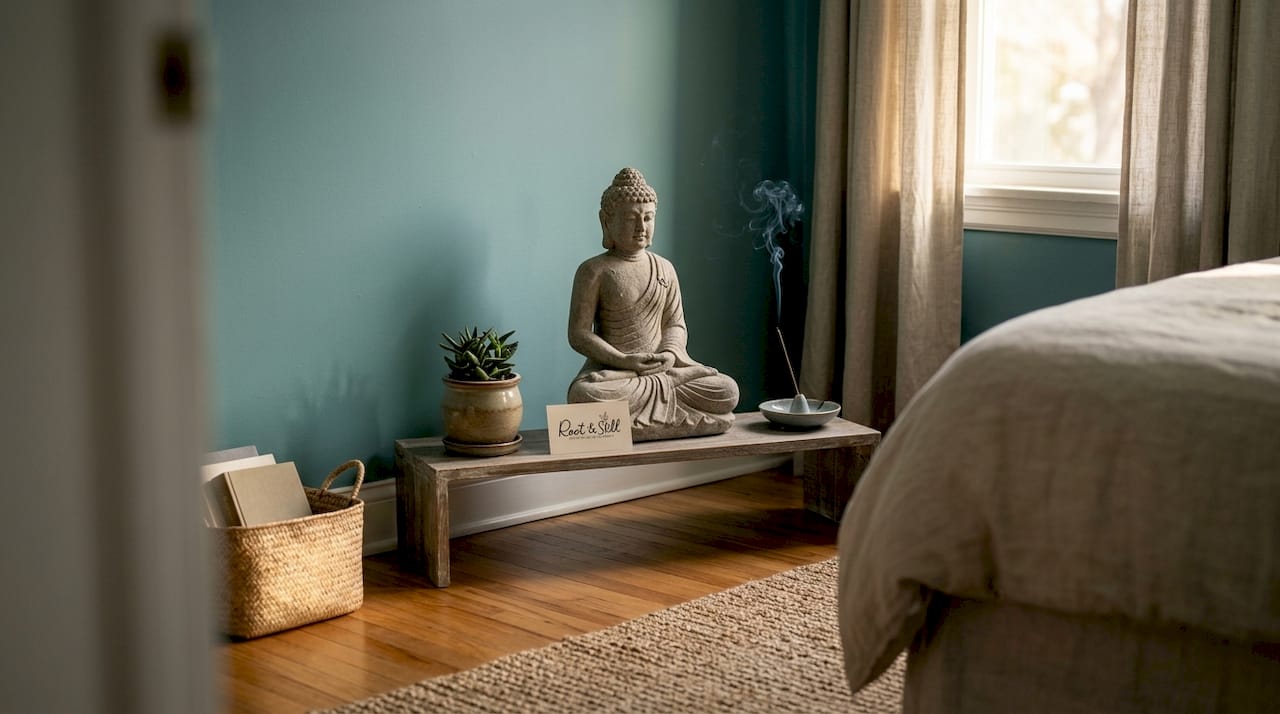
Material and scale reinforce these meanings. Stone and resin statues carry a sense of permanence and weight, suiting garden spaces or living rooms where you want a grounded presence. Lighter materials such as whitewashed wood or pale ceramic sit well in bedrooms or meditation corners, where the mood calls for something softer. Rootandstill offers a whitewash wood figurine that illustrates exactly this quality: the pale, natural finish softens the mood without diminishing the statue’s presence.
| Pose | Symbolism | Ideal placement |
|---|---|---|
| Meditating Buddha | Inner peace, stillness | Bedroom, meditation corner, reading nook |
| Abhaya mudra (protection) | Safety, reassurance | Entryway, hallway |
| Dharmachakra mudra (teaching) | Wisdom, clarity | Study, home office, library |
| Reclining Buddha | Transition, final peace | Living room, garden |
| Laughing Buddha (Budai) | Joy, abundance | Kitchen, living room, near entrance |
Where should you place a Buddha statue at home?
Placement is the single most consequential decision you will make when incorporating a Buddha statue into your home. East and north-east directions are considered auspicious according to vastu guidance, with the statue ideally facing the main entrance or into the room to invite positive energy. Feng shui principles align closely with this: the statue should greet the space rather than face a wall, creating a sense of welcome and openness.
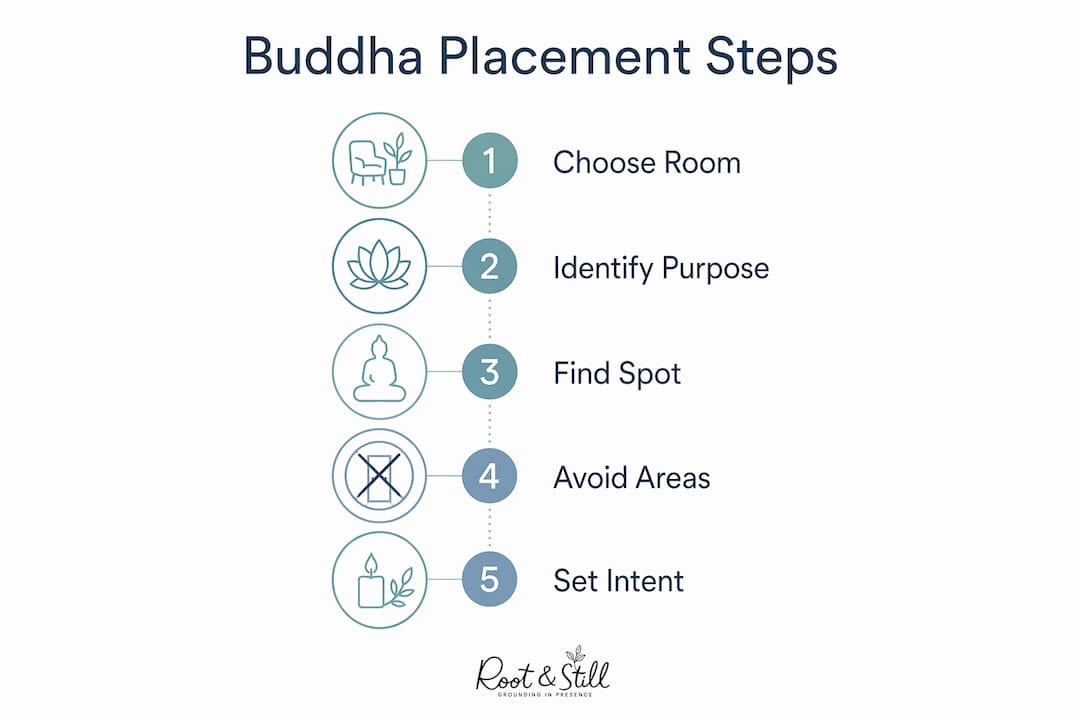
Height matters as much as direction. Statues placed at a minimum of three feet from the floor, ideally at or above eye level, carry the right energetic and cultural weight. A shelf, mantelpiece, or dedicated altar surface all work well. Placing a Buddha directly on the floor is widely considered disrespectful and disrupts the sense of reverence that makes the statue effective as a decor element.
The entryway is one of the most powerful spots in any home for a Buddha statue. A standing or seated figure near the front door sets the tone for the entire space, signalling calm and intention the moment you walk in. The living room is equally well-suited, particularly when the statue becomes a focal point on a console table or low shelf, surrounded by natural materials like linen, stone, or rattan. For those creating a dedicated meditation zone, a corner with a cushion, a low table, and a Meditating Buddha statue forms a genuinely restful retreat.
- Place in the east or north-east of a room where possible
- Position at or above eye level on a shelf, mantel, or altar
- Face the statue towards the main entrance or into the room
- Keep the surrounding area clean and uncluttered
- Avoid bathrooms, kitchens, and spaces near shoes or waste
Rooms to avoid include bathrooms and kitchens, where placement near clutter or waste is considered disrespectful across both vastu and Buddhist traditions. The bedroom is a nuanced case. A small, serene Meditating Buddha placed high on a shelf is generally considered acceptable, but a large or highly ornate statue can feel overpowering in a space meant for rest.
Pro Tip: Create a small, dedicated surface for your Buddha statue with nothing else on it. A single candle holder, a sprig of dried botanicals, or a smooth stone alongside the figure gives it room to breathe and signals to anyone entering the room that this is a considered, intentional space.
How do you incorporate Buddha statues respectfully?
Cultural appreciation and cultural appropriation are separated by one thing: intentionality. When you bring a Buddha statue into your home with genuine respect for its origins and meaning, you are participating in a long tradition of cross-cultural exchange that Buddhism itself has always encouraged. The key is to treat the statue as a meaningful object rather than a trend piece.
One of the most common myths is that a Buddha statue must be gifted to you rather than purchased for yourself. This belief has no doctrinal basis in Buddhism and is a modern folk superstition with no traditional grounding. You are entirely free to choose and purchase your own statue, and doing so with care and research is arguably more respectful than receiving one passively.
The question of Buddha head statues deserves careful thought. Full-figure statues are considered more respectful in several Southeast Asian traditions, where severed heads carry associations with colonial-era looting and disrespect. A full figure honours the complete symbolism of the Buddha’s form and avoids any unintended offence. If you are drawn to a head sculpture purely for its aesthetic, it is worth understanding this context before you commit.
Here are the core principles for respectful incorporation:
- Always elevate the statue above floor level and keep its surroundings clean and ordered.
- Avoid placing Buddha figures in bathrooms, near alcohol, or in spaces associated with waste.
- Choose a full-figure statue where possible, particularly if you are new to Buddhist decor traditions.
- Research the specific pose and its meaning before placing it in a room.
- Approach the purchase with genuine curiosity about the tradition rather than purely aesthetic motivation.
Pro Tip: If you are unsure about a particular statue’s cultural context, Rootandstill’s blog on Buddha statue meanings and origins is a clear, respectful starting point that covers history, symbolism, and tradition without oversimplifying.
Design tips for blending Buddha statues into modern interiors
Buddha home styling works best when the statue is treated as a focal point rather than an afterthought. Scale is the first consideration. A large, one-metre standing figure commands a hallway or garden with quiet authority, while a 20 to 30 centimetre seated statue suits a shelf or side table without overwhelming the surrounding decor. Statue size relative to the room shapes how the piece feels: too small and it disappears, too large and it dominates rather than anchors.
Natural materials are the most reliable companions for Buddha statues in decor. Linen cushions, rattan baskets, terracotta pots, and raw wood surfaces all share the same grounded, organic quality that Buddha imagery carries. Pairing a stone or resin statue with these textures creates a cohesive, restful atmosphere rather than a clash of styles. Buddhist colour symbolism can also guide your palette: white and gold suggest purity and wisdom, earthy ochres and greens evoke nature and balance, while deep blues and purples carry a meditative, contemplative quality.
Incense holders, lotus-shaped candle holders, and small botanical arrangements all work as complementary accents around a Buddha statue. These accessories reinforce the mindful atmosphere without cluttering the space. A terracotta incense plate placed near a seated Buddha, for instance, adds both sensory depth and visual harmony. The scent of incense has its own calming effect, making the corner feel genuinely lived-in and intentional rather than styled for appearance alone.
The viewer’s relationship with the statue is worth considering when you arrange a room. A face positioned at natural eye level in a room’s sightline creates an ongoing, gentle focal point that encourages mindful pauses throughout the day. This is the difference between a statue that truly changes the feeling of a room and one that simply sits on a shelf unnoticed.
Key takeaways
The role of Buddha in home decor is to serve as a symbol of peace and mindfulness, made effective through intentional placement, cultural respect, and thoughtful styling choices.
| Point | Details |
|---|---|
| Pose determines purpose | Match the Buddha’s mudra to the room’s function: protection for entryways, meditation for quiet corners. |
| Placement follows vastu and feng shui | Position in the east or north-east, at eye level or above, facing into the room. |
| Respect guides every choice | Elevate the statue, keep its space clean, and avoid bathrooms, kitchens, and floor placement. |
| Full figures are safer choices | Full-figure statues are more culturally respectful than head-only sculptures in most traditions. |
| Natural materials complete the look | Pair statues with linen, stone, rattan, and botanical accents for a cohesive, grounded aesthetic. |
Why intentionality changes everything about spiritual decor
From Dhriti at Rootandstill
What I have noticed, working with spiritual home decor for years, is that the people who feel most at peace with their Buddha statues are not necessarily the ones with the most expensive pieces or the most perfectly arranged shelves. They are the ones who paused before they placed the statue and asked: why am I putting this here, and what do I want this corner of my home to feel like?
That question changes everything. A Buddha statue placed with genuine thought becomes something you notice every day. It creates a small, quiet interruption in the ordinary rhythm of a room. You walk past it and, almost without realising, your shoulders drop a little. That is not magic. It is the result of intentional design working on your nervous system in a subtle, steady way.
The trend towards spiritual home decor in 2026 is real and growing, but trends are not always the right reason to bring something into your home. What I would encourage is to read a little, choose slowly, and buy one piece that genuinely resonates rather than a collection assembled for visual effect. The calming effect of Buddha statues is well documented, but it depends entirely on the care you bring to the choice and placement. Respect and curiosity are the only tools you actually need.
— Dhriti
Bring stillness home with Rootandstill
Rootandstill curates Buddha statues and mindful decor accessories designed to work in real homes, not just styled photoshoots. Whether you are creating a calm entryway, a meditation corner, or a living room that simply feels more settled, the collection is built around pieces that carry genuine symbolic weight alongside considered design. The standing Buddha statue at one metre tall is a particularly strong choice for hallways and garden spaces where you want a grounded, welcoming presence from the moment you arrive. Alongside the statues, Rootandstill’s terracotta incense plate adds a sensory layer to any mindful corner, combining function with quiet beauty.
FAQ
What is the significance of a Buddha statue in home decor?
A Buddha statue serves as a symbol of peace, mindfulness, and spiritual harmony in the home. Its significance comes from the combination of intentional placement, the meaning of the specific pose, and the respectful context in which it is displayed.
Which direction should a Buddha statue face in a home?
East and north-east placements are considered most auspicious according to vastu guidance, with the statue ideally facing the main entrance or into the room rather than towards a wall.
Can you buy a Buddha statue for yourself, or must it be a gift?
You can absolutely purchase a Buddha statue for yourself. The belief that it must be gifted has no doctrinal basis in Buddhism and is a modern superstition rather than a traditional requirement.
Where should you avoid placing a Buddha statue?
Avoid placing Buddha statues in bathrooms, kitchens, near shoes, or directly on the floor. These locations are considered disrespectful across both Buddhist tradition and vastu principles, and they disrupt the calm, elevated energy the statue is meant to bring.
Is it disrespectful to use a Buddha statue purely for decoration?
Using a Buddha statue decoratively is not inherently disrespectful, provided you treat it with care: keep it elevated, maintain a clean surrounding space, and choose a pose and placement that reflect some understanding of its meaning. Intentionality and respect are the deciding factors.


