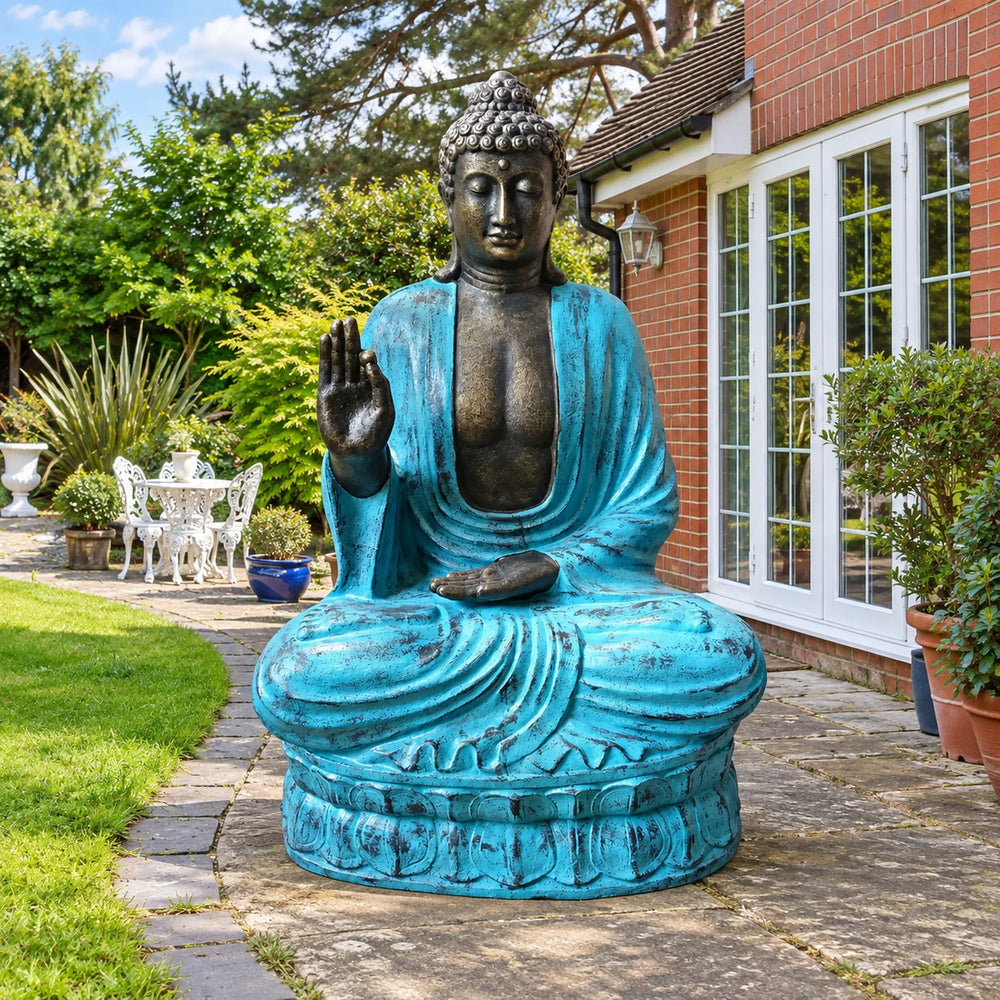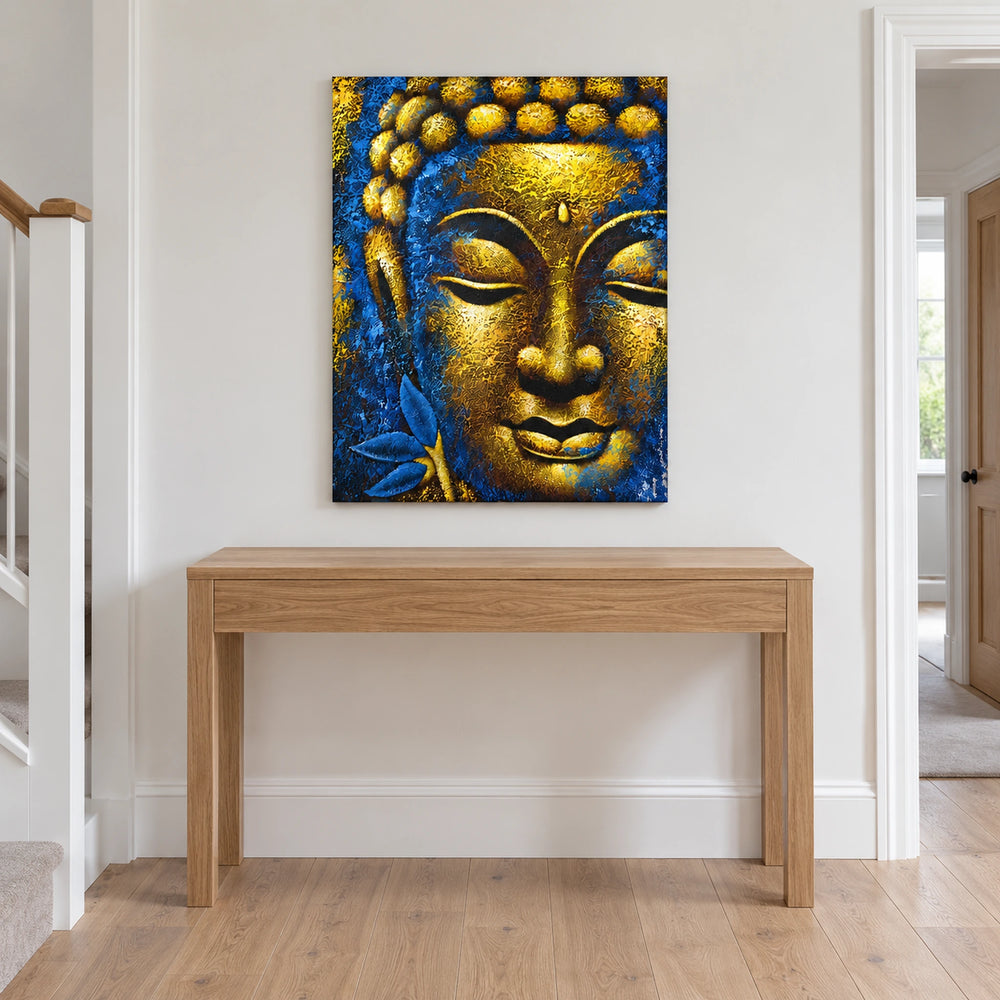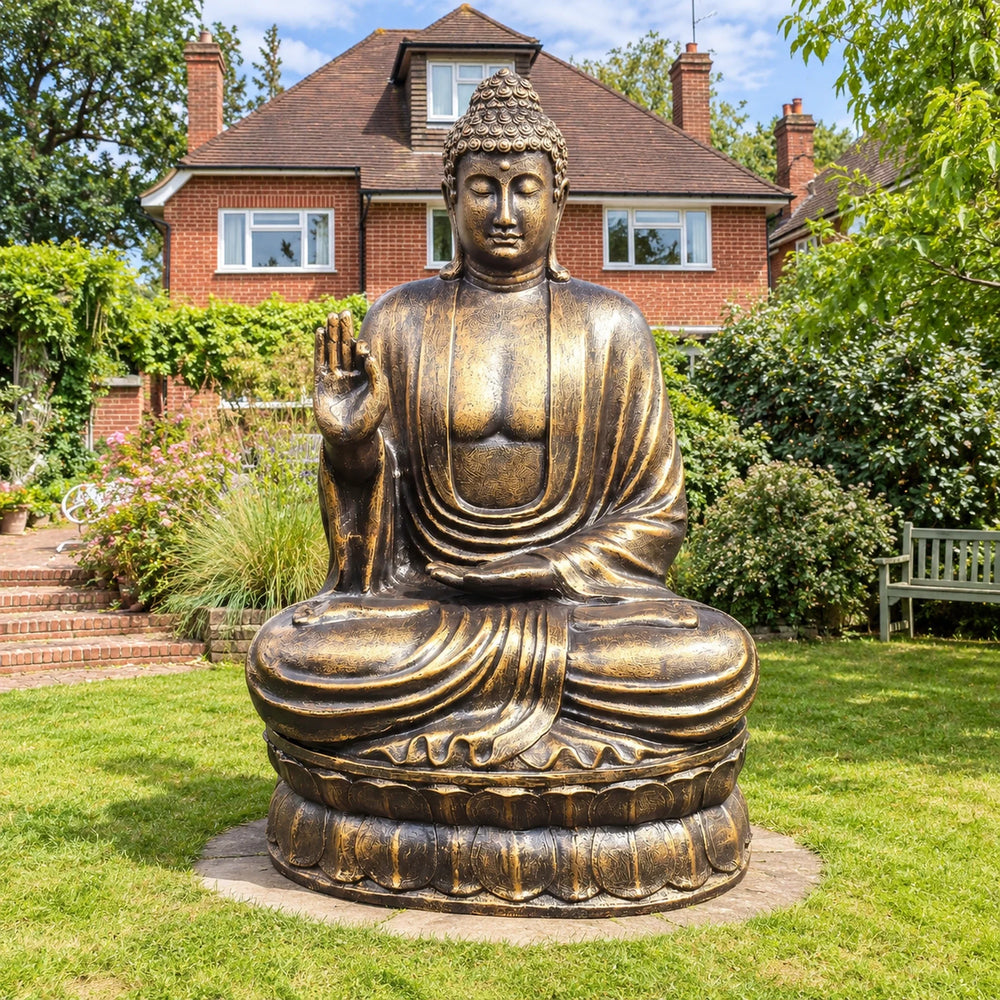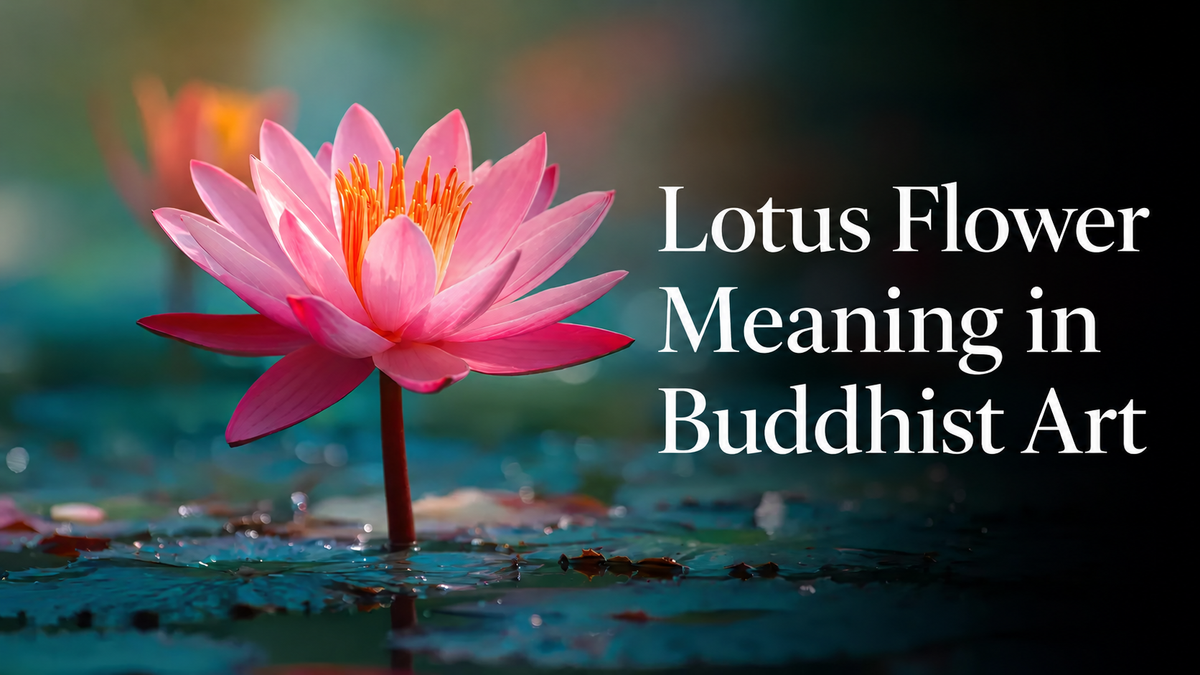
The lotus is a useful starting point when looking at Buddhist art: it can appear as a flower, a patterned surface or the petalled support beneath a figure. Its meaning is best understood through the particular image and tradition, rather than a decorating rule that assigns every colour one fixed message.
Why the lotus matters
The flower’s emergence from muddy water gives it a strong association with purity. The Metropolitan Museum of Art describes this symbolism in its record of an eighteenth-century Japanese Buddhist priest’s robe, whose design includes lotus petals and water. This is a documented example of the motif in religious dress, not just in sculpture.
A much earlier example is the Met’s Two Lotuses from the Bharhut stupa, dated around the first century BCE. The museum connects the carved flowers with auspiciousness and the Buddha’s enlightenment. Looking at such examples gives the symbol a historical context without suggesting that every later ornament has exactly the same purpose.
Reading a lotus base
Start with what you can see. Does the base have one row of petals or several? Is the flower open or shown as a bud? Is it supporting a Buddha figure, another religious figure or an entirely decorative design? These observations help you compare objects, but they do not prove where an item was made or which community used it.
When a museum or maker identifies the figure, date and context, use that explanation. For a new retail piece, read the product description separately from the history of the motif. A lotus-shaped base does not establish antiquity, temple use, consecration or a particular place of manufacture.
What about lotus colours?
Colour can form part of a specific image’s symbolism, but a pink, red, white or blue finish on a modern ornament is not enough to identify its religious meaning. The sources above do not establish a universal shopping chart linking each colour to a guaranteed spiritual effect.
If you are choosing a gift, it is reasonable to select a colour the recipient likes. If the piece is intended for devotional use, ask the recipient about their tradition and preferences, or seek guidance from their community. Avoid assigning a religious message solely from a retailer’s colour name.
Choosing a piece for your home
- Check the whole design. Look at the figure as well as the base, and make sure the listing identifies what it depicts.
- Measure the display space. Compare the stated height, width and depth with your shelf or surface. Allow space around projecting petals.
- Read the material and finish. A metallic colour does not by itself mean solid metal. Use the specification for the exact item.
- Match the setting. Do not assume a decorative finish is suitable for outdoor exposure. Check the product’s stated use and care.
- Keep symbolism separate from results. A meaningful object can be personally important without a seller promising enlightenment, mental clarity or a health benefit.
If you are comparing sculptural pieces, our hand-carved Buddha statue collection is one place to begin. Check individual photographs and specifications for the actual base design; this guide does not mean every item has lotus details.
Displaying a religious image thoughtfully
A home display and a devotional setting are not necessarily the same thing. Choose a stable, clean location and take the preferences of the people using the space seriously. Where a particular religious practice is involved, guidance from that community is more useful than a universal room-placement rule.
Questions people ask
What does the lotus symbolise in Buddhist art?
Purity and enlightenment are documented associations in the museum examples above. The details should still be read in the context of the particular work.
Does the colour tell me which statue to buy?
Not by itself. Consider the depicted figure, the maker’s explanation and the recipient’s preferences as well as colour.
Does a lotus base mean a statue is antique or sacred?
No. The motif alone cannot establish age, provenance or religious use.