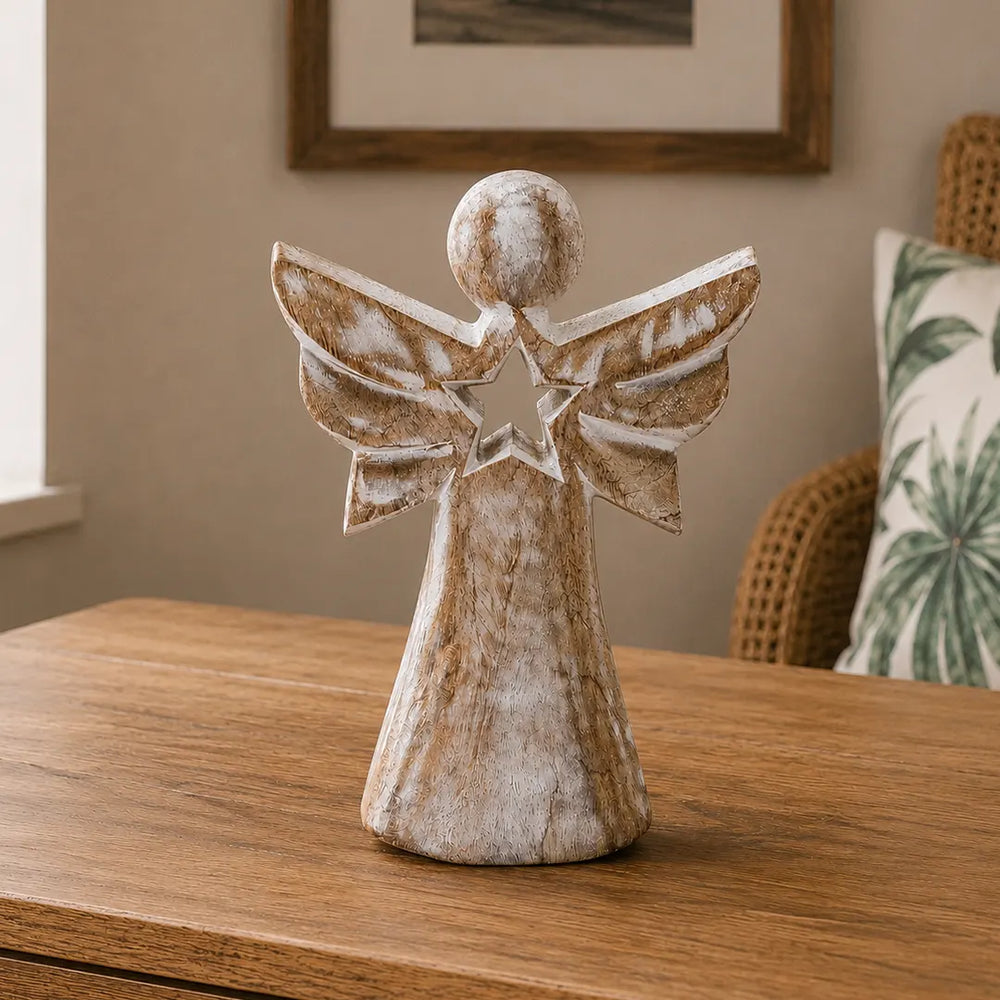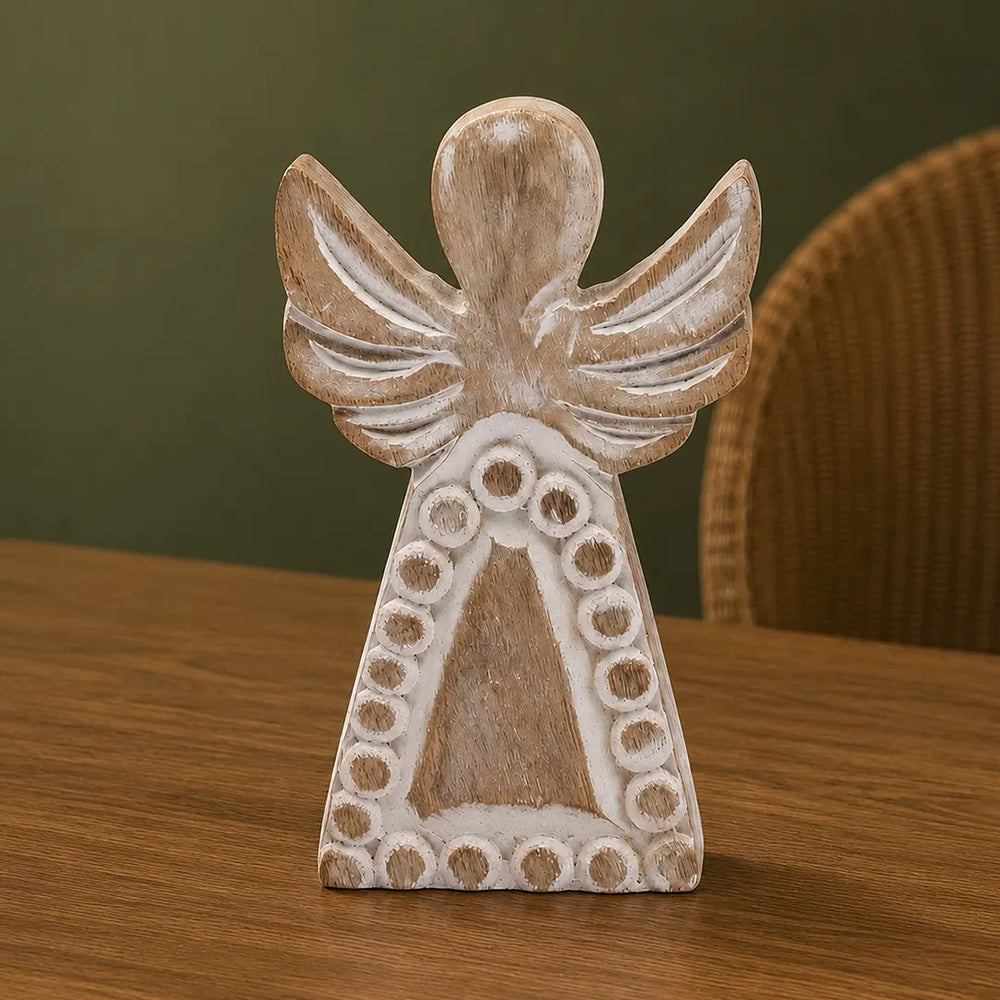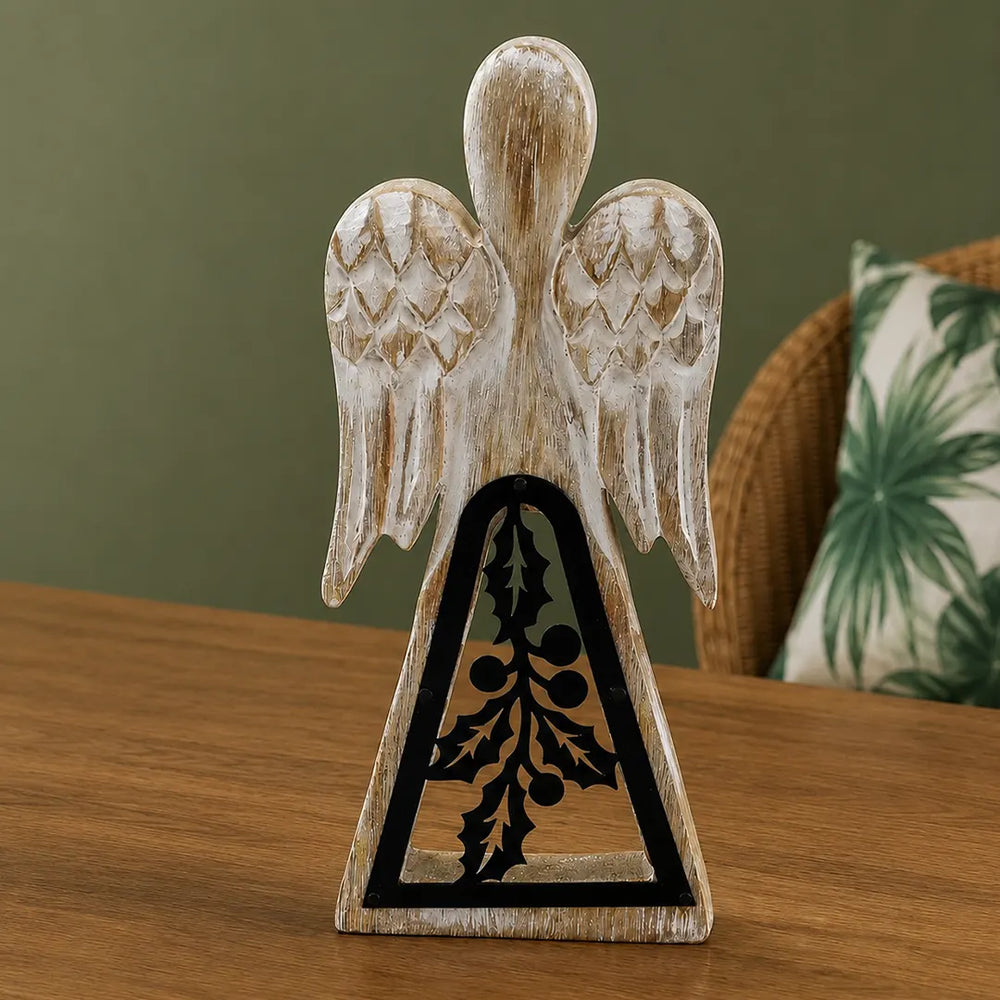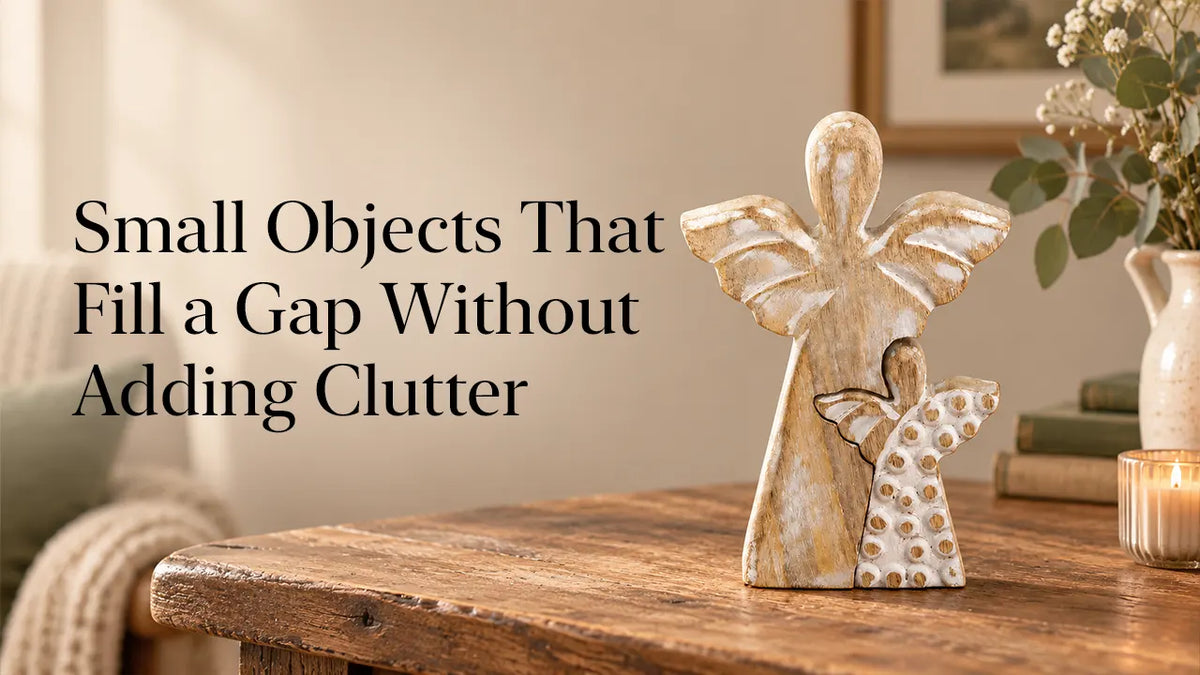
Most people have a shelf that is nearly right and a drawer of small objects that have failed to fix it. That pattern is common enough to be worth explaining, because it is not a matter of choosing the wrong objects. It is that the problem people are trying to solve with a small object is usually not the problem they actually have. This article covers what a nearly right shelf is generally missing, the three specific situations where a small object does help, what works at small scale and what does not, and the free fixes worth trying first. The range is in our mango wood angel collection.
Key takeaways
| Point | Details |
|---|---|
| The problem is rarely emptiness | It is usually height, depth or the absence of a clear subject, none of which a small object supplies. |
| Three situations where it helps | Completing a group of three, adding depth in front, or introducing a different material. |
| Clear silhouettes work at small scale | Fine detail disappears below a certain size and reads as visual noise. |
| Weight works too | Solid brass at small size reads as substantial in a way light objects do not. |
| Removing beats adding | Take two things off, move one forward, turn one at an angle. All free. |
Why small objects usually make it worse
Because the problem is rarely emptiness.
A shelf that looks unfinished is usually missing one of three things. Height, meaning everything on it is roughly the same size. Depth, meaning everything is pushed back against the wall in a line. Or a clear subject, meaning there is no object the eye lands on and stays with.
Adding a small object to a shelf that lacks height gives you the same problem plus one more thing to dust. The gap gets filled and the arrangement does not improve, which is exactly the experience that produces the drawer full of small objects.
Diagnosing which of the three you actually have takes about ten seconds and saves the purchase.

The three situations where a small object genuinely helps
Specific, and worth knowing because in these cases small is the right answer rather than a compromise.
- Completing a group of three. Two objects read as a pair, which reads as symmetry, which reads as formal. A third breaks it, and the third can be small because its job is to disrupt the pairing rather than to compete.
- Adding depth in front. Depth is what most shelves lack. A small object brought forward toward the front edge, sitting in front of something larger, adds a layer that nothing placed beside it can.
- Introducing a different material. A shelf of books and ceramics genuinely gains from one small wooden or brass thing. Not because of the size but because of the texture.
In all three cases, notice that the small object is doing a structural job rather than a decorative one. That is the difference between an object that helps and an object that fills.
What works at small scale
Two qualities, and objects that have neither will disappoint at any price.
A clear silhouette with no fine detail. Detail disappears below a certain size and reads as visual noise rather than as craft. The small whitewash angel at £4.99 works precisely because it is pared back almost to abstraction. A detailed figurine at the same size does not.
Weight. Solid material at small size reads as substantial in a way that light objects never do. A small piece from our brass figure collection has a density in the hand that surprises people, and that surprise carries over into how it reads on a shelf.
| Small object type | Works because | Fails when |
|---|---|---|
| Simplified carved figure | Clear outline, reads at a glance | Rendered in fine detail |
| Solid brass or metal | Weight and density signal quality | Hollow or plated over light material |
| Plain ceramic dish | Introduces a surface rather than an object | Patterned or busy |
| Small plant | Irregular outline against regular objects | Struggling for light |
The stacking trick
The most useful thing in shelf styling and it costs nothing.
Two or three books laid flat, with a small object on top. That gives you height without buying a taller object, introduces a horizontal line into a group of vertical ones, and makes a small piece read as elevated rather than lost.
It works because it separates two problems that people usually try to solve with one purchase. The books supply height and mass. The small object supplies the focal point. Trying to find one object that does both is what leads to buying something too large for the shelf.
The same trick works on a console, a bedside and a coffee table, and it is why interiors photographs are full of books lying flat.
What to do instead of adding
Four adjustments, all free, and each fixes more shelves than a purchase does.
Remove two things. Almost always the first thing to try, and almost always effective. A shelf reads as unfinished when it is over full considerably more often than when it is under full.
Move one object forward toward the front edge. This creates depth, which is the most commonly missing element.
Turn something so it faces at a slight angle rather than square on. Objects square to the viewer read as specimens. At three quarters they read as arranged.
Group two objects that were apart. Tight grouping is what makes several things read as one arrangement, and spreading things evenly is what makes them read as separate.
Our guide to a shelf that works covers the arrangement properly.
How many per shelf, and how many shelves
Three objects per shelf, and do not style every shelf.
The second half of that is the part people miss. An empty shelf, or one holding only books, is what makes the styled ones work. If you have five shelves, style two and leave the rest to books or to air.
A bookcase where every shelf is arranged reads as a display cabinet. One where two shelves are arranged and three hold books reads as a bookcase belonging to a person, which is considerably better.
Buying for a specific gap
Measure first, which almost nobody does with small objects because they feel like low stakes purchases.
Height available, depth available, and the width of the space you are filling. A 15cm object in a 12cm gap is a mistake at any price, and small objects are bought casually enough that it happens regularly.
Our mango wood angel collection runs from £4.99 upward and the small pieces are genuinely small, which is the point. The small whitewash angel and small gold decor angel are shelf edge and bedside scale rather than mantel scale.
If the gap turns out to be larger than you thought, the honest answer is usually books and one medium object rather than three small ones.
Bring that calm into your home with Rootandstill
Our mango wood angel collection runs from £4.99, and the small pieces are pared back rather than detailed, which is what makes them work at shelf edge scale.
The small whitewash angel at £4.99 is the quietest, and the small gold decor angel at £5.99 adds a little warmth. Both are the right size to sit on a stack of books or in front of something larger.
If weight rather than size is what the shelf is missing, our brass figure collection carries small solid pieces with a density that reads as substantial, and pieces from our hand carved collection bring a different material into a group.
FAQ
Why does adding a small object not fix a shelf?
Because the problem is rarely emptiness. It is usually a lack of height, depth or a clear subject, and a small object addresses none of those.
When does a small object genuinely help?
When it completes a group of three and breaks a pair, when it sits in front of something larger to add depth, or when it introduces a different material into the group.
What works at small scale?
Objects with a clear silhouette and no fine detail, since detail disappears below a certain size. Or something dense such as solid brass, where weight does the work.
What is the cheapest fix for a shelf?
Two or three books laid flat with a small object on top. That gives height without buying anything taller and separates the height problem from the focal point problem.
How many objects should go on each shelf?
Three, and do not style every shelf. An empty shelf or one holding only books is what makes the arranged ones work.