Sand finish is the most distinctive treatment in our wall art range and the one most likely to be handled wrongly once it arrives. The instinct with any canvas is to frame it, and with this finish that instinct removes the entire reason for choosing it. Understanding what the surface is actually doing explains not only the framing question but where to hang it, how to light it and how to clean it, all of which differ from a flat printed canvas. This article covers all four. The range is in our Buddha wall art collection.
Key takeaways
| Point | Details |
|---|---|
| The texture has physical relief | Not a printed effect. Every grain casts a small shadow under raking light. |
| It changes through the day | Because the appearance depends on the angle light arrives at. |
| Glazing flattens it completely | Glass adds a reflective plane and removes the shadowing entirely. |
| Hang it on a wall perpendicular to the light | Not opposite a window, where daylight hits square and flattens the relief. |
| Clean with a dry brush | A cloth pushes dust into the texture rather than lifting it. |
What a sand finish actually is
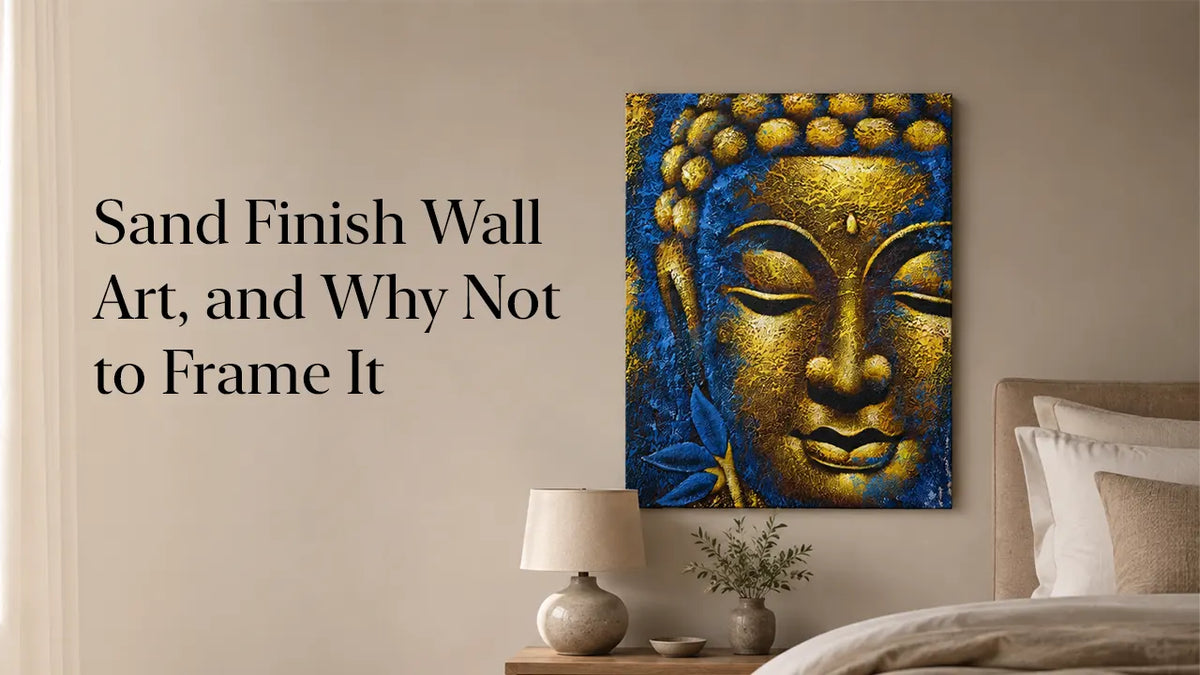
A granular textured surface applied to the canvas, giving physical relief rather than a printed image alone.
The distinction matters because textured effects are frequently printed rather than real. A printed texture looks textured in a photograph and is entirely flat in the hand, which means it behaves like any other flat print under light.
A genuine sand finish has depth you can see and feel. Under raking light every grain casts a tiny shadow, and the accumulation of thousands of small shadows is what produces the tactile quality even from a distance.

Why it changes through the day
The property that makes it worth owning, and the one nobody mentions when selling it.
Because the surface has relief, the appearance depends on the angle light arrives at. Morning light from one side produces different shadowing from afternoon light from another, and the piece looks subtly different at different hours.
A flat printed canvas does not do this. It looks the same at nine in the morning and four in the afternoon, because there is nothing on the surface for light to catch.
This is the same quality that makes carved objects rewarding and rough plaster more interesting than smooth. Surfaces that respond to light are more engaging over years than surfaces that do not, which is a decent argument for texture in a room you spend time in.
Why not to frame it
Glazing flattens it completely, which is the short answer.
Glass or acrylic in front of a textured surface adds a reflective plane between you and the relief. You lose the shadowing, you lose the tactile quality, and you gain reflections that compete with the image. The whole reason to choose a sand finish disappears behind the glass.
These are gallery wrapped, meaning the image continues around the sides, and they are designed to hang exactly as they arrive. There is no unfinished edge to hide.
If you genuinely dislike an unframed edge, a shallow float frame with no glazing is the only sensible option. Even that is unnecessary and it adds cost for no visual gain.
| Treatment | Effect on a sand finish |
|---|---|
| Hung as delivered | Correct. Full texture and shadowing |
| Float frame, no glazing | Acceptable. Adds a border without losing texture |
| Framed with glass | Texture lost, reflections gained |
| Framed with acrylic | Same problem, slightly fewer reflections |
Lighting it
Side light rather than front light, for the same reason as any textured or carved surface.
A picture light directly above and angled down works well, because the light rakes down across the surface and every grain casts a shadow beneath it.
A lamp to one side works equally well and costs nothing if you already own one.
A ceiling fitting directly in front is the worst option, because it removes the shadows that make the texture read. That is how most British rooms are lit, which is why so many textured pieces disappoint at home after looking good in a shop.
Warm at around 2700K. Cool white above 3000K drains the gold sand finish canvas particularly and pushes the grey sand finish canvas toward blue.
Which wall
Not directly opposite a window, where daylight arrives head on for much of the day and flattens the relief exactly when the light is best.
A wall perpendicular to the main light source is considerably better, because light rakes across it naturally for most daylight hours. That single choice makes more difference than anything else you can do, and it costs nothing.
It is also worth thinking about which side. In a north facing room the light is consistent and soft all day, which suits texture. In a south facing room the angle changes dramatically, which means the piece will look very different at different times, and whether that is a feature or a nuisance depends on you.
The colours
The sand finish comes in three single canvases at £39.99 each, plus the sets of four.
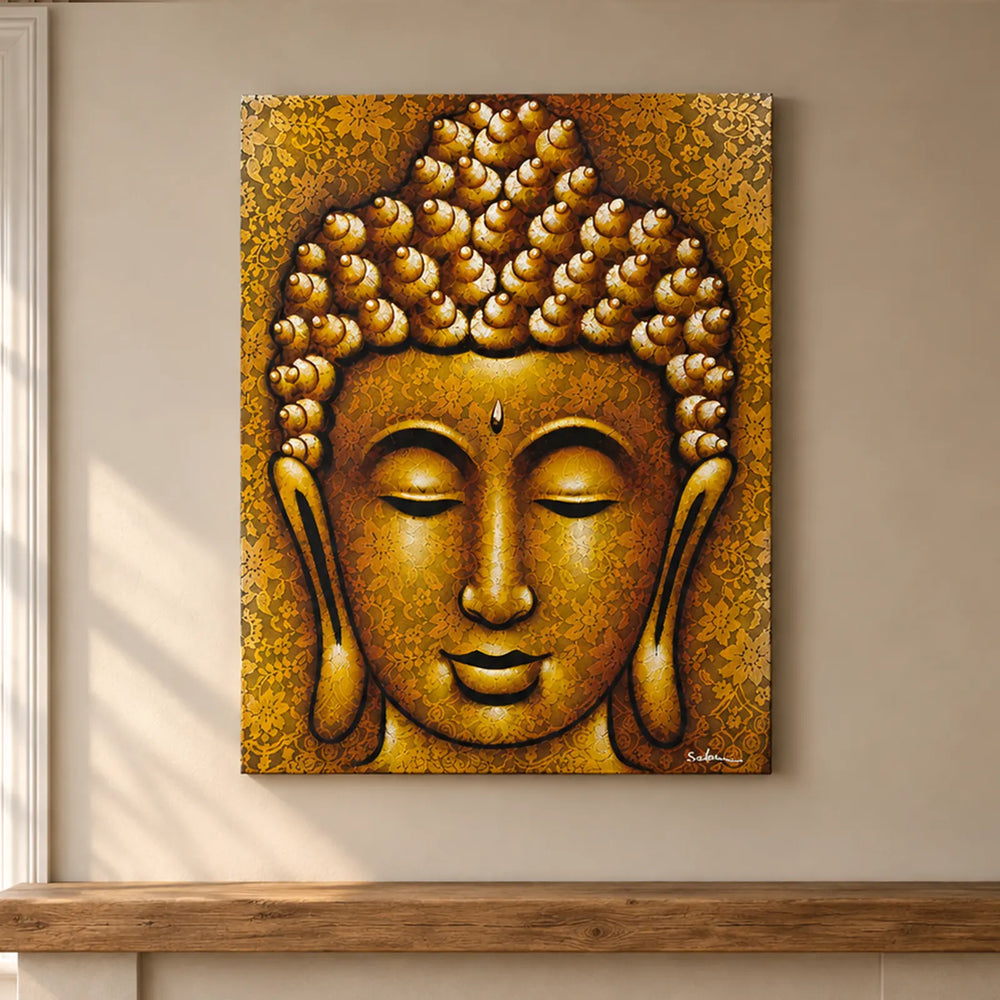
The gold sand finish canvas is the warmest and benefits most from warm lighting. Under a cool bulb it loses considerably more than the other two.
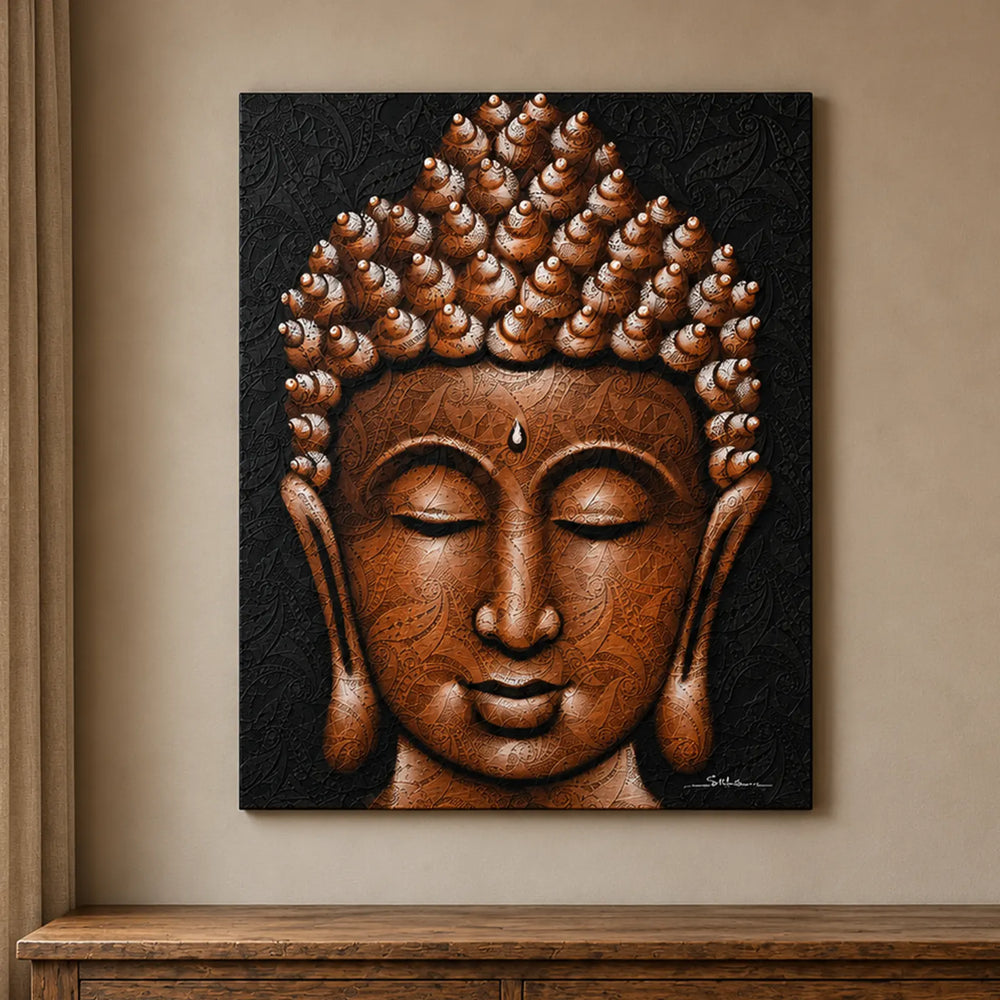
The grey sand finish canvas is the most neutral and suits a contemporary room. It is the safest of the three against any wall colour.
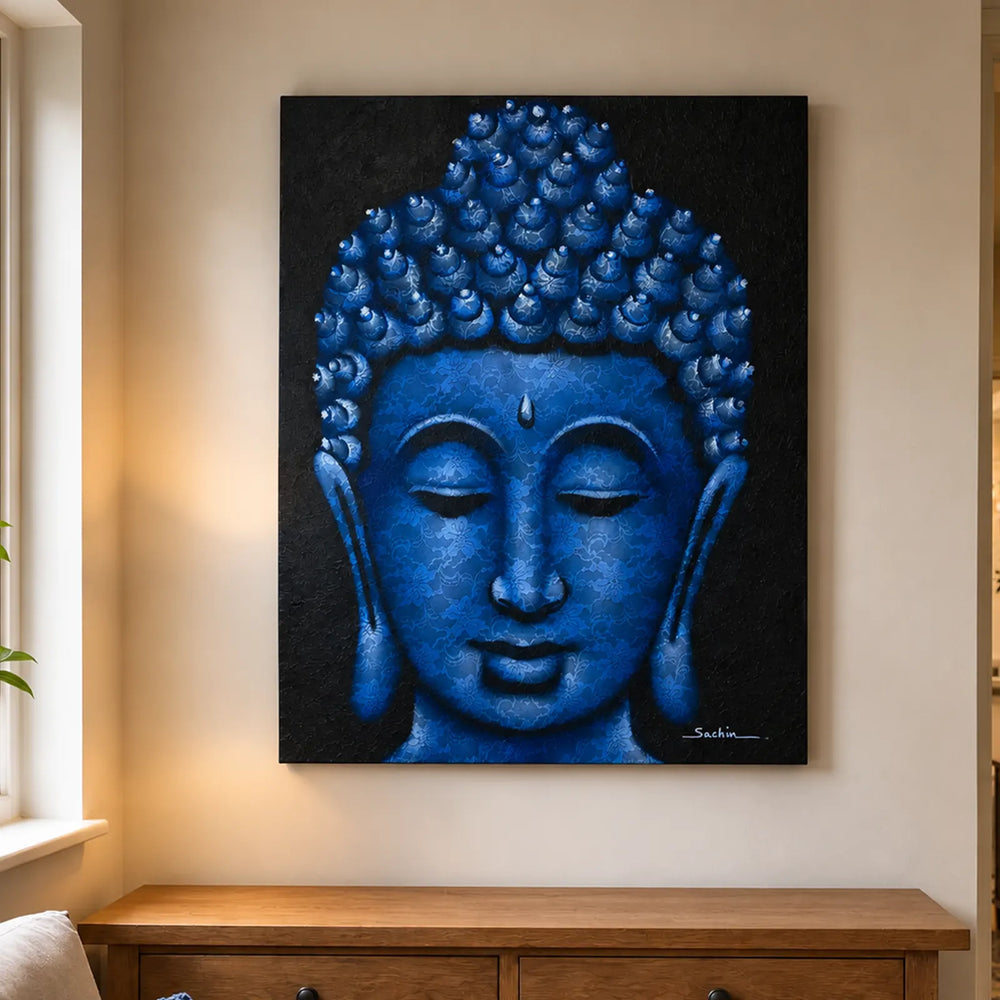
The blue sand finish canvas reads coolest and works well in British light, which is itself cool. In a north facing room it holds its character better than the gold does.
For a larger wall, the set of four Buddha heads at 30cm and set of four Buddha heads at 40cm cover the same finish across four pieces. Our guide to sets of four wall art covers hanging them.
Cleaning a textured canvas
Carefully, because texture holds dust in a way a flat surface does not.
Use a soft dry brush rather than a cloth. A cloth bridges over the relief and pushes dust deeper into the recesses rather than lifting it out, which makes the problem worse over time rather than better.
Never damp. Water on a textured canvas can mark it and can soften an applied finish, and unlike a flat print there is no way to wipe it evenly.
Never a vacuum nozzle directly against the surface. If you use a vacuum, hold the brush attachment slightly away and let the suction lift what the brush loosens.
Done once or twice a year, that is the entire maintenance requirement.
Bring that calm into your home with Rootandstill
Our Buddha wall art collection carries the sand finish in three single canvases at £39.99 and in sets of four at £39.99 and £49.99.
The grey sand finish canvas is the most neutral and the safest against any wall. The gold sand finish canvas is the warmest and wants warm lighting. The blue sand finish canvas holds its character best in a cool north facing room.
For a larger wall, the set of four Buddha heads at 40cm covers around 85cm square as a block, and the three heads canvas with gold detail gives multiple heads on a single canvas.
FAQ
What is a sand finish on wall art?
A granular textured surface applied to the canvas, giving physical relief rather than a printed effect. Every grain casts a small shadow under raking light.
Should I frame a sand finish canvas?
No. Glazing flattens the texture and adds reflections, which removes the whole reason to choose the finish. These are gallery wrapped to hang as they are.
How should a textured canvas be lit?
From one side or from above at an angle rather than head on, warm at around 2700K. Front lighting removes the shadows that make the texture read.
Which wall should it go on?
Not opposite a window, where daylight hits square and flattens the relief. A wall perpendicular to the main light source is considerably better.
How do I clean a textured canvas?
A soft dry brush, never a cloth, which pushes dust into the recesses rather than lifting it. Never damp, and never a vacuum nozzle against the surface.