

Repairing a chipped Buddha statue is straightforward when you match your materials to the statue’s composition, work methodically, and handle the piece with the care its spiritual presence deserves. Clean the damaged area thoroughly, removing all loose particles and surface grime. Choose a filler suited to the material — a colour-matched stone compound for stone or cast resin, epoxy putty for ceramic, and wood filler for carved timber. Apply the compound slightly proud of the surface, allow it to cure fully, then sand smooth and seal. The steps below take you through each stage in detail, from gathering your tools to returning the statue to its rightful place.
At a glance, the repair process covers:
- Cleaning and drying the damaged area before any product touches it
- Selecting the correct filler or adhesive for stone, resin, ceramic, or wood
- Filling chips or bonding broken pieces with a colour-matched compound
- Sanding the cured repair flush and blending the edges
- Sealing the finished surface with a breathable sealant
- Approaching every stage with the quiet respect the statue’s cultural significance calls for
What tools and materials do you need to repair a Buddha statue?
Getting your materials together before you start saves you mid-repair interruptions and keeps the workspace calm and ordered. The right supplies depend on what your statue is made from, so identify the material first.
- Stone or cast concrete statues: a colour-matched stone repair compound (grey and buff are widely stocked at UK garden centres; for an exact match, take a photograph to a specialist stone supplier), a palette knife, 180-grit sandpaper, and a breathable stone sealant
- Resin statues: a two-part epoxy filler or sculpting epoxy, fine sandpaper (180–240 grit), acrylic paint for touch-ups, and a clear acrylic sealant
- Ceramic statues: a ceramic repair kit or two-part epoxy adhesive, fine-grit sandpaper, and ceramic paint matched to the glaze colour
- Wooden statues: a wood filler or wood putty in a matching tone, a palette knife, fine sandpaper, wood stain or paint, and a wax or oil finish; for deeper guidance on wooden pieces, the wooden Buddha statue care guide covers material-specific considerations in full
- Essential tools for all materials: fine brushes, clean cloths, a small palette knife or spatula, and a mixing surface
- Safety items: nitrile gloves, a dust mask rated for fine particles, and good ventilation in your workspace. Asian lacquer, used in some traditional restoration work, is a known allergen; a risk assessment is advisable before handling any specialist restoration substance
- Colour matching: acrylic paints in earth tones (raw umber, burnt sienna, grey) help blend repaired patches on stone and resin; test on an inconspicuous area first
Pro Tip: Take a close-up photograph of the undamaged surface in natural light before you begin. It gives you a reliable colour reference when mixing paint to blend the repair.

How do you repair chips and reattach broken parts step by step?
The repair process for a chipped or broken Buddha statue follows a clear sequence. Rushing any stage, particularly drying time, tends to produce a repair that lifts or cracks within a season.
-
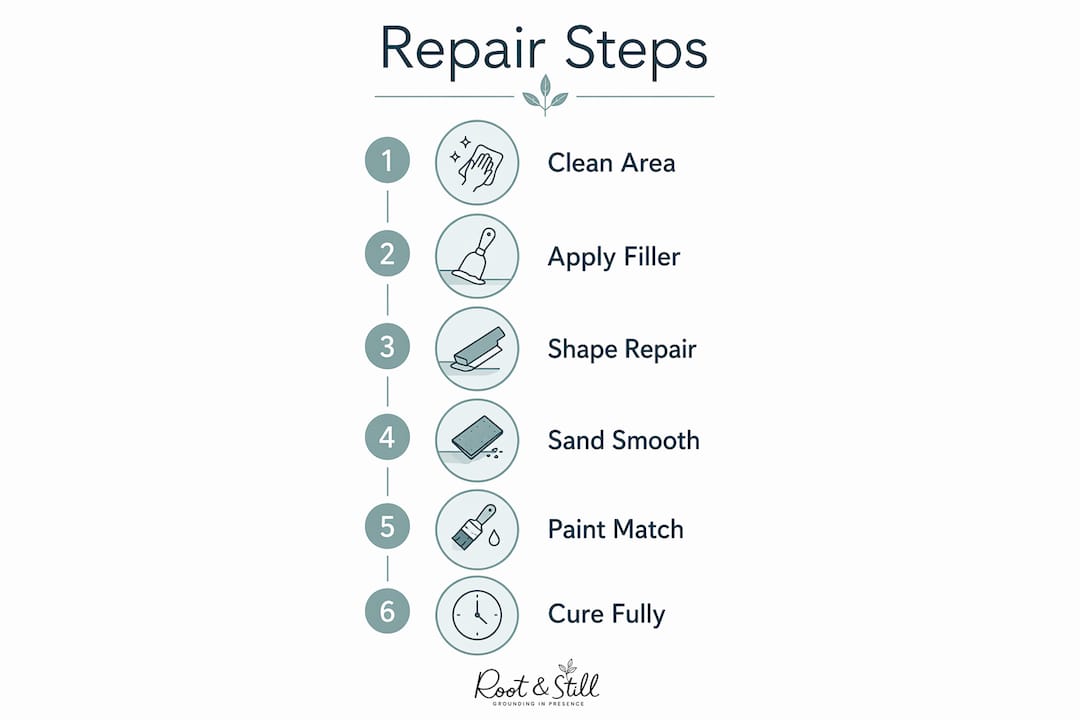
Clean the damaged area. Use clean water and a soft brush to remove dirt, moss, and loose fragments from the chip or break. For outdoor stone statues, let the area dry completely before applying any filler — at least 24 hours in summer, and up to 48 hours in cooler or damper conditions.
-
Mix your repair compound. Follow the manufacturer’s instructions precisely. For stone, mix the colour-matched compound to a stiff paste. For structural repairs on lacquered or carved wooden Buddha sculptures, professional conservators use epoxy with fillers such as calcium carbonate and glass microballoons to achieve both adhesion and flexibility. For a home repair on resin or ceramic, a standard two-part epoxy adhesive works well.
-
Apply the filler. Press the compound firmly into the chip or crack using a palette knife, slightly overfilling the area. This overfill is intentional — it gives you material to sand back to a flush, smooth surface once cured.
-
Reattach broken pieces. If a section has broken away cleanly, apply epoxy adhesive to both surfaces, press firmly together, and support the join with masking tape or a padded clamp while the adhesive sets. Avoid placing stress on the bond until it has fully hardened.
-
Allow full curing time. This is the step most people cut short. Most stone and epoxy fillers need 24–48 hours to cure properly. Keep the statue in a stable, dry spot away from frost or direct sun during this period.
-
Sand the repair smooth. Once fully cured, use 180-grit sandpaper to bring the filled area flush with the surrounding surface. Work in small, circular motions and check frequently. Finish with a finer grit (240 or above) to soften the edges and reduce visible texture differences.
-
Paint or stain to match. Mix acrylic paints to approximate the statue’s original colour and apply in thin, layered coats with a fine brush. Build up gradually rather than applying one heavy coat, which tends to look flat and obvious.
Pro Tip: Work in a well-ventilated space and wear your dust mask when sanding cured filler. Fine particles from stone compounds and epoxy dust are an irritant, and the mask costs far less than a respiratory problem.
How long should you wait before putting the statue back on display?
Curing time is not the same as drying time, and treating them as equivalent is the most common reason a repair fails within months.
- Allow the repair compound to cure fully before handling the statue. Most stone fillers and two-part epoxies reach working hardness within 24–48 hours, but full structural strength can take longer in cold or damp conditions.
- Keep the statue in a stable indoor environment during curing. Avoid humidity extremes, frost, and direct heat sources, all of which can cause the repair to shrink, crack, or delaminate before it has set.
- Do not apply pressure or stress to the repaired area until it is completely hardened. Even a firm grip in the wrong place can compromise a fresh bond.
- Once cured, seal the repaired spot with a breathable sealant. Breathable sealants allow any residual moisture to escape rather than trapping it beneath the surface, which is what causes decay in stone and resin over time. Wrapping statues in plastic traps moisture and promotes exactly this kind of damage, so use breathable fleece if covering the piece for winter storage.
- Place the statue on a raised base — pot feet or a small plinth — to prevent moisture wicking up from the ground and to reduce frost risk at the base.
- Buddhist tradition regards statues as sacred objects, and many practitioners choose to mark the completion of a repair with a re-blessing or consecration ritual. Research into Himalayan conservation practice shows that consecration rituals are considered as important as the physical restoration itself, renewing the statue’s spiritual integrity alongside its material form. Whether or not you follow a formal ritual, taking a quiet moment to acknowledge the statue’s significance before returning it to display feels right.
What challenges should you be aware of when restoring a Buddha statue?
Restoration is rarely as simple as filling a chip and walking away. Several factors can complicate the process, and knowing them in advance helps you make better decisions.
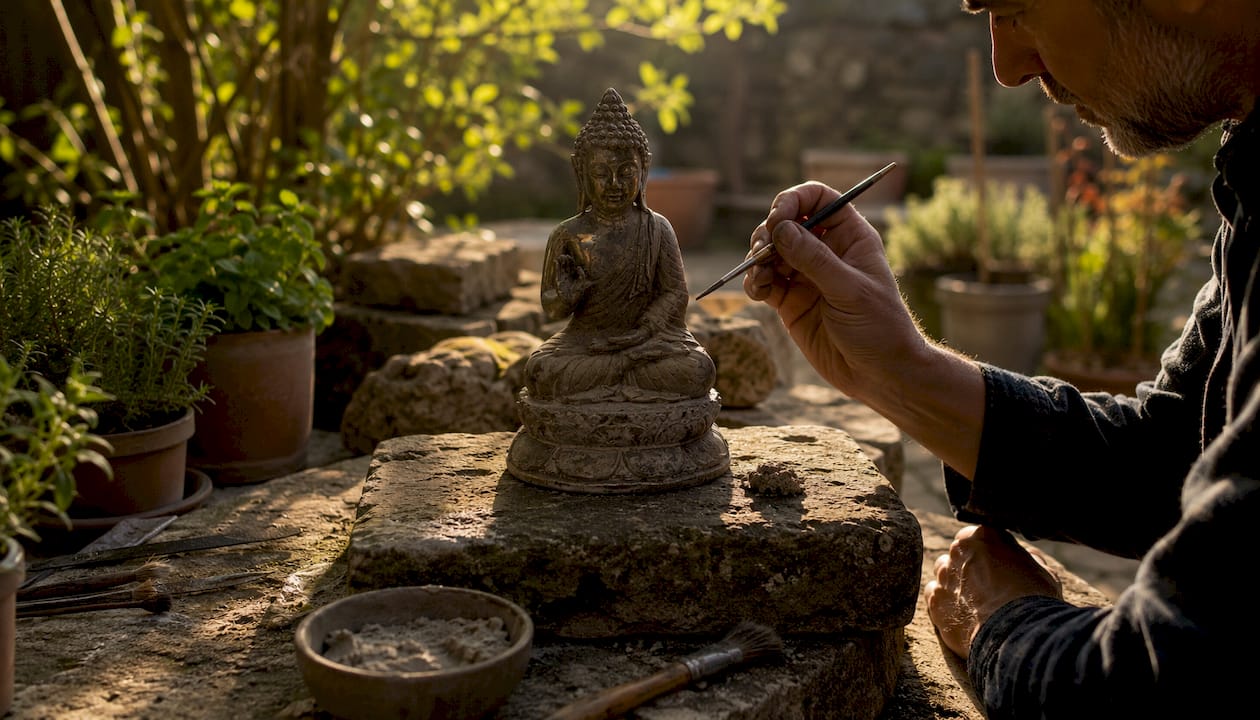
Material-specific fragility is the first consideration. Ceramic statues are brittle and prone to further chipping during sanding if you apply too much pressure. Stone statues, particularly those with a porous surface, absorb moisture readily, which accelerates frost damage if the repair is not sealed promptly. Resin weathers differently from stone and may need a UV-resistant sealant to prevent yellowing.
Visible repair marks are a genuine challenge, especially on statues with a textured or aged finish. Colour matching is the most effective tool here. Layering thin washes of acrylic paint over a cured, sanded repair blends the patch far more convincingly than a single opaque coat. Sanding through progressively finer grits (180, then 240, then 320) also reduces the visual boundary between old and new material.
Environmental damage accelerates quickly if left unaddressed. A small crack in an outdoor stone statue in autumn can expand dramatically by spring as water enters and freezes inside the fissure. Sealing chips within 48 hours of noticing them prevents this cycle from beginning.
The cultural and spiritual dimension of repair deserves genuine thought. Professional conservators working on Buddhist sculptures describe the process as a negotiated balance between physical stability and religious significance, with completeness valued over invisible repair. That framing is worth holding in mind at home too. A repair that is honest and careful, even if faintly visible, honours the statue more than a rushed fix that fails within a year.
When to call a professional. For structural cracks longer than 50mm, or for antique pieces worth over £200, professional restoration is the wiser path. A poor DIY repair on a valuable piece can reduce its worth further and may be irreversible.
How do you keep a repaired Buddha statue looking its best long term?
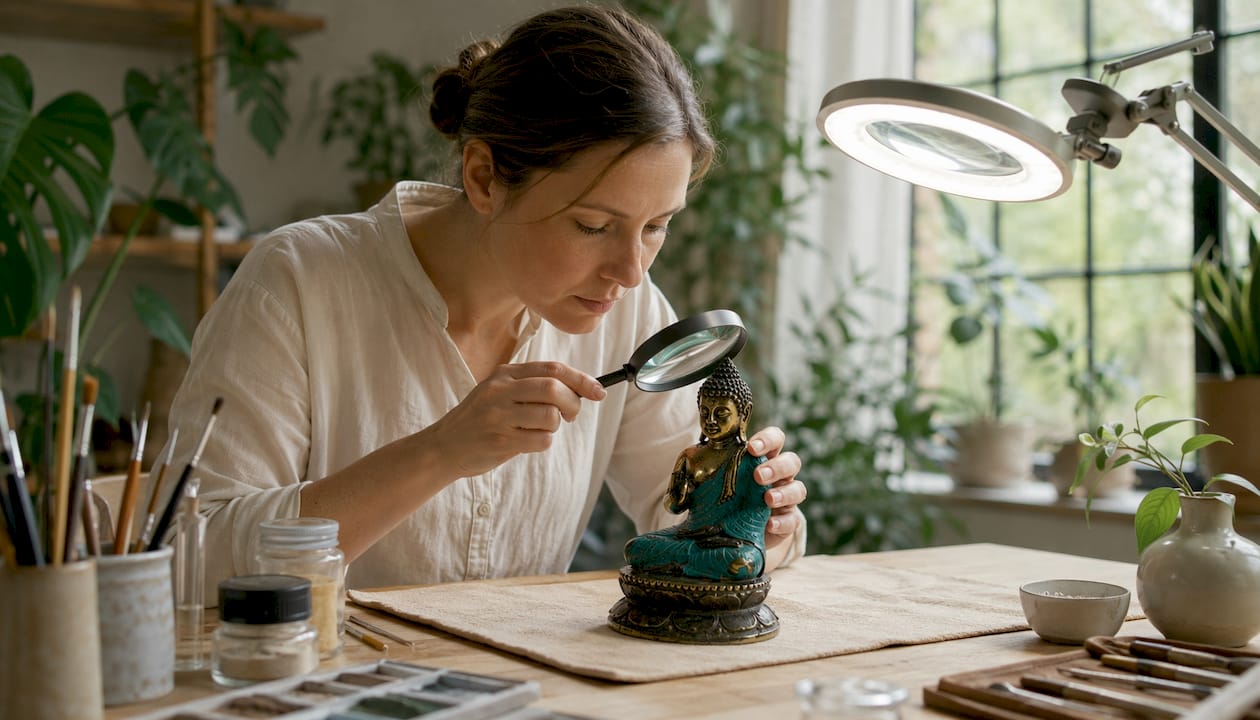
The repair itself is only one part of the story. Ongoing care is what determines whether the statue remains settled and whole for years, or whether you find yourself repeating the process each season.
- Brush the statue gently with a soft, dry brush monthly to prevent surface dirt and moss from taking hold. Moss and lichen hold moisture against the surface, which is the primary driver of long-term stone and resin deterioration.
- Deep clean twice a year using a mild soap solution and a soft brush, then rinse thoroughly and allow to dry fully before resealing. Rootandstill’s Buddha statue maintenance guide covers routine cleaning and placement in detail, including surface-specific advice.
- Inspect the repaired area and the rest of the statue each spring and autumn. Catching a hairline crack early means a simple, quick fix rather than a structural repair.
- Use a breathable sealant on the whole statue once a year, not just the repaired patch. This creates a consistent protective layer and prevents the repaired area from standing out as a visually distinct zone.
- In winter, raise the statue off the ground and cover it with breathable fabric rather than plastic. This single step prevents the majority of frost-related damage to outdoor pieces.
- After any major repair, consider a small consecration or blessing ritual if that practice feels meaningful to you. Buddhist care ethics, as observed in conservation work at the Namgyal Institute of Tibetology in Sikkim, extend beyond the physical to include immaterial spiritual concerns such as karma, merit, and the continuity of the statue’s sacred presence.
- Keep cleaning and sealing products away from your face and hands during application, and work in a ventilated space. Even mild sealants can irritate skin and airways with repeated exposure.
If your statue has reached the point where repair no longer feels sufficient, or if you are looking to add a complementary piece to your space, Rootandstill’s collection includes the Mini Hand Up Sitting Brass Buddha and the Antique Classic Buddha Figurine, both crafted with the kind of quiet presence that settles a room.
Key takeaways
Repairing a chipped Buddha statue well requires matching your filler to the statue’s material, allowing full curing time of 24–48 hours, and sealing the repair with a breathable sealant to prevent moisture damage.
| Point | Details |
|---|---|
| Match materials to the statue | Use stone compound for stone, epoxy for ceramic or structural joins, wood filler for carved timber. |
| Clean and dry before filling | Allow sufficient drying time before applying any filler, adjusting for ambient temperature and humidity… |
| Overfill, then sand back | Apply filler slightly proud of the surface, cure fully, then sand flush with 180-grit sandpaper. |
| Seal with a breathable product | A breathable sealant protects against moisture without trapping it, preventing decay beneath the surface. |
| Respect the spiritual dimension | Consider a re-blessing or consecration after major repairs, in keeping with Buddhist care traditions. |
FAQ
What should you do if your Buddha statue breaks?
Collect all the broken pieces carefully and clean the broken edges before attempting any repair. Use a two-part epoxy adhesive to bond the pieces, support the join while it cures, then sand and paint the repaired area to blend with the original finish.
How do you fix a chipped statue at home?
Clean and dry the damaged area thoroughly, then apply a colour-matched repair compound with a palette knife, slightly overfilling the chip. Once cured (typically 24–48 hours), sand the area flush with fine-grit sandpaper and seal with a breathable sealant.
Is it acceptable to keep a broken Buddha statue?
Many practitioners prefer to repair rather than discard a damaged statue, as Buddhist tradition values completeness and the continuity of the statue’s spiritual presence. A carefully restored statue, particularly one followed by a re-blessing, is considered entirely appropriate to keep and display.
When should you consult a professional restorer?
Seek professional help for structural cracks longer than 50mm, or for antique pieces valued at over £200, where a poor repair could cause irreversible damage or reduce the piece’s worth.


