A Laughing Buddha can be a thoughtful gift when the recipient wants one. The most useful question is not which pose supposedly brings the right kind of luck, but whether this particular person would welcome the figure and has somewhere suitable to keep it.
Check the recipient's wishes first
Do they already collect these figures, have they mentioned wanting one, or have they selected a particular design? If not, a discreet question is kinder than assuming that a cheerful expression makes the object religiously neutral. Budai and Hotei have religious as well as popular associations; The Met's Hotei record gives a useful introduction.
Do not infer preferences from someone's faith alone. Two people in the same community may want very different things for their home. If you are unsure, offer a choice or choose a gift unrelated to religious imagery rather than substituting another religious object on the assumption it must be safer.
Match the gift to a real space
Measure the intended shelf or surface if the recipient is comfortable sharing that information. Height is only one dimension: width, depth and the shape of the base matter too. There is no single safest statue height for an unknown home.
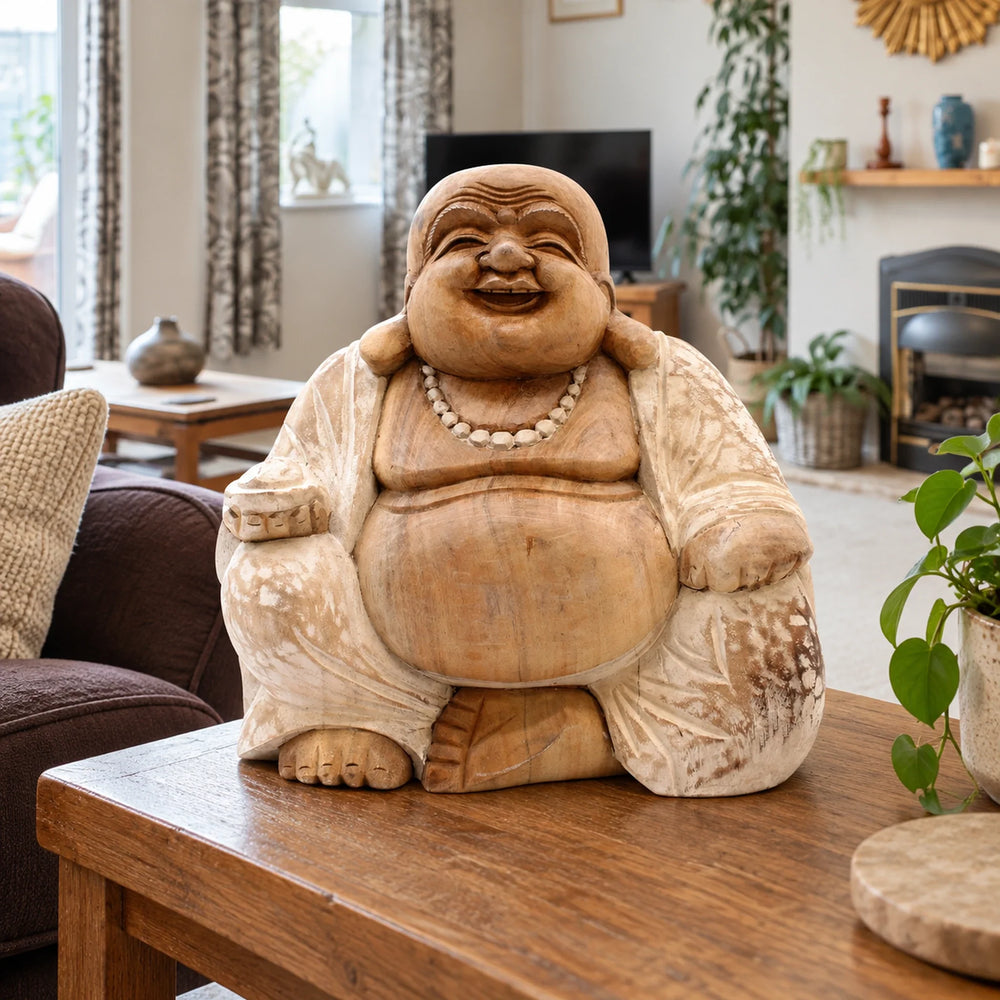
Allow room around projecting hands and other details. Consider who uses the room and whether the object could be knocked over. For a garden gift, require explicit suitability for the intended conditions on the exact product rather than assuming the material name is enough.
Compare the actual listing
- Check the material separately from colour and finish.
- Confirm the dimensions of the exact variant, not a similar design.
- For a set, check the piece count and each piece's size.
- Confirm which accessories are included; photographs may contain props.
- Read the current delivery and returns information before choosing a date-sensitive gift.
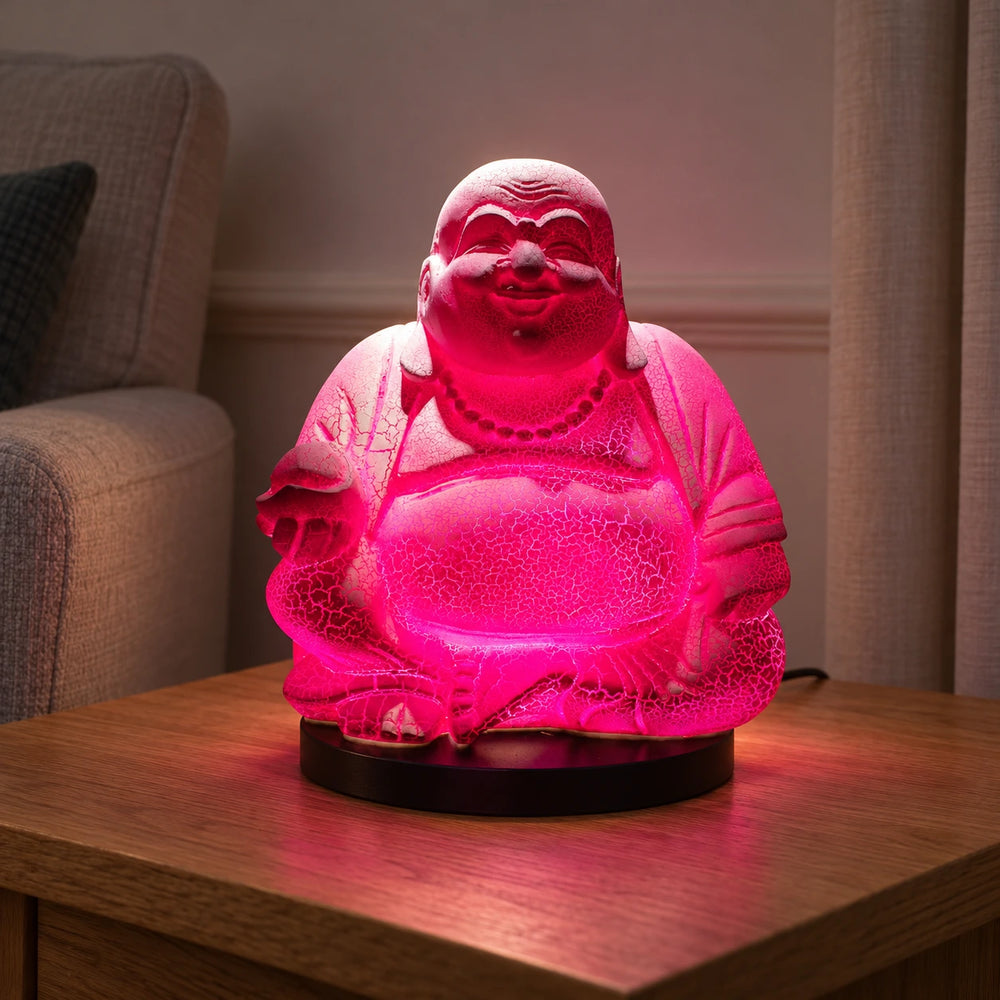
- If the item is a lamp, check the documented electrical and bulb specifications rather than treating it as an ordinary statue.
These checks help avoid practical disappointments without requiring you to become an expert in iconography. If something important is missing, ask before ordering.
Keep the message personal
You can explain why you chose the design without promising recovery, money or good fortune. For example: “You mentioned liking this figure, and I thought you would enjoy choosing a place for it.” A housewarming note might say: “A small gift for your new home, chosen with your favourite colours in mind.”
Those are suggested card messages, not traditional sayings or quotations. For someone who is ill or facing a difficult period, avoid presenting the gift as a remedy or attaching an obligation to be cheerful. Let their preferences guide the decision.
Make declining or exchanging easy
When possible, let the recipient see the design before purchase. Check the applicable returns terms, and do not promise an exchange unless those terms support it. A considerate gift leaves room for a different preference.
Browse the Laughing Buddha collection for individual specifications. If the recipient wants to know more about the subject, share our introduction to Budai rather than repeating an unsupported lucky-charm story.
Questions people ask
Is a Laughing Buddha suitable for everyone?
No gift is universally suitable. Ask about the recipient’s preferences and do not assume the figure is religiously neutral.
What size should I buy?
Choose from the available space and the exact item’s height, width, depth and base. There is no universal safest size for an unknown home.
What should I write in the card?
Explain your personal reason for choosing the gift. Avoid promises about health, money or luck, and do not present an invented message as a traditional quotation.