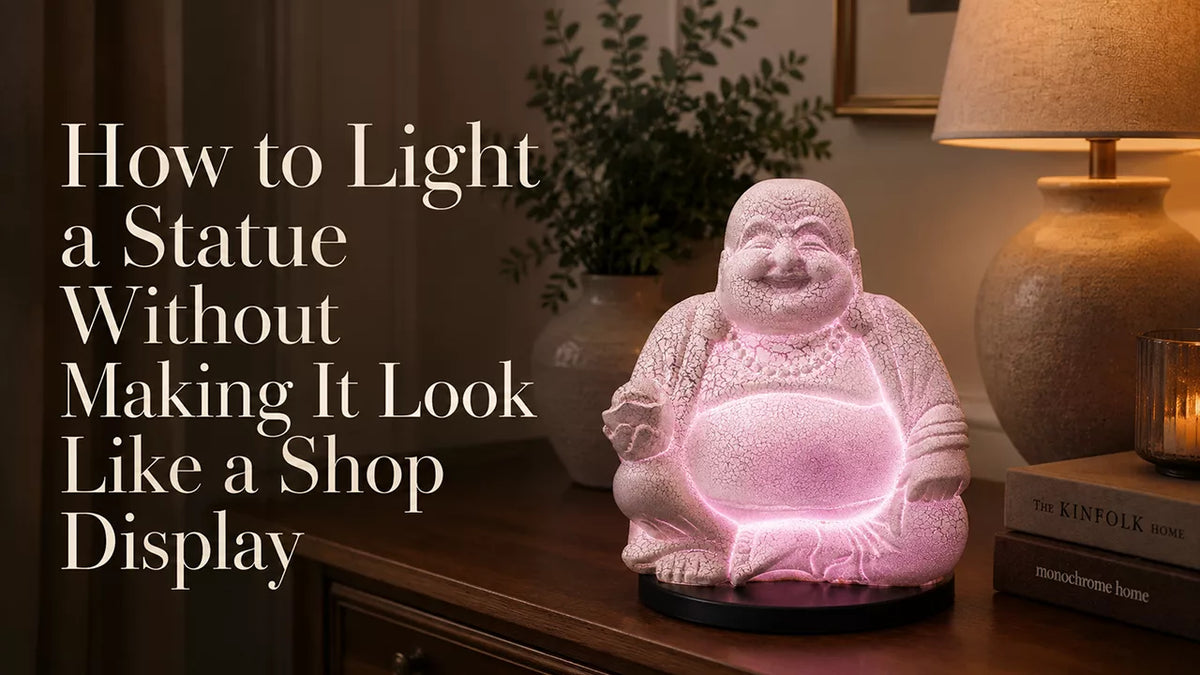
A statue can look different as the light changes through the day. Before buying a spotlight or moving the furniture, try an existing lamp in a few safe positions and compare what you can see from your usual seat. Treat the following arrangements as experiments, not rules that every room must follow.
First, choose what you want to notice
Is the attraction a carved surface, the overall silhouette or the colour of the finish? Look at the piece in daylight and with your normal evening lighting. Make a note of anything that bothers you, such as glare, a very dark face or a bright patch on the wall. One small adjustment may be enough.
Try side lighting for visible texture
Place a suitable lamp to one side, with a secure base and a clear cable route. Compare several positions rather than committing to a fixed angle. Look at the shadows across the face and surface from the place where you will usually view the figure.
If the shadows hide details you wanted to see, move the lamp or soften the effect. Strong contrast may appeal to you, but it is not automatically better than a gentler arrangement.
Try a softer wash for an even view
Use the room's existing lighting or a suitable shaded lamp to see whether a less directional arrangement feels more comfortable. This can be a useful comparison with a dedicated spotlight. Check the whole area, not just a close-up photograph of the statue.
Keep the lamp within the positions and clearances allowed by its manufacturer. Do not cover a light source with fabric or improvised materials to soften it.
Try a silhouette against a lit background
If the outline is what you enjoy, compare a safely positioned light aimed towards the background. Decide whether losing some surface detail is worthwhile. Check for glare and reflections from more than one viewing position before leaving the arrangement in place.
Colour temperature is only part of the picture
The US Department of Energy distinguishes the colour appearance of light from its rendering of object colours. A Kelvin label alone therefore cannot establish exactly how a painted or metallic finish will look.
Compare the actual lamp and object in your room. Warm or cool light can be a preference; there is no universal point above which every gold finish becomes grey or every room looks clinical. Consider the surrounding wall colours and your other lights as part of the comparison.
Keep compatibility and access in view
Only use a dimmer where the lamp, bulb and control are documented as compatible. Follow the specified bulb type, power limits and clearances. Keep cables away from routes where they can catch or trip someone, and leave access for switching off and routine care.
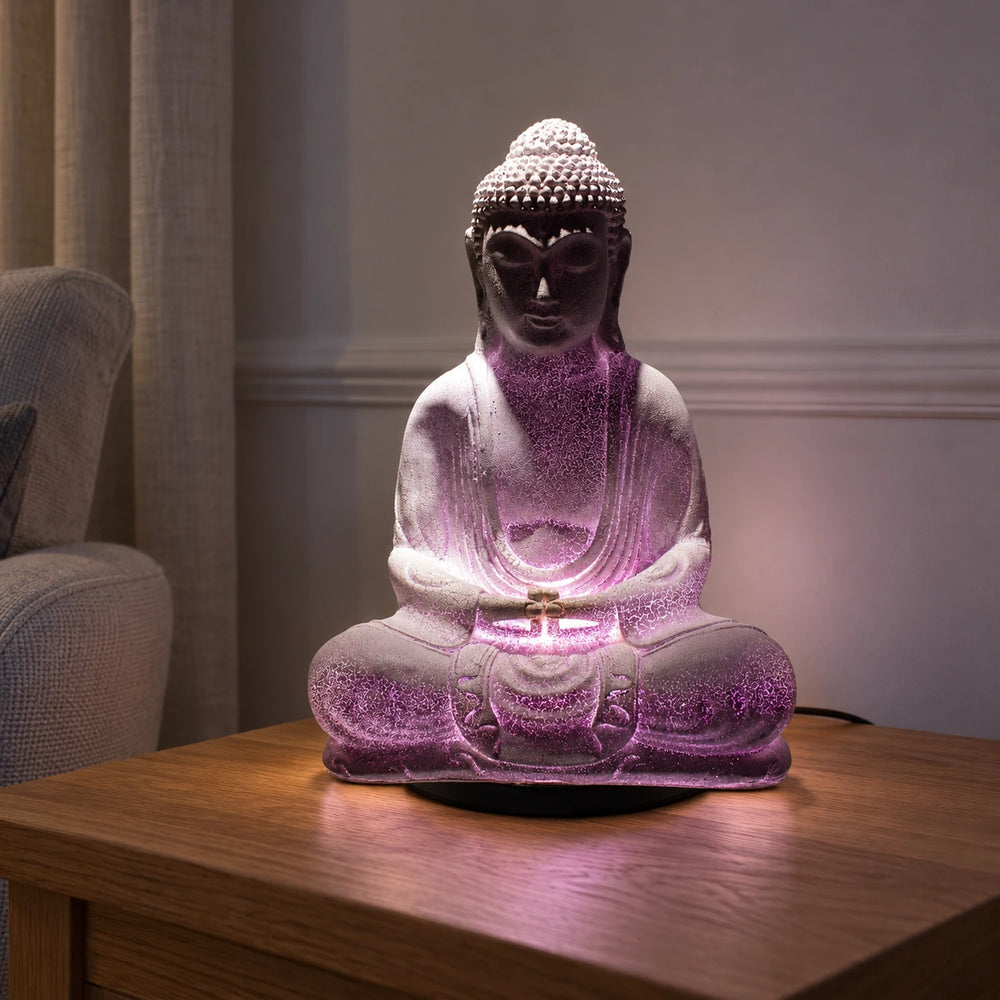
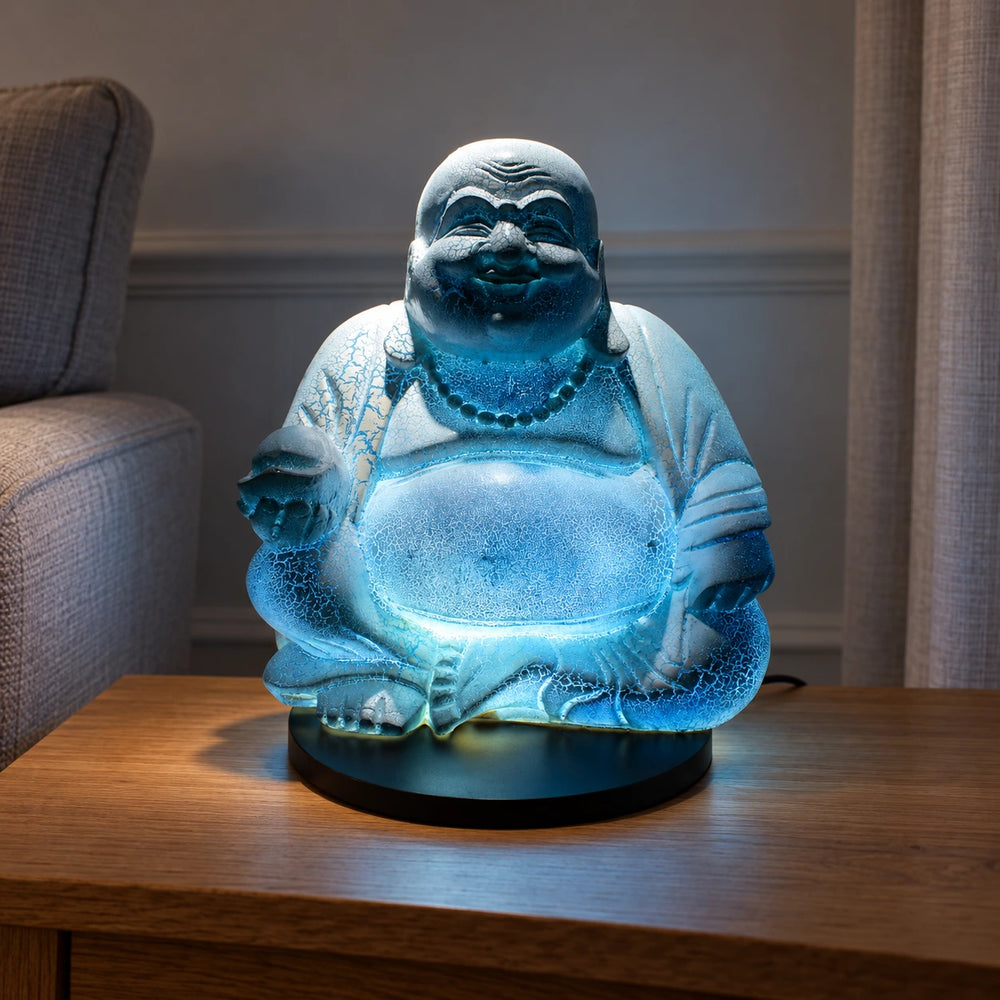
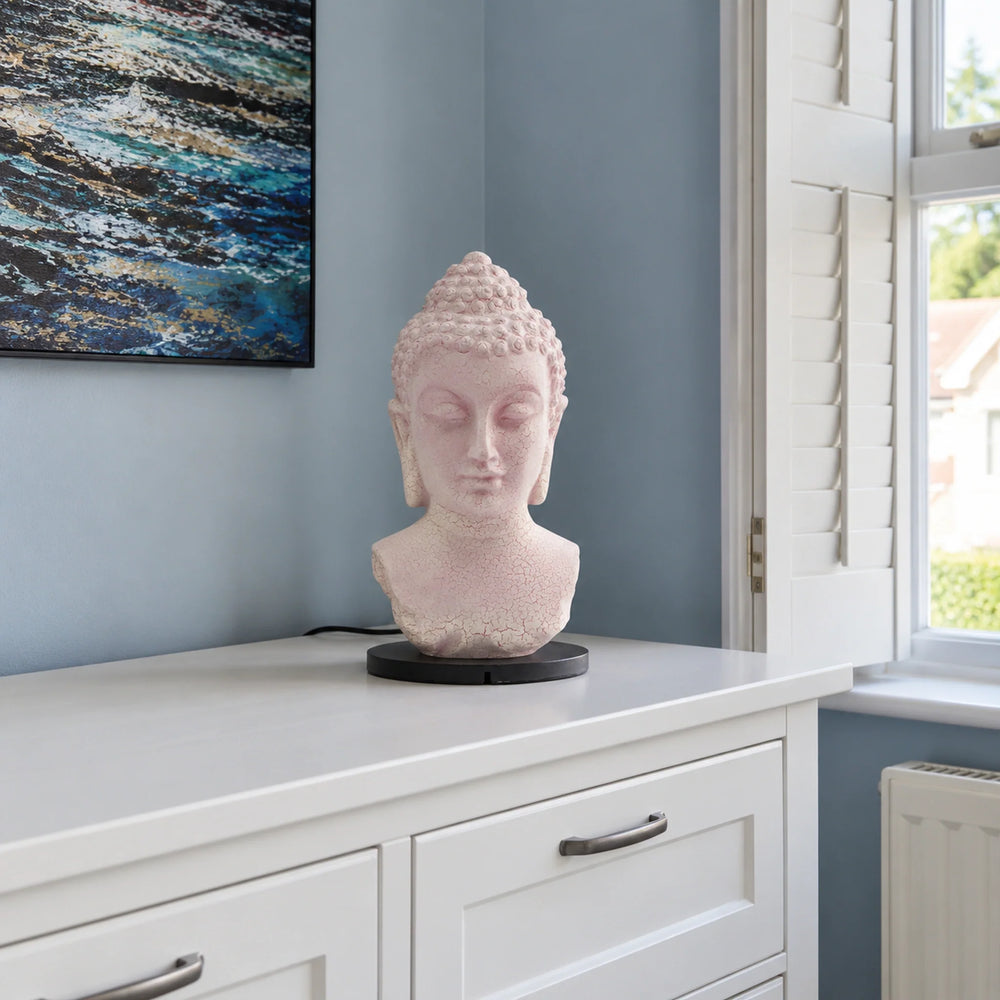
If you prefer a decorative lamp rather than a separately lit figure, compare the Buddha glow lamps. Check each listing for the actual stand, cable, power and bulb details; a built-in light does not remove the need to plan those practicalities.
Questions people ask
Is side lighting always best?
No. Compare a side light, a softer wash and a silhouette if your space allows. Choose the result you prefer from the normal viewing position.
Does a Kelvin rating predict every finish’s colour?
No. Colour temperature and colour rendering are different aspects of lighting. Compare the actual light and object in the room.
Can I put any decorative lamp on a dimmer?
Do not assume compatibility. Use dimming only when the lamp, bulb and control specifications support it.