Judge a canvas print by the information available about the actual product, not by one supposed shortcut such as fabric weight or frame depth. Ask for the details you need before ordering, and inspect the item without pressing or altering it when it arrives.
Find out what the listing includes
“Canvas print” does not tell you everything about its construction. Check whether the work is supplied rolled, stretched, framed or mounted on another support. Confirm the overall width, height and depth, not just the image size.
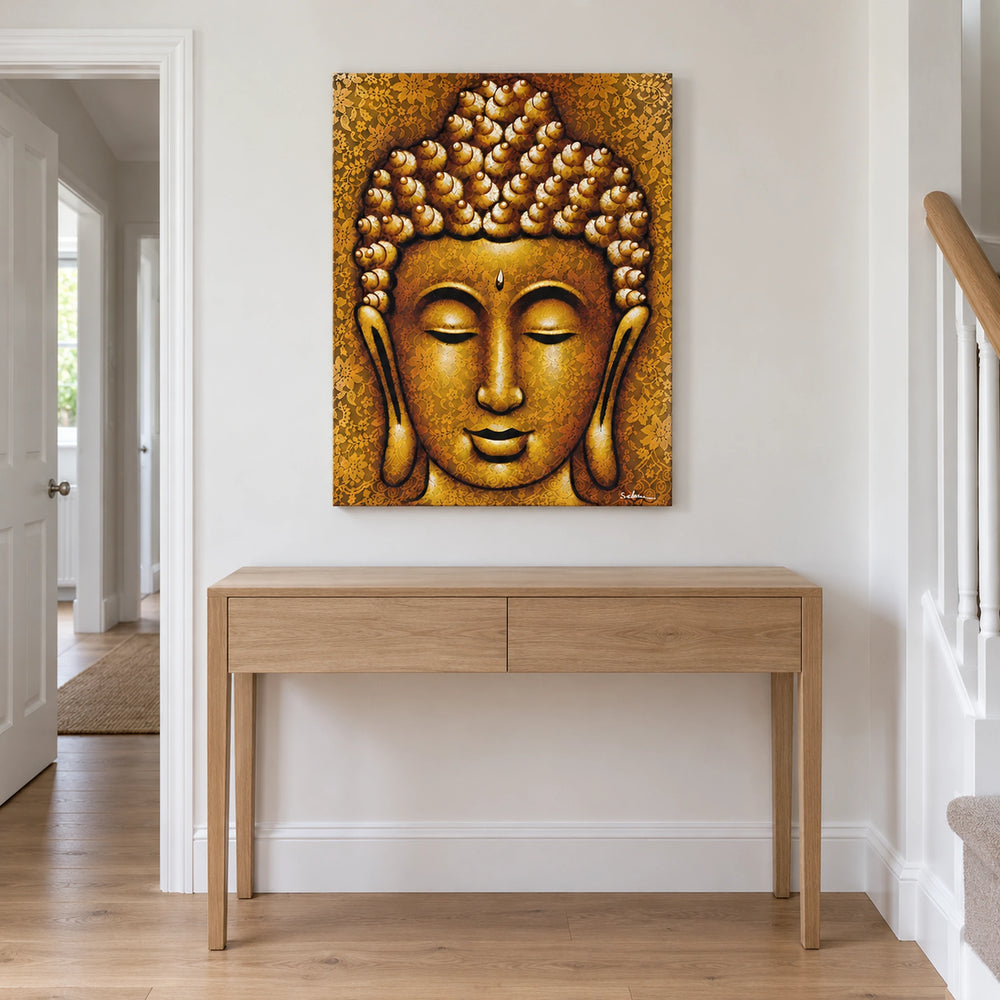
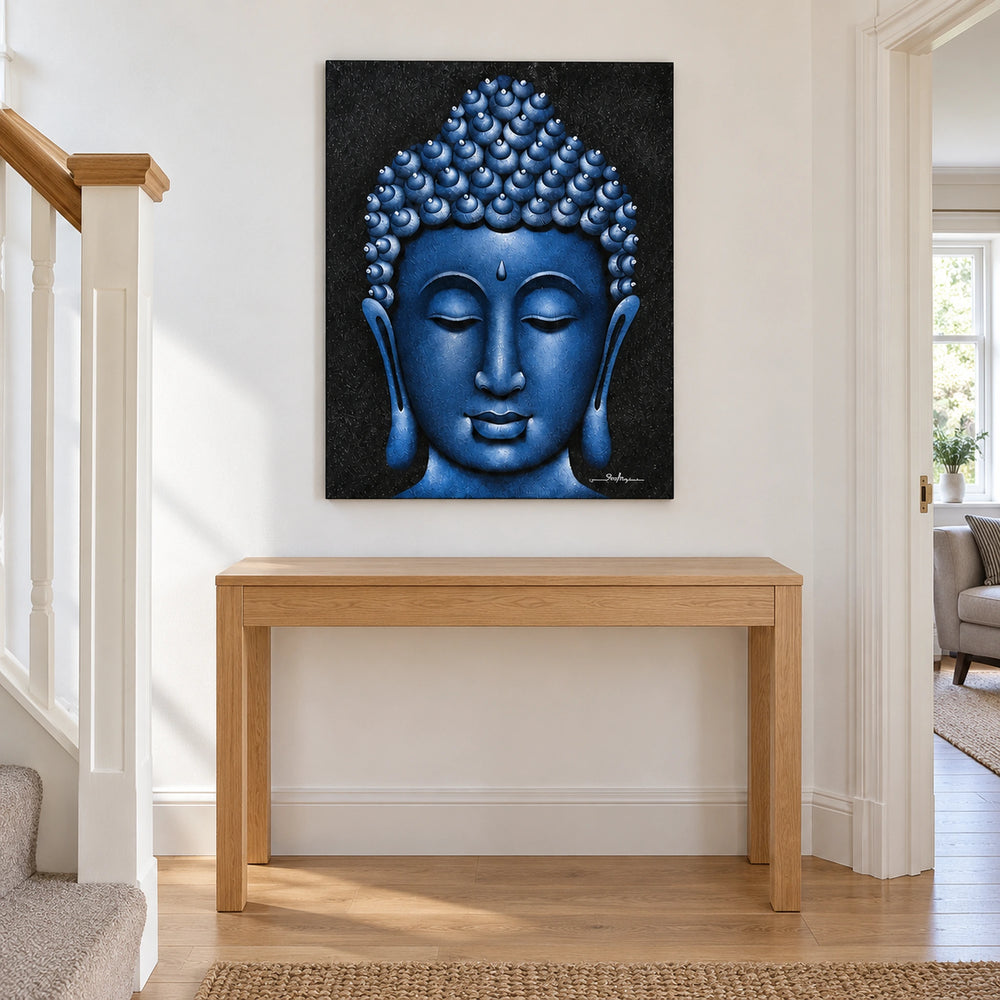
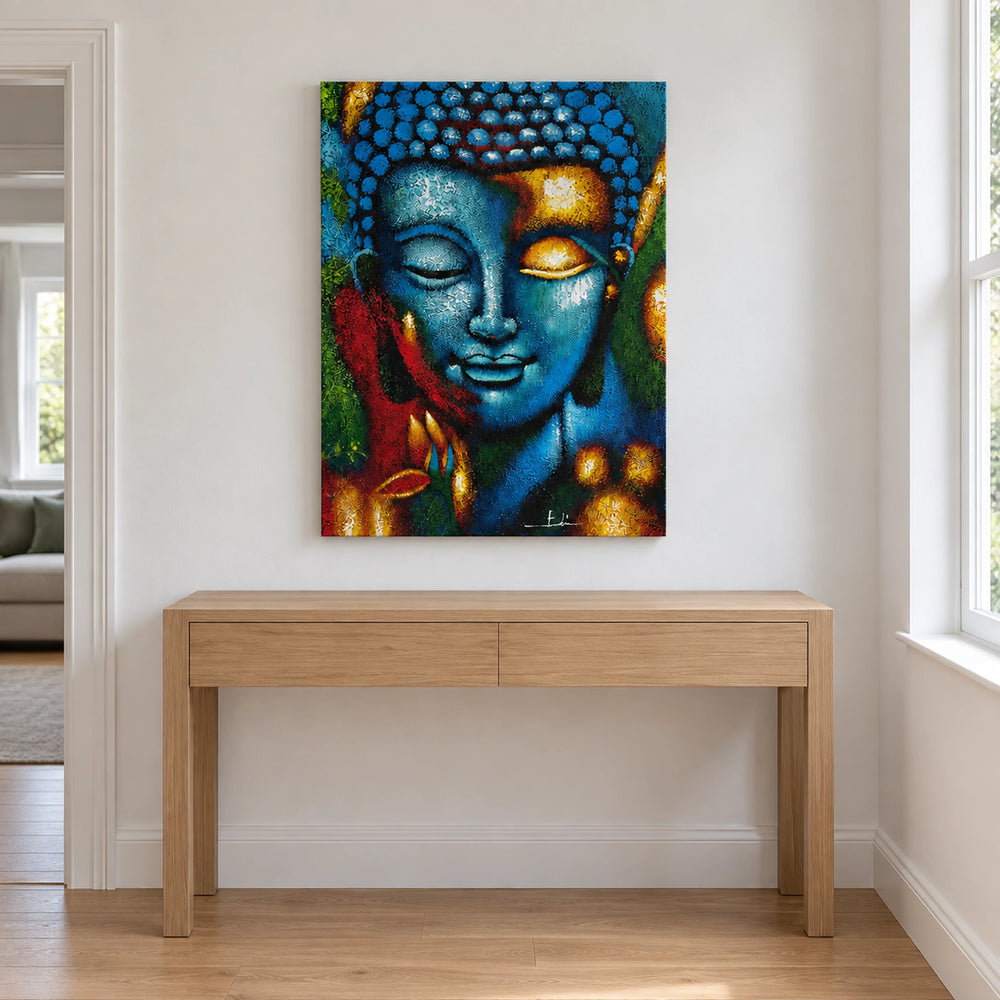
For the pieces in our Buddha art collection, use the individual listing for material and finish information. Do not assume every product in the collection uses the same fabric, ink, coating or support.
Ask for useful photographs
A clear front image helps you assess the composition. A close-up can show visible detail and texture, while side and rear views can clarify edge treatment and construction. If those views are missing and the detail matters to you, ask rather than infer it.
Screen settings and room lighting affect colour. A photograph can help you choose, but it cannot prove long-term fade resistance or show every aspect of workmanship.
Inspect without pressing the canvas
Do not push the surface to test whether it feels substantial. The Canadian Conservation Institute's handling guidance warns against pressure on the front or back of canvas paintings. Treat a print's surface with the same caution and follow its own handling instructions.
Look for visible damage, distortion, loose components or marks without poking, stretching or removing parts. Photograph an apparent problem and contact the seller before attempting a repair.
Check the support, not a single quality badge
Ask what support is supplied and how it is intended to be hung. Deep bars, corner wedges or a cross brace do not, on their own, prove the whole product is better made. The appropriate construction depends on the work and its size.
If corner keys are present, do not hammer them to tighten a new purchase. Tension adjustment can affect the artwork and should follow appropriate professional or manufacturer guidance. Missing keys are not proof that a fixed-corner support is defective.
Compare edges and surface finish
Check whether the image continues around the sides, the edge is mirrored or a plain colour is used. Choose the treatment you prefer; a plain edge is not automatically a cheaper or unfinished product.
Ask whether visible texture is physically applied or part of the printed image. Matt and gloss finishes give different reflections, but neither is universally correct for a British room. Look at the likely window and lamp reflections where you plan to display it.
Ask about care and display conditions
Do not assume a coating makes a print washable, or that an ink label guarantees a particular lifespan. Request care instructions for the exact finish. Avoid applying water, cleaning products or a brush when the maker has not confirmed that method.
The Canadian Conservation Institute's painting-care guidance explains risks from direct sunlight, unstable conditions and inappropriate cleaning. It concerns paintings rather than certifying any particular commercial print; use product-specific guidance and seek qualified advice for valuable or damaged works.
Before hanging
- Confirm the overall dimensions and available wall space.
- Check which fittings are supplied and whether they suit the item.
- Choose wall fixings for the actual load and wall construction.
- Keep the artwork clear of likely knocks, splashes and direct heat.
Our framing guide covers presentation choices, while the above-sofa guide helps with planning the arrangement.
Questions people ask
Can I test quality by pressing the canvas?
No. Inspect visually and ask for construction details rather than risking damage.
Do corner wedges guarantee quality?
No. They are a feature of some supports, not a complete quality test.
Can every canvas print be dry-brushed?
No. Check the instructions for the exact surface and its condition.