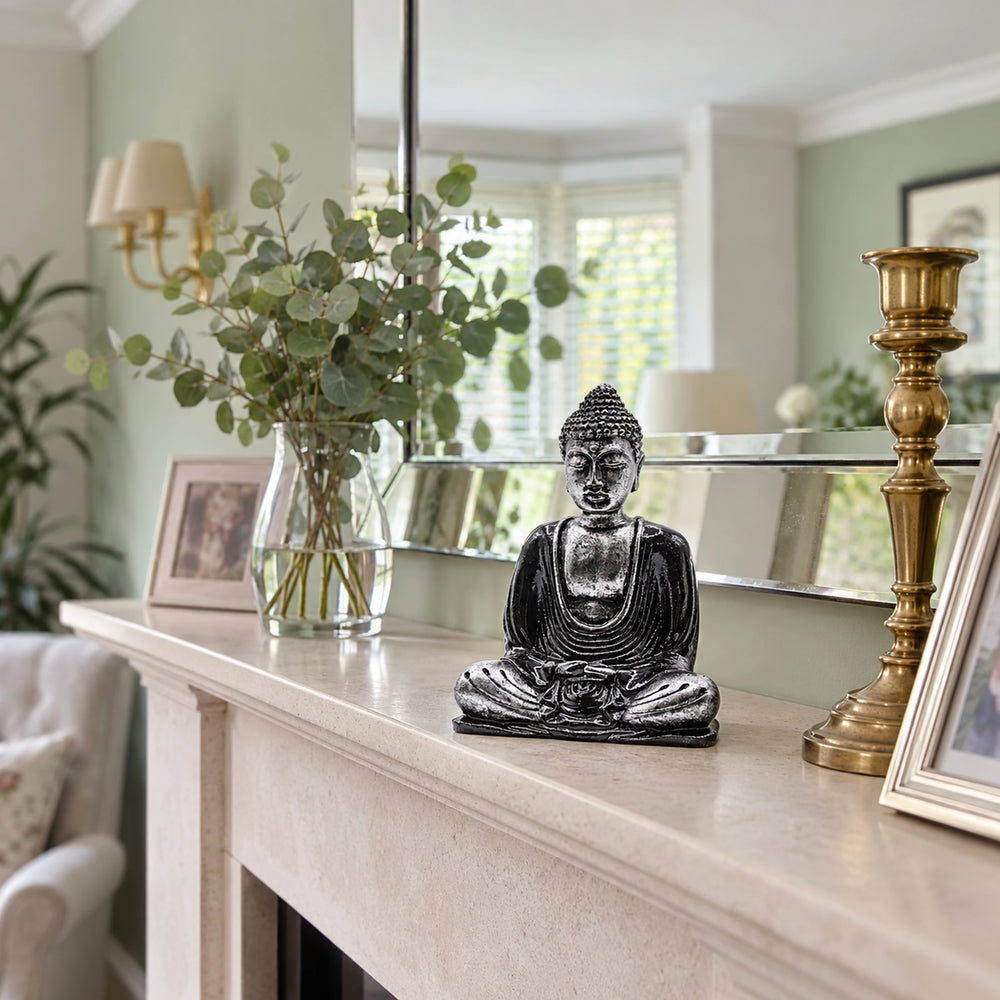
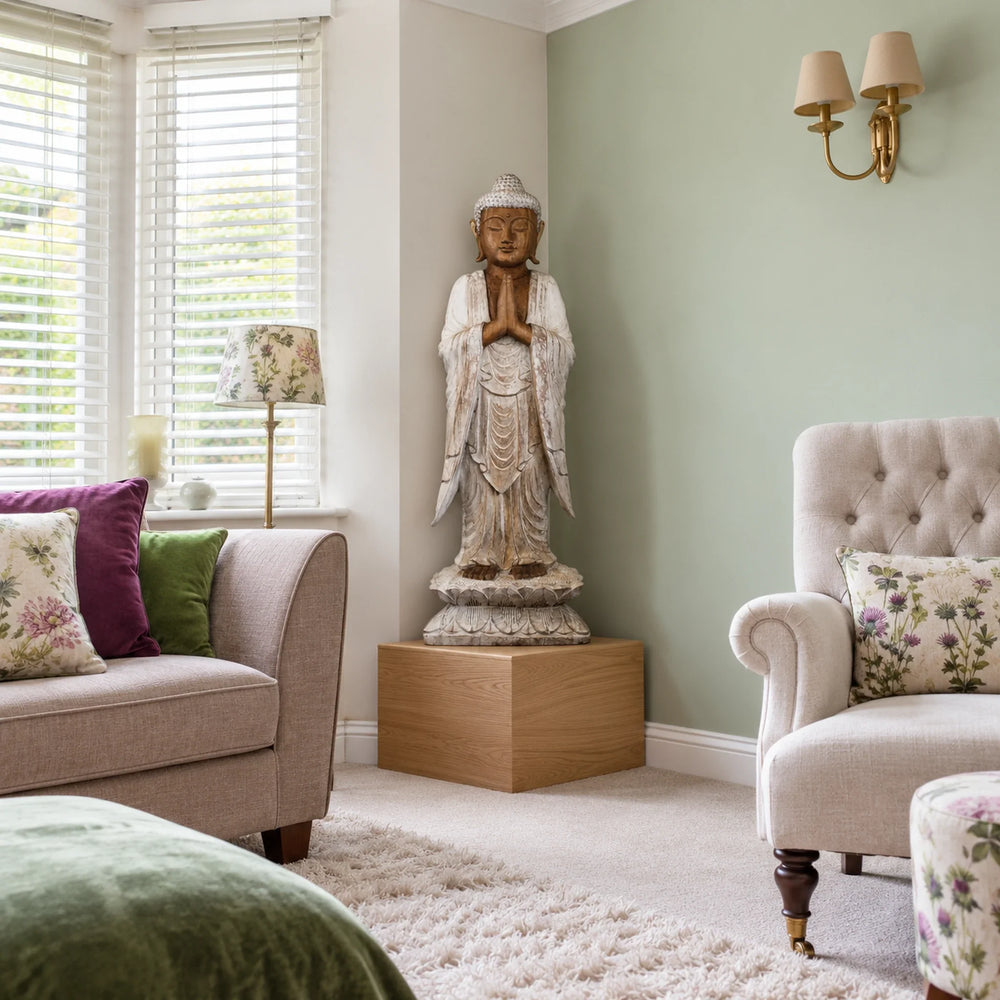
Once you know a Buddha statue would be welcome, the practical question is which one. Start with the person and the space, then compare the actual product information. A universal “safest statue”, fixed price ladder or standard height cannot make that decision for every home.
First, make sure the image is wanted
Ask whether the recipient has a particular figure or style in mind. A religious image may carry more significance than an ordinary ornament. If you are unsure, read our Buddha-gift etiquette guide before selecting a pose. Choosing together can be a thoughtful part of the gift.
Compare material and finish separately
Our hand-carved Buddha collection is a starting point for wooden pieces, while brass Buddha figures offer another material to consider. Read each listing: do not transfer one item’s wood species, origin, weight or construction to the whole collection.
A brass-coloured finish is not the same as solid brass. A vintage-style finish is not evidence of antique age. Nor is one material automatically the more thoughtful gift. Choose the appearance and care requirements that suit the recipient, with the specification stated plainly.
Measure width, depth and weight as well as height
A 30cm figure does not fit every shelf simply because its height sounds modest. Measure the intended surface and leave room around projecting hands, robes or other details. Check the stated weight against the furniture’s capacity, and make sure the base can sit fully supported without obstructing everyday use.
If you do not know the space, ask for measurements or let the recipient choose. Do not equate a larger statue with a better gift.
Check the intended environment
Do not assume resin is waterproof, stone is frostproof, or a covered outdoor position makes a wooden statue suitable for the garden. Coatings, construction and manufacturer instructions matter. For bathrooms, conservatories and outdoor spaces, require explicit suitability for the exact item.
For wood, stable indoor conditions away from strong heat and direct sun are a sensible starting point. The Canadian Conservation Institute explains that changes in humidity can cause swelling, shrinkage and cracking, while light can damage wood and finishes. This risk does not end after the first month.
What photographs can and cannot prove
Look at clear photographs of the front, back and base to understand the form and finish. However, tool marks, asymmetry, visible grain, weight or price alone do not prove that a piece was hand carved. Ask for documented manufacturing and origin information when those claims are important to you. Do not scratch, soak or otherwise test a finish to authenticate it.
Set a budget using the current listing
Compare the current price, delivery information and availability for the exact option you intend to buy. Prices quoted in older articles may no longer apply. Keep enough in the budget for any stated delivery costs or required accessories, and do not assume that gift wrapping, engraving or a gift-card service is offered.
A glow lamp is a different kind of gift: check its documented electrical requirements and included components, rather than assuming it is simply a sculpture with a bulb supplied.
Delivery, inspection and care
Plan any onward journey around the actual size and weight. Keep the protective packaging while checking the delivery and until it is no longer needed. Follow the current store policy if something arrives damaged. A crack or loose part should be assessed, not automatically dismissed as natural character.
Pass on the care instructions supplied for that product. Do not promise a maintenance-free lifespan, or apply oils, waxes or cleaning products without confirming that they suit the finish. An attractive surface should not be treated as proof of durability.
Add a personal note, not an invented history
Explain what made you think of the recipient. If you mention the figure or gesture, use a reliable description; our guide to gift meanings and poses separates interpretation from personal wishes. Leave the final placement to them.
Questions people ask
Wood or resin?
Neither is universally better. Compare the exact specification, finish, suitability and the recipient’s preference.
Which size is safest?
The size that fits the measured space and can be supported securely. Height alone is not enough.
Can I identify hand carving from a photograph?
A photograph can reveal details to ask about, but it is not conclusive evidence of the production method.
Are fine cracks always harmless?
No. Record the condition and ask for advice rather than assuming every crack is normal or merely decorative.