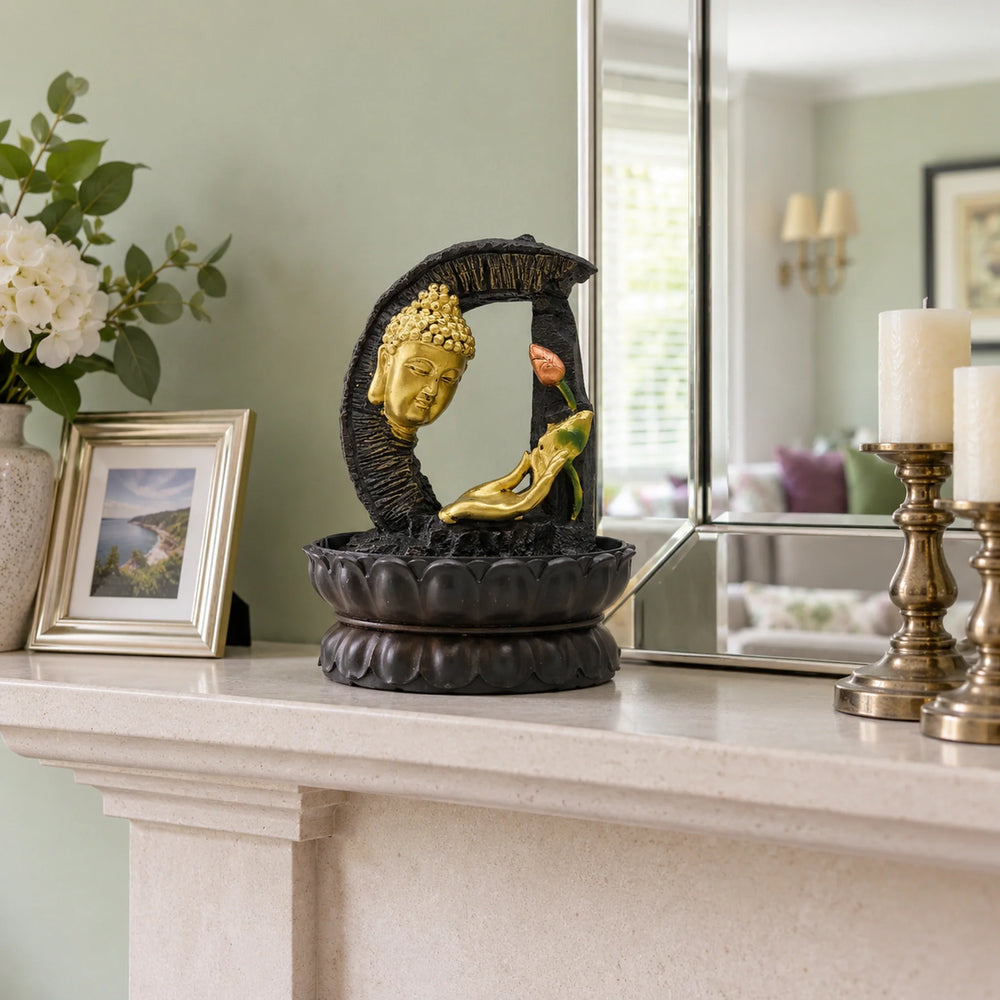
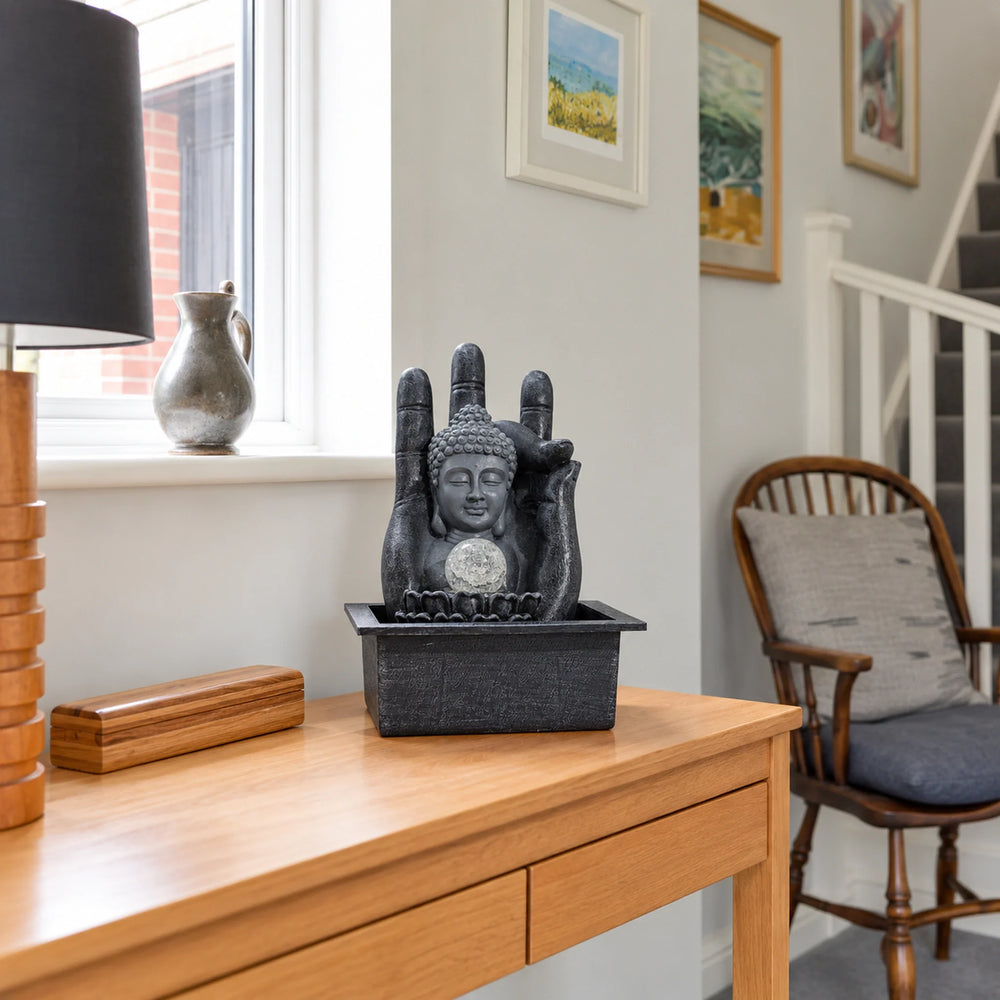
A tabletop fountain can make both water sound and mechanical pump noise. Neither the height of the ornament nor a photograph tells you how loud it will seem in your room. Listen to the particular model where possible, and consider whether you enjoy continuous sound before choosing one.
Separate water sound from pump noise
Water falling into a reservoir can trickle or splash, while a pump may produce a steady hum. A new rattle, grinding noise or marked change in sound calls for a check; it should not simply be accepted as part of the effect.
Switch off and disconnect the electrical supply safely before touching the water or repositioning components. Check the water level, pump mounting and accessible intake according to the instructions. Do not move a pump away from its intended mounting or submerge parts that are not designed for water.
Adjust only what the design allows
Some pumps have an approved flow adjustment, while others do not. If yours does, follow its instructions and remain within the permitted settings. Changing flow can alter the water sound, but it is not a guaranteed cure for motor noise, splashing or a fault.
The shape of the water path and receiving surface also affect the sound. Do not overfill a reservoir, alter the structure or obstruct the outlet to try to make it quieter. Use the stated water level and assembled configuration.
Choose the room and listening position
The same fountain can seem more noticeable when the rest of a room is quiet. There is no universal time when this happens, and people differ in which sounds they find pleasant.
For a bedroom, consider using it while awake first. A smaller fountain is not necessarily quieter, and running water is not a promised sleep aid. Follow the product’s operating instructions, including any limits on running time.
In a home office, test the sound during a call using your normal microphone settings. In a living room, listen from your usual seat with the television both on and off. These checks are more useful than assuming every room of a certain type will suit it.
What to check before buying
- Whether a recording or demonstration is available for the model.
- Its power, water-level and maintenance requirements.
- Whether the proposed surface supports the filled weight and allows safe access.
- Whether you would still enjoy the object if you prefer switching it off during quiet activities.
Compare our tabletop water features, then read about moisture and placement and fountain maintenance.
Questions people ask
Are tabletop fountains silent apart from the water?
Not necessarily. A pump can be audible, and the surrounding surface and room affect what you hear.
Will turning the flow down make it quiet?
Only use an adjustment if the instructions permit it. It may change the water sound, but does not establish that the pump is working correctly.
Can I compare loudness from a video?
A recording helps you hear the character of the sound, but microphone distance, recording settings and playback volume prevent a reliable loudness comparison unless those conditions are controlled.