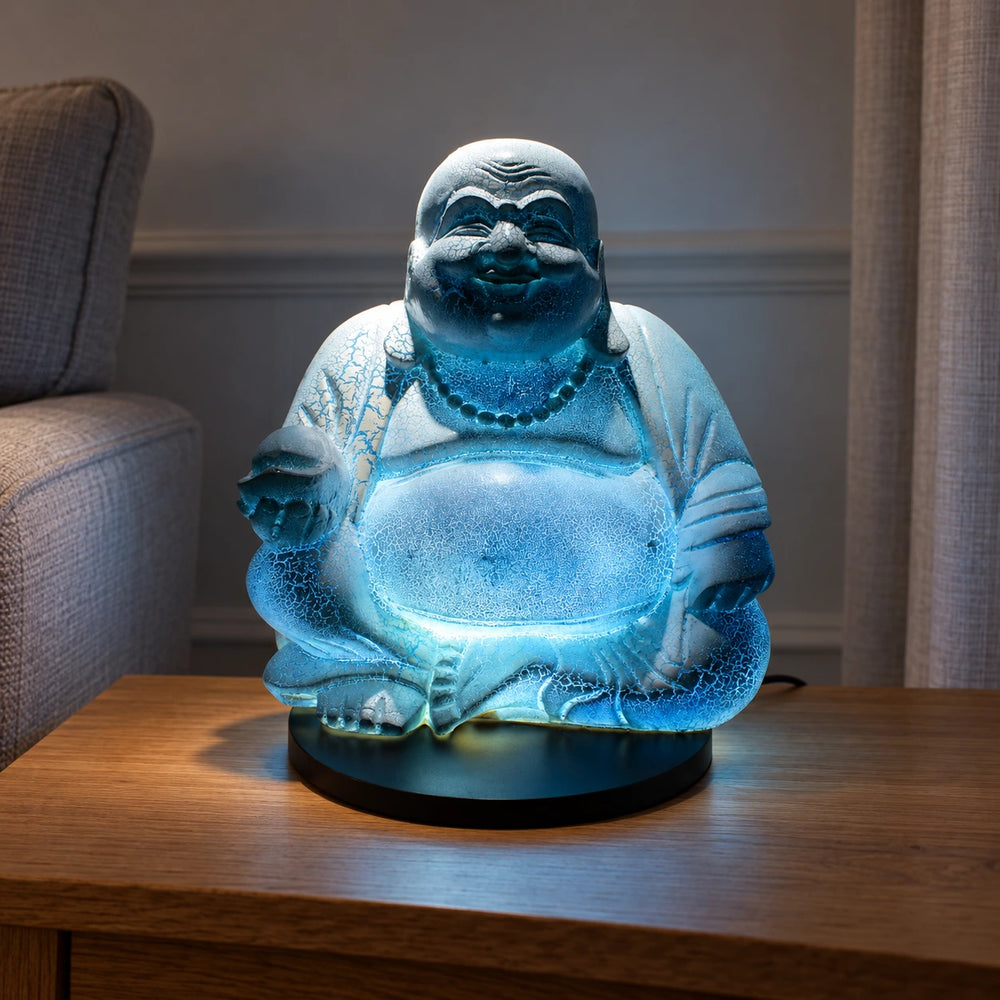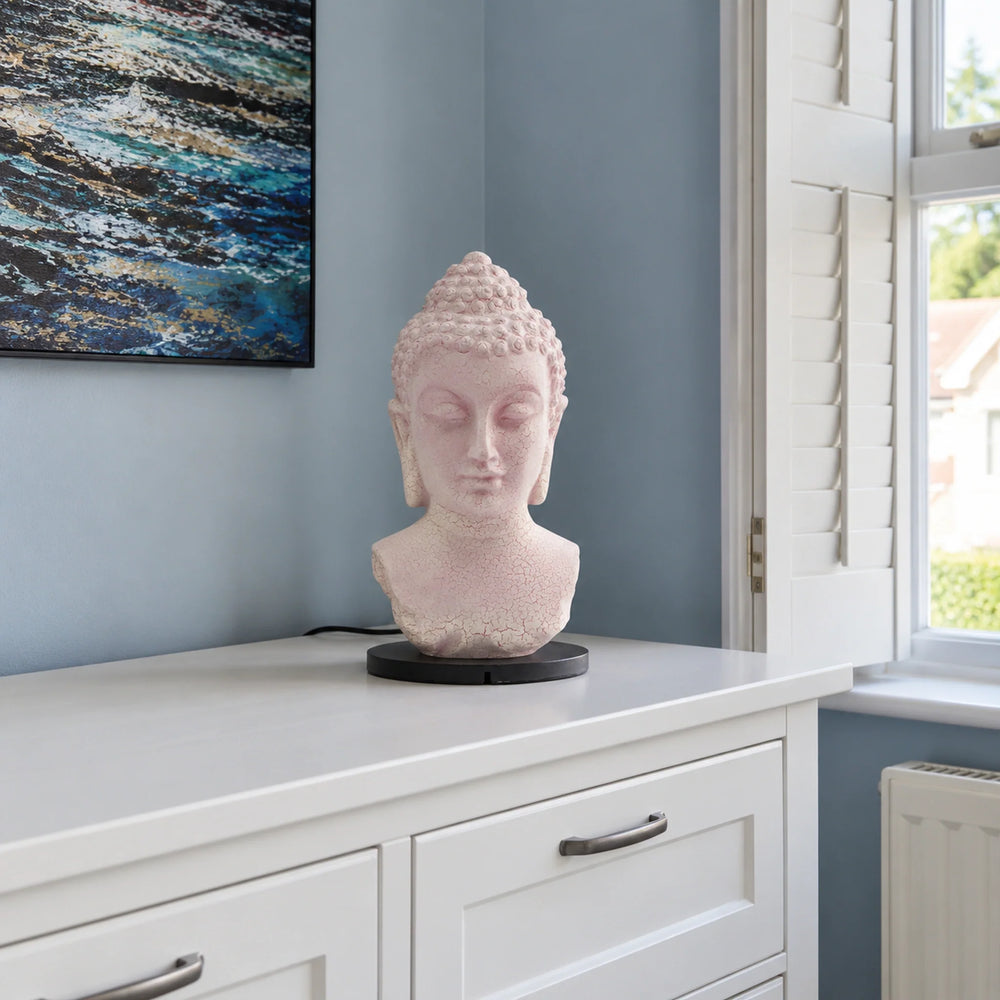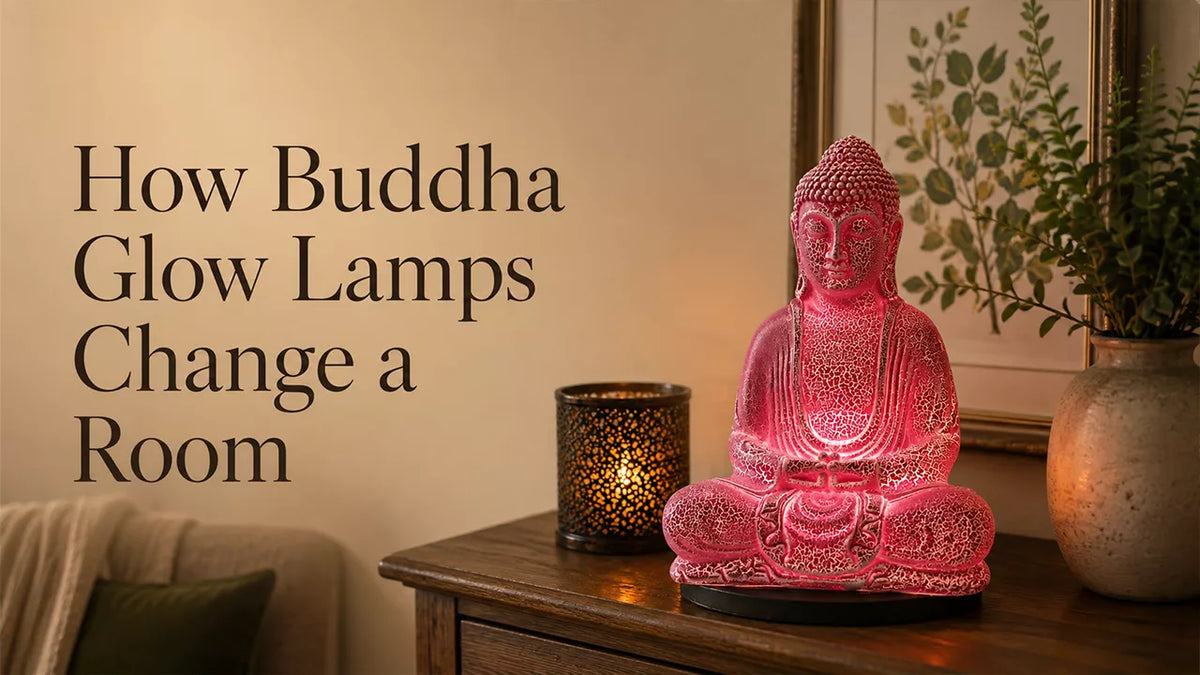
A room can be beautifully furnished and still feel slightly unsettled. The lines may be right, the palette may be soft, yet something in the atmosphere remains too sharp, too busy, too awake. That is often where buddha glow lamps come in - not as a loud focal point, but as a quieter layer that shifts how a space feels the moment the light is switched on.
Unlike brighter overhead lighting, these pieces work through mood. They soften corners, warm up shelves, and bring a sense of pause to places that otherwise feel purely practical. For homes that are meant to support rest, reflection, and a slower rhythm, that change matters more than people often expect. Browse the full range of Buddha glow lamps to find the finish and scale that suits your space.
Why buddha glow lamps feel different
A sculptural lamp can add a focal point as well as light. Whether its form feels peaceful or appropriate is personal; Buddha imagery also has religious significance that should not be reduced to a universal mood effect.
This is not simply about adding another lamp. It is about introducing a source of light that also carries meaning. For many people, Buddha-inspired decor is less about religion and more about intention. It suggests calm, mindfulness, and a home that has been arranged with care. In that setting, a warm illuminated piece can feel grounding in a way that a standard table lamp rarely does.
The light itself plays a role too. A softer amber or golden glow tends to flatter natural textures such as wood, linen, stone, rattan, and ceramic. That makes buddha glow lamps especially well suited to interiors that lean towards neutral tones and tactile materials. They do not fight the room. They settle into it.
Where buddha glow lamps work best at home
Placement changes everything. A lamp like this rarely needs the most obvious spot in the room. In fact, it often has more presence when it is allowed to create atmosphere from the side rather than take over the centre.
In a living room, it works beautifully on a console, low sideboard, or open shelf where the light can spread gently across the wall behind it. This kind of placement helps the room feel more layered in the evening, especially when the main ceiling light is switched off. If your sitting area feels a little flat after dark, this is often the missing element.
For a bedroom, consider both the household's preferences about religious imagery and the lamp's installation needs. Choose a stable surface with adequate space, keep it clear of curtains and bedding, and follow its maker's instructions. Do not assume a window ledge is a suitable location.
A meditation corner or reading nook is an obvious fit, but it should not feel overly staged. One lamp, one cushion, one candle holder, one natural-textured throw - that is often enough. The aim is not to build a themed corner. It is to create a place that feels quieter than the rest of the room.
Hallways can benefit too. These are often neglected spaces, treated as purely functional routes from one room to another. A gentle lamp placed on a hallway table can shift the entire feel of your home in the evening, making the entrance feel more welcoming and less abrupt.
Choosing buddha glow lamps with a design eye
Not every Buddha lamp creates the same feeling. Some are ornate and heavily detailed, while others are pared back and sculptural. Which works best depends on your home and on how you want the piece to sit within it.
Compare the finishes actually specified on the individual product page. A stone-effect appearance is not proof of stone, and carved-looking detail does not establish hand-carving. Choose a shape and colour that suit the room without assuming every finish mentioned in a styling guide is stocked.
Scale matters just as much as style. A lamp that is too small can disappear, while one that is too large can feel theatrical. In most homes, the most successful pieces are those that feel intentional but unforced - present enough to shape the room, restrained enough to let the rest of the space breathe.
Light colour is a preference, not a guarantee of restfulness. Check the lamp's stated light source, permitted bulb type and rating, and whether the source is replaceable or fixed. Do not assume colour temperature or brightness can be changed.
Creating a calmer evening atmosphere
Many homes are designed for daylight and forgotten after dusk. Natural light leaves, overhead fixtures come on, and suddenly even the loveliest room can feel flat. Decorative lighting changes that. It lets the room hold onto softness.
A decorative lamp can provide a separate visual setting for the evening. The actual brightness, colour and steadiness of the light depend on the product; they should not be assumed from the word “glow”. We do not claim that a lamp slows the body, improves sleep or produces a particular physiological response.
Keep sufficient light for reading and moving safely. Route cables away from walkways, do not cover the lamp, and follow the manufacturer's placement, ventilation and switching-off instructions.
For couples sharing a home, this can be a simple way to make a communal room feel more restful without redesigning everything. For someone living in a flat, where every area has to do several jobs, one well-placed lamp can help create a clearer shift between work time and personal time.
A meaningful accent, not a themed space
One of the easiest mistakes with spiritual decor is overdoing it. A Buddha-inspired lamp may feel calming to you, but if it is surrounded by too many similar objects, the room can start to feel less intentional and more decorative in a generic way.
A better approach is restraint. Let the lamp be one part of a wider atmosphere built through texture, light, and space. Pair it with natural materials, a few carefully chosen accessories, and enough emptiness around it to let the object breathe. Stillness is easier to feel when a room is not visually crowded.
It is also worth thinking about respect. For many people, Buddha imagery holds spiritual significance. Even when used in a design-led home, it should be placed thoughtfully rather than casually. A sense of care in how the piece is styled tends to create a more grounded result anyway.
At Root & Still, this is part of what makes mindful decor feel different from impulse ornament. The object is not there simply to fill a gap on a shelf. It is there to shape the mood of a room.
Is a buddha glow lamp right for every room?
Not always, and that is part of choosing well. If a space already has several strong focal points, another symbolic object may feel unnecessary. If the room relies on task lighting for work, cooking, or detailed activities, this kind of lamp will not replace more practical light sources.
But that is not really the point. A buddha glow lamp works best as supportive lighting - something atmospheric, decorative, and emotionally grounding. It shines in rooms that need softness rather than brightness, and in homes where the feeling of the space matters as much as the furniture inside it.
If your home feels visually busy, a single calming light source can be more effective than adding more decor. If it feels cold in the evening, warmth matters more than another cushion or vase. And if you are trying to create a place that helps you pause, breathe, and reconnect, the right lamp can quietly support that shift every day.
Sometimes the most powerful changes at home are the least dramatic. A softer light. A calmer corner. A room that asks a little less of you when the day is done.