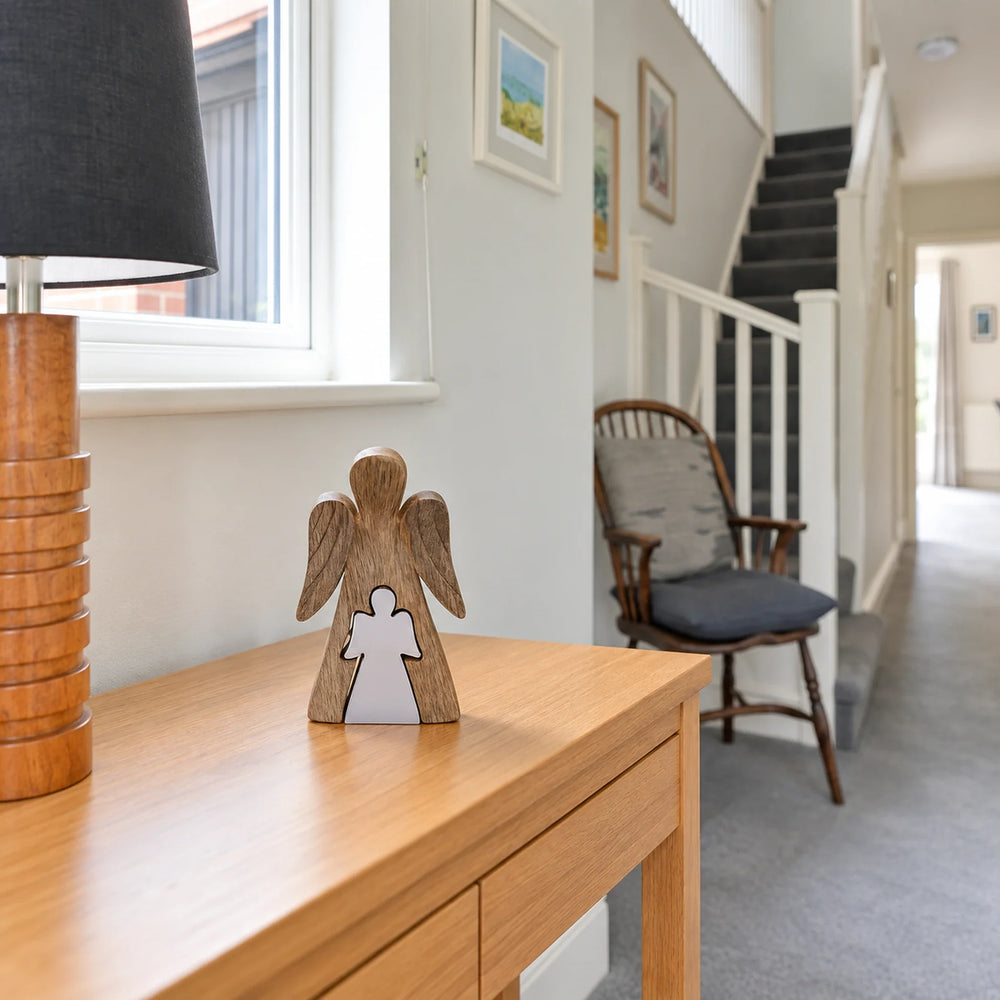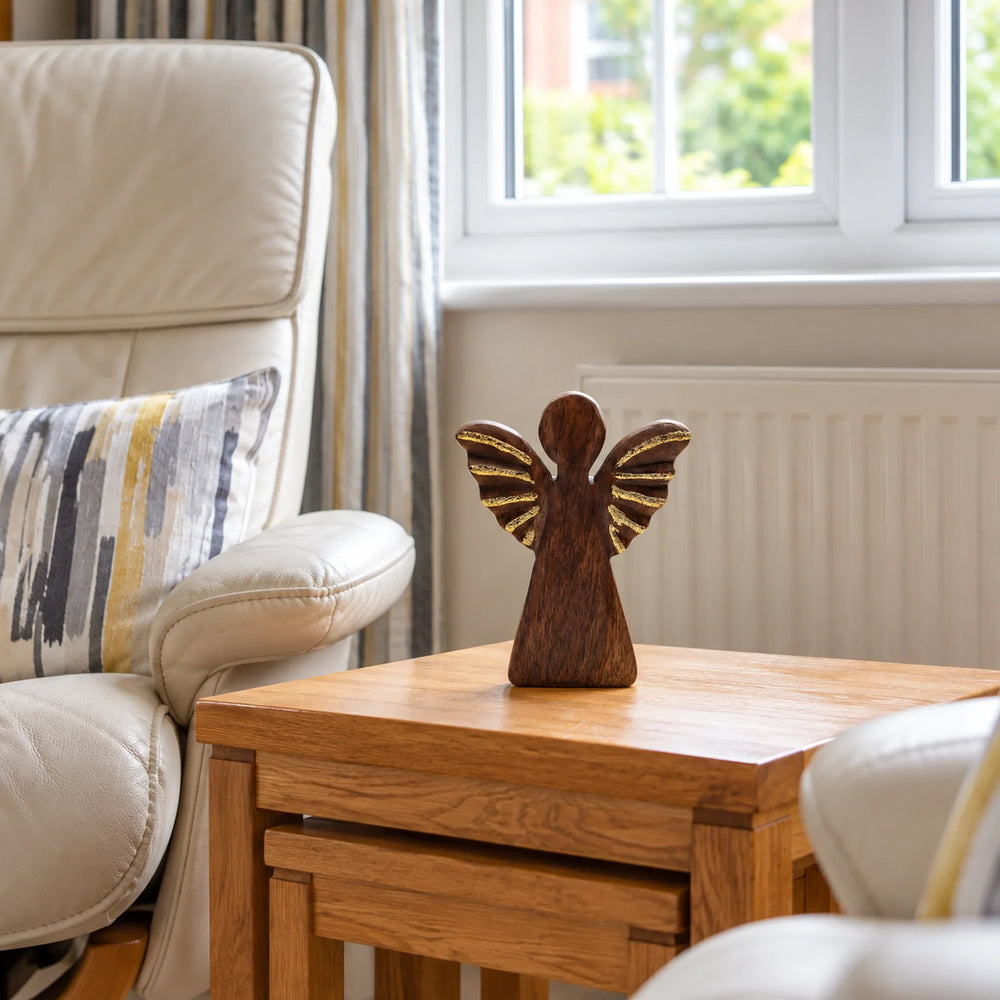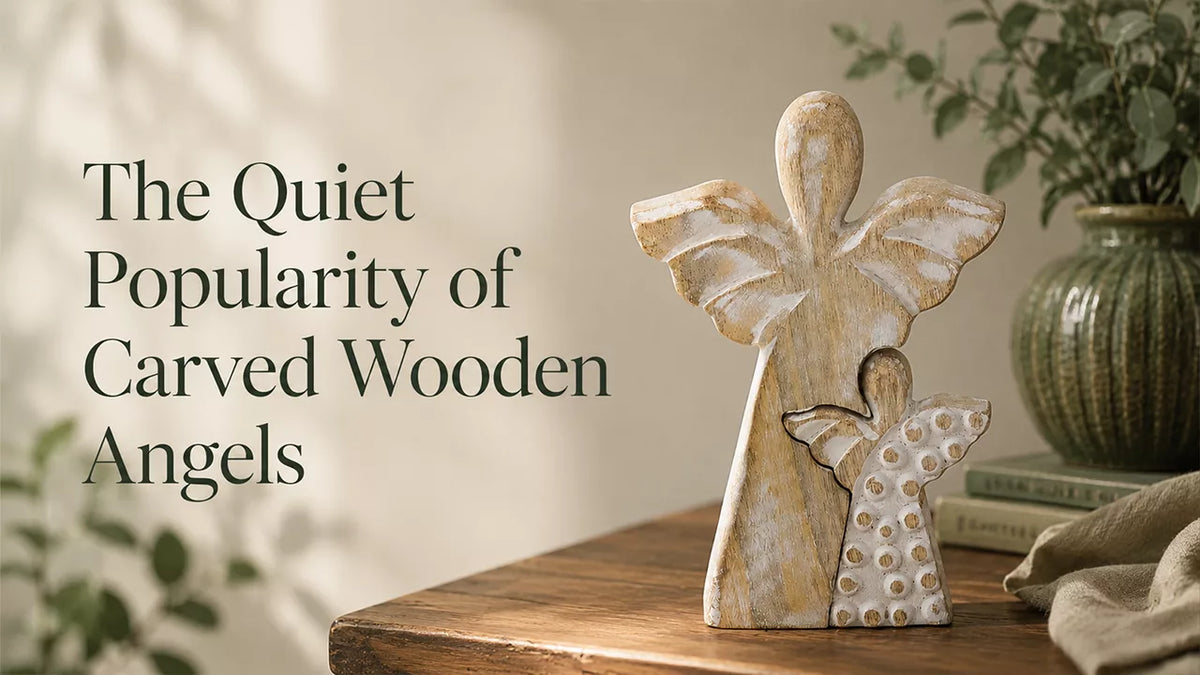
A wooden angel can be a seasonal decoration, a religious image or a personal reminder of someone. Those meanings are not interchangeable, and the right choice depends on the person who will live with it. We do not have evidence here to quantify who buys angels or why.
Begin with the recipient
If the gift is connected with bereavement, consider whether an angel is a symbol the person would welcome. There is no universal best time after a funeral, ideal size or rule about printed messages. A quiet question or a simple offer of practical help may suit them better than an object.
A card can explain your own intention without telling the recipient how to feel: “I saw this and thought of you” may be enough. Do not promise protection, relief from grief or any particular response.
Choosing the material and finish
Wood, resin and other materials can each suit a different design. Visible grain does not prove hand-carving, and an irregular surface is not a guarantee of quality or origin. Compare the description of the exact piece, not a general claim that one material is more authentic than another.
For the wooden angel collection, check each listing's material, finish and dimensions. Names such as “guardian”, “peace” or “star” identify designs; they do not establish a promised effect. Do not infer included metal components, enamel or a particular timber from a photograph alone.
Size and where it will stand
Measure the available surface, including depth, and check that the whole base can sit securely. Leave space for cleaning and everyday use. A large piece is not automatically more thoughtful, and a windowsill may expose a finished wooden object to strong sun, damp or accidental knocks.
For a hanging design, follow the maker's mounting instructions and use fixings appropriate to the wall and weight. Keep fragile details and loose parts away from children and pets.
Christmas display and storage
An angel can be part of an arrangement of Christmas decorations if that suits the household. Keep wooden decorations and greenery away from flames and other heat sources. A flame-free light is an alternative when you want a lit display.
Wooden ornaments are not unbreakable. Protect projecting wings and applied details when packing, prevent objects rubbing together and use a dry, suitable storage space. Keep the original packaging if it supports the piece well.
Care should match the finish
Follow the care instructions for your ornament. If you bought it from Root & Still and need guidance, contact us before applying oils or other treatments. Do not automatically oil a painted, whitewashed, enamelled or otherwise finished ornament because the underlying material is wood. The Canadian Conservation Institute's wood-care guidance explains that light, humidity and handling can damage wood and its finishes, and that wood does not need routine “feeding”.
Handle the object by a sound, supported part rather than a wing or delicate attachment. If a surface is flaking, loose or powdery, ask for suitable care advice before cleaning it. A change in colour is not necessarily desirable ageing.