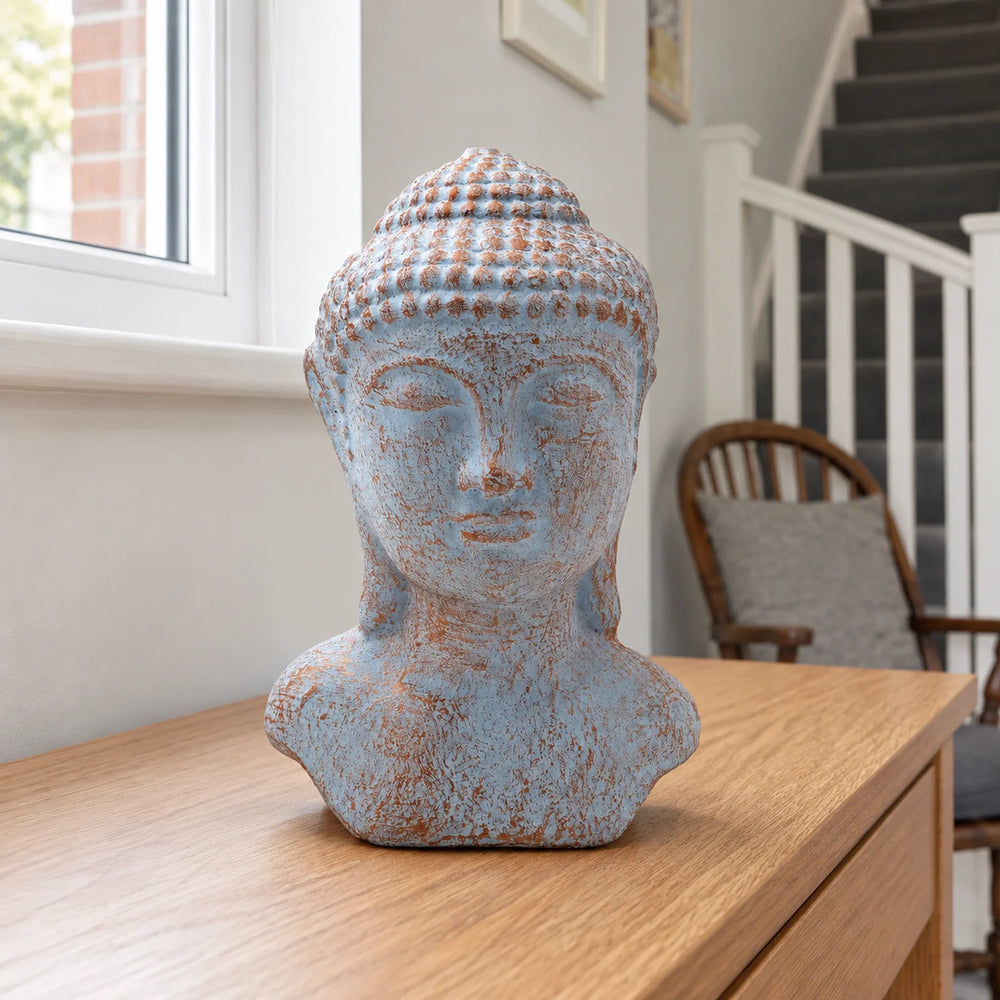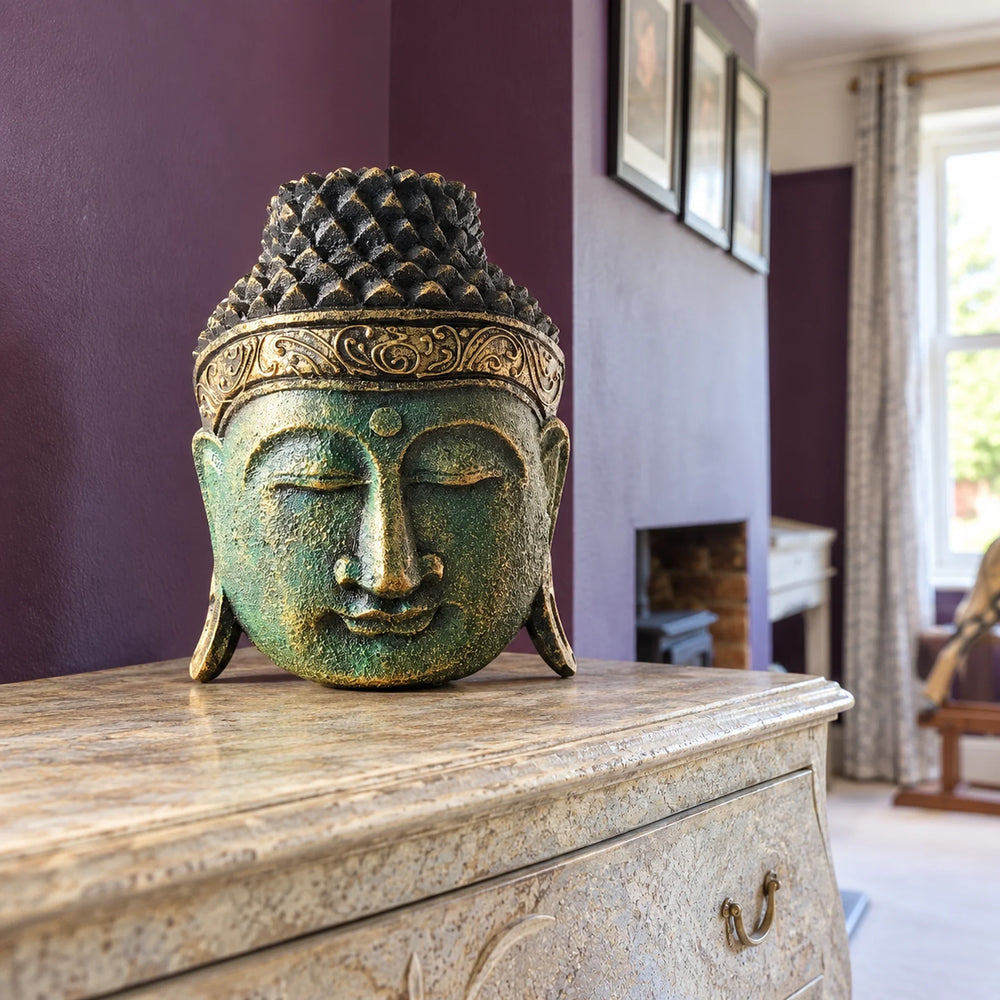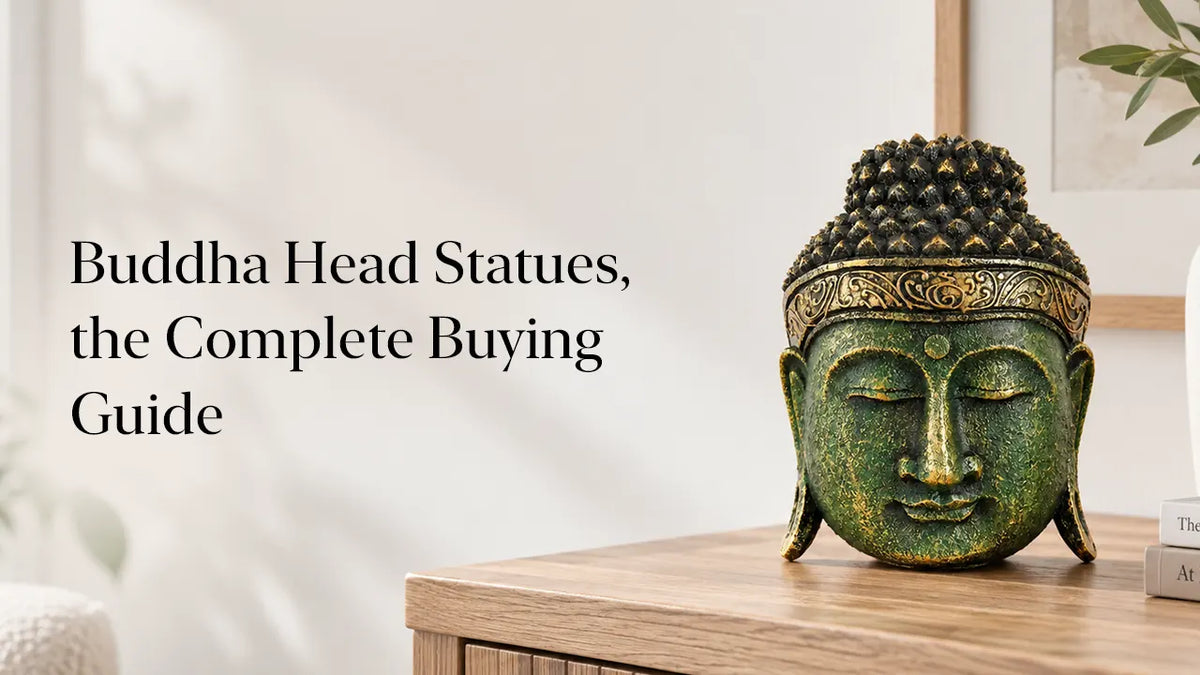
When choosing a Buddha-head sculpture, start with three questions: what does the listing say the object represents, what is it made from, and is it appropriate for the intended owner and setting? A photograph and a short title rarely answer all three.
Ask about identity and intended use
Read the description for the stated subject and any cultural context. If a precise identification matters to you, ask for supporting information rather than identifying the figure from a single facial feature. A retail description should not invent a religious attribution where the maker's information is unclear.
Religious imagery can matter deeply to the people who encounter it. If the sculpture is a gift, ask whether the recipient would welcome a head-only representation. Do not assume that everyone of a particular faith shares a preference, or that a full figure is automatically an acceptable substitute.
Distinguish an older fragment from a contemporary design
If an object is offered as an antique fragment, ask for evidence of its age and provenance. If it is sold as a contemporary decorative head, look for a clear description of that product. An antique-style finish alone does not establish age.
This guide does not authenticate objects or provide export advice. Those questions require evidence specific to the object and the relevant circumstances. Do not infer that every item in a collection has the same history or manufacturing process.
Read the material beneath the finish
Separate colour names from material descriptions. A metallic appearance does not identify the underlying substance, and an aged-looking coating does not establish antiquity. Check the exact variant, because similar photographs or names can conceal differences.
For manufacturing claims, ask what is documented. A rough or smooth surface alone is not proof of carving, casting or moulding. If the method is important to you, obtain a clear answer before ordering.
Measure the whole object
Use height, width and depth, including the base. Check the usable depth of the intended shelf and any clearance above it. A dimension in a product title may not describe the full footprint.
For a group or set, confirm the number of pieces and the measurements of each. Allow space to handle and clean them without catching neighbouring objects. Check the stated weight and the suitability of the supporting surface rather than choosing by height alone.
Choose colour in the actual room
Compare the finish with nearby materials and view the space in daylight and evening light. Blue is not universally the calmest choice, and silver is not automatically the safest. Your existing colours and personal preference are more useful than a rule assigning one finish to every room.
Use a stable position appropriate to the item and follow its documented care guidance. For religious display, seek advice from the relevant community rather than treating a shopping guide as a universal placement authority.
Before ordering
Check current availability, the exact variant, included components, delivery and returns information. Compare individual listings in the Buddha-head collection. If you prefer to consider a full figure, browse the wooden Buddha statue collection, checking each item's own facts rather than assuming it shares the specifications of another.
Questions people ask
Is a Buddha head a suitable gift for everyone?
No universal answer applies. Ask whether the recipient wants this kind of representation rather than assuming their religious or decorative preferences.
Does an antique finish mean the object is old?
No. A finish describes appearance. An age or provenance attribution needs separate evidence.
Which measurements matter?
Check height, width, depth, base and stated weight for the exact variant, together with the intended surface and clearances.