The Best Buddha Statues to Buy in the UK in 2026 (and What to Look For Before You Spend)
Whether you want a serene focal point for the living room, a meaningful gift, or a hand-carved statement piece for the hallway, this guide covers everything you need to know before you buy — materials, poses, price tiers, placement, and the pieces worth your money right now.
Why People Are Buying Buddha Statues in 2026
The UK market for mindful home décor has grown significantly over the past few years and Buddha statues have moved well beyond specialist spiritual shops. You will find them in interior design features, on Pinterest mood boards for Japandi living rooms, and in the homes of people who have no particular religious connection to Buddhism but are drawn to what these pieces represent: calm, intention, and a quieter way of living.
The reason is not difficult to understand. Homes have become our primary spaces for work, rest, and restoration all at once. There is a growing appetite for objects that carry meaning rather than simply filling space, and a well-chosen Buddha statue does exactly that. It brings a sense of stillness into a room without demanding attention in the way that bold art or statement furniture does.
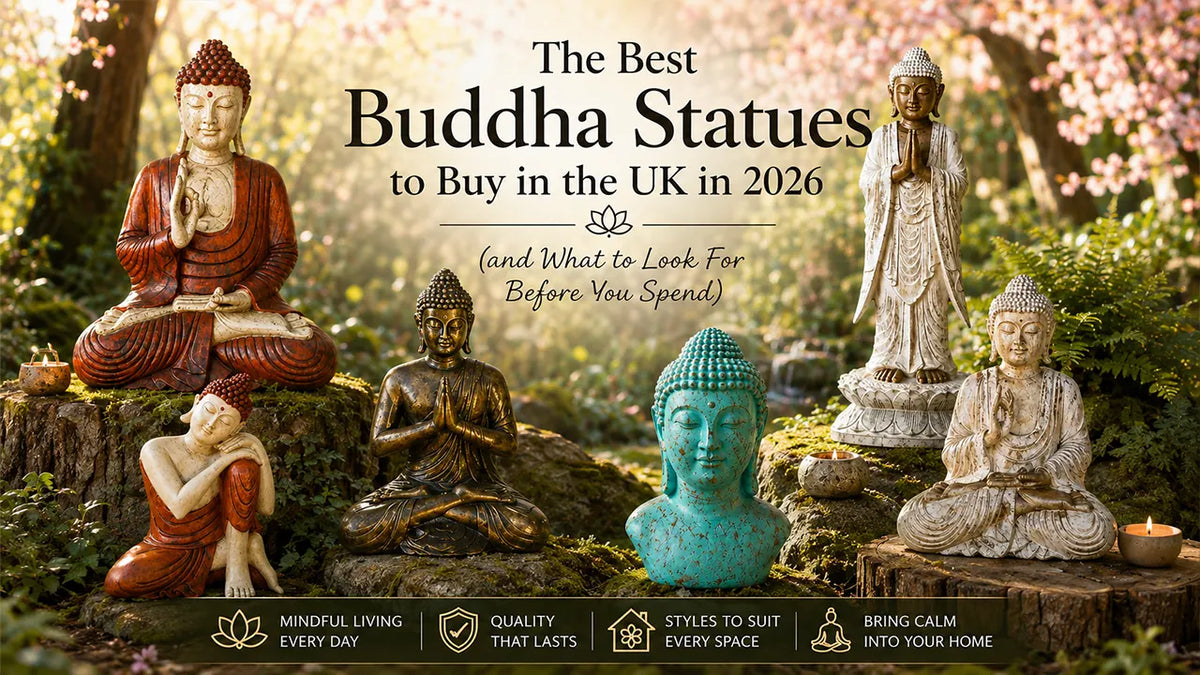
In 2026, the most popular styles in the UK are hand-carved wooden figures in whitewash or natural finishes, antique-style brass figures for shelving and sideboards, and larger statement pieces for hallways and garden corners. Minimalist interiors, Japandi styling, and the broader slow living movement have all contributed to this shift towards pieces that feel deliberate and considered rather than decorative for decoration's sake.
Worth knowing: A 2025 RIBA survey found that over 69% of UK homeowners consider mental health a priority in their home design decisions. Buddha statues sit neatly within this — they are objects that serve an emotional as well as aesthetic function.
What to Look For Before You Spend
The online market for Buddha statues in the UK ranges from a few pounds for a mass-produced resin piece to several hundred pounds for a hand-carved, gallery-quality figure. Understanding what separates the two will save you from disappointment and help you spend wisely.
Finish quality
The finish tells you a great deal about how a piece has been made. Look for consistency of colour and texture, clean lines in the facial features, and a finish that looks intentional rather than rushed. On hand-carved pieces, minor natural variations are a sign of authenticity, not poor workmanship. What you want to avoid are obvious mould seams, flaking paint, and flat or patchy colour that suggests machine production.
Weight and substance
A quality statue should feel substantial for its size. Lightweight pieces are almost always lower-grade resin and will look noticeably cheaper in person than they do in photographs. If a listing does not include the weight, it is worth asking before you buy.
Material transparency
Reputable sellers are clear about what their pieces are made from. Hand-carved wood, solid brass, and high-quality resin are all good materials — but they are very different things and should be priced accordingly. Be wary of listings that use vague terms like "stone effect" or "natural finish" without specifying the actual material.
Packaging and delivery
A heavy or delicate piece deserves proper packaging. This is worth checking in advance, particularly for larger statues or brass figures. At Root & Still, our hand-carved pieces are individually wrapped and crated for safe transit.
- Material is clearly stated — wood, brass, resin, or stone
- Finish is consistent with no visible mould lines or flaking
- Weight is appropriate for the size
- Seller provides clear, multiple product photographs
- Returns policy covers damage in transit
- UK-based fulfilment or tracked international shipping
Materials Explained: Wood, Resin, Brass, Stone
The material you choose affects how a piece looks, where it can be placed, how it ages, and ultimately what kind of presence it brings to a space. Here is an honest breakdown.
Hand-carved wood
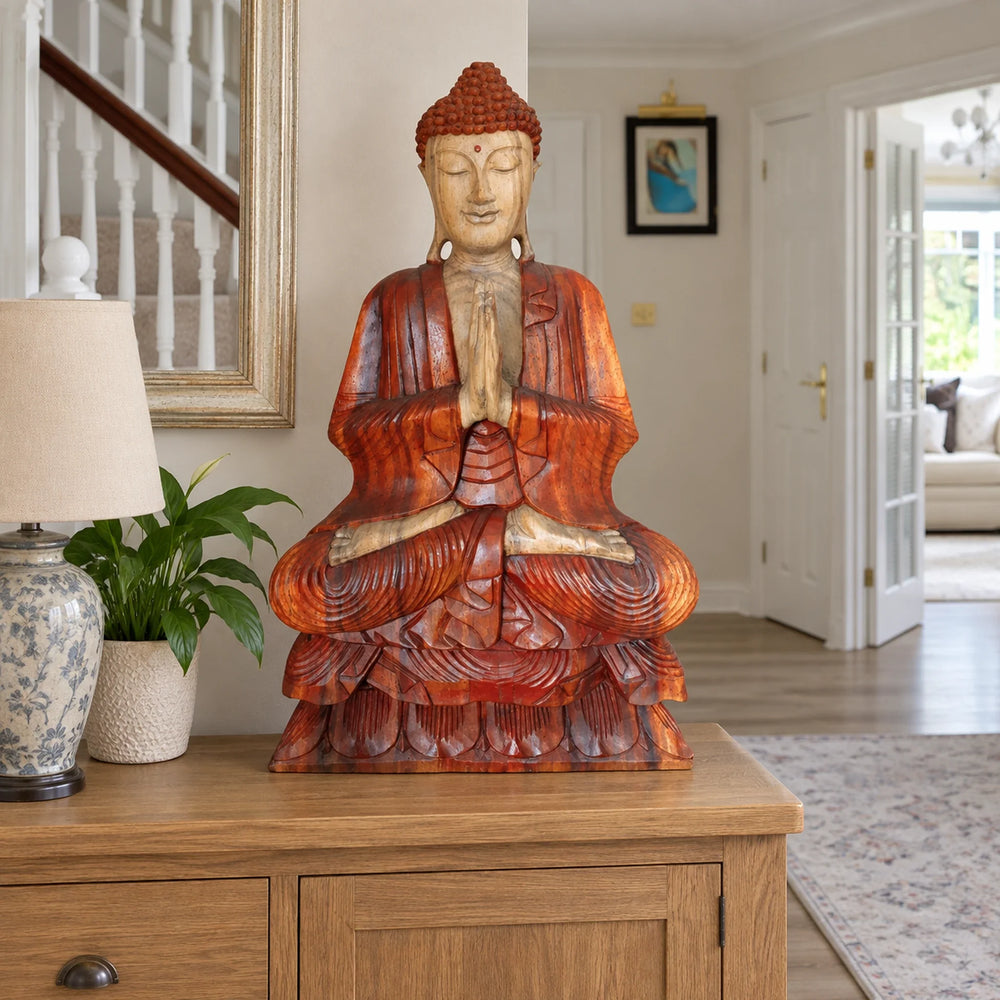
Hand-carved wooden Buddha statues are the most characterful option available. Each piece is shaped by a craftsperson, meaning that the grain of the wood, the expression of the face, and the fall of the robe are all subtly unique. Wood brings warmth and a tactile quality that synthetic materials cannot replicate. It works particularly well in interiors that use natural materials — linen, rattan, stone, and reclaimed wood — and suits both Japandi and earthy bohemian aesthetics beautifully.
Our hand-carved collection ranges from 25cm pieces starting at £60 up to 60cm statement figures at £228 to £333. The vintage-finish pieces with distressed colour are particularly popular in 2026 for their aged, artisanal quality.
Resin
High-quality resin allows for fine detail that is difficult to achieve consistently in wood, and it is more resistant to humidity and temperature fluctuation. For indoor pieces where you want a clean, precise finish — particularly whitewash or antique-effect finishes — quality resin is an excellent choice. The key word here is quality. Budget resin pieces are lightweight and look it. Our whitewash resin range has been carefully selected to offer the warmth and detail of carved work at a more accessible price point, starting from £56.
Brass
Solid brass figures are the collector's choice. They are dense, permanent, and develop a rich patina over time. A good brass Buddha has a weight that feels genuinely significant — you notice it when you pick it up. Brass works beautifully on a sideboard, shelf, or altar, and pairs well with dark wood, ceramic, and stone accents. Expect to pay more for solid brass than for resin or plated alternatives, and the difference in quality is immediately apparent.
Stone and concrete
Stone-effect and concrete Buddha statues are the choice for gardens and outdoor spaces. They weather naturally, resist frost and UV exposure, and develop a moss and lichen patina that makes them look like they have always belonged in the landscape. For indoor use, genuine stone figures are heavy and cold to the touch — they are striking but less intimate than wood or brass.
| Material | Best for | Outdoor use | Price range | Ages well |
|---|---|---|---|---|
| Hand-carved wood | Living rooms, shelves, meditation spaces | ✗ | £60 – £365 | ✓ Develops patina |
| Resin (quality) | Indoor shelves, gifting, bedside | ✗ | £9 – £90 | ✓ Stable finish |
| Solid brass | Sideboards, altars, collector pieces | ✗ | £30 – £200+ | ✓ Rich patina |
| Stone / concrete | Gardens, outdoor corners | ✓ | £25 – £150+ | ✓ Natural weathering |
Poses and What They Mean
Buddha statues are not simply decorative objects — each pose and hand gesture, known as a mudra, carries a specific meaning rooted in Buddhist tradition. You do not need to follow Buddhism to appreciate these meanings, but understanding them can help you choose a piece that feels right for the space and the intention behind it.
Meditation (Dhyana) — hands folded in the lap
The most widely recognised pose. The Buddha sits in lotus position with both hands resting in the lap, right hand over left. This posture represents deep concentration, inner peace, and the journey toward enlightenment. It is the ideal choice for meditation spaces, reading corners, and bedrooms — anywhere you want to invite stillness.
Teaching Transmission (Dharmachakra) — one hand raised, one in the lap
A beautiful and slightly less common pose, the Teaching Transmission shows the Buddha sharing wisdom. The hands form the "Wheel of Dharma" gesture. This is a wonderful choice for a study, home office, or entrance hall — spaces associated with thought, learning, and greeting others. Our hand-carved Teaching Transmission statues are among the most popular in the collection for exactly this reason.
Welcome (Abhaya) — one hand raised, palm outward
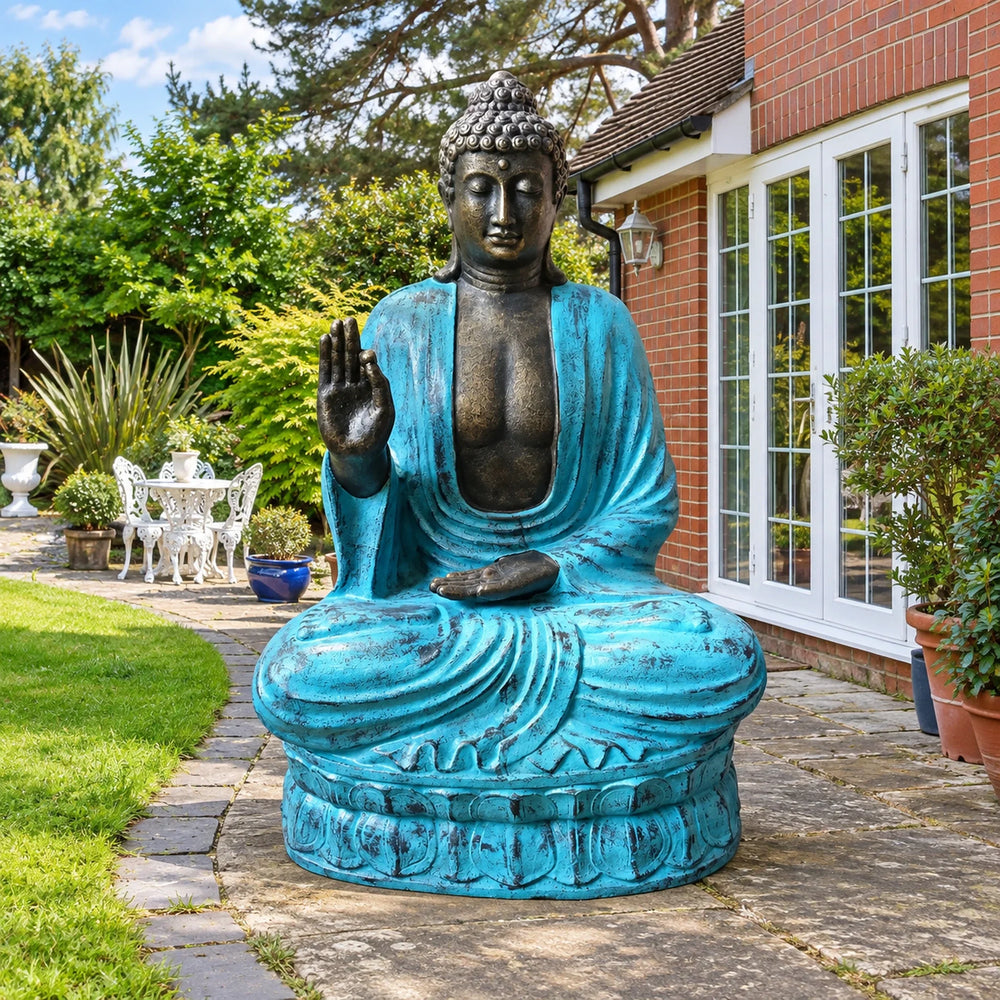
The raised hand means fearlessness, protection, and blessing. The Welcome pose is traditionally placed near entrances to greet visitors with positive energy. It works particularly well in a hallway or by a front door.
Hand Down (Bhumisparsha) — one hand touching the earth
Often called the Earth-Touching or Witness pose, this represents the moment of the Buddha's enlightenment. It is a powerful and grounding posture, well-suited to living rooms, garden spaces, and anywhere you want a sense of rootedness and permanence.
Thinking (contemplative) — resting the chin on the hand
A more informal, human pose that represents quiet contemplation. Our hand-carved Thinking Buddha at 25cm and 30cm is a popular choice for desks and bookshelves — there is something warm and approachable about the posture that works beautifully in creative and working spaces.
Happy (Laughing) Buddha — rounded, joyful figure
Strictly speaking, the Laughing or Happy Buddha is not a depiction of Siddhartha Gautama but a separate figure — the Chinese monk Budai — who came to represent contentment, abundance, and good fortune. However, the two traditions have merged in Western popular culture and the Happy Buddha is now one of the most widely bought figures in the UK. It brings genuine warmth and joy to kitchens, living rooms, and offices.
Reclining (Sleeping) Buddha — lying on the side
The reclining pose represents the Buddha's final moments before attaining Nirvana — a state of absolute peace and release. It is one of the most serene and beautiful poses available, and our 50cm Sleeping Buddha is a perennial favourite for bedrooms and wellness spaces.
Not sure which pose to choose? Think about the room and what you want it to feel like. Meditation and Reclining poses suit rest spaces. Teaching Transmission and Welcome suit social or entrance spaces. Thinking and Hand Down suit creative and grounding spaces. The Laughing Buddha suits anywhere you want more joy.
Size Guide: What Fits Where
Getting the size right is one of the most common mistakes people make when buying a Buddha statue online. A piece that looks substantial in a photograph can feel underwhelming on a large shelf, or overwhelming on a small console table. Here is a practical guide.
Under 30cm — desk, shelf, and bedside
Our 25–30cm pieces are the most versatile in the collection. They work beautifully on bookshelves, bedside tables, bathroom shelves, and desks. At this size you want the detail and finish to do the work — these are pieces you look at closely, so craftsmanship matters more than scale. Prices start from £56 for our whitewash resin range and £60 for hand-carved wood.
30–50cm — sideboard, console, and focal shelf
This is the most popular size range for living rooms and hallways. A 40cm piece on a sideboard commands attention without overwhelming the space. Our 40cm hand-carved figures (from £79) and the 50cm Sleeping Buddha (£95) are consistently among our bestsellers. At this size, consider the finish in relation to the rest of the room — whitewash works in lighter, more minimal spaces; natural wood and brass suit warmer, richer interiors.
50–70cm — statement corner and feature piece
A 60cm+ piece is a genuine statement. You need the space to support it — a corner of the living room, a dedicated alcove, or a wide hallway console. Our 60cm hand-carved Teaching Transmission (from £228) and the 60cm Vintage Orange (£333) are the pieces that stop visitors in their tracks. At this price and scale, you want to be certain of the finish and placement before you buy.
Garden pieces
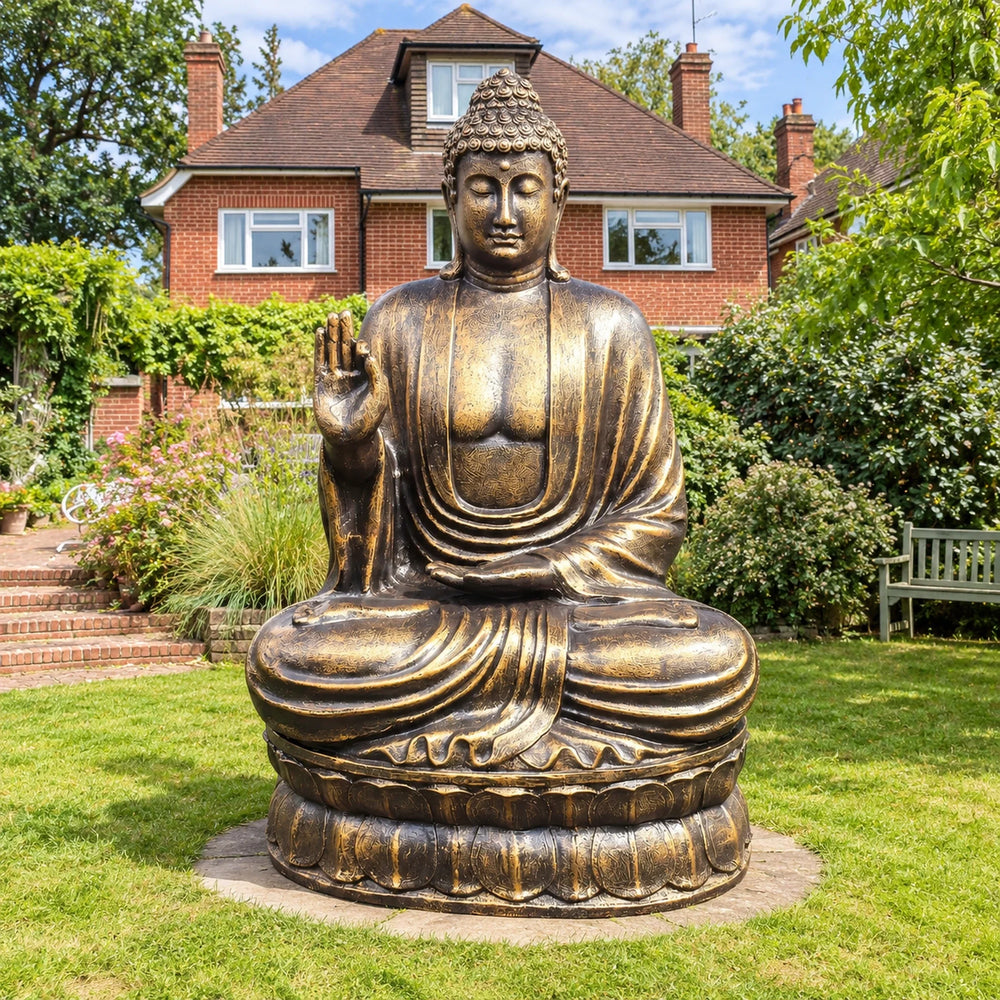
For outdoor use, scale up significantly. A piece that looks impressive indoors can disappear in a garden setting. As a general rule, aim for 60cm+ for a border feature and 80cm+ for a path or focal point. Material must be genuinely weatherproof — look for stone, concrete, or materials explicitly described as frost-resistant.
Our Top Picks for 2026
These are the pieces we would recommend across different budgets, styles, and placements. All are available now with fast UK delivery.
Where to Place Your Buddha Statue at Home
Placement matters both aesthetically and, if you are interested in the traditional guidance, energetically. Here is a room-by-room guide based on what works in British homes.
Hallway
The hallway is one of the best places for a Buddha statue in the UK home. A Welcome or Teaching Transmission pose near the entrance greets everyone who enters and sets the tone for the whole house. Keep the area around it uncluttered — the statue needs space to read properly. A console table, low shelf, or plinth works well. At 30–40cm the piece will suit most hallways; for wider entrance halls consider 60cm.
Living room
The living room is the most versatile placement. A Buddha on a sideboard, mantelpiece, or floating shelf becomes a natural focal point without demanding the constant attention of large art. Group it with a small plant, a candle, and one or two other objects at different heights — follow the "rule of three" and the result will look intentional. Avoid placing it on the floor unless it is a larger piece designed for that purpose.
Bedroom
The bedroom is ideal for a Sleeping or Meditation Buddha. A 25–30cm piece on the bedside table or windowsill creates a calming presence that is the last thing you see before sleep and the first in the morning. The Sleeping Buddha at 50cm works beautifully on a low dresser or wide window ledge.
Home office or study
A Thinking or Meditation Buddha on a desk or bookshelf brings a contemplative quality to a working space. At desk scale — 20–30cm — it should feel like a quiet companion rather than a dominant object. The natural wood finish works particularly well in offices because it softens the technology-heavy environment.
Bathroom and spa spaces
The bathroom is an underrated placement for a Buddha statue. A small oil burner or incense plate alongside a 20–30cm figure transforms a functional room into something closer to a spa. Choose a resin or brass piece for bathrooms — wood does not appreciate sustained humidity.
Garden
A garden Buddha works as a meditative focal point within planting, at the end of a path, or beside water. The key is scale — small indoor pieces will look lost outdoors — and material — it must be genuinely weatherproof. Moss and lichen that develop over time add to the effect rather than diminishing it.
Buying as a Gift
Buddha statues have become one of the most popular meaningful gifts in the UK, and for good reason. They are beautiful, personal, and carry a sense of intention that generic gifts rarely do. A few guidelines for buying one as a gift.
Consider the recipient's interior style
A whitewash resin figure suits a more contemporary, minimal home. A vintage distressed piece suits someone with an eclectic, bohemian, or maximalist aesthetic. A brass figure suits a classic or luxurious interior. If in doubt, a natural wood hand-carved piece in a neutral finish is the safest and most versatile choice.
Think about the pose and its meaning
If the recipient has a meditation practice, a Meditation pose is an obvious choice. If they have just moved into a new home, a Welcome pose is particularly appropriate. A Happy Buddha is a safe, joyful gift for someone you want to bring good fortune to. The Sleeping Buddha is a thoughtful gift for someone who values rest and recovery.
Gifting for specific occasions
For housewarming gifts, a Welcome pose in the 30cm range is ideal — it is sized right for a new home and carries a meaningful message. For birthdays and Christmas, the Happy Buddha range and the Sleeping Buddha are consistently the most bought. For new mothers or those going through a difficult period, a Meditation pose carries a quiet message of support and peace.
Frequently Asked Questions
Is it disrespectful to have a Buddha statue in your home if you are not Buddhist?
This is the most common question we receive and the short answer is no — not if the piece is treated with the respect any meaningful object deserves. In Buddhist philosophy, if the presence of a Buddha figure creates peace, mindfulness, and positive energy in a space, that is considered a good thing regardless of the owner's background. The key is intention. Placing a Buddha statue thoughtfully, at an appropriate height, in a clean and considered space is respectful. Using it as a novelty item or placing it in a bathroom in a way that feels dismissive is not. The vast majority of people buying these pieces in the UK do so with genuine appreciation and respect, and that is all that is needed.
Which direction should a Buddha statue face?
Traditional guidance, rooted in Feng Shui and Vastu Shastra, suggests that a Buddha statue should face inward into the room rather than toward an outside wall, and ideally face east or northeast. In a hallway, the statue should face the front door to greet incoming energy. In practice, the most important thing is that the piece faces into the living space so it can be seen and appreciated. For most UK homes, this means positioning it against a wall and facing the main seating or activity area of the room.
What is the best Buddha statue for good luck?
The Laughing or Happy Buddha — technically the figure of Budai rather than the historical Buddha — is the traditional symbol of good fortune, abundance, and contentment. It is the most common choice for this purpose. In Feng Shui, rubbing the belly of the Happy Buddha is said to bring good luck, and placing it near the entrance of a home or business is considered auspicious. Our whitewash Happy Buddha range is available from 30cm to 50cm.
How do I care for a hand-carved wooden Buddha statue?
Hand-carved wooden pieces need minimal care. Dust regularly with a soft dry cloth — avoid damp cloths which can raise the grain over time. Keep the piece away from direct sunlight and sources of sustained heat or humidity, which can cause cracking or warping. If the finish begins to look dry, a small amount of natural wood oil applied sparingly and buffed off will restore the richness of the colour. Avoid chemical cleaners entirely.
Can I place a Buddha statue in the bedroom?
Yes. Contrary to some older guidance, placing a Buddha in a bedroom is entirely appropriate and is widely practised. The Sleeping and Meditation poses are particularly suited to bedrooms. The only traditional caution is to avoid placing the statue at floor level in an area associated with foot traffic — a shelf, dresser, or bedside table at chest height or above is ideal.
What is the difference between a Buddha statue and a Ganesha or Hindu deity figure?
Buddha statues represent Siddhartha Gautama, the founder of Buddhism, or occasionally Maitreya (the future Buddha) and Budai (the Happy Buddha). They originate in Buddhist traditions across South and Southeast Asia. Ganesha, Lakshmi, Shiva, and other figures are deities within Hindu traditions and carry different meanings, symbols, and placement guidance. They are distinct traditions and should be understood separately, though both have found a warm reception in British homes as meaningful, beautiful objects.
Do you offer free UK delivery?
Delivery costs vary by piece and are shown clearly at checkout. Larger and heavier hand-carved pieces are individually crated for safe transit. For delivery times, terms, and any current promotions, please see our shipping policy.