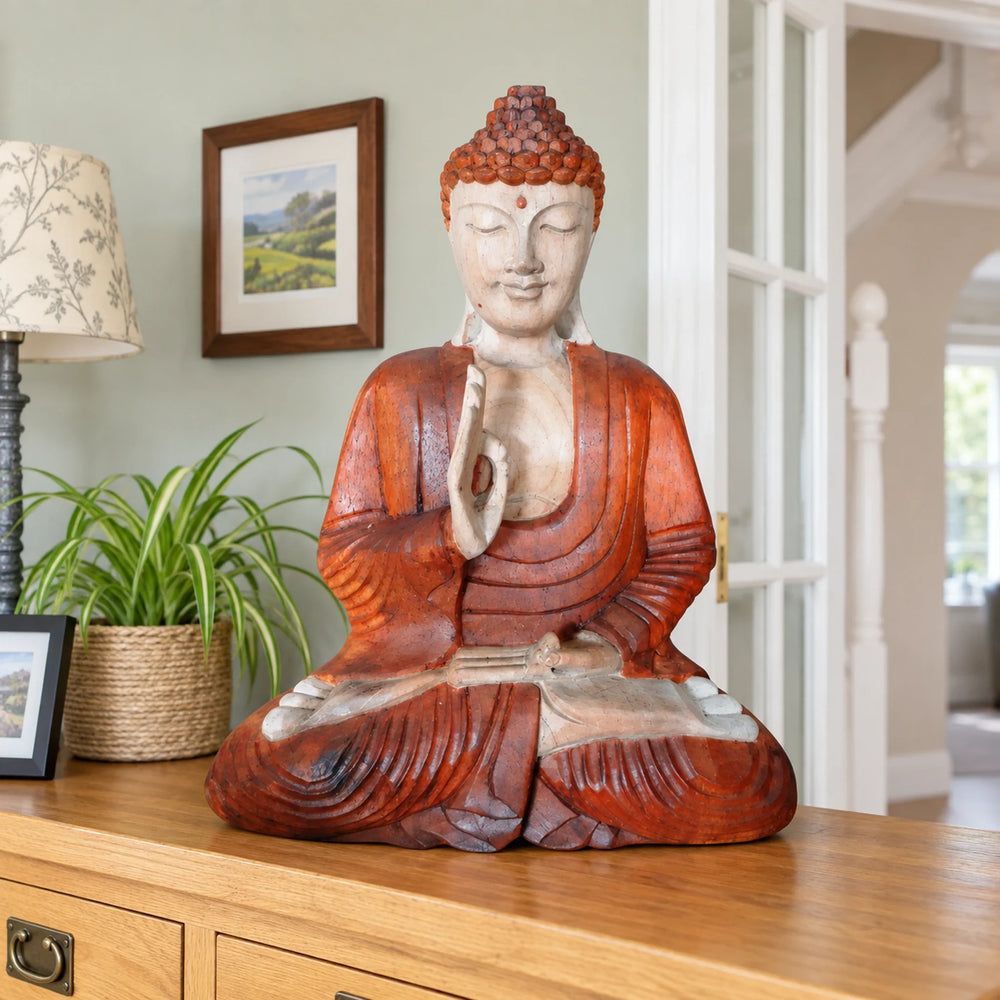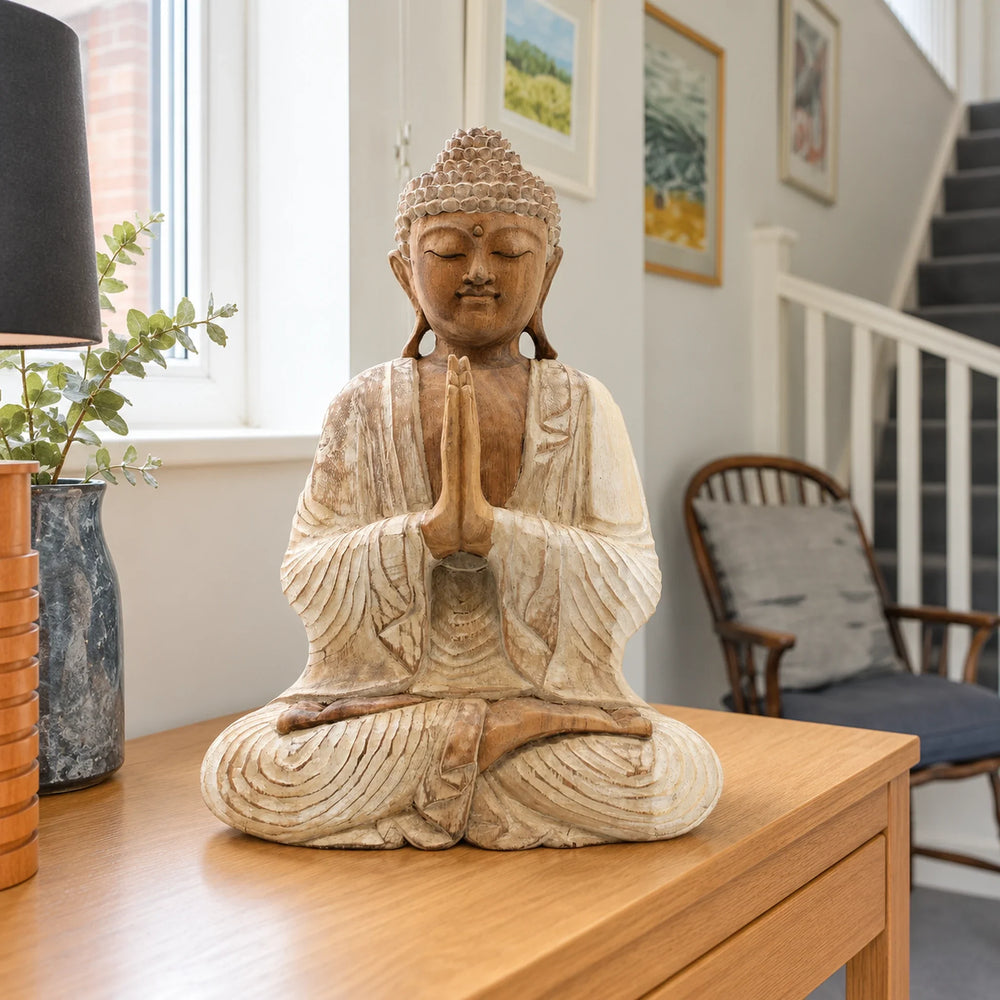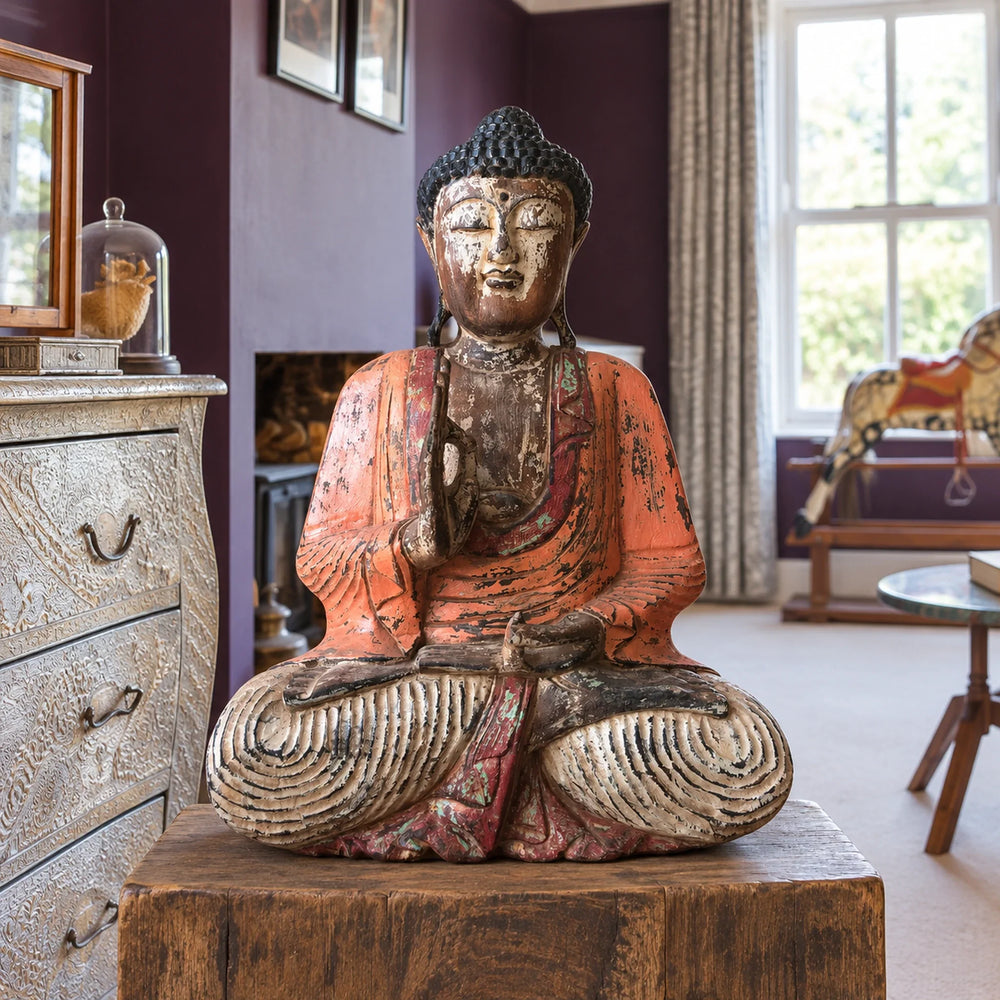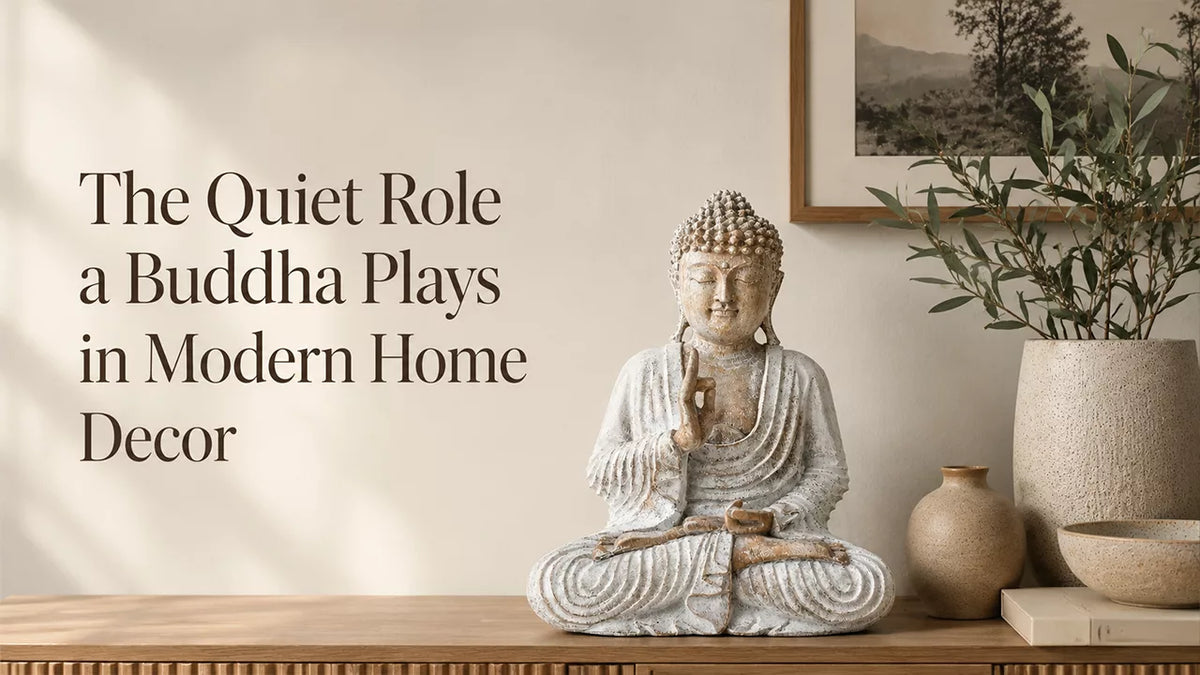
A Buddha figure can bring artistic interest and personal meaning to a home. Its role depends on the image, the person displaying it and the setting. Thoughtful styling begins with that context, alongside practical questions about scale, support, material and how the room is used.

Understand the image before choosing a place
Buddha images have religious and devotional roles; they are not simply universal symbols for a relaxed interior. The British Museum’s guide to living traditions describes their continuing use in Buddhist worship. A decorative use should not erase that significance.
Hand gestures, known as mudras, carry meanings within Buddhist art. They do not dictate a modern room plan. The Museum’s walking Buddha entry, for example, describes abhaya as a gesture of dispelling fear. That symbolism is different from a promise that placing a statue by a door will protect a home.
Laughing Buddha figures commonly depict Budai, known as Hotei in Japan. The Metropolitan Museum explains Hotei’s association with Maitreya. Do not treat every figure sold under the broad word “Buddha” as the same person or pose.
Choose a location that respects both the object and the room
Start with a clean, considered place where the figure will not be knocked, stepped over or mixed with waste. Religious display practices differ; a universal three-foot rule, compulsory compass direction or single list of acceptable rooms would oversimplify them. For a devotional setting, ask a teacher or community familiar with that tradition.
Feng shui, vastu and Buddhist practice should not be presented as one interchangeable system. If a particular placement belief matters to you, follow it with an understanding of its context. It is not evidence that the statue changes a room’s energy or produces a health benefit.
On a hallway console, leave space for the items used when entering the home. In a living room, view the figure from the seats and normal walking routes. In a reading corner, make sure it does not take the place of a usable lamp or somewhere to put a book. A secure, practical position is more useful than a display arranged only for a photograph.
Compare dimensions and materials
Check height, width, depth and weight against the intended surface. Leave space around the base and use support appropriate to the object. A large figure needs a plan for access and handling; do not assume an ordinary shelf can carry it.
Wooden Buddha statues and resin statues offer different surfaces and finishes. Look at the specific product information rather than assuming all wood is light or all resin is weatherproof. Gold-coloured, bronze-effect and antique-style describe appearance unless the description establishes more.
For outdoor placement, use the individual model’s suitability and care guidance. A sheltered corner does not make an indoor statue suitable for a garden, and material alone does not establish frost resistance. Compare garden Buddha statues with the conditions and support at the proposed location.
Build a simple visual arrangement
Choose one quality to repeat in the surrounding room: a pale finish, a curved outline, a wood tone or a textured surface. It need not become a complete theme. A figure can sit alongside books, a ceramic vessel or a photograph without every object sharing the same origin or symbolism.
Leave enough space to see the silhouette and clean around it. If several ornaments compete for attention, try displaying fewer at once. This is a design preference, not a rule that a minimal room will make everyone calmer.
Use lighting that lets you enjoy the detail without glare. Keep candles away from the figure’s finish and from books, cloth and dried plants. If using a candle, follow its instructions and the London Fire Brigade’s guidance: a suitable heat-resistant holder, stable placement, separation from combustible materials and no unattended burning.
Make a considerate choice for a shared home
Discuss religious imagery with the people who share the space. An object can hold different meanings for different viewers, and good intentions alone do not settle every concern. If buying a gift, ask about the recipient’s preferences rather than assuming a statue will suit anyone interested in wellness.
You do not need to make claims about health, prosperity or spiritual progress to value an object. Its craftsmanship, appearance, meaning or place in your own practice can be enough. For more on fitting a figure to a surface, see our statue size guide.
Frequently asked questions
What does a Buddha statue add to home decor?
It can provide artistic interest and personal or religious meaning. Those qualities depend on the image and its context; a statue does not guarantee peace, good health or positive energy.
Which direction should it face?
There is no single direction this decorating guide can prescribe for every home or tradition. Consider a secure, respectful location and seek guidance within your tradition for devotional use.
Can an indoor Buddha statue go in the garden?
Only use a statue outdoors when its product information supports that use. A sheltered location or stone-like appearance does not establish weather or frost resistance.
How much space should I leave around it?
Allow enough room for a secure base, everyday movement and cleaning. Measure the actual object and surface rather than relying on a universal height or clearance rule.